
San Agustin, Gran Canaria Travel Guide: Top Things to Do & Where to Stay (2026)

San Agustin is the calm, grown-up cousin in Gran Canaria’s south coast family. Just a few minutes east of Playa del Ingles, it trades wild nights and party strips for peaceful walks, soft sand, and a slower pace of life. It’s the kind of place where you hear the ocean at night, and where the most stressful decision of the day is choosing between the pool or the beach.
This is a destination for people who want to do less, better. Mornings are for long breakfasts and sun loungers. Afternoons mean coastal walks, maybe a massage, and the occasional lazy sangria. And evenings? Dinner with a view, with the sound of waves in the background.
San Agustin is relaxed, quiet, and low-key, especially compared to nearby Playa del Ingles or Maspalomas. It’s popular with Scandinavian and German visitors (some of whom live here part-time), and it’s definitely not a party town. It’s about sea views, casual walks, good food, and the occasional spa day. You won’t find big shopping streets or all-night bars, instead you get coastal promenades, mellow beaches, and restaurants that don’t rush you. It’s a great fit for couples, solo travellers, families, and anyone who wants to avoid the chaos without being completely isolated.
SAN AGUSTIN ESSENTIALS
✈️ Getting There / You’ll fly into Gran Canaria Airport (LPA), about 20 to 25 minutes by taxi from San Agustin. I always use WelcomePickups for all my airport transfers, and San Agustin was no exception. Search flights on Skyscanner.
🚗 Getting Around / San Agustin is very walkable, you can get to the beach, shopping centre, and restaurants on foot. There are local buses that connect you to nearby areas like Maspalomas or Las Palmas, but if you want to properly explore Gran Canaria, renting a car is the best move. The island is small and easy to drive, so day trips from here are genuinely easy. Compare rental cars on DiscoverCars.
🎟️ Tours / If you’re not driving or just want an easy day out, book a tour, these are the most popular and worthwhile experiences in Gran Canaria:
Catamaran Morning Cruise with Water Sports
Gran Canaria Highlights & Hidden Gems with Local Guides
Maspalomas Dunes Camel Ride
🏨 Stay / Skip the endless scrolling, this is the one I’d point a friend toward (full picks in Where to Stay below):
Budget/self-catering: Apartamentos Buganvilla
Mid-range: Hotel San Agustin Beach Club
Splurge: Gloria Palace San Agustin Thalasso & Hotel
📱 Connect / You’ll need mobile data while you’re in Spain, and I always recommend using an eSIM, there’s absolutely no need for a physical one. I use Holafly, use code TRAVELWITHPAU for 5% off.
🛡️ Get Insured / Unfortunately, things can and do go wrong when you travel. World Nomads covers adventure activities, emergency medical, and trip cancellation.
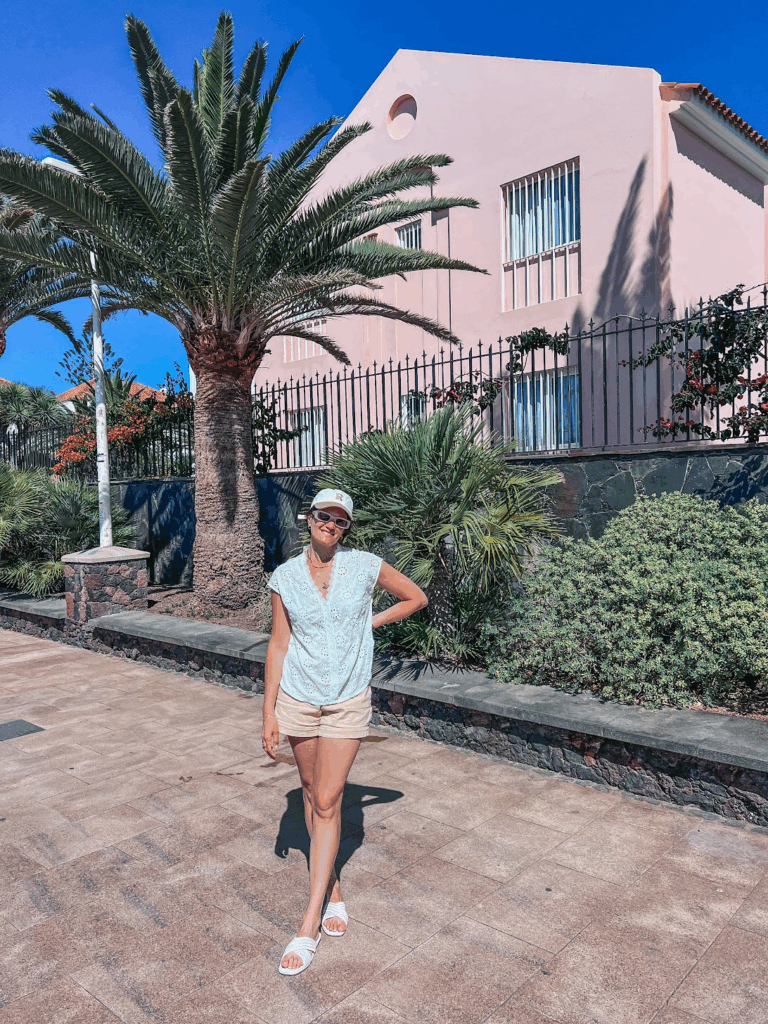
Things to Do in San Agustin
1. Spend Time on San Agustin Beach
San Agustin Beach is long, curved, and quieter than others in the south. Black volcanic sand, clear water, and usually calm waves. There are sun loungers for hire (cheap), lifeguards, and a few casual cafes in and behind the beach.
2. Walk to Playa del Ingles
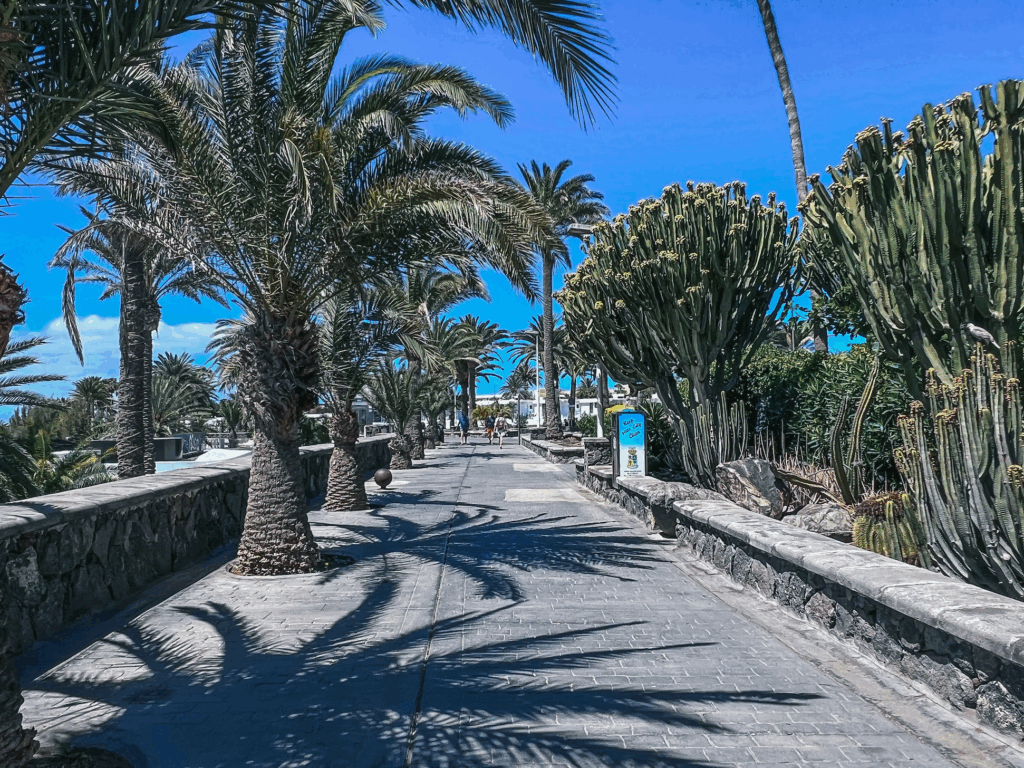
The seafront promenade connects San Agustin to Playa del Ingles in about 30 to 40 minutes. It’s a stunning walk, especially in the late afternoon when the light softens, with plenty of benches and lookout points along the way. I’ll be honest, I found Playa del Ingles itself pretty tacky, cheap-looking restaurants and bars and lots of booze, but if that’s your thing I’m not here to judge. It’s the complete opposite of San Agustin’s vibe.
3. Go on a Catamaran Cruise
This half-day catamaran cruise from Puerto Rico combines laid-back sailing with the chance to try water sports like jet skiing, parasailing, or banana boat rides. You’ll cruise along Gran Canaria’s southern coast, stop in a calm bay for swimming or snorkelling, and enjoy a light lunch with drinks on board. It was one of the best boat tours I’ve done, and I’ve done many. Book the catamaran morning cruise with water sports, they pick you up in San Agustin.
4. Explore Gran Canaria with Local Guides
If you’re after a more personal take on the island, this small-group tour is a brilliant way to explore both the must-see highlights and the off-the-beaten-path spots. Guided by two passionate locals, you’ll visit picturesque villages, dramatic viewpoints, and lesser-known corners that reveal the authentic side of Gran Canaria. Book the Gran Canaria highlights and hidden gems tour.
5. Taste Local Rum, Wine and Bananas
For a true flavour of Gran Canaria, this guided tour blends the island’s agricultural traditions with some delicious tastings. You’ll visit local farms and producers, sampling Canarian rum, wines, and fresh bananas while learning how they’re made, a laid-back and tasty way to experience the countryside. Book the rum, wines and banana tour, it offers pickup from San Agustin.
6. Take a Surf Lesson
Whether you’re a complete beginner or looking to brush up on your technique, a surf lesson on the beach in San Agustin is a great way to get out on the waves. The session includes all the gear, guidance from certified instructors, and a laid-back, friendly vibe, ideal if you’re keen to try something active without straying far from your hotel.
7. Enjoy a Thalasso Spa
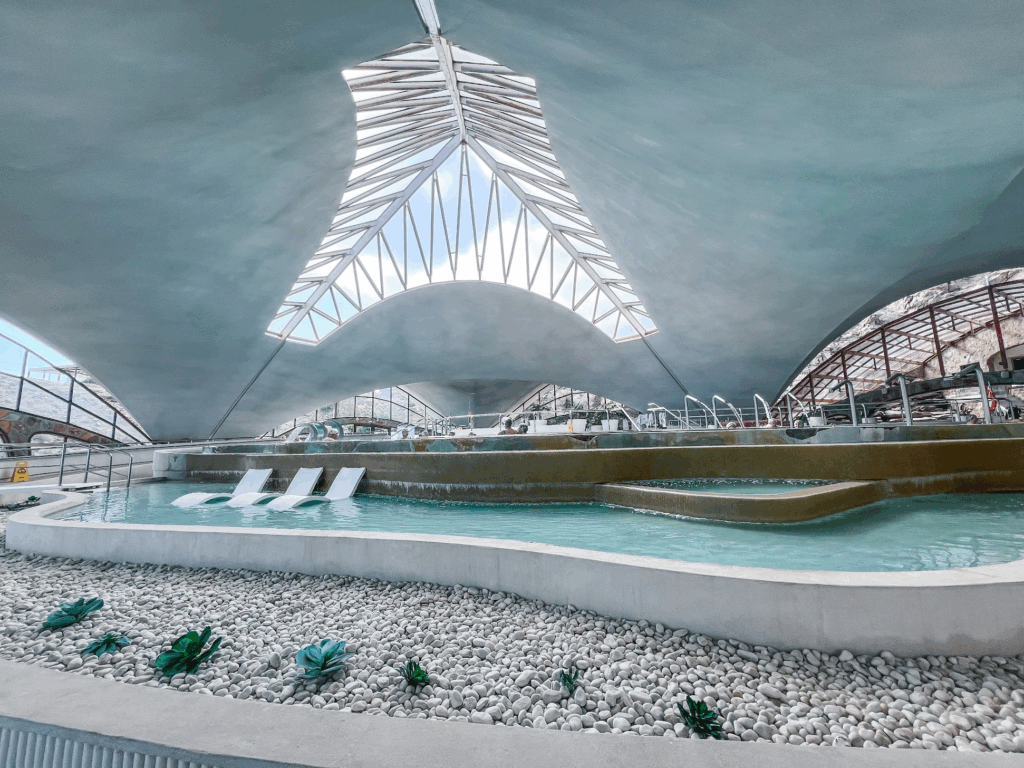
The Thalasso Centre at Gloria Palace is open to the public and offers everything from seawater circuits to deep-tissue massages. The water circuits are pretty unique, and the architecture of the spa and the views are stunning. And for the record, Thalasso means sea water, yes, this spa genuinely uses seawater.

8. Play Mini Golf at the San Agustin Shopping Centre
A fun, low-key activity for families or anyone with a competitive streak. Not flashy, but well-maintained and conveniently located right in the shopping centre. We loved it.
9. See the Origen Dinner Show
For a night out that’s completely different, book a seat at the Origen Dinner Show at Sala Scala. This immersive experience blends Canarian history, dance, music, and acrobatics into one high-energy performance, all while you enjoy a three-course meal. A fun, theatrical way to experience the island’s culture without it feeling like a lecture.
10. Go Dolphin Watching
Head out from Puerto Rico de Gran Canaria on a dolphin-watching cruise that’s equal parts relaxing and exciting. You’ll sail along the island’s southwest coast with a chance to see wild dolphins in their natural habitat, often swimming right alongside the boat, and if you’re lucky, whales or flying fish too. Book the dolphin watching cruise, pickup available from San Agustin.
11. Ride a Camel Through the Maspalomas Dunes
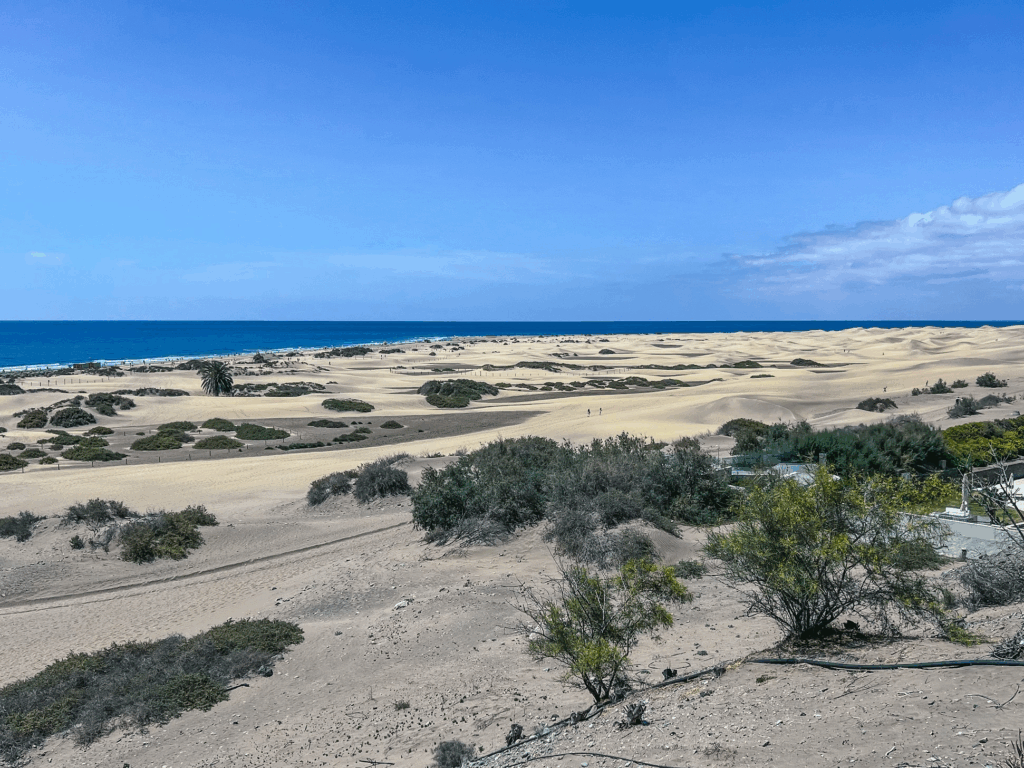
Experience Gran Canaria’s desert-like landscapes with a guided camel ride through the iconic Maspalomas Dunes. This short but memorable trek offers a unique way to explore the protected nature reserve, with sweeping views of golden sand and distant ocean. Book the Maspalomas camel ride. You’ll need to get yourself to the starting point by bus, taxi, or, if you’re staying at the Gloria Palace, using their free transfer to Maspalomas.
12. Spend a Day at Aqualand Maspalomas
If you’re travelling with kids, or just want to beat the heat in the most fun way possible, head to Aqualand Maspalomas. This large water park has everything from relaxing lazy rivers to high-adrenaline slides like the Kamikaze and Racer Twin Turbulence, with dedicated areas for smaller children, plenty of sunbeds, and food on-site. Book Aqualand Maspalomas admission in advance in high season.
13. Explore Sioux City
Sioux City is a replica Wild West frontier town near San Bartolome de Tirajana, complete with cowboy shows, stunt performances, and a small zoo. It’s deliberately kitsch and knows it, the shows are entertaining and it makes for a solid half-day activity, especially if you’re travelling with children or want something completely different from beach time. Check showtimes and book here.
14. Visit Mundo Aborigen
On the road to Fataga, Mundo Aborigen is an open-air reconstruction of an ancient Canary village, showing how the island’s original inhabitants, the Guanches, lived before Spanish colonisation. Life-size figures are set among caves and huts in a dramatic landscape, it’s a bit rough around the edges but genuinely interesting if you want context on the island’s pre-Hispanic history, and it’s usually combined with the drive through the spectacular Barranco de Fataga gorge.

Where to Stay in San Agustin
Accommodation in San Agustin is mostly mid-range, quiet, and close to the beach. These are your best options.
Budget
Apartamentos Buganvilla A good self-catering option. Basic but spotless apartments with kitchens and balconies, ideal if you want a base to explore or cook a few meals yourself. Best for: self-catering on a budget.
Mid-range
Hotel San Agustin Beach Club Right on the beach and ideal for adults who want peace and quiet. Feels a little retro in the best way, think white tablecloths and balconies over the sea. Best for: adults wanting quiet beachfront.
Corallium Beach by Lopesan Hotels (Adults Only) Clean, modern, and extremely chilled. Great pool scene, decent food, and located just steps from the beach promenade. Best for: couples wanting a chilled adults-only stay.
Don Gregory by Dunas (Adults Only) Bright, calm, and very beachfront. Every room has a sea view, and it’s walkable to pretty much everything in San Agustin. Best for: sea views on every room.
Splurge
Gloria Palace San Agustin Thalasso & Hotel This is where I stayed and loved it. The biggest and most well-known hotel in the area, with sea views, multiple pools, and a well-rated spa. The rooftop restaurant, Gorbea, is a popular dinner spot even for non-guests. If you’re visiting with kids, they have a kids’ pool and water slides, a mini club, and high chairs all over, and you can select an all-inclusive option to have all your meals sorted. Best for: families and a proper spa stay.
None of these float your boat? Search all San Agustin hotels.
Where to Eat in San Agustin
My top recommendations for each meal:
Greek Taverna A cosy, family-run place with fresh Greek flavours, ideal if you want something different after a few days of Spanish food. Grilled meats, salads, and house wine.
Addio Mare Casual Italian with a big terrace. Well-made pizzas, proper pasta, and very consistent, great for a relaxed evening meal.
Il Vespino Vecchio A standout Italian tucked near the shopping centre. Excellent handmade pasta, a solid wine list, and very welcoming staff. Book ahead, it’s not big and it’s popular.
Restaurante Gorbea (Gloria Palace rooftop) Ideal for a special night. Refined food, grilled meats, fresh seafood, plated starters, with rooftop views. Best to reserve a window table.
Loopys Pizzeria A laid-back, modern pizzeria with crisp, stone-baked pizzas and cold beer. Popular with families and big groups, they do takeaway too.
Bar La Riojana A super local bar with great prices and surprisingly good tapas. Simple, unfussy, and often busy with residents, ideal for a quick drink and bite.
Helamore Hands down the best ice cream in San Agustin. Creative flavours, generous scoops, and lovely staff. A must after dinner or mid-afternoon on the beach.
How Long to Spend in San Agustin
3 to 4 days is enough for the beach, a stroll to Playa del Ingles, the catamaran cruise, and a couple of the tours.
7 days is the sweet spot for a holiday, adding Las Palmas, the local guides tour, Aqualand or Sioux City, and enough beach time to genuinely relax.
10+ days is worth considering if you want to explore the whole island thoroughly, combining the south with a couple of nights in Las Palmas.
Getting To & Around San Agustin
You’ll fly into Gran Canaria Airport (LPA), about 20 to 25 minutes by taxi from San Agustin. I always use WelcomePickups for all my airport transfers, and San Agustin was no exception. The No. 66 or 90 buses also connect the airport to San Agustin, cheap but not ideal with heavy luggage or for families and big groups. Search flights on Skyscanner.
San Agustin itself is very walkable, especially the beachfront promenade linking the main hotels, shopping centre, and beaches. If you’re heading further, like Maspalomas or Las Palmas, you’ll want a car or to use taxis and buses, although I did actually walk to Maspalomas with the pram once. Renting a car is useful if you want to explore the island properly, otherwise it’s not essential. Compare rental cars on DiscoverCars.

Best Time to Visit San Agustin
Like most of Gran Canaria, San Agustin is a year-round destination. That said:
December to February is peak season for northern European visitors escaping winter. Expect higher prices and busy hotels, but the weather’s still mild and sunny.
March to May is a sweet spot, warm temperatures, quieter resorts, and slightly better deals.
June to August brings hotter weather and more families, but San Agustin stays less crowded than nearby resorts.
September to November offers great weather and fewer crowds, perfect for off-season sun.
San Agustin FAQ
Is San Agustin suitable for families? Yes. It’s one of the quieter resort areas on Gran Canaria, with a laid-back atmosphere, calm beaches, and easy access to restaurants and shops. It’s a great option if you’re travelling with kids and want to avoid the louder nightlife in nearby Playa del Ingles. I actually visited with a 7-month-old baby, and the Gloria Palace San Agustin is perfect if you’re visiting with kids, they have a kids’ pool and water slides, mini club, and high chairs all over. You can also select an all-inclusive option to have all your meals sorted.
Is it walkable? Yes, especially within San Agustin itself. The beachfront promenade links the main hotels, shopping centre, and beaches. If you’re heading further, like Maspalomas or Las Palmas, you’ll want a car or to use taxis and buses, although I did actually walk there with the pram.
Do I need a car? Not necessarily. You can get around locally on foot or by taxi, and there’s a decent bus network for trips further afield. But if you want to explore the island properly, mountains, small towns, hidden beaches, hiring a car is worth it.
How far is San Agustin from the airport? About 20 minutes by car or taxi. There are also airport shuttles and buses, but a private transfer is the quickest and easiest if you’ve got luggage or kids in tow.
Can you swim at the beach here? Yes, San Agustin Beach has gentle waves most of the year, with lifeguards on duty. It’s popular but not usually crowded, and you can rent sunbeds and umbrellas.
Is San Agustin good for nightlife? It’s more low-key than neighbouring resorts, think cocktail bars, hotel lounges, and the odd live music night rather than big clubs. For proper nightlife, you’re better off heading to Playa del Ingles (10 minutes away by taxi), although I must warn that Playa del Ingles was god awful in my opinion, very tacky, cheap-looking restaurants and bars, lots of booze. But hey, if that’s your thing I’m not here to judge, Playa del Ingles is definitely not classy, in fact the complete opposite.
When’s the best time to visit? Gran Canaria is a year-round destination, with mild winters and hot, dry summers. For beach weather without the peak-season crowds, aim for spring (March to May) or autumn (September to November).
Always travel with insurance, World Nomads has me covered for water sports, hiking, and all the adventure activities the Canaries offer.
This post contains affiliate links. If you click and make a purchase, I may earn a small commission at no extra cost to you. Thanks for supporting travelwithpau.com.


Malaga Bucket List: The Best Things to Do in Malaga (2026)

Hola from the vibrant coastal city of Malaga! Malaga captured my heart with its perfect blend of rich history, stunning beaches, and lively culture. Nestled on the Costa del Sol, this Mediterranean gem invites you to soak up the sun, indulge in delicious tapas, and immerse yourself in its captivating past. Join me as I share my Malaga bucket list, uncovering the best activities, places to stay, places to eat, and tips for navigating this Spanish haven.
MALAGA ESSENTIALS
✈️ Getting There / Malaga is served by Malaga-Costa del Sol Airport (AGP), one of the busiest in Spain, with direct flights from across the UK on Ryanair, easyJet, British Airways, and Jet2. Book a private airport transfer with WelcomePickups: fixed-price, meet-and-greet arrival, the taxi queue in summer can be long! Search flights on Skyscanner.
🚗 Getting Around / Malaga city centre is gloriously walkable, most of the main attractions are within a 20-minute walk of each other, and Uber, Bolt, and FreeNow all operate here too. For day trips further afield, compare rental cars on DiscoverCars.
🎟️ Tours / Malaga has excellent guided options, especially useful for the Alcazaba, tapas culture, and the day trips. The best ones to book in advance:
Alcazaba Guided Tour
Malaga Evening Wine and Tapas Tour
Malaga Sunset Catamaran Trip with a Glass of Cava
Caminito del Rey VIP Guided Tour with Transport
🏨 Stay / Skip the endless scrolling, this is the one I’d point a friend toward:
Budget/self-catering: Libere Malaga La Merced
Mid-range: Hotel Molina Lario
Splurge: Parador de Malaga Gibralfaro
🧳 Luggage Storage / If you’re early for check-in or have time to kill before a flight, no stress, there are luggage storage points all over Malaga. Use this website to find one nearby.
📱 Connect / Stay connected from the moment you land with an eSIM. I use Holafly, use code TRAVELWITHPAU for 5% off.
🛡️ Get Insured / Things can and do go wrong when you travel. World Nomads covers 150+ activities, including hiking, water sports, and day trips, exactly what you’ll be doing in Malaga.
Malaga Bucket List: Things to Do in Malaga
1. Roam the Historic Alcazaba
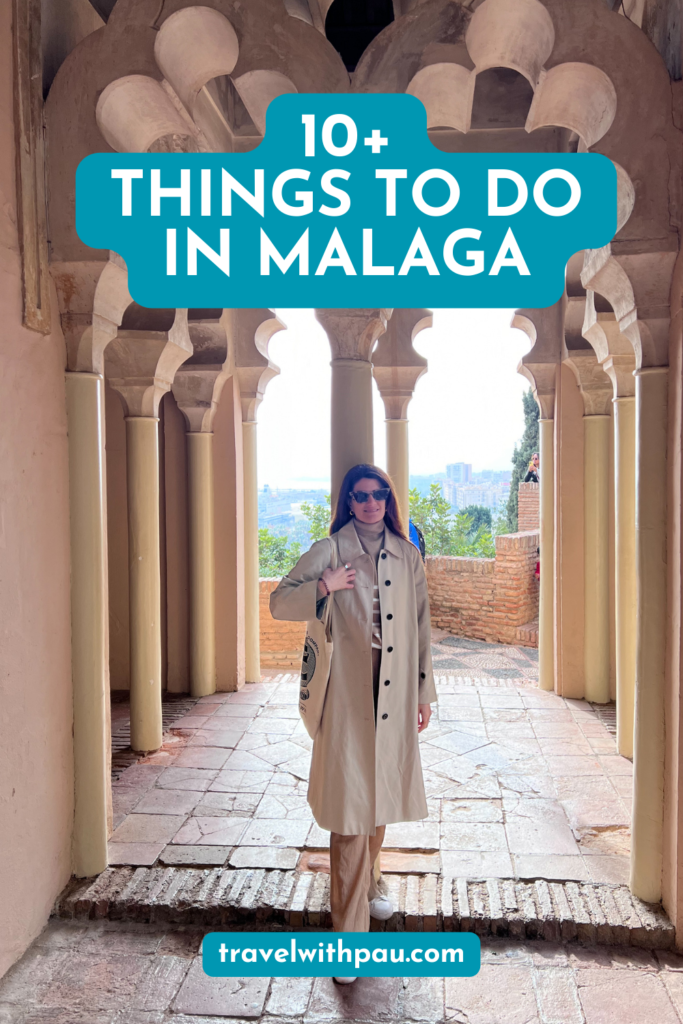
Begin your Malaga adventure at the Alcazaba, a centuries-old Moorish fortress-palace climbing the hillside above the city, offering breathtaking views of the city and the Mediterranean. Wander through its enchanting gardens, gates, courtyards, and ancient walls, transporting yourself back in time. The adjacent Roman Theatre at the foot of the hill is free to see from outside and adds another layer of history. Book the Alcazaba guided tour to get the most out of it.

2. Admire Picasso’s Birthplace
Discover the birthplace of the legendary artist Pablo Picasso. The Picasso Museum, housed in a historic palace, showcases an impressive collection of his works spanning his career, giving real insight into the life of this creative genius. A short walk away, his actual birthplace on Plaza de la Merced is now a foundation and exhibition space. Book your Picasso Museum ticket in advance here, it does sell out.
3. Stroll Through the Old Town (Casco Antiguo)
Lose yourself in the charming streets of the Old Town, where vibrant markets, cosy cafes, and hidden squares await. This is where Calle Larios, Malaga’s elegant marble-paved pedestrian main street, runs through, lined with 19th-century buildings and boutiques. A walking tour is always something I’d recommend for your first morning to get properly oriented, book an Old Town walking tour here , it covers Calle Larios, Bishop Square, the Cathedral, and the Alcazaba’s backstory.
4. Try the Sweet Wine at El Pimpi
After a magnificent sunset, what can you do? Have a little wine and something to snack on before dinner, of course. A great, and legendary, place to do it is El Pimpi. I always recommend their Malaga Virgen sweet wine (around €2 a glass), a portion of dogfish to share (€11), or a light piripi, a mini-sandwich of pork loin, natural tomato, bacon, cheese, and aioli.
5. Relax at La Malagueta Beach
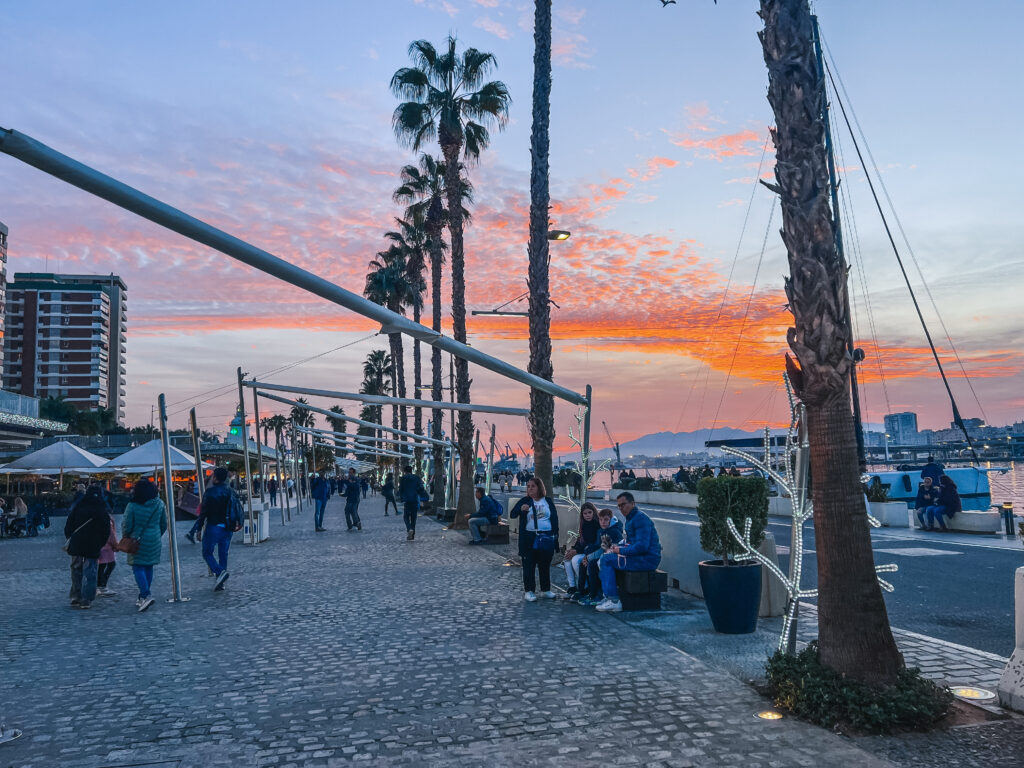
Unwind at La Malagueta Beach, where golden sands meet the azure Mediterranean, just a short walk from the historic centre. Whether you’re a sunbather, a water sports enthusiast, or just a beachcomber, this coastal haven offers the perfect escape from the sightseeing.
6. Visit Malaga’s Best Museums
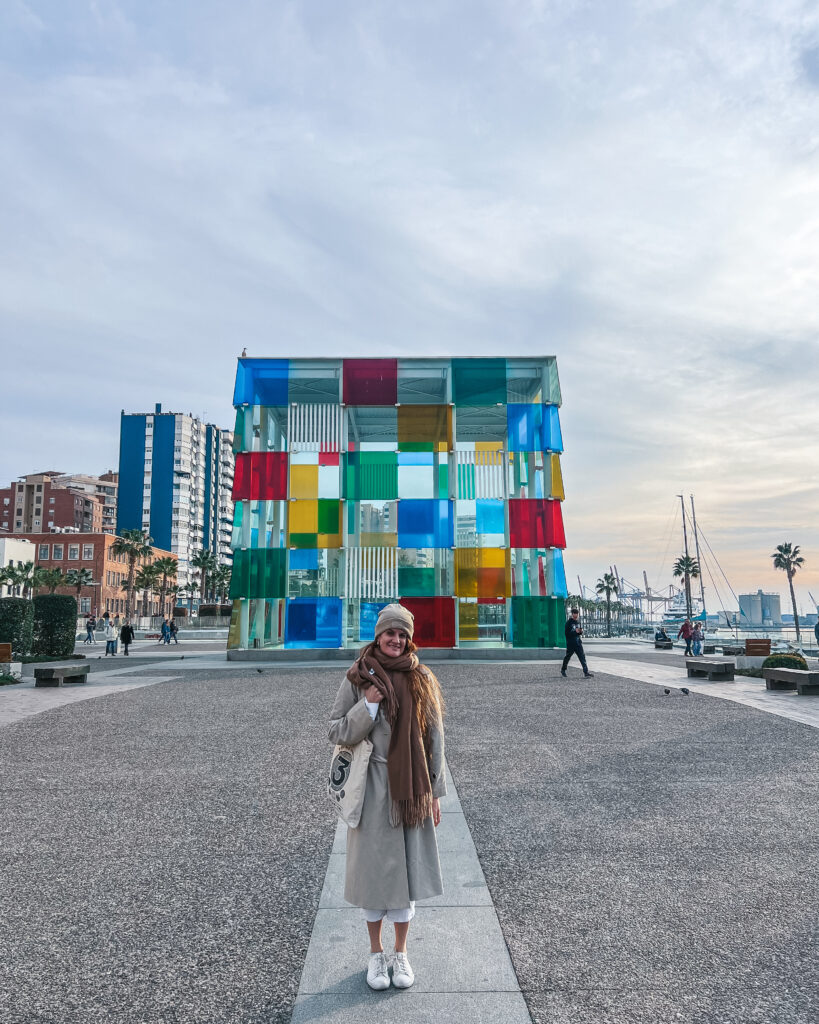
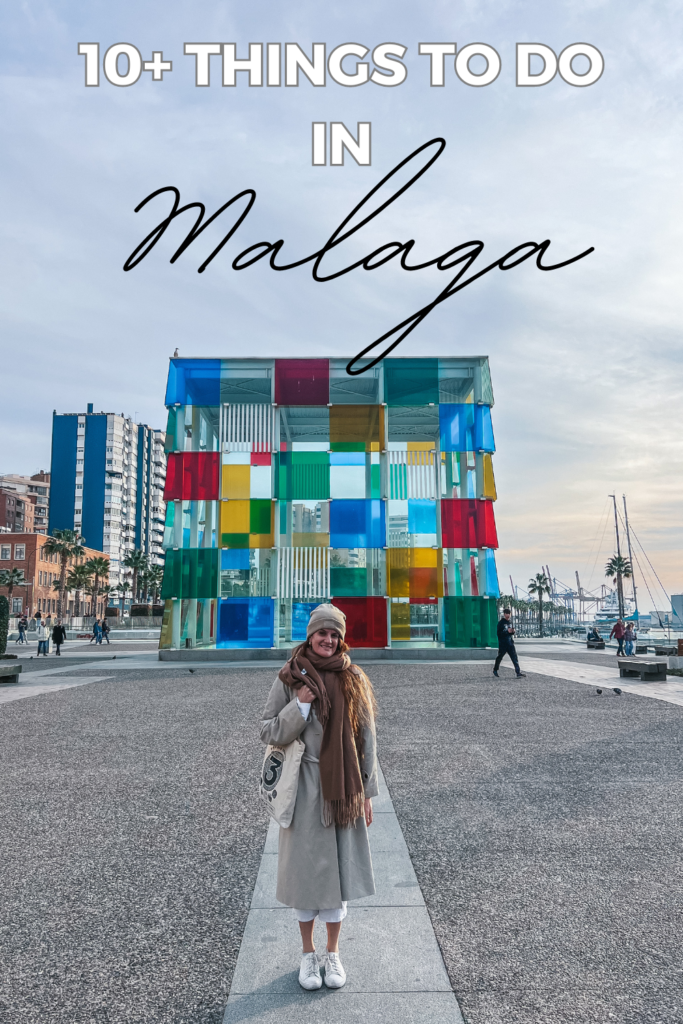
Did you know Malaga is one of the cities with the most museums in Spain? If you love art, you’re going to have a busy few hours here. Beyond the Picasso Museum, the unmissable stops are the Centre Pompidou (its striking multicoloured cube sits right on the port at Muelle Uno), book your ticket here, and the Carmen Thyssen Museum (housed in a 16th-century palace, holding around 230 works by 19th-century Spanish artists), book your ticket here.
7. Explore the Malaga Museum
The Malaga Museum, housed in the Palacio de la Aduana (the old Customs Palace), is one of the city’s most underrated stops, combining the Fine Arts Museum and the Provincial Archaeological Museum under one roof. It’s a genuinely impressive collection for a museum most visitors walk straight past.
8. Hike Mount Gibralfaro for Panoramic Views
Lace up your walking shoes and climb Mount Gibralfaro, above the Alcazaba, for the finest panoramic views in Malaga, the harbour, the bullring, the cathedral, and the beaches stretching either side. You can walk up through the Alcazaba gardens or take bus 35 from Paseo del Parque to the top. The Parador hotel up here has a lovely terrace for a drink even if you’re not staying.
9. Indulge in Tapas Culture
Dive into Malaga’s vibrant food scene by hopping from one tapas bar to another. Savour local specialities like boquerones (anchovies) and salmorejo (cold tomato soup) while embracing the lively atmosphere. In many traditional bars, you still get a free tapa with every drink you order, the streets around Calle Carreteria and the cathedral are lined with old-school bodegas worth working your way through. For a more structured version of the same idea, book the evening wine and tapas tour.

10. Marvel at the Cathedral of Malaga
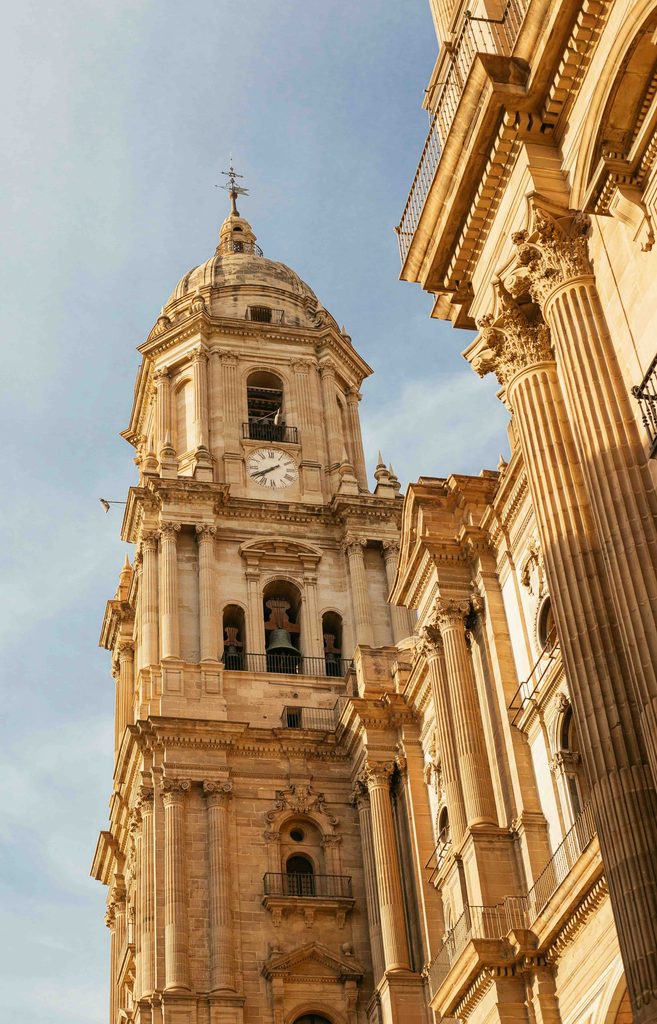
Marvel at the grandeur of the Malaga Cathedral, nicknamed La Manquita (“the one-armed lady”) because construction started in the 16th century and one of its two towers was never finished, funds were diverted to support the American Revolution instead. The result is charming rather than awkward. Climb to the rooftop for one of the best panoramic views in the city.
11. Visit the AC Malaga Palacio’s Terrace
To get a proper panoramic view of the cathedral, go up to the terrace of the AC Malaga Palacio (I used to stay here on work trips) and it’s really cool, it even has a pool with views. Admission with a drink costs around €10, but the views are priceless.
12. Wander Atarazanas Central Market
Stroll through the stalls of Atarazanas Central Market, a Malaga classic. It’s the work of architect Joaquin de Rucoba, who built the market on the remains of an old Nasrid-era naval workshop. Don’t miss the stained-glass window at the far end, which floods the hall with colour and is truly marvellous. Come in the morning when it’s busiest.
13. Escape to La Concepcion Botanical Garden
If you like quiet places and want to surround yourself with greenery, the La Concepcion Botanical Garden is an oasis of peace about 4km north of the centre. Inaugurated in 1855 and expanded since, it’s home to one of the finest collections of tropical and subtropical plants in Europe. Great with kids too, entry includes a little train tour of the grounds. Admission costs €5.20.
14. Swim and Boat Along the Coast
Another essential thing to do in Malaga is take a swim, there are beaches all along the coast. Beyond Malagueta, if you have a few days and want a change of scene, head to La Caleta and Pedregalejo. And why not rent a boat and go out to explore the beaches of the Malaga coast and its most inaccessible corners at your own pace? There are options with and without a skipper from under €100 per boat, per day. Book the “captain your own boat” experience, no licence needed.
15. Sail Off on a Sunset Catamaran
If you’d rather someone else did the sailing, a sunset catamaran trip is one of the loveliest ways to end a day in Malaga, watching the city and the Alcazaba glow gold from the water with a glass of cava in hand as the sun drops behind the coastline. Book the sunset catamaran trip with a glass of cava.
16. Explore Pedregalejo and El Palo
If you want a more authentic, local Malaga experience away from the tourist centre, head east along the coast to the Pedregalejo and El Palo beach neighbourhoods. These old fishing districts have narrow streets, seafood restaurants right on the beach, and a relaxed neighbourhood atmosphere. This is where espetos de sardinas (sardines grilled on cane skewers over wood fires on the beach) originated, eating them here with your feet practically in the sand is genuinely one of the great Malaga experiences.
17. Explore the Automobile and Fashion Museum
For something completely different, the Automobile and Fashion Museum is a fascinating blend of vintage cars and haute couture, a journey through time showcasing the evolution of both industries side by side. Book your ticket here.
18. Catch a Flamenco Show
No trip to Andalusia is complete without seeing proper flamenco, and Malaga has some genuinely good venues for it rather than the tourist-trap versions you find in some cities. Teatro Flamenco Malaga puts on an intimate, authentic show in a small, cosy venue right in the centre, dancers, singers, and musicians in a setting where you’re close enough to feel it rather than watching from the back of a big theatre. Book Teatro Flamenco Malaga tickets.
Practical info: Calle Lazcano 5. Around one hour. Books up, especially at weekends.
Malaga Day Trips
Do you have more time and have you already done everything there is to see and do in Malaga itself? Consider renting a car through DiscoverCars and taking a route through the province at your own pace, passing through some of its most beautiful towns.
Caves of Nerja, Nerja and Frigiliana
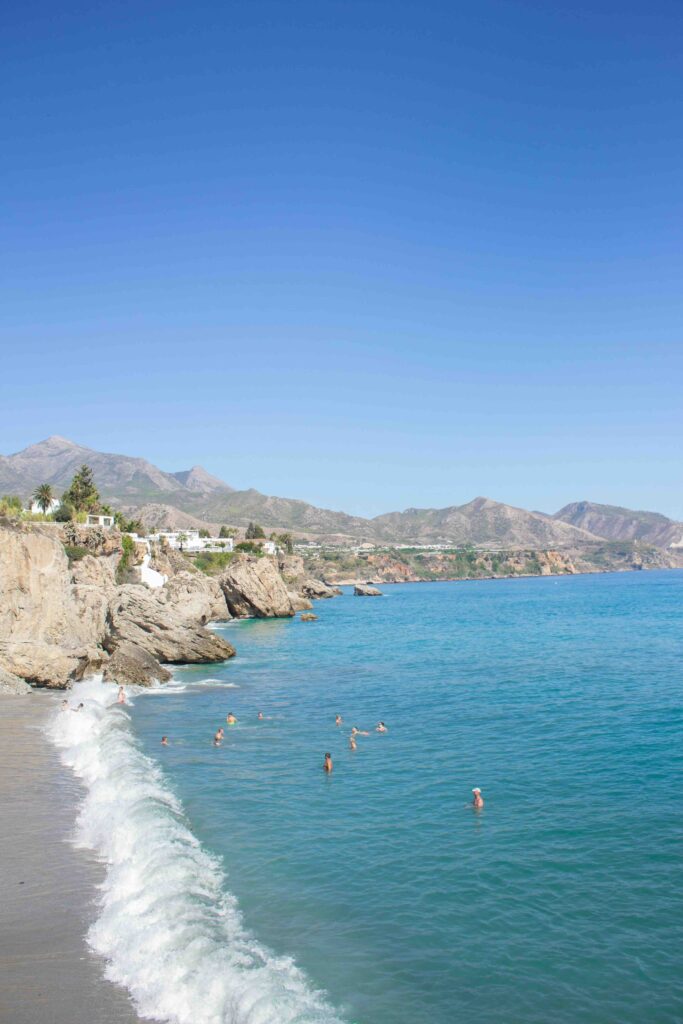
Nerja, 55km east of Malaga, has one of the most beautiful natural settings on the Costa del Sol, the Balcon de Europa viewpoint drops straight down to the sea, with superb beaches either side. Just outside town, the Caves of Nerja are a genuinely spectacular set of prehistoric caverns, nicknamed the “Natural Cathedral of the Costa del Sol” for their scale. Just 7km inland from Nerja, Frigiliana is arguably the prettiest white village in Andalusia, with flower-draped streets and Moorish-era architecture. All three are doable in a day. Buses run from Malaga bus station to Nerja (around €5, 1 hour), or book the Caves of Nerja, Nerja & Frigiliana day tour to cover all three in one guided day out.
El Caminito del Rey
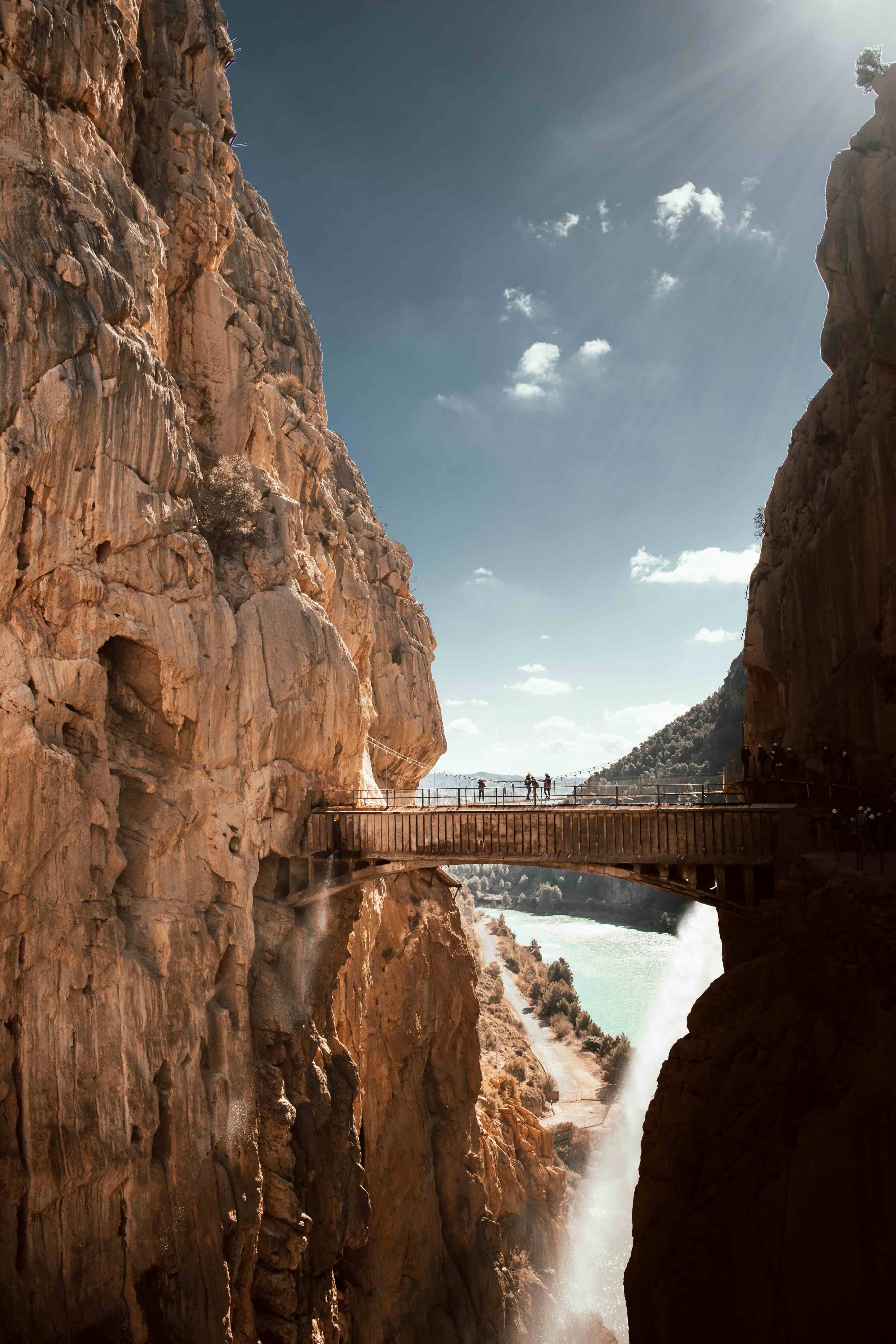
El Caminito del Rey is one of Spain’s most exhilarating walks, a walkway route hanging over the Gaitanes Gorge near El Chorro, about an hour from Malaga. Just know you’re going to be scared: the walkways are nailed to the canyon walls and you’ll literally have an abyss under your feet, in places you’re 105 metres up. It’s had a major safety renovation and is now a proper tourist attraction, but it’s still dizzying and spectacular. Book weeks ahead in high season. Book the Caminito del Rey day trip with guided tour to have all the logistics handled for you, including a stop in the white town of Ardales along the way.
Mijas, Marbella, Puerto Banus and Colomares Castle
For a proper taste of the glamorous Costa del Sol, this combined day trip covers Mijas Pueblo (one of the prettiest white villages in Andalusia, with panoramic sea views), Marbella’s historic centre and its beautiful Plaza de los Naranjos, Puerto Banus (yachts, sports cars, and designer boutiques, purely for the people-watching if nothing else), and the extraordinary Colomares Castle in Benalmadena, a genuinely strange and wonderful monument dedicated to Christopher Columbus that mixes half a dozen architectural styles. Book the Mijas, Marbella, Puerto Banus & Colomares Castle tour.
Ronda and Setenil
Ronda sits on a dramatic gorge 100km west of Malaga, its 18th-century Puente Nuevo bridge spanning the El Tajo gorge is one of the iconic images of Andalusia. Nearby Setenil de las Bodegas is famous for houses built directly into the rock overhangs. Book the Ronda & Setenil tour with wine and tapas to see both in one day without the driving, with free time built in and a proper Andalusian food stop along the way.
Antequera
Antequera is less visited than Ronda or Nerja but genuinely worth the detour, home to some of the oldest and best-preserved megalithic dolmens in Europe (a UNESCO World Heritage Site), plus the dramatic karst rock formations of El Torcal nearby.
Gibraltar
Yes, you can day trip to another country. Gibraltar is about 2.5 hours from Malaga along the coast, and the contrast is part of the fun, red phone boxes, duty-free shopping, and British pubs sitting at the foot of the Rock, with the Strait and Africa visible from the top on a clear day. The Upper Rock Nature Reserve has the famous Barbary macaques and St Michael’s Cave, a natural cavern full of stalactites. Book a direct bus tour to Gibraltar from Malaga, with an optional guided Rock Tour once you’re there.
Cordoba
Further afield but worth it if you have the time, Cordoba is about 2 hours from Malaga and home to the extraordinary Mezquita, the Mosque-Cathedral, a UNESCO World Heritage Site where hundreds of red-and-white striped arches give way to a Renaissance cathedral built right in the middle of it. The old Jewish Quarter and the Roman Bridge over the Guadalquivir are worth the wander too. Book a Cordoba full-day trip with Mezquita-Cathedral.
Granada
Granada is the day trip everyone should do at least once, home to the Alhambra, one of the most spectacular palace complexes in the world. The Nasrid Palaces, the Generalife gardens with their famous water features, and the Alcazaba fortress all sit within the same UNESCO World Heritage site, and it’s genuinely worth the roughly 2-hour drive each way. Book a Granada full-day trip with the Alhambra, with priority access and a guide through the Nasrid Palaces and Generalife.
Seville
Seville is the furthest of these day trips, but if you have the time it’s one of the most beautiful cities in Spain, the Real Alcazar, the vast Gothic Cathedral with its Giralda tower, and the Barrio Santa Cruz’s tangle of orange-tree-lined lanes. It’s a long day (allow the best part of 12 hours round trip) but doable. Book the Seville day trip with optional monument tickets, with free time built in to explore at your own pace.

Where to Stay in Malaga
For a stay that combines comfort and proximity to Malaga’s main attractions, consider the vibrant Old Town or the trendy Soho district. The Malagueta area offers beachfront accommodation, a perfect blend of relaxation and city life.
Budget: Libere Malaga La Merced
I stayed in this serviced apartment, which was bang in the city centre, and everything was absolutely perfect. Best for: anyone who wants a proper kitchen and living space without giving up a central location.
Mid-range: Hotel Molina Lario
I haven’t stayed here myself, but this is the one I’d point a friend toward for a proper mid-range pick. It’s right across from the Cathedral, just off Calle Larios, in a pair of restored 19th-century buildings, and the rooftop pool and terrace looking out over the Cathedral is a genuinely lovely spot for an evening drink. Best for: first-timers who want to be right in the historic centre without going full splurge.
Splurge: Parador de Malaga Gibralfaro
If you want to splash out, this is the place, up on the hill by the castle with stunning views and a real sense of history and occasion. Best for: a special-occasion stay with the best views in the city.
None of these float your boat? Search all Malaga hotels.

Where to Eat in Malaga
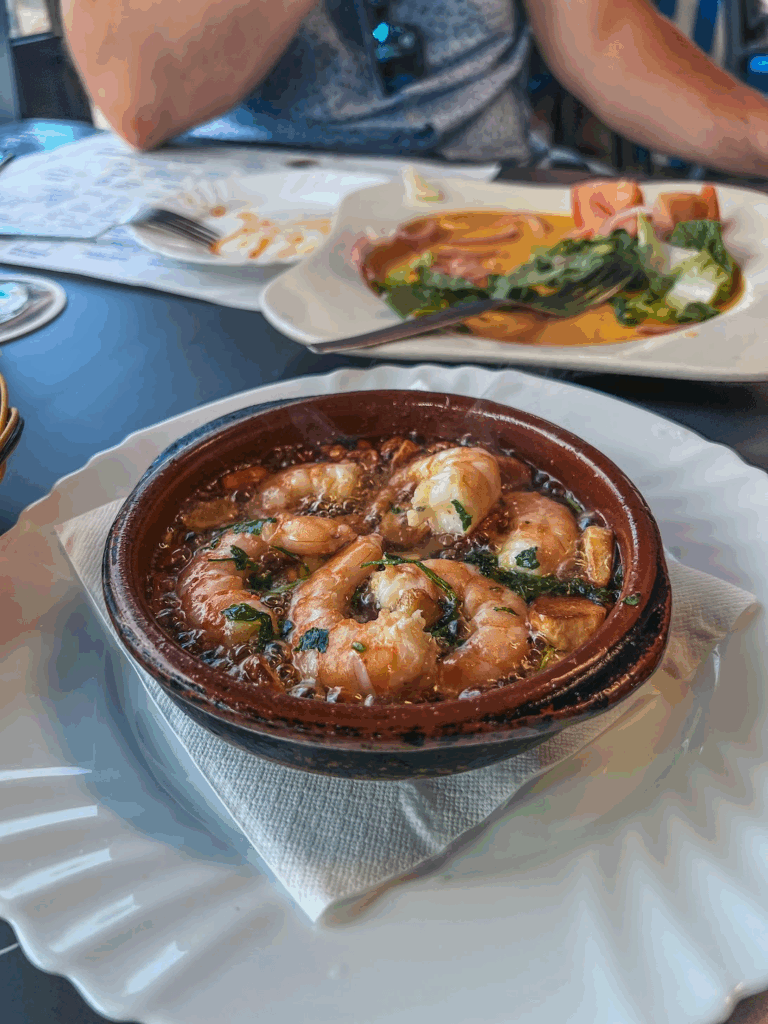
Embark on a culinary journey in Malaga, where the vibrant flavours of Andalusian cuisine await. Start with espetos de sardinas, grilled sardines skewered to perfection on the beach. Dive into the refreshing depths of salmorejo, a cold soup topped with egg and jamon. For a crispy seafood affair, try pescaito frito, an array of lightly battered and deep-fried fish. Cool off with porra antequerana, a heartier cold soup, and the almond-infused freshness of ajoblanco. Try gambas al pil pil, prawns sizzling in olive oil and chilli peppers. Finish with sweet wine, or the classic joy of churros dipped in velvety chocolate, Casa Aranda near the market has been doing them since 1932 and is constantly crowded for good reason.
For sweet wine specifically, Antigua Casa de Guardia on Alameda Principal is Malaga’s oldest wine bar, pouring since 1840 straight from huge old barrels behind the counter, with your order chalked up on the bar in front of you. It’s a two-minute detour from Atarazanas Market and one of the most atmospheric places in the city for a glass of Muscatel or Pedro Ximenez.
I’ve put together a few curated lists rather than a plain write-up, so you can pick and choose:
- My favourite dinner spots in Malaga
- My favourite brunch spots in Malaga
- My favourite wine bars in Malaga
- My favourite ice cream in Malaga
How Long to Spend in Malaga
3 days is the minimum to see Malaga city properly, the Alcazaba, Picasso Museum, Old Town, beach neighbourhoods, and a proper tapas evening.
4 to 5 days lets you add one or two day trips, Nerja and Frigiliana on one day, Ronda or the Caminito del Rey on another.
A week or more gives you time to slow down, fit in a couple more day trips (Granada and the Alhambra, Gibraltar, or Seville are all doable from Malaga), and really enjoy the food and beach life.
Getting To & Around Malaga
Getting to Malaga is a breeze, thanks to Malaga-Costa del Sol Airport, which connects to major cities across Europe including several in the UK. From the airport, the Cercanias C1 train runs every 20 minutes to the city centre (12 minutes, €1.80), or grab a taxi (€15 to €20). Book a private transfer with WelcomePickups if you’d rather have it fixed-price and waiting for you. Search flights on Skyscanner.
The city itself is walkable, and buses and contactless-payment trains cover the rest easily. Uber, Bolt, and FreeNow are all available too. Consider renting a bike to explore the scenic waterfront, or a train to nearby towns. For day trips further out into the province, a hire car gives you the most flexibility, compare rates on DiscoverCars.
Best Time to Visit Malaga
Malaga enjoys over 300 days of sunshine a year, which means it’s genuinely a good destination in any month. That said, spring (April to June) and autumn (September to October) are the sweet spots, warm enough for the beach, not outrageously hot, and with smaller crowds than peak summer. July and August are the busiest and hottest months, temperatures regularly hit 35°C+, and the city is packed.
If you visit in spring, try to time it with Semana Santa (Holy Week), Malaga’s Easter processions are among the most dramatic in Spain, with elaborate floats, incense, and thousands of penitents filling the streets. It’s an extraordinary spectacle.
Winters are mild (15 to 18°C) and quiet, perfect for a city break focused on culture and food rather than beach time.
Malaga FAQ
Is Malaga safe for tourists?
Malaga is generally very safe for tourists. Exercise normal precautions, stay aware of your surroundings, and be cautious of pickpocketing in crowded areas.
Is Malaga worth visiting beyond the beach?
Absolutely. Malaga has one of the most concentrated collections of museums in Spain, a fascinating Moorish fortress, a beautiful old town, and some of the best tapas culture in Andalusia. The beach is a bonus, not the main event.
What is the best area to stay in Malaga?
For first-time visitors, the Old Town (Casco Antiguo) is the best base, within walking distance of the Alcazaba, Picasso Museum, cathedral, market, and tapas bars. The Soho district is slightly more affordable and very central. The Malagueta area is perfect if you prioritise beach access.
What is the currency in Malaga?
The currency is the Euro (€). ATMs are widely available, and contactless payment is accepted almost everywhere.
How do I get from Malaga airport to the city centre?
The Cercanias C1 train runs every 20 minutes from the airport to Malaga Centro station (12 minutes, €1.80). Taxis cost around €15 to €20. For a fixed-price, door-to-door service, WelcomePickups is the most reliable option.
What are the best day trips from Malaga?
The best day trips from Malaga are Nerja and Frigiliana (coastal and village beauty), Ronda and Setenil (dramatic gorge and rock-built houses), Caminito del Rey (spectacular hiking), and Antequera (prehistoric dolmens and dramatic rock formations).
More Spain on the blog: Tenerife | Costa Brava | Lloret de Mar
Enjoyed this article? Support my work by buying me a latte. Otherwise, do me a great favor of leaving a comment and following me on Instagram (@travelwithpau). Feel free to say ‘Hello!’ I don’t bite. And make sure you save the article for later on Pinterest!

This post contains affiliate links. If you click on one and make a purchase, I might make a small commission, at no extra cost to you in order to help support my blog.
Things to Do in Lloret de Mar: The Complete Guide (2026)
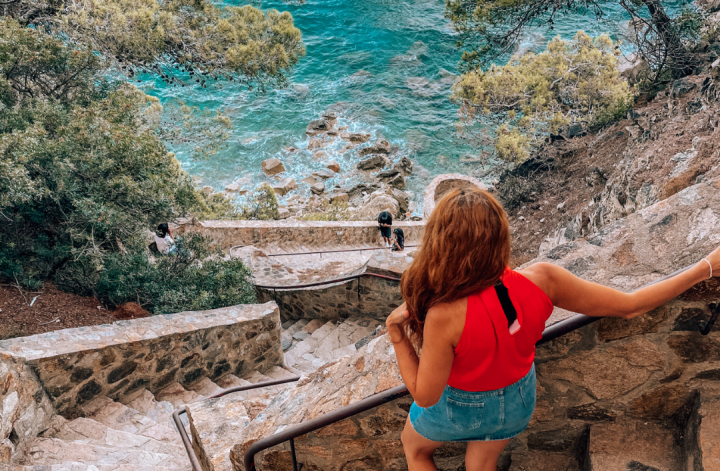
When I told people I was going to Lloret de Mar, I got a lot of raised eyebrows. It’s not exactly the Costa Brava’s glamour destination, that title goes to Cadaqués. But Lloret is one of the best-value bases on the entire coast, and I chose it precisely because it offers something the prettier, more exclusive villages don’t: abundant accommodation, reasonable prices, great bus connections, and a genuinely wide range of things to do. If you go in looking for the real Lloret de Mar beyond the nightclub strip, you’ll find something much more interesting than the reputation suggests.
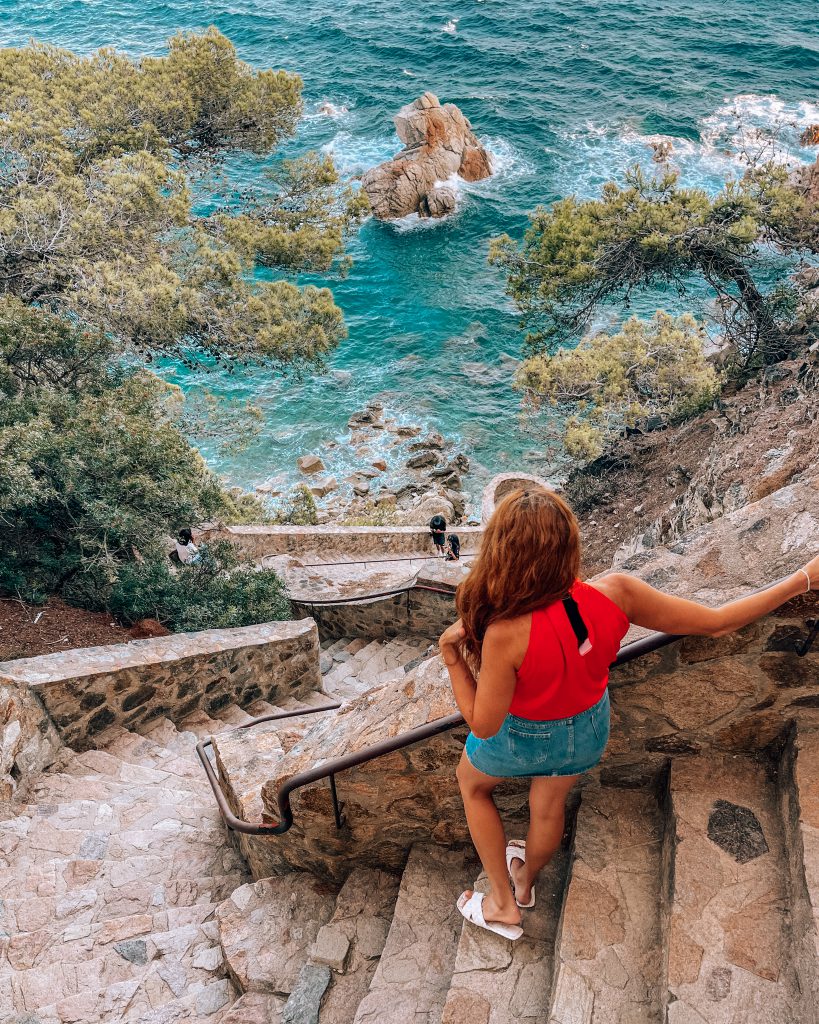
LLORET DE MAR: THE ESSENTIALS
✈️ Getting There / Lloret de Mar doesn’t have its own airport, the nearest options are Barcelona El Prat and Girona Airport. Book a private transfer with WelcomePickups: full flight and route detail below. Search flights on Skyscanner.
🚗 Getting Around / Lloret de Mar itself is compact and walkable, the main beach, old town, castle, and gardens are all within 20 minutes on foot. Public buses connect to nearby beaches (including Santa Cristina and Cala Boadella) and towns. For exploring further along the Costa Brava coast, compare rental cars on DiscoverCars.
🎟️ Tours / Lloret punches above its weight for organised activities. The best ones to book in advance:
Catamaran Sailing Cruise with BBQ and Drinks
Sunset Catamaran Cruise with DJ and Drinks
Scuba Diving Experience, No Licence Required
Vintage 4×4 Tour: Lloret de Mar & Hidden Gems
Catamaran Cruise with Food, Drinks & Music
🏨 Stay / Lloret has excellent-value accommodation compared to smaller Costa Brava villages:
Rigat Park & Spa Hotel ($$$)
Casa Coco Boutique Hotel & Spa ($$$)
Hotel Cleopatra ($$)
Hotel Marsol ($$)
The 15th Boutique Hotel ($$)
Hostal Ribas ($)
🧳 Luggage Storage / If you’re early for check-in or have time to kill after checkout, no stress, there are luggage storage points all over Lloret de Mar. Use this website to find one nearby.
📱 Connect / Stay connected the moment you land. I use Holafly, use code TRAVELWITHPAU for 5% off.
🛡️ Get Insured / Don’t skip travel insurance, World Nomads covers 150+ activities including diving, hiking, and water sports. Essential for an active Costa Brava trip.
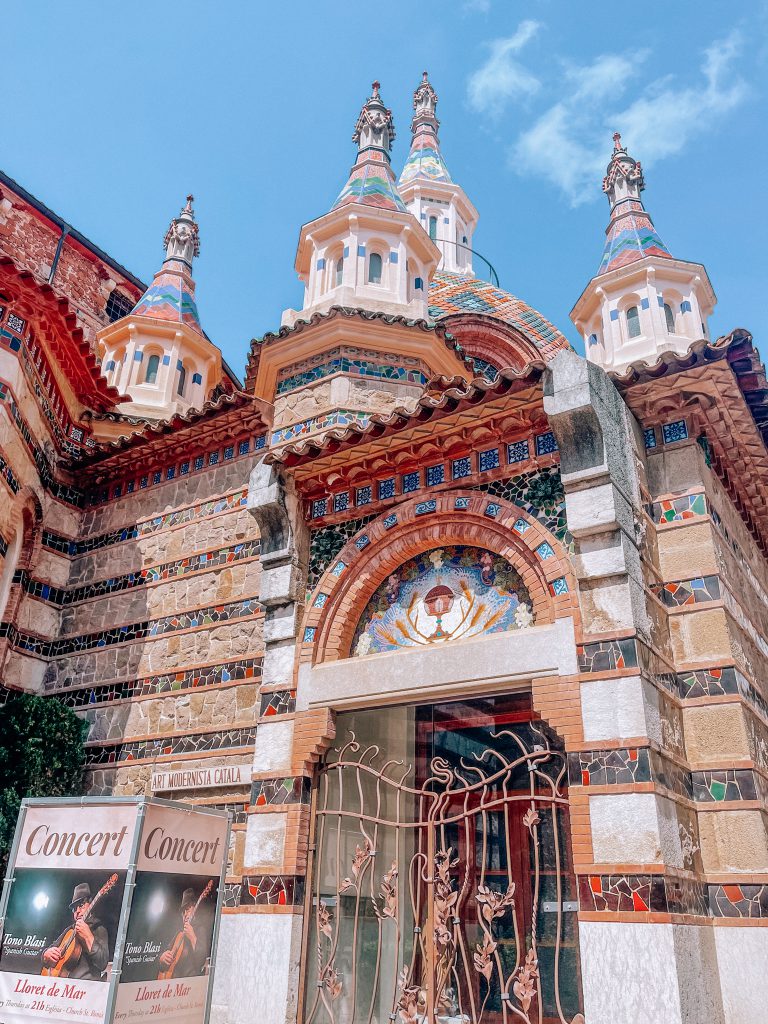
12 Things to Do in Lloret de Mar
Tenerife Bucket List: The Best Things to Do in Tenerife (2026)

I was expecting Tenerife to be just another beautiful beach destination, packed with British tourists longing for warmth and sun. Well, it’s so much more than that. This island is genuinely one of the most diverse places I’ve visited — you can hike a volcano, swim in natural lava pools, kayak with dolphins, and eat fresh seafood in a clifftop village, all in the same trip. If you’re looking for the best things to do in Tenerife, you’ve come to the right place.
VISITING TENERIFE: THE ESSENTIALS
Transport / Tenerife has two airports: Tenerife South (TFS) serves the resort areas and is where most UK direct flights land; Tenerife North (TFN) is closer to Puerto de la Cruz and La Laguna. Book a private airport transfer with WelcomePickups for a fixed-price, no-hassle arrival with your driver waiting at arrivals. Search for flights on Skyscanner.
Car Rental / A car is essential in Tenerife — the best beaches, hikes, and villages are spread across the island and public transport won’t cover them. Compare rental rates on DiscoverCars — they consistently beat the airport desks.
Tours / There’s a lot worth pre-booking in Tenerife. The best:
Teide National Park & Cable Car
Masca Gorge Guided Hike
Whale & Dolphin Watching from Los Gigantes
Kayaking with Dolphins
Teide Stargazing Tour
Siam Park Tickets
Stay / The north (Puerto de la Cruz) gives you authentic Tenerife with easy access to nature; the south (Costa Adeje) is best for beach resorts and reliably sunny weather.
Stay / The north (Puerto de la Cruz) gives you authentic Tenerife with easy access to nature; the south (Costa Adeje) has more reliable sunshine and full resort facilities:
South
Sunwing Fanabe Beach $ — best for families
Hotel Jardín Tropical $$ — best for couples
Royal Hideaway Corales Resort $$$ — best for couples (adults-only)
North
Hotel San Telmo $ — best for hikers
Hotel Botánico & The Oriental Spa Garden $$ — best for couples
Gran Hotel Taoro Park $$$ — best for couples & hikers
Search all Tenerife hotels on Booking.com →
Connect / You’ll need mobile data while you are in Spain, I always recommend using an eSIM (there’s absolutely no need for a physical one!). I always use Sim Local, and you can get 5% discount with code TRAVELWITHPAU. Get it here.
Get Insured / Things can and do go wrong when you travel. World Nomads offers coverage for over 150 activities as well as emergency medical, lost luggage, trip cancellation and more — especially important if you’re hiking Teide or doing the Masca gorge.

Things to Do in Tenerife
Parque Nacional El Teide
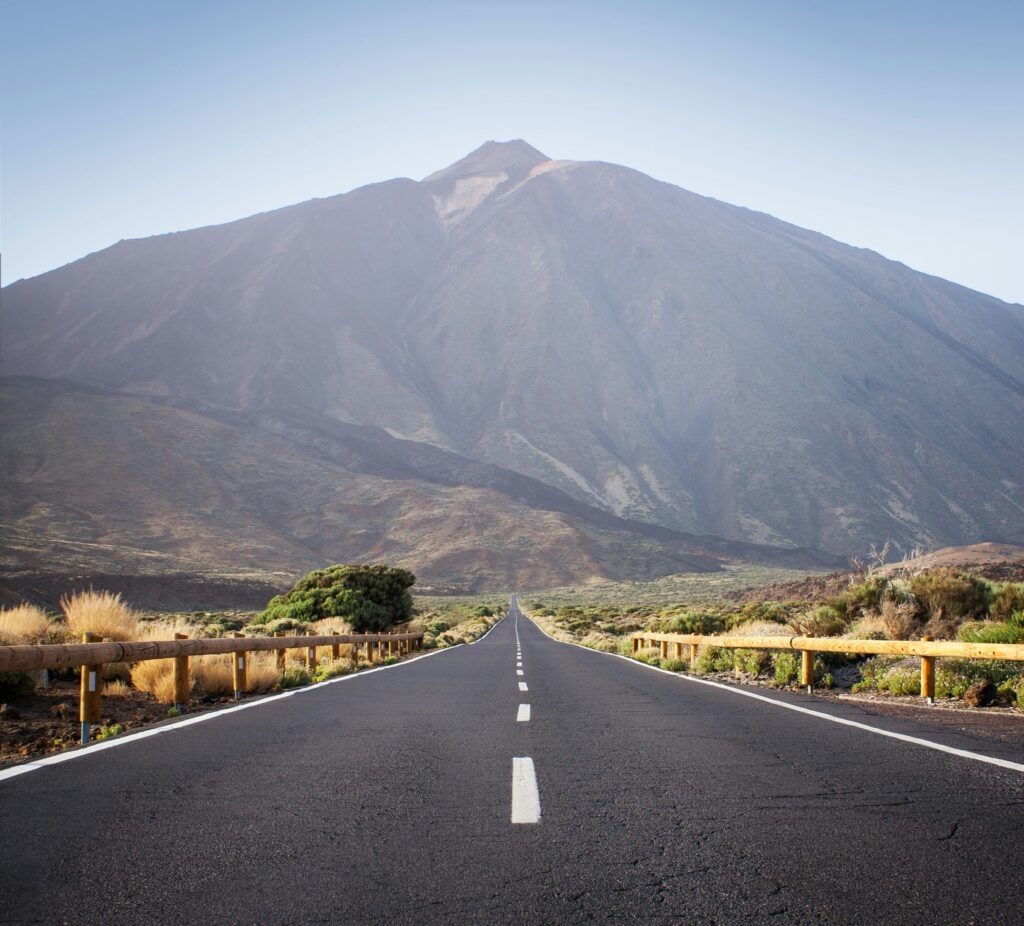
Mount Teide is Tenerife. Standing at 3,718 metres, it’s Spain’s highest peak and the third-largest volcano in the world — and on a clear day you can see it from almost anywhere on the island. The national park surrounding it is a UNESCO World Heritage Site, and the lunar-like landscape of rust-red rock and volcanic ash is genuinely unlike anywhere else I’ve been.
There are a few ways to experience Teide. The cable car takes you up to 3,555 metres — the views from the top are extraordinary, with the clouds far below you and, on the clearest days, glimpses of the other Canary Islands in the distance. If you want to go all the way to the summit (an additional 30-minute hike), you’ll need a free advance permit from the national park website. Book it well ahead, especially in summer.
For hikers, the Montaña Blanca trail (8.3 km, 4–6 hours up) is the classic route. The shorter Roques de García walk is an easier 2-hour loop that still takes you through spectacular volcanic scenery.
Book a Teide cable car + guided tour
Barranco de Masca Hike and Los Gigantes
This was, hands down, my favourite experience in Tenerife — and I didn’t even know it existed until a local told me about it.
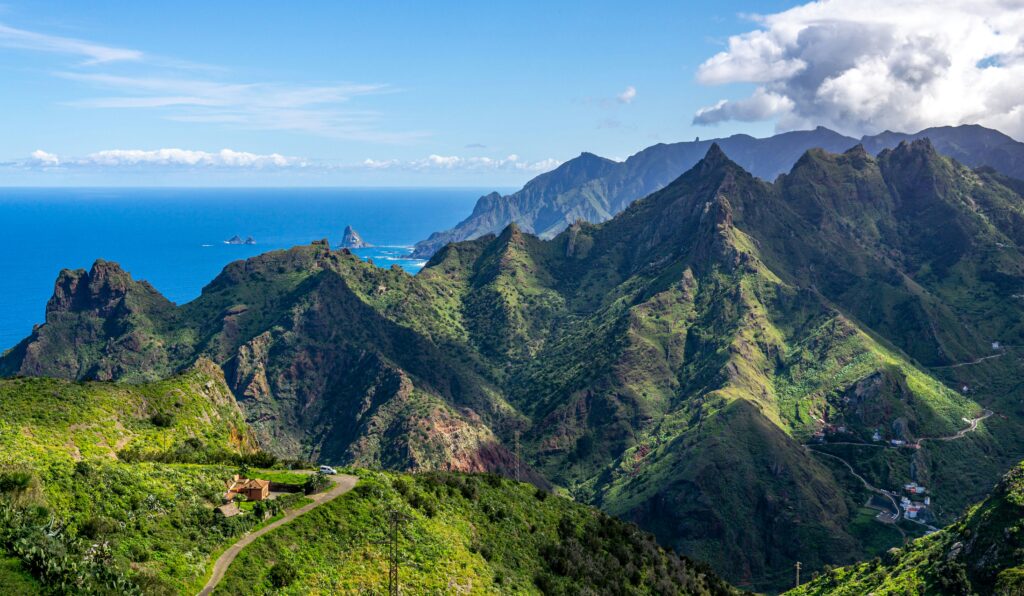
The Barranco de Masca is a dramatic gorge hike that descends from the mountain village of Masca down to a remote black-sand beach at the bottom. It’s about 3 hours of walking through one of the most spectacular landscapes I’ve ever seen: towering cliff walls, exotic palms and cacti, mini streams, geckos darting across the rocks. It feels like the set of a film.
At the bottom, you can either hike back up (double the time, not for the faint-hearted) or take a boat back to Los Gigantes — I’d strongly recommend the boat. Los Gigantes itself is worth a visit for the famous cliffs alone: sheer black rock faces dropping straight into the Atlantic, some reaching 800 metres high.
The hike involves some scrambling over large rocks and can be slippery — wear proper shoes and take plenty of water. A permit is now required to do the hike (book via caminobarrancodemasca.com). Taxis from Los Gigantes to Masca village cost around €23.
The hike trail can be confusing at times, if you are not an experienced hiker, I would recommend to book a guided hiking tour:
This tour visits Masca Beach and includes a boat transfer
This tour is above Masca, with some beautiful scenic views
Kayaking with Dolphins
One of the most memorable mornings of my Tenerife trip was a 3-hour 45-minute kayaking excursion out to find wild dolphins. We went out in two-person kayaks and spent the morning paddling along the coast, then spotted a pod of dolphins — not performing in a show, just going about their lives in the ocean. There were beers and snacks waiting when we got back.
Our guide Dominique (a Frenchman who’d ended up in Tenerife and never left, as you do) was brilliant — knowledgeable about the local marine life and genuinely passionate about keeping the experience as natural as possible. Book your dolphin kayaking tour here.
The Best Beaches in Tenerife
One of the surprises of Tenerife is how varied the beaches are — golden sand, black sand, wild and remote, or fully set up with sun loungers. Here are my favourites:
Playa Las Teresitas — The most beautiful beach on the island, in my opinion. Golden Saharan sand (yes, imported from the Sahara), calm turquoise water, palm trees, and the dramatic Anaga mountains as a backdrop. It’s just a short drive from Santa Cruz and has a wonderfully local feel — this is where the Tenerife residents come to relax.
Playa El Bollullo — Black volcanic sand, banana plantations on either side, and very few tourists. You have to walk down a path to reach it, which is probably why it stays quiet. The seafood restaurants at the top are great for lunch.
Playa El Jardín — A beautifully landscaped beach in Puerto de la Cruz with black sand and views across to Mount Teide on clear days. The surrounding gardens are gorgeous and make it feel very different to a typical resort beach.
Playa del Duque — Costa Adeje’s most upmarket beach, with calm turquoise water, sunbeds, and smart restaurants nearby. The mock castle at one end is a bit kitsch but it makes for a good photo.
Playa El Médano — Wide, golden, and very windy — which is exactly why the surfers and windsurfers love it. If you’re into water sports or just want a beach with a more local, active atmosphere, this is it.
Playa La Tejita — A spacious golden beach just along from El Médano, with a dramatic red mountain as a backdrop and a clothing-optional cove at one end. Very chilled.
Playa Abades — Remote and hard to reach, but worth it for the solitude. There’s an abandoned leper village nearby that adds a strange, atmospheric quality to the whole area.
Garachico
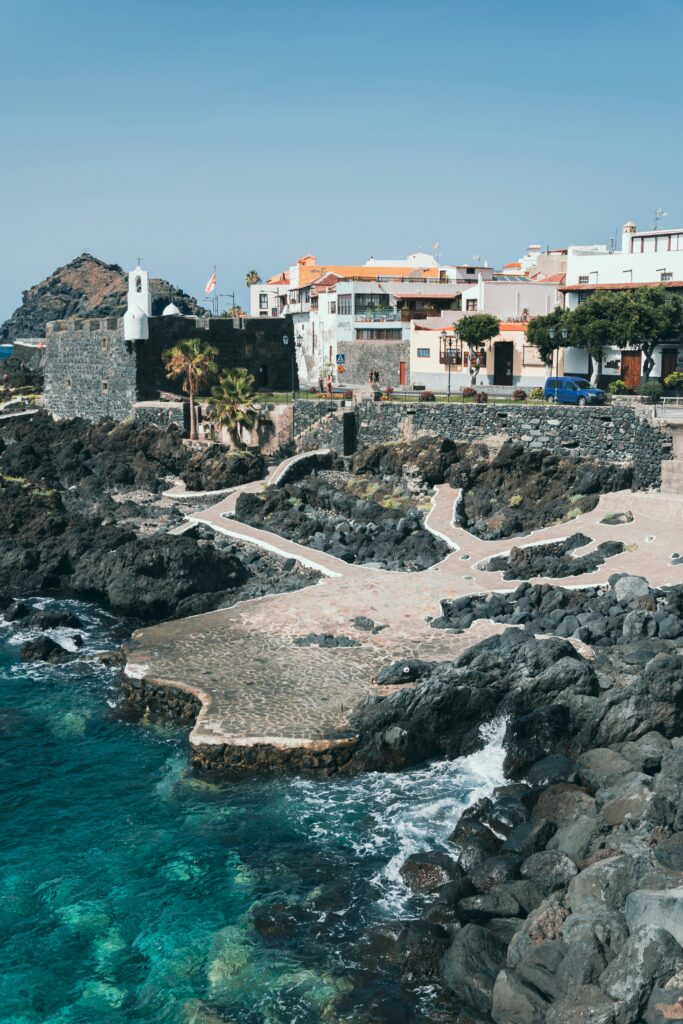
Garachico is one of those places that makes you fall a little bit in love with Tenerife all over again. This small coastal town sits in a valley surrounded by tropical vegetation and, until 1706, it was the island’s most important harbour. Then the Montaña Negra volcano erupted and buried most of it under lava. The town rebuilt — and what the lava left behind actually became one of Garachico’s greatest assets: a series of natural rock pools carved out by the lava flow, perfect for swimming in.
Wander the cobblestone streets, visit the 16th-century San Miguel Castle, and stop at Fragola café for ice cream. It’s a really easy half-day trip from anywhere in the north or you can also visit it via a tour to various spots. Book it here.
Anaga Rural Park
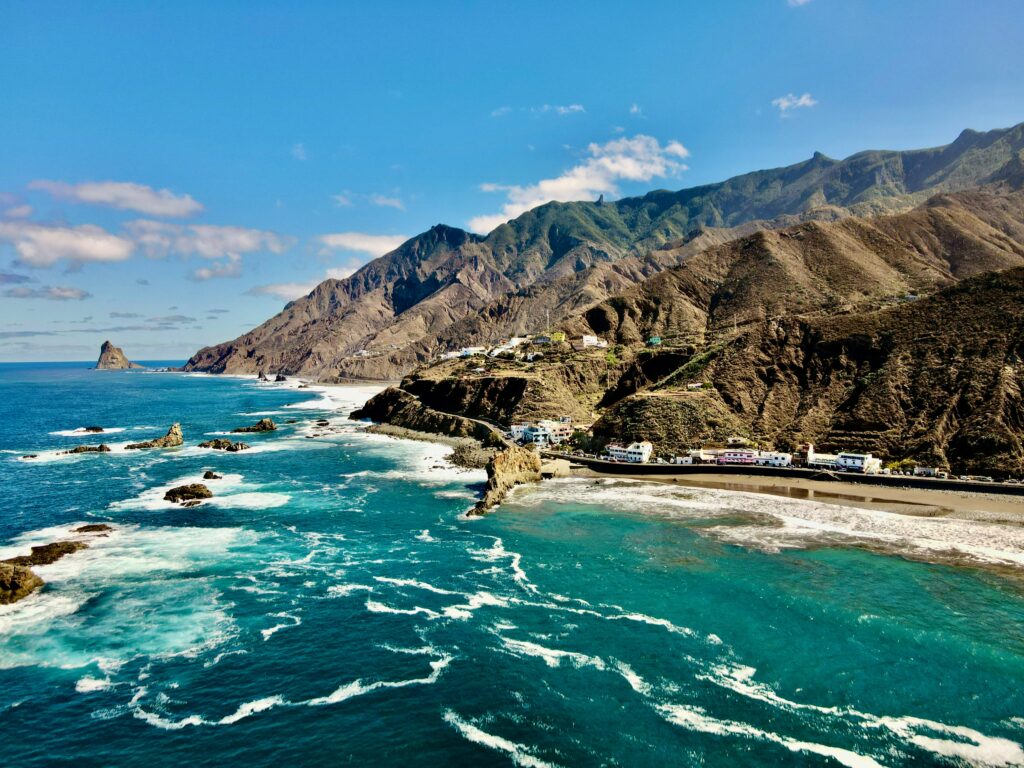
The Anaga Rural Park in the northeastern corner of Tenerife is a world away from the sun-and-beach version of the island. It’s one of the oldest forests in Europe — ancient laurisilva trees dripping with moss, hiking trails that wind through misty mountains, and dramatic viewpoints over wild coastline. The village of Taganana at the bottom is beautiful, with a handful of tiny restaurants serving fresh fish straight from the Atlantic.
This is the Tenerife that most visitors miss, and honestly it was one of my highlights. Allow at least half a day if you can.
Book a guided Anaga Rural Park hiking tour here.
La Laguna
La Laguna — officially San Cristóbal de La Laguna — is a UNESCO World Heritage city and one of the most beautiful towns in the Canary Islands. Its old colonial quarter is a maze of colourful buildings, churches, and atmospheric squares that were the model for many cities built across the Americas in the 16th century. Today it’s also a university town, which gives it a buzzy, youthful energy.
It’s only 10 minutes from Santa Cruz by tram and could easily fill a half-day. The food and coffee scene is great — much better than anything in the resort towns down south.
La Orotava
La Orotava is often overshadowed by its more famous neighbour Puerto de la Cruz, but it deserves its own visit. The historic centre is full of ornate Canarian wooden balconies (some of the finest examples anywhere on the island), lush botanical gardens, and well-preserved colonial architecture. The views down to Puerto de la Cruz and the Atlantic are spectacular too.
When you visit make sure you go to the Casa de los Balcones (Balconies House). You can book your ticket here. Also if you are the adventurous type, you can book this canyoning adventure that departs from La Orotava. Book it here.
Whale and Dolphin Watching
The waters off Tenerife’s southwest coast are home to a resident population of short-finned pilot whales, which means whale watching here is reliable year-round — not a seasonal gamble. You can also spot bottlenose dolphins, loggerhead turtles, and, if you’re lucky, blue or sperm whales passing through.
Boat tours leave from Los Gigantes and Costa Adeje, and most are 2–3 hours. Go for one of the smaller, more responsible operators over the big party boats if you want a genuine wildlife experience.
Book a whale and dolphin watching tour here
Siam Park
If you’re travelling with kids (or just want a brilliant day out regardless of age), Siam Park in Costa Adeje is consistently rated one of the best water parks in the world — and having been, I can confirm the hype is deserved. The rides are excellent, the wave pool is enormous, and the Thai-temple theming is surprisingly well done. Book tickets online in advance to skip the queues.
Stargazing at Teide
Mount Teide sits above the clouds, far from light pollution, in one of the clearest skies in the world — which makes it one of the premier stargazing destinations in Europe. Several tour operators run evening stargazing excursions that take you up the mountain after dark, usually with telescopes and a guide who really knows their stuff. I didn’t do this on my trip and I genuinely regret it.
Canarian Food and Markets
Tenerife’s food scene is better than most people expect. Don’t leave without trying papas arrugadas (wrinkly potatoes boiled in heavily salted water and served with mojo verde or mojo rojo), gofio (a toasted grain flour used in everything from soups to ice cream), and fresh grilled fish at a local guachinche — a type of informal Canarian tavern where local wine and home cooking are the whole point.
For markets, the Mercado de Nuestra Señora de África in Santa Cruz is one of the best: fresh produce, local cheeses, Canarian wines, and street food all under one roof. Go on a Saturday morning.
Where to Stay in Tenerife
One of the most important decisions you’ll make before visiting Tenerife is which part of the island to base yourself in — because the north and south feel like two completely different destinations.
The island is split by a mountain range, and the two halves have entirely different climates and vibes. The south (Costa Adeje, Los Cristianos, Playa de las Américas) is hot, dry, and resort-heavy — great for beach holidays, buzzy evenings out, and family-friendly facilities. The north (Puerto de la Cruz, La Orotava, La Laguna) is greener, cooler, and much more authentic — lush tropical vegetation, colonial architecture, and far fewer package tourists.
My recommendation? Base yourself in the north and day-trip south. You get the best of both worlds, and you’ll discover a side of Tenerife that most visitors miss entirely.
South Tenerife — Best For Beaches and Resorts
The south is where you’ll find the big resort hotels, long stretches of golden sand, and the best weather on the island. It’s more developed but can feel a bit soulless if you stay exclusively in the resort bubble.
Browse hotels in Costa Adeje and Los Cristianos: South Tenerife
North Tenerife — Best For Authenticity and Nature
The north is where I’d choose to stay every time. Puerto de la Cruz is a charming town with a real local feel, great restaurants, and easy access to La Orotava, La Laguna, and Anaga Rural Park. It’s also cooler, which you’ll appreciate after a long day of hiking.
Browse hotels in Puerto de la Cruz and La Laguna: North Tenerife
Best Day Tours in Tenerife
If you’d rather not drive yourself — or want to cover multiple highlights in one go with a guide — these are the tours worth booking:
- La Laguna, Aloe Vera Farm & Lunch Tour: An 8-hour cultural day out that combines the UNESCO-listed city of La Laguna, a visit to a working aloe vera farm, a stop at a bodega, and lunch included in the price. A great option if you want to get beyond the resorts and understand the island a little better. Book here
- Full-Day Guided Island Tour: A classic 8-hour circuit around the island’s perimeter taking in four very different stops — the dramatic cliffs of Los Gigantes, the ancient Dragon Tree in Icod de los Vinos, the seaside city of Puerto de la Cruz (free time for lunch), and the Basílica in Candelaria with its famous Black Madonna. A good all-rounder if it’s your first time. Book here
- Teide, Icod, Garachico & Masca Full-Day Tour: The volcano-focused option. You head up through Vilaflor’s pine forests — the highest village in Spain — into the otherworldly Las Cañadas del Teide (filming location for Planet of the Apes, genuinely as dramatic as it sounds), then drop down to Icod de los Vinos for the famous ancient Dragon Tree and free time for lunch, Garachico for its natural lava pools, the clifftop hamlet of Masca, and the giant cliffs of Los Gigantes on the way back. Book here
- Complete Island Tour with Masca (no Teide): A cultural and coastal circuit that covers a completely different part of the island — no Teide on this one. You visit the Basílica in Candelaria with its Guanche king statues, the beautifully preserved historic quarter of La Orotava with its famous carved wooden balconies, the historic harbour town of Garachico and its volcanic lava pools, Teno Rural Park, and the village of Masca. Hotel pickup from south resorts from 7:30am; the tour runs for around 9 hours. Book here
- La Gomera Full-Day Trip from Tenerife South: A small-group day trip (max 18 people) to Tenerife’s neighbouring island. You’ll visit the Roque de Agando volcanic formations, walk through the ancient laurisilva forest of Garajonay National Park, have lunch with a live silbo gomero (the island’s unique whistled language), and explore San Sebastian de La Gomera — where Columbus stopped before sailing to the Americas. Transfers included from Los Cristianos, Las Américas, and Costa Adeje. Operates Tuesdays to Thursdays. Book here
Getting There and Around
Getting to Tenerife
Most UK airports have direct flights to Tenerife South (TFS) — the main tourist airport near the resort areas. If you’re heading to the north, Tenerife North (TFN) is smaller and closer to Puerto de la Cruz and La Laguna, though there are fewer flight options.
For your airport transfer, I’d recommend booking with WelcomePickups — you get a fixed price, the driver meets you at arrivals with a name board, and there’s no haggling with taxis.
Getting Around Tenerife
A car is pretty much essential if you want to make the most of Tenerife. The buses (guaguas) connect the main towns but routes to places like Masca, Teide, or the Anaga viewpoints are infrequent or non-existent. The moment I picked up my rental car, the whole island opened up.
I always use DiscoverCars to compare rental prices — they compare across multiple suppliers so you can see which companies have the best deal on the dates you need. Book early, especially in summer and over the winter Christmas/New Year period when prices spike.
A few driving tips for Tenerife:
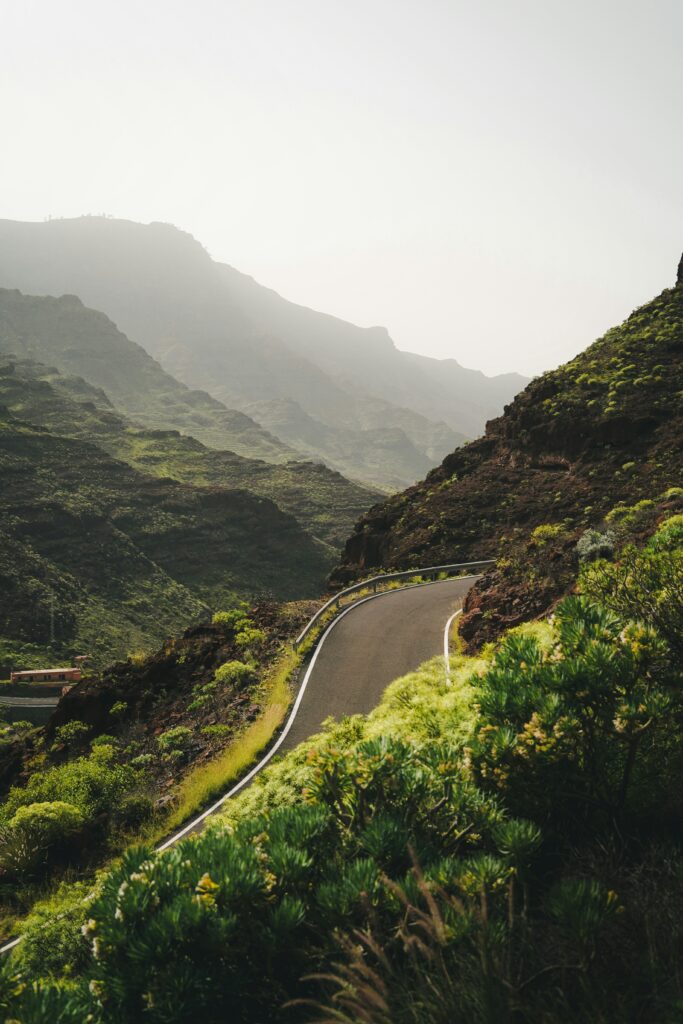
- Roads in the mountains (especially around Masca and Anaga) can be very narrow and steep — take it slowly
- Parking in the resort towns is easier than you’d think; most have free or cheap car parks nearby
- Keep a full tank when heading to Teide — petrol stations are scarce inside the national park
Best Time to Visit Tenerife
Tenerife earns its “Island of Eternal Spring” nickname — the weather is genuinely pleasant year-round, which is one of the main reasons it’s such a popular destination for British travellers in winter.
Winter (November–February): Mild and sunny with temperatures around 20–22°C in the south. This is peak season for escaping the UK winter and is also the best time for whale watching. Expect crowds and higher prices.
Spring (March–May): Arguably the best time to visit if you’re into hiking — temperatures are comfortable, wildflowers bloom across the national park, and the island isn’t yet packed with summer tourists.
Summer (June–September): Hot and very sunny in the south (28–30°C), which is great for beach holidays. The north stays a little cooler. Teide and Anaga are best hiked early morning to avoid the heat.
Autumn (October): A lovely shoulder season — warm enough for the beach, not too crowded, and one of the better months for hiking. Whale watching is also excellent in October and November.
One thing to know: the south and north have noticeably different climates even within the same day. It can be overcast and misty in Puerto de la Cruz while blazing sunshine reigns in Costa Adeje. This is just Tenerife being Tenerife — don’t worry about it.
FAQ
Is Tenerife worth visiting?
Absolutely — and it’s much more than just a beach holiday destination. Tenerife is the most diverse of the Canary Islands, with an active volcano, UNESCO World Heritage cities, ancient forests, black-sand beaches, world-class whale watching, and year-round sunshine. Whether you want to hike, relax, explore culture, or do water sports, Tenerife has it covered. It genuinely surprised me on my visit, and I left wanting to go back.
When is the best time to visit Tenerife?
Tenerife is a genuine year-round destination. Winter (November–February) is ideal for escaping cold UK weather, with mild temperatures around 20–22°C. Spring (March–May) is the best season for hiking — comfortable temperatures, fewer crowds, and wildflowers in bloom. Summer is great for beach holidays, and autumn offers a lovely balance of warm weather and quieter resorts.
Do you need a car in Tenerife?
Yes — a rental car makes a huge difference in Tenerife. The island’s best beaches, hikes, and villages are spread across very different parts of the island, and public transport is patchy for many of the highlights. I always book through DiscoverCars to compare prices across rental companies. Roads in the mountains can be narrow, so take your time on the scenic routes.
Where is the best area to stay in Tenerife?
It depends on what you’re after. The south (Costa Adeje, Los Cristianos) has the best beach weather, the biggest resorts, and a lively nightlife scene — ideal for a classic sun holiday. The north (Puerto de la Cruz, La Orotava, La Laguna) is greener, cooler, more authentic, and much better for exploring Tenerife’s culture and natural landscapes. I’d personally always choose the north and day-trip south when I want the beach.
Is the Masca Gorge hike difficult?
The Masca Gorge hike is moderately challenging — it’s not technical climbing, but it does involve several hours of walking on uneven, rocky terrain with some scrambling required. The descent takes around 3 hours; going back up is significantly harder. A permit is required and must be booked in advance at caminobarrancodemasca.com. Wear proper hiking shoes, bring plenty of water, and take the boat back from the beach to Los Gigantes rather than attempting the full return hike.
What should I eat in Tenerife?
Don’t leave without trying papas arrugadas (wrinkly salted potatoes served with mojo sauce) — they’re everywhere and they’re brilliant. Also look out for fresh grilled fish at a local guachinche (a small, informal Canarian tavern), gofio (a toasted flour used in traditional dishes), and Canarian wine, which is much better than you might expect. For an authentic food experience, visit the Mercado de Nuestra Señora de África in Santa Cruz on a Saturday morning.
Have questions about Tenerife? Drop them in the comments below — I’m happy to help.
Enjoyed this article? Support my work by buying me a latte. Otherwise, do me a great favor of leaving a comment and following me on Instagram (@travelwithpau). Feel free to say ‘Hello!’ I don’t bite. And make sure you save the article for later on Pinterest!


This post contains affiliate links. If you book through my links, I earn a small commission at no extra cost to you. I only recommend products and services I genuinely use and trust.