
Koh Tao Bucket List: The Best Things to Do in Koh Tao (2026)
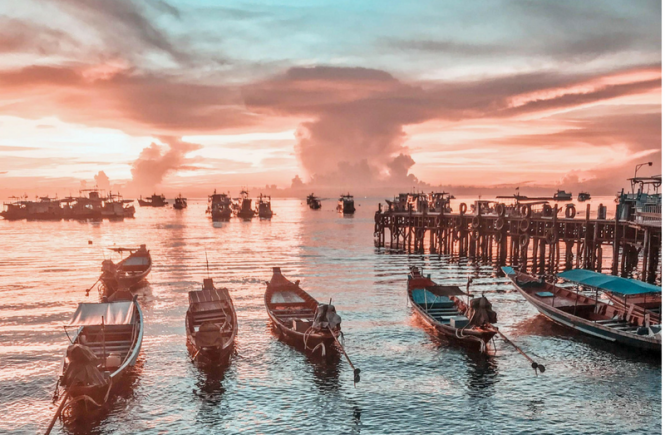
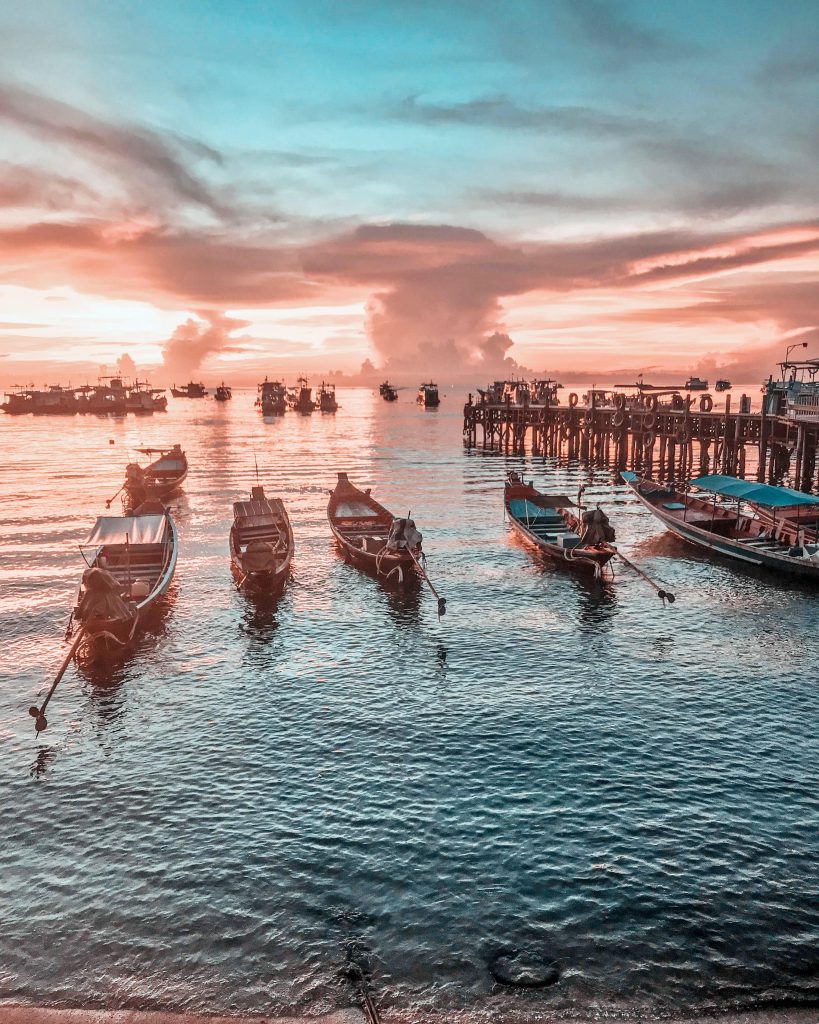
Koh Tao was my favourite island in Thailand. I loved all of them, but Koh Tao has a perfect size, beautiful beaches, outstanding diving and snorkelling, as well as the perfect amount of partying, there is some but it’s not at the crazy annoying level. These are my favourite things to do in Koh Tao, as well as where to stay, where to eat and how to get there!
KOH TAO ESSENTIALS
✈️ Getting There / The only way to get to Koh Tao is by ferry, from Surat Thani, Chumphon or Koh Samui. There is no airport on the island, so most people fly into Koh Samui or Surat Thani, or come overland from Bangkok with a bus plus ferry combo. Search flights on Skyscanner, then book your bus and ferry in one search with 12Go or pre-book your ferry tickets with Ferryhopper.
🛵 Getting Around / Walking is the main way to get around, as well as scooters and boats. The roads are steep, so only hire a scooter if you’re confident on one.
🎟️ Tours / Snorkelling and diving are the top activities in Koh Tao, so these are the best tours to book ahead:
PADI Open Water Course
Islands Snorkeling Highlights Day Tour & Lunch
Try Scuba Diving 1-Day Experience
Koh Nangyuan & Hidden Bays Snorkeling Tour w/ Lunch
🏨 Stay / Skip the endless scrolling, these are the ones I’d point a friend toward (full picks in Where to Stay in Koh Tao below):
Budget: Ban’s Diving Resort
Mid-range: The Beach Club Koh Tao
Splurge: Jamahkiri Resort & Spa
🍽️ Eat / My top recommendations for each meal:
Breakfast/Brunch: Blue Water Café
Lunch: Coconut Monkey
Dinner: Barracuda
📱 Connect / You’ll need mobile data while you are in Thailand, and I always recommend an eSIM, there’s absolutely no need for a physical one! I use Holafly, which gives you unlimited data, plus 1GB of free global backup data with its Always On feature, handy if your plans change. Get yours with my link and use code TRAVELWITHPAU for 5% off.
🛡️ Get Insured / Unfortunately, things can and do go wrong when you travel. World Nomads offers coverage for more than 150 activities as well as emergency medical, lost luggage, trip cancellation and more, and if you’re planning to dive, you’ll want it.
Best Things to Do in Koh Tao
1. Explore the Underwater World
Koh Tao’s underwater world is probably the number one reason people come here, because the island has the perfect combination: amazing snorkelling and really low prices. A lot of people come just to do their PADI certification. I didn’t do mine because I had already done it somewhere else, but whether you sign up for a PADI Open Water Course or simply snorkel in shallow reefs teeming with marine life, you’re in for a treat. If you’d rather try diving before committing to a full course, the Try Scuba Diving 1-Day Experience is a relaxed way in, and if you’re already certified, Sail Rock is one of the island’s most popular dive sites. For snorkellers, the Islands Snorkeling Highlights Day Tour & Lunch and the Koh Nangyuan & Hidden Bays Snorkeling Tour w/ Lunch are more relaxed days out.
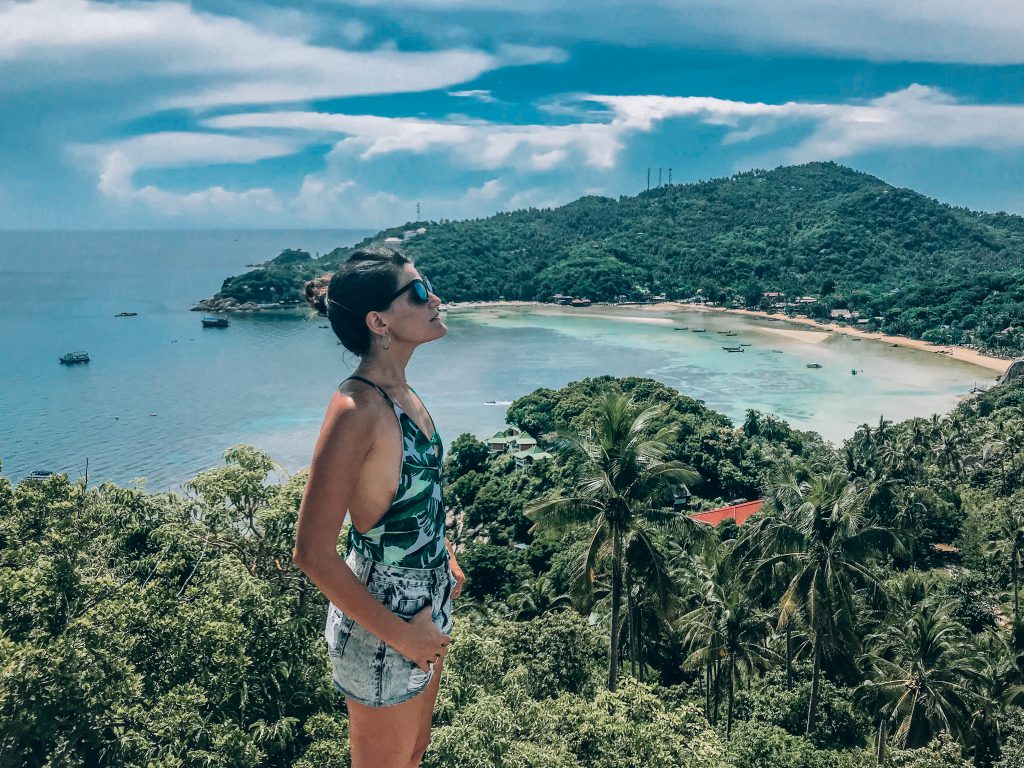
2. Hike to John Suwan Viewpoint and Chill at Freedom Beach
Koh Tao has many beautiful viewpoints, but John Suwan Viewpoint is the best one. You can get to it walking from the centre of Koh Tao, it’s approximately a 40 minute walk in total, or by scooter. You need to pay when you come in, but it’s worth it. The hike is short and easy, approximately 20 minutes, although the top is a bit rocky, so it’s more comfy if you don’t do it in flip flops. Make sure you stay at Freedom Beach afterwards, it’s beautiful, empty, and you can do a bit of snorkelling while you are there as well.
Other viewpoints you might want to check out in Koh Tao are Love @ Koh Tao and Mango Bay.
3. Visit Koh Nang Yuan
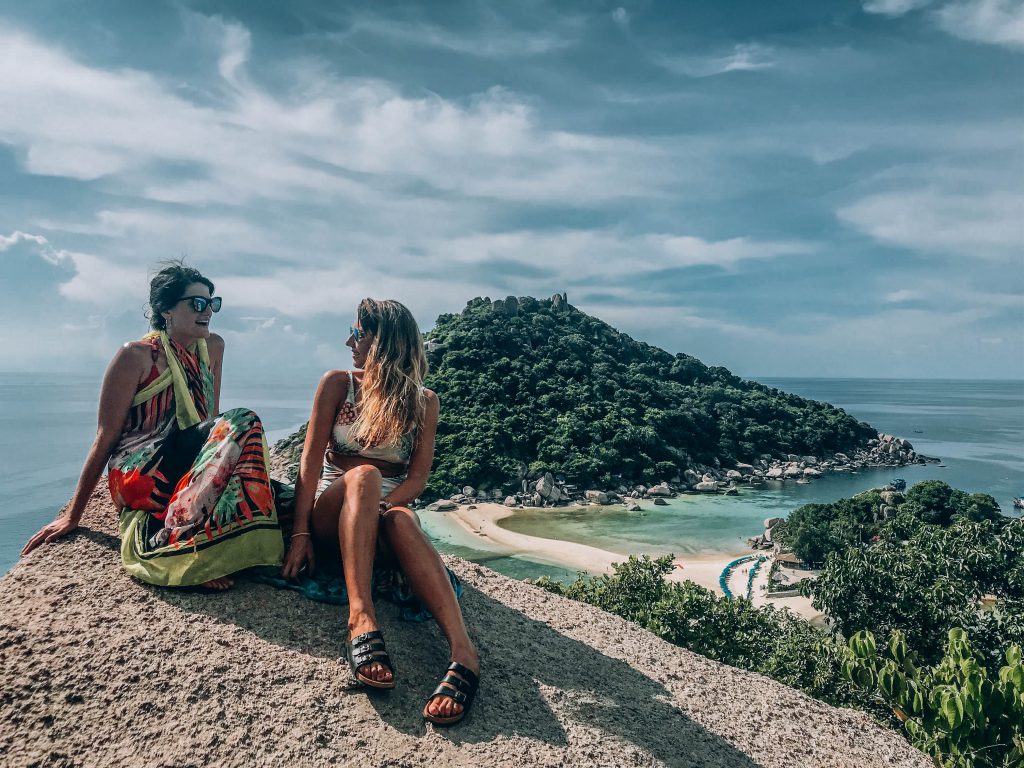
Koh Nang Yuan is a small island really close to Koh Tao which is a must visit. It has a viewpoint, and it’s really three small islands connected by a strip of sand so it actually looks really cool, especially from the viewpoint. There are taxi boats that take you there from Koh Tao. You can also kayak to it from Koh Tao or visit as part of a day tour, which is what I did. The island is protected so there is no town, just a small restaurant and a dive resort. Entry to the island is currently 250 THB per adult, paid in cash, so check whether your tour includes it. Book the tour here.
4. Take an Entire Day Boat Tour
This one is a must, I would say if you only have one day in Koh Tao, do this one! We booked an all day tour which was brilliant, total value for money, and loads of fun. It covered pick up from our hotel in Koh Tao and it took us to Shark Bay, Aow Leuk and Hin Wong Bay snorkelling, each one just better than the last. After that our last stop was a couple of hours in Koh Nang Yuan.
5. Hike from Mae Haad Pier to Chalok Bay
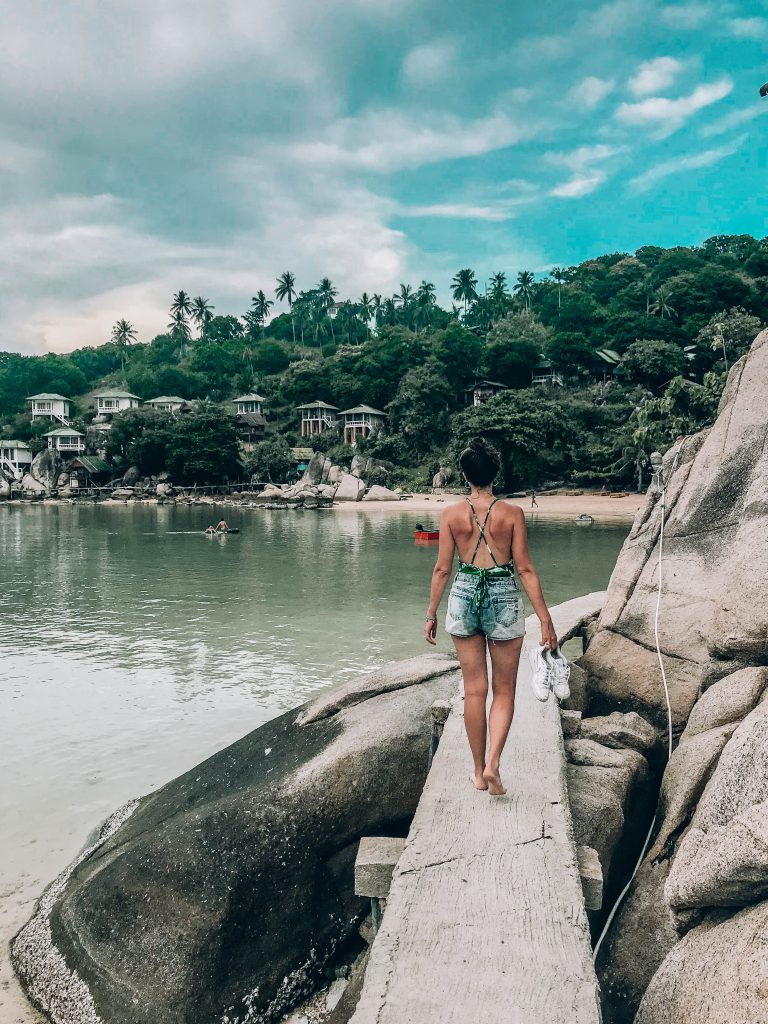
A must to do if you want to get off the beaten path when in Koh Tao. It is accessible for every level of fitness. You will get to swim in remote bays, pass through beautiful resorts, enjoy great views, walk through a palm tree forest and skinny dip on a deserted beach. Yes, all that.
From the Mae Haad pier in Koh Tao walk south and leave the sea on your right side. Pass through Sensi Paradise Resort and up to Charm Churee Resort. Then head down to the beach, you’ll reach Jansom Bay. Jansom Bay is only a 15-minute walk from the Mae Haad pier and is so picturesque. There are rafts a few minutes away from the shore that you can float on. So cool! Leave Jansom Bay and continue towards Sai Nuan Beach. It can be crowded at midday, but tourists leave around sunset so this deserted bay will be all yours and is a great spot to take pictures. Just around the corner there is Sai Nuan 2, known for its Banana Rock restaurant, one to check out.
6. Watch the Sunset
Part of why Koh Tao was my favourite island in Thailand was its sunsets. They are absolutely unreal. As the sun goes down the clouds get darker but on the horizon a red fiery strong glow remains. A popular place to watch the sunset in Koh Tao is Mango Bay Viewpoint, but if you are not feeling like hiking up there, then Sairee Beach would also work. I watched the sunset at the beach close to a bar coincidentally called Sunset while having a beer and it was one of those moments where you go “Wow, I’m literally so lucky right now that I can see this!” To see the sunset we hiked from Chalok Bay up to View Point Resort and then down to Sunset bar. It was magical.
7. Party in Sairee Beach
When the sun goes down in Koh Tao, the fun is not over. Head to Sairee Beach for a little bit of partying. If the night is successful you might even end up refreshing yourself in the sea under the stars.
8. Snorkel with Sharks at Shark Bay
Not one from my own list, but it comes up in every Koh Tao guide for a reason: Shark Bay (also called Thian Og Bay) on the south coast is where blacktip reef sharks and green turtles hang out, and you can see them just by snorkelling, no dive certification needed. The sharks are harmless, the little ones tend to cruise the shallows close to shore, and early morning or late afternoon gives you the best chance of spotting them. It’s snorkelling only, so bring your own gear if you can (it can also be rented nearby), and note that the coral here isn’t the island’s best, it’s all about the animals. Shark Bay is also one of the stops on the all-day boat tour in number 4.
9. Rock Jump and Snorkel at Tanote Bay
Also worth knowing about: Tanote Bay on the east coast of the island is surrounded by hills and boulders, and it’s known as the best spot on Koh Tao for rock jumping, with good snorkelling right off the beach too. It’s a good option if you want something a bit different from the west coast beaches.
10. Visit the Turtle Conservation Centre
For something a bit different, New Heaven Reef Conservation at Chalok Baan Kao Bay raises hatchling sea turtles for about a year before releasing them back into the sea. Visitors can watch the turtles being fed in the late afternoon, though you can’t handle them. Opening hours and programmes change, so check with New Heaven before you go.
11. Try Kayaking and Paddleboarding
Koh Tao’s calm bays are made for paddling, and sunrise or sunset is the nicest time to be out on the water. Kayaks and paddleboards can be rented around Sairee Beach (SUP Tao is the best-known paddleboard rental, and you’ll need to be a confident swimmer), and as I mentioned above, you can even kayak across to Koh Nang Yuan if you’re feeling energetic. If you’d rather have it all organised, the Tao-Nangyuan Snorkeling Day Trip with Meals & Sunset includes kayak and paddleboard gear, with kayaking at Hin Wong Bay, Aow Leuk and Shark Bay.
12. Take a Thai Cooking Class
If you need a break from the water, a Thai cooking class is a fun way to spend a morning or afternoon. This Half Day Thai Cooking Class with Sea View takes about 3 hours in a small group between Mae Haad and Sairee, you cook three classic Thai dishes from scratch, and a meal is included.
13. Go Rock Climbing
Koh Tao’s granite boulders and cliffs make it a surprisingly good climbing spot, with outdoor routes and an indoor gym near Sairee Beach. There’s no big tour operator for this one, so book directly with a local climbing outfit once you’re there.
14. Watch a Muay Thai Fight
If you want to see something properly Thai, Muay Thai fight nights are typically held about once a month, they normally sell out, and Island Muay Thai in Sairee sells advance tickets on its own website. The same gym and Monsoon Gym both offer classes if you’d rather have a go yourself.
Day Trips From Koh Tao
Most of the best days out from Koh Tao are on the water. These are the boat tours I’d look at first.
Islands Snorkeling Highlights Day Tour & Lunch: This is the all-day trip I describe above, and it’s a great all-rounder. The route covers Shark Bay, Aow Leuk, Hin Wong Bay, Mango Bay and a couple of hours on Koh Nang Yuan, with a Thai-style lunch on board and snorkel gear and a life jacket provided. It has thousands of reviews and a 4.7 rating, so you won’t be the first to try it. Book here.
Koh Nangyuan & Hidden Bays Snorkeling Tour w/ Lunch: A 7 hour trip with a Thai-style lunch box on board, time to walk the sandbar and climb to the viewpoint on Koh Nang Yuan, and a stop at Mango Bay. Book here.
Tao-Nangyuan Snorkeling Day Trip with Meals & Sunset: If you’d like your snorkelling day to end with a view, this one adds meals and a sunset on the water, and it includes kayak and paddleboard gear too. Book here.
Try Scuba Diving 1-Day Experience: No experience needed, hotel pickup included, and it’s the best-reviewed way to see what all the fuss is about before you commit to a course. Book here.
Not sure which to pick? Browse all the Koh Tao tours.
Where to Stay in Koh Tao
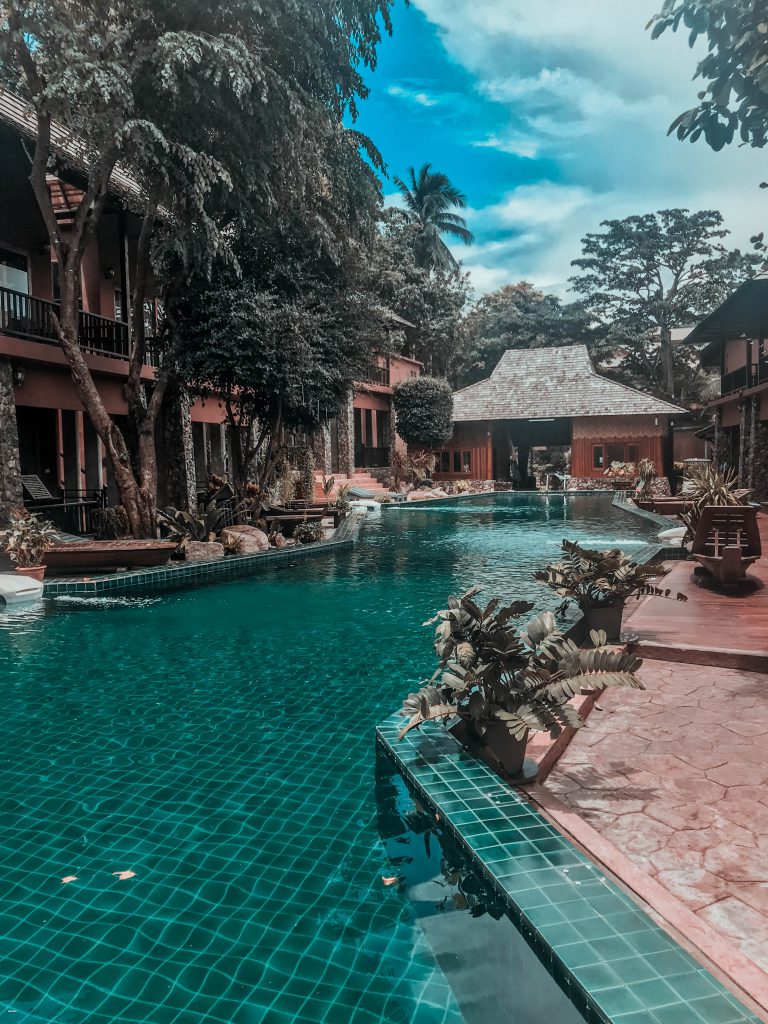
I really enjoyed my stay at The Beach Club Koh Tao. The hotel is on the beach, and it’s actually beautiful to watch the sunset from there. Maybe depending on where your room is you can even watch it from your balcony. The rooms are spacious, there is complimentary water, tea & coffee and the aircon works wonderfully. But my favourite thing was the pool. It’s a strong green, a really unique colour for a pool, and it’s huge. It also makes the hotel look great as it’s right in the middle, surrounded by trees and by the rooms. Refreshing in the pool in the afternoons after going to the beach was the best. Last, it’s really close to Mae Haad where you’ll find most of the best restaurants in Koh Tao for dinner or breakfast. You can book The Beach Club Koh Tao here.
Want more choice? Below are some of the best hotels on the island, each offering unique experiences and exceptional service, perfect for your stay in this tropical paradise.
Budget Accommodation
- Ban’s Diving Resort: A popular and affordable resort for divers, offering comfortable rooms, an on-site dive school, and a large outdoor pool.
Mid-range
- The Beach Club Koh Tao: Where I stayed, see my review above.
- Sensi Paradise Beach Resort: A beautiful tropical resort with beachfront villas, a tranquil atmosphere, and excellent service, perfect for a relaxing getaway.
- The Tarna Resort: A hillside resort above Sairee Beach with sea-view rooms and villas, a restaurant, and a free shuttle to the beach and the pier. Some rooms open straight onto the pool.
Splurge
- Jamahkiri Resort & Spa: A luxury resort offering stunning ocean views, spacious rooms, a full-service spa, and a private beach for an unforgettable stay.
- Koh Tao Coral Grand Resort: A beachfront resort with a range of cosy bungalows, an outdoor pool, and easy access to the island’s famous diving spots.
None of these float your boat? Search all Koh Tao hotels.
Where to Eat in Koh Tao
If you only have one meal in Koh Tao, then make it these!
Breakfast/Brunch: Blue Water Café: Famous for its smoothie bowls, pancakes, and oceanfront views.
Lunch: Coconut Monkey: A cosy café offering fresh salads, sandwiches, and vegan-friendly options.
Dinner: Barracuda: One of the island’s top-rated restaurants, known for its fresh seafood and fusion dishes.
How Long to Stay in Koh Tao
3 to 4 days is the minimum I’d suggest, which is enough to relax, explore the beaches, do a boat tour and a viewpoint hike, and either dive or snorkel.
5 days is what you need if you’re getting certified in scuba, and this is IMPORTANT! You won’t be able to do the Open Water course in less.
A week or more if you want to slow right down, add a hike or two, and fit in the sunset spots, the nightlife and a few more days in the water without rushing.
Best Time to Visit Koh Tao
The best time to visit is from December to April when the weather is driest and ideal for diving and island hopping. Avoid October and November, which are the rainiest months due to monsoon season. I visited in May and it was great! Really quiet and not so rainy.
Getting To & Around Koh Tao
Koh Tao doesn’t have its own airport, so most travellers fly into Koh Samui or Surat Thani and then take a ferry, or head overland from Bangkok with a bus plus ferry combo via Chumphon, which is usually the cheapest option but a long travel day, typically 9 to 12 hours, so check current timetables. Search flights into Thailand on Skyscanner. 12Go is a booking platform that covers pretty much every domestic transport option in one search, trains, buses, minivans, ferries, and even combined routes like a bus plus ferry to an island, which makes it the easiest way to book the whole trip from Bangkok. If you’re coming from another island, pre-book your ferry tickets with Ferryhopper. In high season, boats to Koh Tao fill up, so booking a day or two ahead is wise.
Once you’re on the island, walking is the main mode of transport, as well as scooters and boats. Scooters are a popular way to get around, but Koh Tao’s roads are steep and can be tricky, especially in wet conditions. If you’re not confident riding one, consider walking, using taxis, or renting an ATV for safety. There are several ATMs on the island, but they sometimes run out of cash, so bring some Thai baht with you or withdraw at the airport before arriving.
Koh Tao FAQ
How do I get to Koh Tao?
Koh Tao doesn’t have its own airport, so most travellers fly into Koh Samui or Surat Thani and then take a ferry. You can also come overland from Bangkok with a bus and ferry combo via Chumphon. Book your ferry here, or book bus and ferry together with 12Go.
What is the best time to visit Koh Tao?
The best time to visit is from December to April when the weather is driest and ideal for diving and island hopping. Avoid October and November, which are the rainiest months due to monsoon season. I visited in May and it was great! Really quiet and not so rainy.
Is Koh Tao good for beginners who want to learn scuba diving?
Yes! Koh Tao is one of the most affordable and popular places in the world to get PADI certified. There are dozens of reputable dive schools, many with experienced English-speaking instructors and great beginner dive sites. Book your PADI course here.
How many days should I spend in Koh Tao?
A minimum of 3 to 4 days is ideal to relax, explore the beaches, and do some diving or snorkelling. If you’re getting certified for scuba, you’ll want at least 5 days, this is IMPORTANT! You won’t be able to do it in less.
Do I need to rent a scooter on Koh Tao?
Scooters are a popular way to get around, but Koh Tao’s roads are steep and can be tricky, especially in wet conditions. If you’re not confident riding one, consider walking, using taxis, or renting an ATV for safety.
Are there ATMs on Koh Tao?
Yes, there are several ATMs on the island, but they sometimes run out of cash. It’s wise to bring some Thai baht with you or withdraw at the airport before arriving.
Can you visit Koh Tao without diving?
Absolutely. Snorkelling is excellent right off the beaches and on boat tours, and there are viewpoint hikes, kayaking, sunsets and beach bars to fill your days. You don’t need a dive certification to enjoy Koh Tao, and a try-dive is an easy way to see if you like it.
How much is the Koh Nang Yuan entrance fee?
Entry to Koh Nang Yuan is currently 250 THB per adult, paid in cash on arrival, with a lower child rate. Some older pages still show 100 THB, which is out of date. Check whether your tour includes the fee, as some do and some charge it separately.
Traveling to Thailand? Check other Thailand posts here.
My stay at The Beach Club Koh Tao was complimentary, however as always my opinions are my own.
Enjoyed this article? Support my work by buying me a latte. Otherwise, do me a great favor of leaving a comment and following me on Instagram (@travelwithpau). Feel free to say ‘Hello!’ I don’t bite. And make sure you save the article for later on Pinterest!

This post contains affiliate links. If you click on one and make a purchase, I might make a small commission, at no extra cost to you in order to help support my blog.
Bangkok Bucket List: The Best Things to Do in Bangkok (2026)
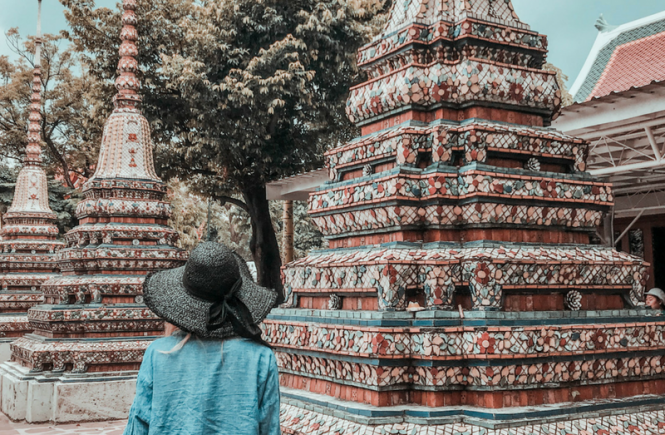

Bangkok hit me like a burst of chilli, full-on, a little overwhelming, and utterly addictive. I arrived expecting temples and tuk-tuks and found a city of breathtaking contradictions: monks in saffron robes weaving between suits on the Skytrain, a centuries-old floating market twenty minutes from a rooftop cocktail bar on the 83rd floor. It’s the kind of place where every alley holds a street food stall that’ll ruin you for Thai food back home forever.
For most travellers, Bangkok is the gateway to Thailand, the starting point before heading south to the islands or north to Chiang Mai. But I’d argue you need to give it at least three or four days in its own right, because there are more things to do in Bangkok than you can possibly cram into a rushed layover. The temples alone could fill a week.
I’ve put together this Bangkok bucket list to help you make the most of the city, from the iconic Grand Palace to the hidden alleys of Chinatown, the best day trips, where to stay, and every practical detail you need. Whether it’s your first visit or your fifth, Bangkok always has something new to throw at you.
BANGKOK ESSENTIALS
✈️ Getting There / Most flights land at Suvarnabhumi Airport (BKK), roughly 11 to 13 hours from London. Book a private airport transfer with WelcomePickups for a stress-free arrival. Search flights on Skyscanner.
🚗 Getting Around / The BTS Skytrain, MRT, and Grab app cover the city easily, plus the scenic Chao Phraya Express Boat by river. Heading further out, book your train, bus, or ferry on 12Go.
🎟️ Tours / Bangkok is one of those cities where a guided tour can genuinely transform a visit, especially for the temples where context makes everything click. The best ones to book in advance:
Chinatown Night Food Tour with Michelin Stalls
Grand Palace, Wat Pho and Wat Arun Guided Tour
Luxury 5-Star Chao Phraya Cruise
Thai Cooking Class with Market Tour
🏨 Stay / Skip the endless scrolling, these are the ones I’d point a friend toward:
Splurge: Capella Bangkok
Budget: Baan2459
Mid-range: Solitaire Bangkok Sukhumvit 11
🧳 Luggage Storage / If you’re early for check-in or have time to kill after checkout, no stress, there are luggage storage points all over Bangkok. Use this website to find one nearby.
📱 Connect / Stay connected the moment you land. I use Holafly, use code TRAVELWITHPAU for 5% off.
🛡️ Get Insured / Thailand is generally safe, but travel insurance is non-negotiable, especially if you’re planning any adventure activities, motorbike rides, or water sports elsewhere in the country. World Nomads covers a wide range of activities that standard insurers often exclude.
Bangkok Bucket List: 27 Things to Do
1. Marvel at the Grand Palace and Wat Phra Kaew
No Bangkok bucket list is complete without the Grand Palace, and no visit to the Grand Palace is complete without understanding what you’re actually looking at, which is why I’d strongly recommend booking a guided tour rather than wandering around with just a leaflet. The complex was built in 1782 and served as the official residence of the Kings of Siam, and the sheer scale of it is staggering. Within the walls is Wat Phra Kaew, the Temple of the Emerald Buddha, the most sacred Buddhist site in Thailand.
Practical info: Entry costs 500 THB (approximately £11). The complex is open daily 8:30am–3:30pm. Dress code is strictly enforced: shoulders and knees must be covered. Sarongs are available to borrow at the entrance, but they’ll also sell you a cheap cover-up on the spot if you turn up underdressed, my friend had to buy a shirt for 150 baht after a pashmina wasn’t deemed enough coverage, so don’t assume a scarf will cut it. Book a guided Grand Palace tour.
2. See the Reclining Buddha at Wat Pho
Just a short walk from the Grand Palace, Wat Pho is one of the oldest and largest temple complexes in Bangkok, and home to an absolutely enormous 46-metre-long golden Reclining Buddha. The scale of it only hits you when you’re standing in front of it: your eye travels down the length of the figure and you realise you’ve been craning your neck the whole time. Wat Pho is also considered the birthplace of traditional Thai massage, and there’s a massage school on the premises, a legitimately good place to book a session.
Practical info: Entry costs 200 THB (approximately £4.50). Open daily 8am–6:30pm. Dress code applies. Book a Wat Pho and Wat Arun guided walking tour.

3. Watch the Sunset at Wat Arun, the Temple of Dawn
Wat Arun sits on the west bank of the Chao Phraya River and is best seen from the water, the towering prang (spire) encrusted with colourful fragments of porcelain is one of the most photographed images in Thailand. Don’t leave Bangkok without taking the public ferry at least once, it’s a brilliant way to get around and you’ll get places through the water fast. You reach Wat Arun by crossing the river on a short public ferry from Tha Tien pier, which costs about 5 THB. Get there at sunrise or golden hour for the best light; the views back across the river towards Wat Pho are equally gorgeous.
Practical info: Entry costs 100 THB (approximately £2.20). Open daily 8am–6pm. Browse Wat Arun tours and tickets.
4. Get Lost in Chatuchak Weekend Market
One of the largest markets in the world, Chatuchak has over 15,000 stalls spread across 35 acres, selling everything from vintage clothing and independent designer homeware to live animals (a slightly overwhelming section I always hurry past). It’s a market full of independent designers that’s extremely cheap but also super cool, genuinely one of the least touristy things to do in Bangkok, and prices are very reasonable compared to anything you’d find in the tourist-facing markets. I picked up vintage-style blouses for just 100 baht each and beautiful embroidered pashminas for 150 baht. Go on a Saturday or Sunday, bring cash, wear comfortable shoes, and prepare to lose several hours.
Practical info: Open Saturdays and Sundays, 9am–6pm. Entry is free. Located near Mo Chit BTS station and Kamphaeng Phet MRT station.

5. Feast Your Way Through Chinatown (Yaowarat)
Bangkok’s Chinatown is one of the oldest in the world and, to my mind, one of the most atmospheric neighbourhoods in the city. Yaowarat Road comes alive at night, when the street food vendors set up and the neon signs glow gold overhead. Go hungry, there are Michelin-recommended stalls serving crab omelettes, roast duck, shark fin soup, and all manner of things on sticks that you absolutely must try. But it’s just as fun for shopping as it is for eating, I got properly lost in the small side alleys buying totally unnecessary but brilliant fun items, an accessories and patches shop kept me entertained for a good half hour. The streets off the main drag are just as rewarding: look for the medicine shops, the gold traders, and the tiny shrines tucked between restaurants.
Practical info: Best visited in the evening from around 6pm. Take the MRT to Hua Lamphong or the Chao Phraya boat to Ratchawong pier. Join a Chinatown Night Food Tour.
6. Cruise the Chao Phraya River at Sunset
An evening dinner cruise on the Chao Phraya is one of the most atmospheric things you can do in Bangkok, watching Wat Arun, the Grand Palace walls, and the lit-up riverside temples slide past from the water is genuinely magical. There are options at every price point, from a simple hop-on hop-off day boat to white-tablecloth dinner cruises with live music. For a first visit, I’d go for a dinner cruise so you catch the temples lit up at night.
Practical info: Cruises run from around 7pm. Prices vary from roughly 1,000 THB (£22) for a basic dinner cruise to 2,500 THB+ (£55+) for more upmarket options. Book the newest Luxury 5-Star Chao Phraya Cruise.
7. Live It Up on Khao San Road
Khao San Road is Bangkok’s legendary backpacker street, and whatever you may have heard about it, it’s worth at least one visit, if only for the spectacle. By day it’s a street market selling everything from knock-off designer goods to gap year essentials (fisherman trousers, elephant-print everything). By night it transforms into a full-on party strip, with bars spilling out onto the street, music competing from every direction, and buckets of who-knows-what changing hands. It’s wonderfully chaotic, and I mean that affectionately.
You don’t really need a tour to feel the vibe, just turn up and wander, but if you’d rather have someone show you around, point out the good spots, and answer questions as you go, book the Khao San Nightlife Tour with Street Food and Drinks.
Practical info: Khao San Road is in the Banglamphu neighbourhood, a short tuk-tuk or taxi ride from the Grand Palace. Free to visit. Most bars are open until 2am or later.
8. Haggle at Bangkok’s Floating Markets
Bangkok has several floating markets within day-trip distance, ranging from the famously touristy to the genuinely local. Taling Chan is the closest to the city centre and the most authentically Thai, it’s a weekend market where locals buy their groceries from boats moored along the canal. Damnoen Saduak (about 100km south-west) is the most photographed and the most organised for tourists, colourful boats, lots of photo opportunities, and plenty of vendors. Amphawa (about 80km) is a lovely evening market that fills up with fireflies after dark. If you’re short on time, a guided tour takes care of the logistics. Book a Damnoen Saduak Floating Market Tour.

9. Watch a Muay Thai Fight Night
Watching a live Muay Thai fight at one of Bangkok’s legendary stadiums is one of those experiences that sticks with you long after you leave. The atmosphere is electric, the crowd bets on the bouts, the live music changes tempo as the fight intensifies, and the skill and athleticism on display is extraordinary. Rajadamnern Stadium (one of the oldest, dating from 1945) and Lumpinee Boxing Stadium are the two main venues, with fight nights running several times a week at each. Book tickets in advance to guarantee good seats.
Practical info: Tickets from around 1,500 THB (£33) for ringside standing up to 3,000 THB+ (£66) for premium seats. Book Muay Thai tickets at Rajadamnern Stadium.
10. Take a Muay Thai Lesson
If you’d rather get involved than just watch, a Muay Thai class is a brilliant way to experience Thailand’s national sport firsthand. Classes are open to all levels, even if you’ve never thrown a punch, with small groups or private sessions and English-speaking instructors in a welcoming environment. Bring comfortable clothing, water, and a change of clothes. Book a Muay Thai introduction class for beginners.
11. Learn to Cook in a Thai Cooking Class
Learning to cook Thai food in Bangkok is one of the best travel investments you can make, the skills and flavours travel home with you in a way that a souvenir never does. Most classes begin with a morning market tour to pick up ingredients, then move into a kitchen where you learn to make classics like pad thai, green curry, and mango sticky rice. The Blue Elephant cooking school is particularly well-regarded, but there are dozens of excellent options at all price points.
Practical info: Half-day classes typically cost between 1,000–2,000 THB (£22–£44). Full-day options are also available. Book a Thai cooking class with market tour.
12. Get a Traditional Thai Massage
A proper Thai massage in Bangkok is basically a rite of passage, and you won’t have to go far to find one, massage parlours are absolutely everywhere, especially around spots like Khao San Road. Beyond a classic Thai massage, most places also offer foot reflexology, oil massages, facials, and scrubs. Prices are super affordable compared to Western standards, so don’t be surprised if you end up going back more than once during your trip. Try a Thai massage class if you’d rather learn the technique than just receive it.
13. Ride in a Tuk-Tuk
Zipping through the chaotic streets of Bangkok in the back of a tuk-tuk is a rite of passage in itself. These colourful, three-wheeled rickshaws are loud, a little wild, and undeniably fun, there’s something exhilarating about weaving through traffic with the wind in your hair. Always negotiate and agree on the fare before you hop in, and don’t be surprised if your driver suggests a “quick stop” at a gem or tailor shop along the way, politely decline if you’re not interested. Book a half-day tuk-tuk sightseeing tour if you’d rather have a driver take you round the sights properly.
14. Shop and Dine at Asiatique The Riverfront
Asiatique is a sprawling open-air shopping and entertainment complex on the banks of the Chao Phraya, a converted 1900s wharf that now houses over 1,500 boutiques, 40-odd restaurants, a Ferris wheel, and a cabaret theatre. It’s a lovely place to spend an evening: the riverside setting is beautiful, the vibe is relaxed, and the food options range from street food to sit-down dining. You can reach it by taking a free shuttle boat from Sathorn Pier (Central Pier).
Practical info: Open daily 5pm–midnight. Entry is free. Free shuttle boat from Sathorn Pier runs from around 4pm.
15. Catch a Calypso Cabaret Show
Bangkok’s cabaret shows are a genuine institution, glitzy, theatrical, and performed by some of the most talented and glamorous performers you’ll see anywhere. Calypso Cabaret at Asiatique is the best-known and most polished option, singing and dancing through a full theatrical programme that’s cheeky, colourful, and honestly one of the most entertaining things to do in the city after dark.
Practical info: Shows typically run twice nightly. Book the Calypso Cabaret Show with Thai Set Dinner.

16. Pay Your Respects at Erawan Shrine
In the middle of one of Bangkok’s busiest intersections, surrounded by the Grand Hyatt Erawan hotel, a shopping mall, and a very loud junction, sits one of the most deeply venerated shrines in the city. The Erawan Shrine houses a four-faced golden Brahma statue that Thais believe grants wishes, and at almost any hour of the day you’ll find people leaving offerings of flowers, wooden elephants, and incense. Traditional dancers perform when visitors commission them in thanks for answered prayers. It’s a profoundly moving thing to witness.
Practical info: Located at the corner of Ratchadamri Road and Ploenchit Road, next to Chit Lom BTS station. Open 24 hours. Entry is free.
17. Admire the Golden Buddha at Wat Traimit
On the edge of Chinatown, Wat Traimit houses the world’s largest solid gold Buddha statue, weighing over five tonnes and standing nearly 3 metres tall. For decades it was hidden under a plaster casing to protect it from looters, and was only discovered to be solid gold in 1955 when the plaster cracked during a move, revealing what had been sitting in plain sight the whole time. That story alone makes it worth the visit.
Practical info: Entry costs 100 THB (approximately £2.20). Open daily 8am–5pm. Located at the edge of Chinatown, a short walk from Hua Lamphong MRT station.
18. Step Inside the Jim Thompson House
Jim Thompson was an American businessman who almost single-handedly revived the Thai silk industry after the Second World War, and his home, a complex of six traditional Thai teak houses reassembled along a canal in 1959, is one of the most beautiful and fascinating places in Bangkok. The house is filled with his collection of Asian art and antiques, and the guided tours are excellent. His mysterious disappearance in 1967 (he simply vanished during a walk in the Cameron Highlands in Malaysia, and was never found) adds an additional layer of intrigue.
Practical info: Entry costs 200 THB (approximately £4.50). Open Monday–Saturday 10am–6pm. Guided tours included in the ticket price. Book the Jim Thompson House Tour and Thai Cooking Experience.
19. Catch Your Breath in Lumphini Park
Bangkok can be relentless in its energy, and Lumphini Park, the city’s lungs, is the best antidote. In the early morning, you’ll find Tai chi practitioners, joggers, and groups doing aerobics by the lake. Monitor lizards (large ones, absolutely unfazed by humans) patrol the paths. I once got chatting to an elderly Thai man in the park who spoke several languages and kept a diary logging the nationality of every visitor he met, then taught me a few Thai phrases before we parted ways, the kind of encounter that only happens when you slow down enough to sit on a park bench. On weekend evenings, families set up picnics and musicians play. It’s completely free, completely lovely, and a reminder that Bangkok is a city where people actually live.
If you want to properly slow down rather than just pass through, book an all-level morning yoga flow class in the park.
Practical info: Open daily 4:30am–9pm. Entry is free. Located near Silom MRT station and Lumphini MRT station.
20. Cycle Through Bang Krachao, Bangkok’s Green Lung
Bang Krachao is a man-made island formed by a bend in the Chao Phraya River, and despite sitting just minutes from the skyscrapers of downtown, it feels like a different country entirely: jungle boardwalks, quiet canals, coconut groves, and barely any traffic. Renting a bike and getting lost on the elevated concrete paths through the mangroves is one of the best low-key things to do in the city, especially if you need a break from the noise. Reach it by a short longtail boat crossing from Klong Toey or Wat Bang Nam Phueng pier, or skip the planning altogether and book the Green Oasis Nature Bike Tour.
Practical info: Bike rental is available near the pier for a small daily fee. Best visited on weekday mornings to avoid crowds. Book a Bang Krachao cycling tour.
21. Wander the Backstreets of Talad Noi
Talad Noi is Bangkok’s oldest neighbourhood, a maze of narrow lanes between Chinatown and the river packed with vintage machinery shops, Chinese shrines, and increasingly, striking street art murals that have made it a favourite with photographers. It’s scruffy in the best way, genuinely lived-in rather than curated for tourists, and one of those areas that rewards slow wandering with no fixed plan.
Practical info: Best explored on foot in the late afternoon. A short walk from Hua Lamphong MRT station or the River City pier.
22. Snack Your Way Through Jodd Fairs Night Market
If Chatuchak feels too sprawling, Jodd Fairs is the trendier, more manageable alternative, a modern night market with converted shipping container bars, live music, and food stalls slinging everything from grilled seafood to inventive fusion snacks. It has a younger, more local crowd than the tourist-heavy markets, and it’s a genuinely fun way to spend an evening.
Practical info: Open evenings, typically from around 4pm to midnight. Free entry. Multiple locations across the city, Rot Fai (Ratchada) is the most established.
23. Shop Till You Drop at MBK Center and Siam
Bangkok is a world-class shopping city, and the Siam area is its commercial heart. MBK Center is the local favourite, a massive, slightly chaotic mall with over 2,000 stalls selling electronics, fashion, accessories, and food at very good prices. It’s the place to go for phone repairs, custom phone cases, and bargain branded goods. I genuinely loved MBK, and definitely shopped one too many beach dresses there, all bought with good intentions for the islands later in the trip. For more upmarket shopping, Siam Paragon and CentralWorld are next door, housing international brands and excellent food courts. The Skytrain connects all of them.
Practical info: MBK Center is open daily 10am–10pm. Located at National Stadium BTS station. Entry is free.
24. Sip Cocktails at Bangkok’s Rooftop Bars
Bangkok’s skyline is spectacular from above, and there are several rooftop bars vying to give you the best view. The most famous is Sky Bar at Lebua State Tower (the one from The Hangover Part II), perched on the 64th floor, with views in every direction and cocktails to match. For something more accessible, the Baiyoke Sky Hotel at 83 floors up is the highest public observation point in Bangkok, and significantly cheaper. Red Sky, on the 56th floor of Centara Grand, is another excellent option, and you can book a table in advance to skip the queue. Rooftop sundowners are a Bangkok rite of passage.
Practical info: Sky Bar at Lebua is open from 6pm. Smart casual dress code enforced. Cocktails start around 600 THB (£13). Located at the corner of Si Phraya and Charoen Krung roads.
25. Explore the Vimanmek Teak Mansion
The Vimanmek Teak Mansion is an extraordinary building, reportedly the world’s largest golden teak wood mansion, built in 1900 as a royal residence for King Rama V. It’s stunning to look at, sits within beautifully maintained gardens, and feels genuinely off the tourist radar compared to the more famous sights. The guided tours (compulsory with entry) are interesting and unhurried. Dress code applies as it’s on royal palace grounds.
Practical info: Entry costs 100 THB (approximately £2.20), or free if you already have a Grand Palace ticket from the same day. Open Tuesday–Sunday 9:30am–4pm. Located near Dusit Park.
26. Dive Into Bangkok’s Street Food and Night Markets
Bangkok’s street food scene is among the best in the world, and the best way to experience it is simply by wandering, though having a guide helps enormously for context and recommendations. Yaowarat (Chinatown) at night is unmissable. The area around Silom and Patpong Night Market is good for browsing. Victory Monument has excellent student-budget noodle spots. And if you want a one-stop street food experience, Chatuchak Park area on weekends offers everything from rotis to grilled seafood.
Practical info: Most night markets run from around 5pm–midnight. Budget 200–400 THB (£4.50–£9) for a full meal of street food. Book a Bangkok Chinatown food tour with Michelin stalls.
27. Climb to Wat Saket, the Golden Mount
Wat Saket is one of Bangkok’s lesser-visited gems, and all the better for it. The temple sits atop an artificial hill about 80 metres high, reached by a winding staircase of more than 300 steps through gardens, bells, and prayer flags. The views from the top across the old city rooftops are fantastic, and the whole experience feels far more meditative than the busier Grand Palace complex. Go in the late afternoon for the best light.
Practical info: Entry costs 20 THB (under £1). Open daily 7:30am–5:30pm. Located in the Pom Prap Sattru Phai district, about 20 minutes’ walk from Khao San Road.
Bangkok Day Trips
Bangkok’s location in central Thailand makes it an excellent base for day trips. Here are the best options:
Ayutthaya (most recommended): The ancient capital of the Kingdom of Siam, Ayutthaya is a UNESCO World Heritage Site roughly 80km north of Bangkok, about an hour and a half by train or minivan. The crumbling temple ruins, headless Buddha statues, and sheer scale of the historical park make it one of the most impressive archaeological sites in South-East Asia. You can easily do it as a day trip, though staying overnight gives you the place almost to yourself in the early morning. Book an Ayutthaya Temples Guided Tour with Lunch.
Damnoen Saduak Floating Market and Maeklong Train Market: Combine both iconic day trips in one, watch vendors pull their stalls back from the tracks as a full-size train passes through the Maeklong market, then head to Damnoen Saduak for the famous floating market experience. Best done on a guided tour as getting between the two independently is time-consuming. Book the combined Railway and Floating Market Tour.
Kanchanaburi: The site of the infamous Bridge on the River Kwai and deeply significant WWII history, Kanchanaburi is about two hours west of Bangkok. The Allied War Cemetery is sobering and moving. Worth a full day at minimum. Trains run directly from Thonburi Station, or you can take a minivan from Mo Chit, both take around 2 to 2.5 hours. Check routes and book your ticket on 12Go.
Koh Samet: For a beach day without the commitment of travelling south, Koh Samet is a small island about 200km south-east of Bangkok, around three hours by bus and ferry. White sand, clear water, and very doable as a two-night trip if you want a change of pace from the city. Book your bus and ferry combo on 12Go.

Where to Stay in Bangkok
Bangkok has accommodation at every budget level, and the neighbourhood you choose matters as much as the hotel itself. Here’s my breakdown:
Budget: Baan2459, Best for Atmosphere in Chinatown
Baan2459 is a tiny boutique guesthouse with just four rooms, set in a beautifully restored heritage shophouse on the edge of Chinatown. I stayed here and loved it because being so small and boutique, every detail is really thought through, right down to a genuinely customised welcome, it felt like a little oasis in the middle of Bangkok. It puts you right in the heart of the most exciting neighbourhood in the city for street food and night-time wandering, perfect for exploring Chinatown and the temples. Check availability.
Mid-range: Solitaire Bangkok Sukhumvit 11, Best for Location and Value
Rated 8.3 out of 10 from nearly 6,000 reviews, Solitaire Bangkok is genuinely excellent value for money. It’s a totally different style of stay to Baan2459, but I loved it just as much, the pool and steam rooms are great, and the breakfast was honestly amazing. It’s on Sukhumvit Soi 13, walkable distance from the BTS Skytrain, a great area if you like gourmet restaurants and nightlife. There’s an outdoor pool, breakfast included, and they even run a free tuk-tuk shuttle to the nearest BTS stations. Comfortable, well-run, and reliable. Check prices and book.
Splurge: Capella Bangkok, Best for Riverside Luxury
If you’re going to push the boat out in Bangkok (quite literally), Capella Bangkok is the place to do it. It’s a low-rise riverside property with 101 suites and villas, all with panoramic views of the Chao Phraya. The design is hushed and residential, contemporary luxury without the fuss, and the service is impeccable. It consistently features in the world’s top 50 hotel lists, and for good reason. Rates start from around £600 per night. Check availability and book.
None of these float your longtail boat 😉 ? Search all Bangkok hotels.
Where to Eat in Bangkok
Bangkok is genuinely one of the best food cities on earth, and honestly, wandering is half the fun. Yaowarat (Chinatown) at night is unmissable, Michelin-recommended street stalls serving crab omelettes, roast duck, and shark fin soup line the main road once the neon comes on. Silom and Patpong Night Market are good for browsing between bites, Victory Monument has excellent student-budget noodle spots, and Chatuchak Park on weekends offers everything from rotis to grilled seafood. If you’d rather have a local walk you through it, book a Chinatown food tour with Michelin stalls, or take a hands-on Thai cooking class so you can recreate it all when you’re home.

Getting To & Around Bangkok
Most flights from the UK to Bangkok land at Suvarnabhumi Airport (BKK), the main international hub, roughly 11 to 13 hours from London. Thai Airways and British Airways operate direct services; budget-friendly alternatives often involve a stop (usually Dubai, Doha, or Kuala Lumpur) and can save you significant money if you’re flexible with timing. Budget airlines, including AirAsia and Nok Air, tend to use Don Mueang Airport (DMK), the second Bangkok airport, further north of the city, so factor in extra travel time and cost if your onward flight uses it. Use Skyscanner to find the best fares, and book a private transfer into the city with WelcomePickups for a fixed price, a named driver, and no stress after a long-haul flight.
Once you’re in the city, the BTS Skytrain and MRT metro are your best friends, fast, air-conditioned, and very affordable, get a Rabbit Card and top it up as you go. The Grab app is a reliable local version of Uber for door-to-door trips, and the public Chao Phraya Express Boat is a brilliant, cheap, and scenic way to get around by river. Tuk-tuks are fun for shorter hops, just always agree on a price before you get in.
If you’re heading further afield, to Kanchanaburi, Koh Samet, or anywhere else in Thailand, 12Go is worth knowing about. It’s a booking platform that covers pretty much every domestic transport option in one search, trains, buses, minivans, ferries, and even combined routes like a bus plus ferry to an island, so you can compare times and prices and book the whole journey without piecing it together yourself.
How Long to Spend in Bangkok
I’d recommend a minimum of three full days in Bangkok, and ideally four or five if you want to do the city justice without feeling rushed.
Three days is enough to cover the main temples (Grand Palace, Wat Pho, Wat Arun), do an evening on Khao San Road, explore Chinatown, and squeeze in a day trip to Ayutthaya.
Four to five days gives you breathing room, a cooking class, a river cruise, Chatuchak market on a weekend, and the chance to properly get lost in the neighbourhoods between the main sights. This is my recommended length.
One week or more and you can slow right down, venture further afield (Kanchanaburi, the floating markets), and start to feel like you actually understand the rhythms of the city rather than just ticking boxes.
If Bangkok is your gateway to the rest of Thailand, don’t try to cram it all into one day. Give it three, come back through, and give it three more.
Best Time to Visit Bangkok
The best time to visit Bangkok is between November and February, during the cool dry season. Temperatures hover around 25–30°C, humidity is lower, and you won’t be caught in a downpour every afternoon. This is peak tourist season, so book accommodation and tours ahead.
March to May is hot season, genuinely brutal, with temperatures pushing 38°C and thick humidity. It’s manageable if you’re temple-hopping in the mornings and mall-hopping in the afternoons, but not ideal.
June to October is monsoon season. Bangkok doesn’t flood in the dramatic way some other Thai cities do, and the rain tends to come in short, heavy bursts rather than all-day drizzle. Hotel rates drop significantly, and the city is far less crowded, if you don’t mind the occasional soaking, it’s actually a decent time to visit.
Bangkok FAQ
Is Bangkok worth visiting?
Absolutely, and emphatically. Bangkok is one of the great cities of the world: extraordinary temples, phenomenal food, a rooftop bar scene to rival any metropolis, and an energy that’s completely its own. The heat and the chaos can be exhausting, but they’re also exhilarating. Go in.
How many days do you need in Bangkok?
Three full days is a comfortable minimum for the highlights. Four to five days lets you explore at a reasonable pace and take at least one day trip. A full week gives you Bangkok and some breathing room. Don’t try to rush it.
What is the best area to stay in Bangkok?
It depends on your priorities. Khao San Road is ideal for backpackers and those wanting to be close to the old city temples. Sukhumvit is the most convenient all-rounder, great transport links, restaurants, and shopping. Silom is good for business travellers and has excellent nightlife. For atmosphere (and the best street food), Chinatown is unbeatable.
Is Bangkok safe for travellers?
Bangkok is generally very safe for tourists. The main risks are petty theft in crowded markets, scams targeting tourists (particularly the “the Grand Palace is closed today” tuk-tuk scam, it never is), and traffic. Exercise the usual caution you would in any large city. Drink responsibly, use reputable taxis via Grab, and trust your instincts.
When is the best time to visit Bangkok?
November to February, during the cool dry season, is the best time to visit. It’s peak tourist season but the weather is the most manageable, low humidity, clear skies, and temperatures around 25–30°C. See the Best Time to Visit Bangkok section above for more detail.
Do British citizens need a visa for Thailand?
As of 2026, British passport holders can visit Thailand visa-free for stays of up to 60 days (recently extended from 30 days). Always double-check the latest entry requirements before you travel, as these can change.
More Thailand Inspiration
If Bangkok has whetted your appetite for Thailand, here’s where to head next:
Koh Phi Phi Bucket List | Krabi Bucket List | Koh Tao Bucket List
Enjoyed this article? Support my work by buying me a latte. Otherwise, do me a great favor of leaving a comment and following me on Instagram (@travelwithpau). Feel free to say ‘Hello!’ I don’t bite. And make sure you save the article for later on Pinterest!


This post contains affiliate links. If you book through one of my links, I may earn a small commission at no extra cost to you, it helps keep this blog running. Thank you for your support!
Koh Phi Phi Bucket List: The Best Things to Do in Koh Phi Phi (2026)


Koh Phi Phi is, genuinely, one of those places. You arrive by ferry, the islands come into view from the water, and you understand immediately why everyone you’ve ever met who came to Thailand talked about this place with that slightly glazed look in their eyes. The water is a colour I don’t have a good word for (not quite turquoise, not quite green, brighter than teal) and it sits against limestone cliffs that shoot straight up from the sea as if someone placed them there for maximum dramatic effect.
I visited in late April, which put me just at the edge of peak season, and even then it was less chaotic than I’d feared. The islands have a certain energy (part beach paradise, part party destination, part protected national park) that somehow all coexists. There’s something really special about Koh Phi Phi, and I came away a little obsessed with it.
Whether you’re planning a two-day stopover or a full week of island life, here’s everything to put on your Koh Phi Phi bucket list.
KOH PHI PHI: THE ESSENTIALS
Getting There / Koh Phi Phi has no airport. You arrive by ferry. From Krabi, the crossing takes around 1.5 hours; from Phuket, around 2 hours. Ferries run daily and can be booked through Ferryhopper. If you’re flying into Phuket or Krabi first, book a private airport transfer with WelcomePickups to get to the ferry pier without the taxi negotiation faff. Search for flights into Phuket or Krabi on Skyscanner.
Getting Around / There are no cars or motorbikes on Koh Phi Phi. The island is car-free, which is one of its great charms. You get around on foot (Tonsai Village is walkable) or by longtail boat (to reach more remote beaches and neighbouring islands). Budget around 100–500 THB (£2–£12) per longtail boat trip depending on distance.
Tours / There are countless tours across Koh Phi Phi but these are the most popular ones:
Private Longtail Boat to Maya Bay with Snorkeling
7 Island Tour by Longtail Boat
From Phuket: Phi Phi & Bamboo Islands: Premium Day Trip w/ Seaview Lunch
Avoid The Crowds Speedboat to Maya Bay at Sunrise
Speedboat Day Trip with Shark Snorkeling
Stay / Although it’s a tiny island there are a few hotels in Koh Phi Phi to choose from, and which you choose will depend on your budget and location. Some of the most popular, and highly rated include:
Zeavola Resort $$$
Phi Phi Island Village Beach Resort $$$
Phi Phi The Beach Resort $$
Phi Phi Relax Beach Resort $$
ChaoKoh Phi Phi Hotel & Resort $$
Casa Maya House $
Connect / You’ll need mobile data while you are in Koh Phi Phi, I always recommend using an eSIM (there’s absolutely no need for a physical one!). I always use HolaFly, and you can get 5% discount with code TRAVELWITHPAU. Get it here.
Get Insured / Koh Phi Phi involves boats, snorkelling, and diving: all things you want to be covered for. World Nomads covers 150+ activities including water sports, emergency medical, and trip cancellation. Don’t skip this one.
Pai Bucket List: The Best Things to Do in Pai, Thailand (2026)

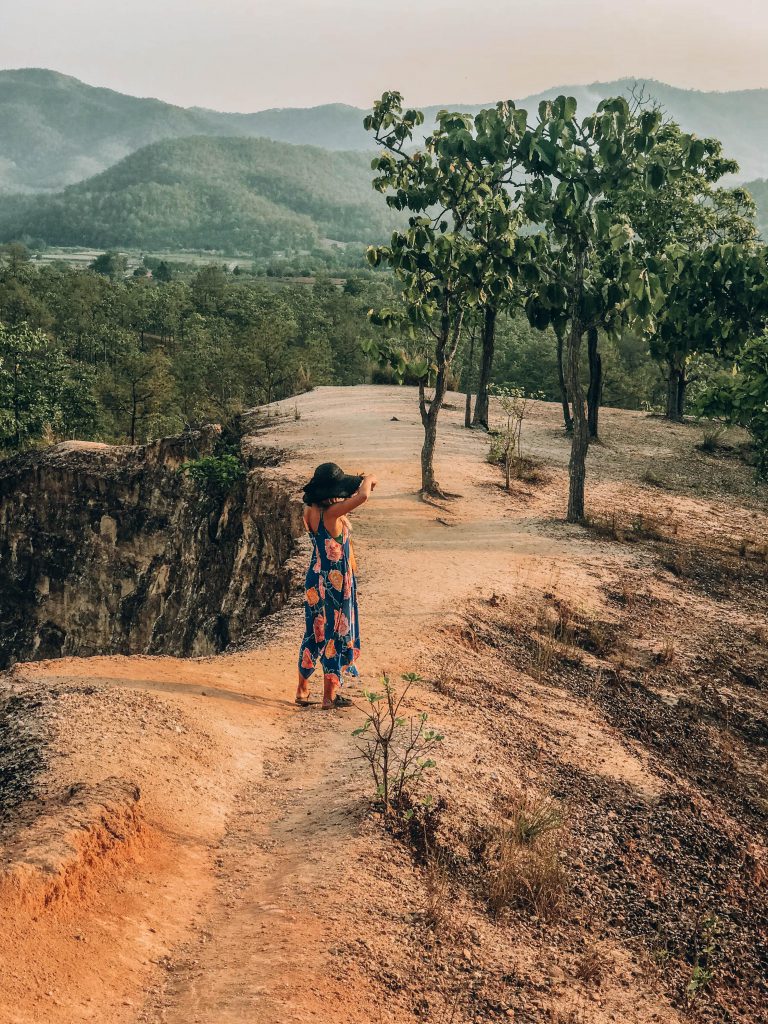
I’ll be honest with you: I almost didn’t make the trip to Pai when visiting Thailand. My friends in Chiang Mai told me to just “chill out, go to nice cafes, eat nice food, listen to music and relax”, which, fair enough, is basically the entire Pai experience. But I’m really glad I went. Things to do in Pai range from hiking at sunrise to floating down rivers and eating your body weight in street food, and the whole place just has this wonderful hippie, jungly energy that pulls you in the moment you arrive. It doesn’t have a beach, yet somehow it still feels a little beachy. Pai is genuinely one of those places that’s hard to explain until you’re there.
This guide covers everything you need to know, the best things to do in Pai, where to stay, how to get there, and what to eat. Whether you’ve got a day or a week, Pai will surprise you.
PAI, THAILAND ESSENTIALS
✈️ Getting There / The journey to Pai is half the adventure. From Chiang Mai, you take a minibus that winds through 762 bends, yes, 762 mountain curves, across the Mae Hong Son Loop. It takes around 3 to 4 hours, and motion sickness tablets are your best friend (ask me how I know). Book your minibus seat through 12Go Asia. Alternatively, if you’re coming from Bangkok, fly into Chiang Mai first. If you’d rather skip the sweaty public transfer game, WelcomePickups offers reliable private airport transfers so you start your trip stress-free. Search for flights into Thailand on Skyscanner.
🚗 Getting Around / Pai is small enough to walk the centre, but for reaching the waterfalls, canyon, hot springs, and viewpoints scattered around the mountains, you’ll want to hire a scooter. Rental is cheap, usually around 150 to 200 THB per day, and gives you total freedom to roam. If you’re not confident on a motorbike, tuk-tuks and songthaews are available for shorter trips.
🎟️ Tours / Rather book a guided experience? The best ones to book in advance:
Pai Sunset Tour: Yun Lai Viewpoint, Pai Canyon & Two Huts
Sunrise at Jabo Viewpoint & Nam Lod Cave Private Tour
Nam Lod Cave Tour with Local Guide & Sunset at Two Huts
Pai Jungle Ziplining Adventure, 16 Platforms
Pai Tipsy Tubing with Local DJs
🏨 Stay / Pai has options for every budget, see the full picks below:
Budget: Common Grounds Pai
Mid-range: Pai Village Boutique Resort
Splurge: Reverie Siam
📱 Connect / Stay connected the moment you land. I use Holafly, use code TRAVELWITHPAU for 5% off.
🛡️ Get Insured / Don’t travel to Thailand without travel insurance, especially if you’re renting a scooter. I always use World Nomads, which covers adventure activities and offers reliable claims support.