Last Updated on October 2, 2026
Let me be honest with you: Genoa was not what I expected. My first impression was that it was a bit gritty, it’s not polished or prettified for tourists the way Rome or Florence can feel. But give it a chance, and I promise you won’t regret it. Genoa was one of the most genuinely surprising cities I’ve visited in Italy. Among all the things to do in Genoa, the combination of medieval lanes, extraordinary Renaissance palaces, the best focaccia of my life, and a fishing village right on the doorstep of the city centre won me over completely. Plus it’s cheap. And the food is exceptional.
This is my complete Genoa travel guide, everything I’d tell a friend who was heading there.
GENOA ESSENTIALS
✈️ Getting There / Genoa is well connected by rail to all major Italian cities. From Milan it’s around 1.5 hours; from Rome around 3 hours. The train is my preferred way to travel within Italy, easy, scenic, and often cheaper than flying. Book tickets on Trainline for the best fares. Genoa’s Cristoforo Colombo Airport is compact and close to the city, pre-book a transfer with WelcomePickups for a stress-free arrival with a fixed-price, English-speaking driver. Search flights on Skyscanner.
🚗 Getting Around / You don’t need a car in Genoa itself, but if you’re planning day trips to Portofino or Cinque Terre, having a car for part of your trip is useful. Compare rates on DiscoverCars.
🎟️ Tours / Genoa’s historic centre is best explored on foot, but guided tours bring the history to life in a way that’s hard to replicate independently. The best ones to book in advance:
Genoa Aquarium Entrance Ticket
Genoa Old Town Walking Tour: Caruggi and Palazzi
Guided Tour of the Rolli Palaces, UNESCO Site
Rooftop Pesto and Pasta Cooking Class
🏨 Stay / I stayed at Vo.Al. Concept Guest House near Genoa’s Central Station and loved it, see the full write-up below:
Budget: B&B Argentina
Mid-range: Starhotels President
Luxury: Bristol Palace Hotel
Search all Genoa hotels
🧳 Luggage Storage / If you’re early for check-in or have time to kill after checkout, no stress, there are luggage storage points all over Genoa. Use this website to find one nearby.
📱 Connect / Stay connected the moment you land. I use Holafly, use code TRAVELWITHPAU for 5% off.
🛡️ Get Insured / Don’t skip this. I use World Nomads, it covers activities, delays, and medical emergencies.
Things to Do in Genoa
1. Get Lost in the Caruggi (Medieval Lanes)
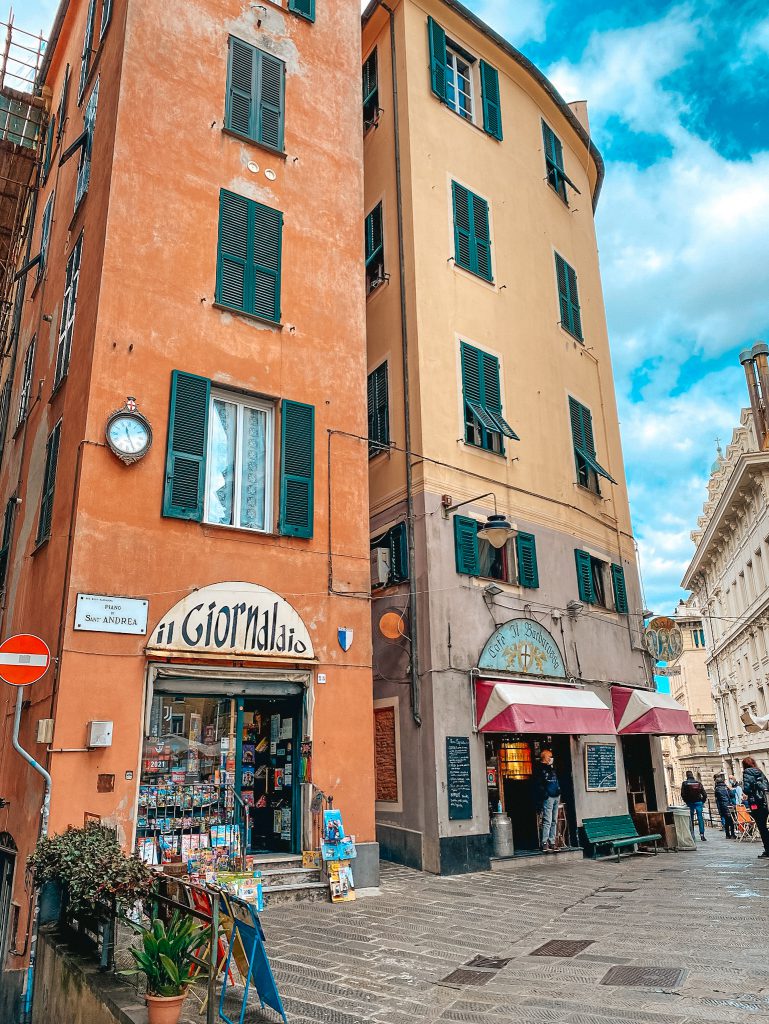
The caruggi, Genoa’s dense network of narrow medieval alleys, are the heart and soul of the city. This is a UNESCO World Heritage-listed historic centre, one of the largest in Europe, and walking through it feels genuinely medieval: dark, atmospheric, fragrant with focaccia and coffee, with sudden piazzas opening up unexpectedly and tiny street shrines (called edicole) tucked into corners.
Some highlights within the caruggi: the beautiful Abbazia di San Matteo, the Parrocchia di Santa Maria delle Vigne, and Piazza Campetto with its elegant architecture. A practical note: the caruggi’s reputation for being rough has improved significantly, but as with any dense urban neighbourhood, common sense applies, especially late at night. If you’d rather not navigate them solo on day one, this guided caruggi walking tour is a good way to get properly oriented before exploring alone for the rest of your trip.
2. Walk the Strada Nuova, Via Garibaldi
The Strada Nuova (now known as Via Garibaldi and Via Balbi) is the monumental showpiece of 16th-century Genoa. This is where the wealth of the Maritime Republic was put on display: a street of Renaissance palaces, the Palazzi Rolli, built by Genoa’s most powerful noble families to host visiting heads of state, cardinals and ambassadors. The sheer scale and grandeur of them is genuinely astonishing.
Via Garibaldi is today a UNESCO-listed street, and the palaces are some of the finest examples of Renaissance civic architecture in Italy. Walking it even without going inside any of the museums is worthwhile for the architecture alone, but if you want proper context on how the whole Rolli system worked, this guided tour of the Rolli Palaces covers the history in a way a plaque never can.
3. Explore Palazzo Rosso and Palazzo Bianco
Two of the Palazzi Rolli on Via Garibaldi are now world-class art museums open to the public. Palazzo Rosso (the Red Palace) houses an extraordinary collection of Flemish and Italian paintings including Van Dyck, Veronese and Rubens. Palazzo Bianco (the White Palace) across the street contains further Flemish masterworks. Both are also magnificent as architecture, gilded ceilings, frescoed rooms, and the original furnishings of a 17th-century noble household.
If you visit only one museum in Genoa, make it one of these two, check current opening times and tickets for Palazzo Rosso here.
4. Tour the Opulent Palazzo Reale
Did you know Genoa has a Royal Palace? It was the Genoese residence of the House of Savoy, who acquired it in 1824. If you’re a fan of these palatial visits, don’t miss the Gallery of Mirrors, a total display of luxury. Admission is around €6, and it’s an easy addition if you’re already doing the Strada Nuova palaces nearby, or book a combined guided tour of the Rolli Palaces and Palazzo Reale if you’d rather have the history explained properly.
5. Visit Christopher Columbus’ Childhood Home
Genoa’s most famous son is Christopher Columbus, and despite spending most of his adult life in Spain, the house where he grew up still stands in the city. The Casa di Colombo on Piazza Dante (just inside the Porta Soprana, one of the original city gates) is a partial facade from the 15th century, with a small garden and explanatory panels. It’s not a grand museum, but it’s a quietly moving spot to stand and consider that the man who “discovered” the Americas grew up a few metres from where you’re standing.
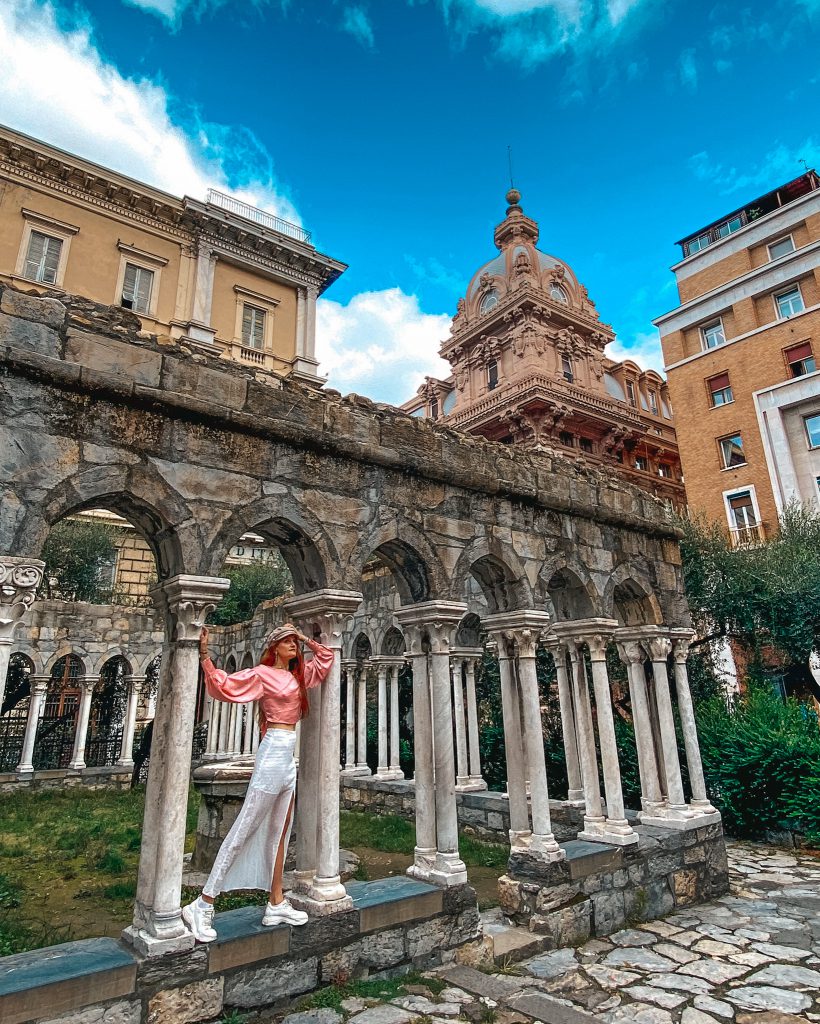
While you’re here, visit the adjacent Sant’Andrea’s Cloister, a beautifully preserved cloister with double rows of columns and an interior well, originally from a convent and later converted into a prison.
6. Walk Around Porto Antico at Sunset
The Porto Antico, the Old Port, has been beautifully revitalised and is now one of the most pleasant parts of the city to spend an afternoon. The best time is at sunset, when the light turns everything golden and the harbour fills with the reflections of boats and waterfront buildings.
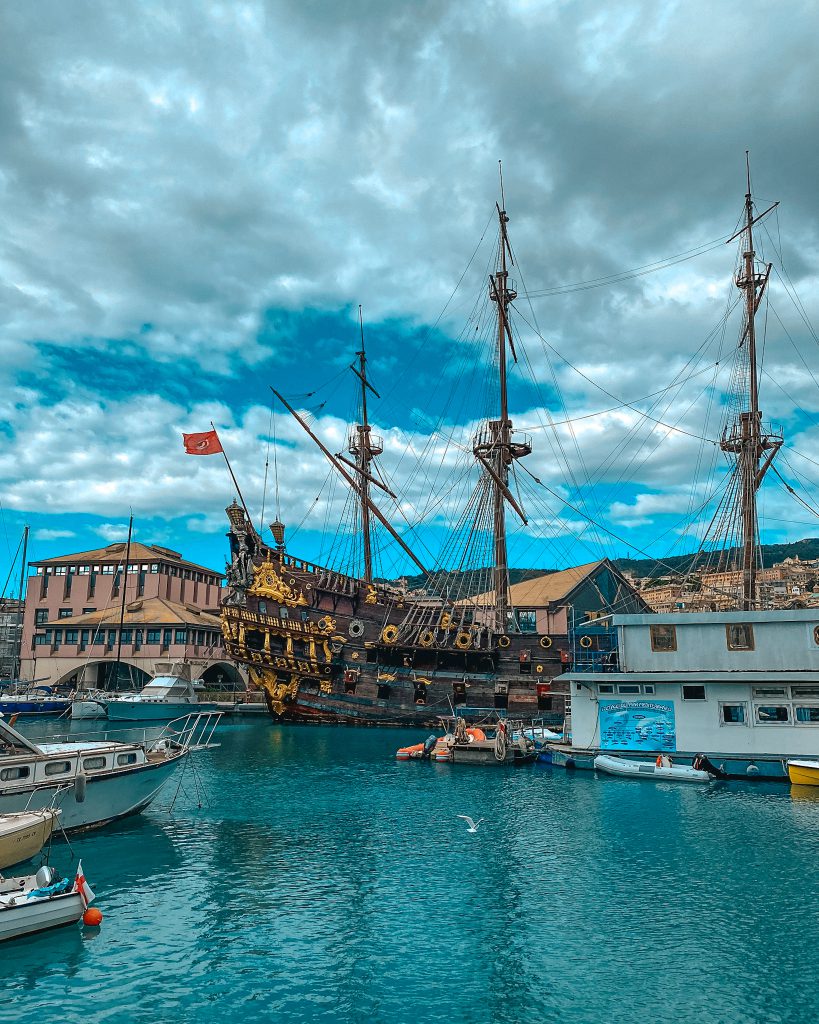
Historical note: this is where Genoa’s ships departed during the era of the Maritime Republics, when the city was one of the most powerful trading powers in the Mediterranean. Look out for the Neptune Galleon, actually a replica Spanish galleon built for Roman Polanski’s film Pirates, now permanently moored in the harbour and one of the more surreal sights in any Italian city.
7. Go Up the Bigo Elevator
The Bigo is Porto Antico’s most distinctive architectural landmark, designed by Renzo Piano (Genoa’s most famous contemporary son), it resembles a giant octopus with a panoramic elevator rising from one of its arms. The views over the port, the historic city centre and the Ligurian Sea from the top are excellent and the ride only costs around €4. It was originally built for the 1992 Columbus Festival, marking the 500-year anniversary of Columbus’s voyage. Book Bigo lift tickets in advance to skip the queue in peak season.
8. Shop (Food) Till You Drop at Eataly
Right opposite the Bigo is a free alternative for great views of the port: an elevator up to Eataly, a store of Italian gourmet gastronomic products. The views from the top aren’t quite as spectacular as the Bigo’s, but they’re free, and the cafeteria offers a good perspective of the port with a cappuccino for around €1.30. You’ll end up spending more than that though, to me, Eataly is an Italy food lover’s paradise, budget proper time to browse.
9. Visit the Genoa Aquarium
The Acquario di Genova is one of the largest aquariums in Europe and one of the most visited attractions in Italy. Over 600 different species of marine life across 70 tanks, including dolphins, sharks, penguins, seals and a walk-through tunnel beneath a shark tank. It’s located right in the Porto Antico and is excellent for families or anyone with even a passing interest in the sea. Book Genoa Aquarium tickets in advance, queues can get long in peak season, especially with kids in tow.
10. Eat Pesto the Proper Way
Pesto comes from Genoa. Full stop. The Genovese version, made with fresh basil, garlic, pine nuts, Parmigiano and Pecorino cheeses, and local olive oil, ground with a mortar and pestle, is a completely different thing to the stuff that comes in a jar. Try it on trofie (the traditional short pasta) or trenette with green beans and potato (a classic Ligurian combination that sounds odd and tastes extraordinary).
Best spots for pesto pasta: Zeffirino (the classic, beloved by locals and tourists alike), Trattoria da Maria (old-school, loud, delicious, zero frills), Mangiabuono, Zimino, and Trattoria Rosmarino. Prefer to make it yourself? This rooftop pesto and fresh pasta cooking class teaches you the proper mortar-and-pestle method, with wine included.
11. Try Focaccia, as Much as Possible
Genovese focaccia is legendary, and for good reason: thick, dimpled, olive-oil-drenched, salty, chewy, and absolutely nothing like the supermarket version. The Genoese eat it for breakfast, as a snack, for lunch. It is a way of life.
Best focaccerias in the city: Focacceria Mario (operating since 1936, this is the benchmark), Focaccia e Dintorni, and Focacceria Genovese. Try the classic, then try the version topped with cheese (focaccia di Recco if you can find it, it’s a different beast entirely).
12. Walk the Sottoripa Arcades
The Sottoripa is a long medieval arcade running along the seafront near the Porto Antico, one of the oldest streets in Genoa, lined with shops, bars, and small restaurants under dark stone arches. It has a wonderfully atmospheric, slightly timeless quality, particularly in the early evening when the working day is ending and locals stop in for aperitivo. It connects the old city to the port and makes for a lovely, uncrowded alternative to the more tourist-heavy streets.
13. Admire San Lorenzo Cathedral
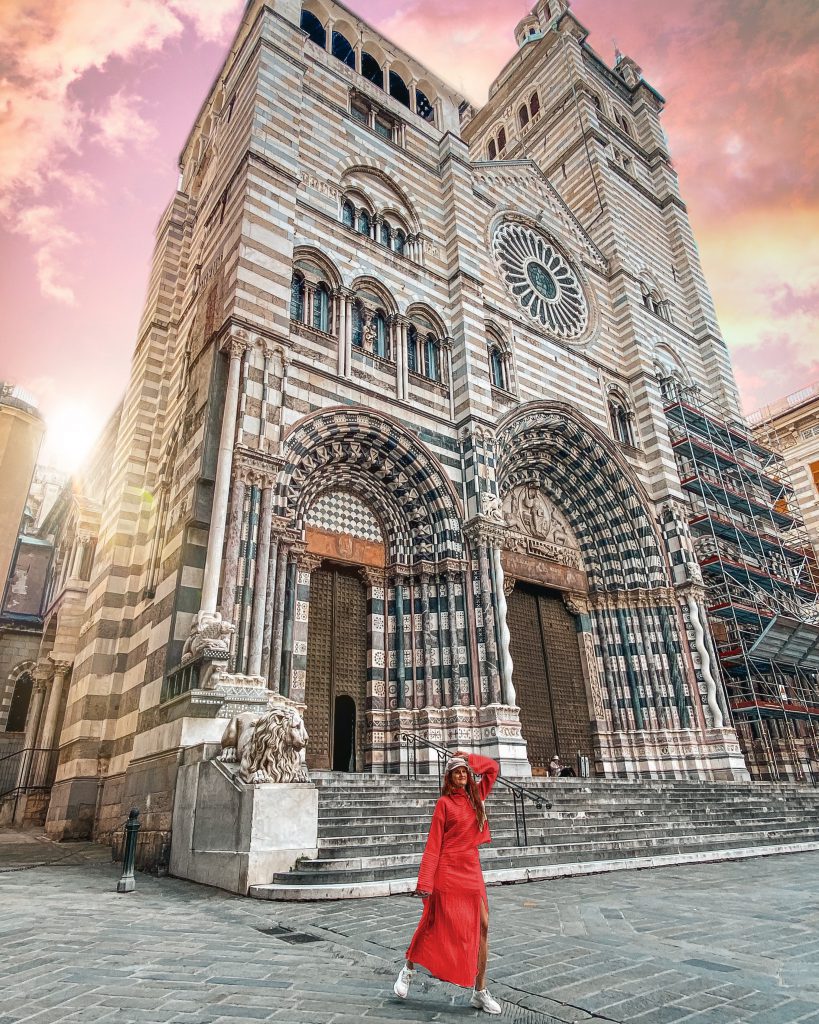
The Cattedrale di San Lorenzo is Genoa’s most important church, built in the 9th century in Genoese Gothic style and expanded repeatedly over the centuries, with a striking black-and-white marble-striped facade. Entry is free, and the interior contains the Treasury of San Lorenzo, which holds some remarkable medieval reliquaries including a purported fragment of the True Cross and the plate on which John the Baptist’s head was supposedly served to Salome. Entrance to the treasury requires a ticket, check current entry times and prices here.
14. People-Watch at Piazza de Ferrari
Piazza de Ferrari is Genoa’s nerve centre, ringed by impressive buildings including the Palazzo Ducale and the Opera. Other nice squares nearby worth a wander are Piazza delle Erbe and Piazza San Donato. Visit the Palazzo Ducale for the cultural side, but also consider the aperitivo at its bar, Mentelocale, from 18:20 to 21:30 daily, around €12 gets you a cocktail and a proper food buffet, which is not bad at all.
15. Visit the Lanterna Lighthouse
The Lanterna di Genova is one of the oldest lighthouses in the world still in operation, and a symbol of the city. Dating from 1128 (with later modifications), it stands on a promontory west of the city and offers sweeping views of the Ligurian coastline. It’s a bit of a hike or a short taxi/bus ride from the centre, but the views from the lighthouse park and from the observation level are excellent. There’s also a small museum inside.
16. Have a Craft Beer at Kamun Lab
Tucked into the caruggi, Kamun Lab is a genuinely good craft beer bar that also provides free snacks with your drink. It’s the kind of place where you go for one beer and stay for three. A perfect spot to rest your feet mid-afternoon after hours of walking.
17. Wander Boccadasse
Boccadasse is the neighbourhood that makes people rethink everything they thought they knew about Genoa. Until recently an independent fishing village, it now forms part of the city’s eastern edge along the Costa Ligure, but it still looks and feels completely separate from urban Genoa. Coloured houses clustered around a small harbour, fishing boats pulled up on the beach, gelato eaten on the harbour wall. If you can’t get to Cinque Terre, Boccadasse is your consolation prize, and it’s a very good one.
Follow Corso Italia along the seafront to get there, or take a bus from the centre.
18. Panoramic Views from Spianata Castelletto
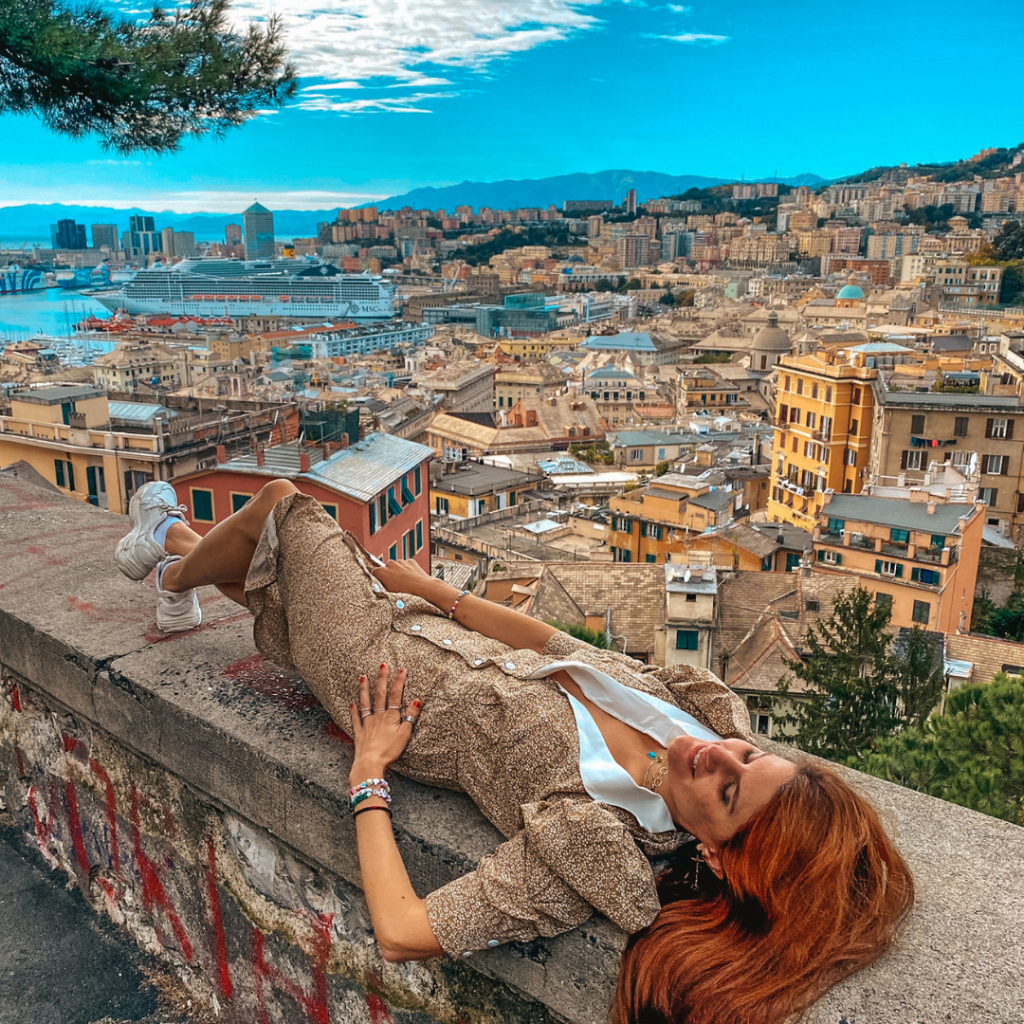
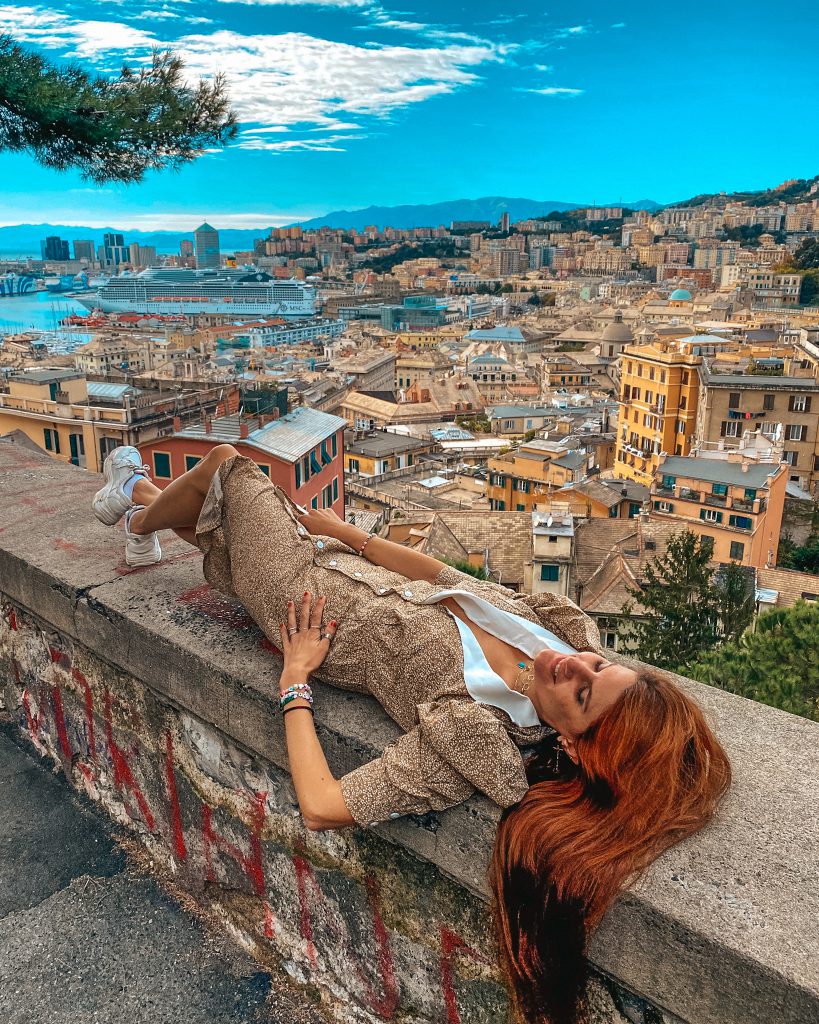
For the best views over Genoa, head up to the Spianata Castelletto, a terrace high above the city with Genoa spread at your feet. Access it via the Liberty-style elevator near Piazza Portello (€0.90) or by walking up. Sunset from here is spectacular, especially in autumn when the light is low and golden. It’s a local favourite for an evening aperitivo with a view.
19. Spot Genoa’s Street Art
Genoa’s glory days from the 15th to 17th centuries drew Flemish master painters who established a thriving art movement in the city, creating masterpieces like the Portrait of a Lady. Those foundations live on among a newer generation of street artists leaving their own mark on the ancient port city. One prominent native, known as Tiler, uses computer software along with tiles and mosaics to create street art that spreads his message prolifically around town. Worth keeping an eye out for as you wander the caruggi.
Day Trips from Genoa
Cinque Terre
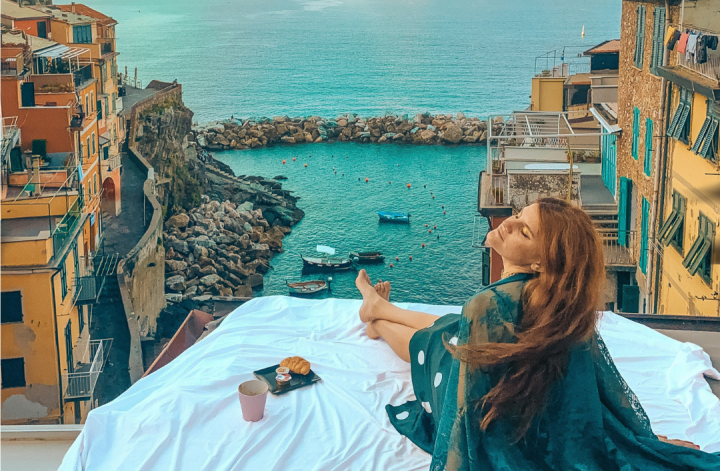
Cinque Terre, five small villages threaded along the Ligurian coast, is under an hour from Genoa by train, making it a very viable day trip. Book a guided Cinque Terre day trip from Genoa, or take the train to La Spezia and hop on the local Cinque Terre Express to any of the five villages yourself. I’ve written a full guide to which villages to prioritise, where to hike, and where to eat, my complete Cinque Terre bucket list covers all of it in depth.
Portofino
Portofino, one of the most glamorous villages on the Italian Riviera, is around 45 minutes from Genoa by bus or car. Book a Portofino day trip from Genoa, or hire a car with DiscoverCars if you’d rather go at your own pace. If you want to see more of the coast in one go, this full-day boat tour to Camogli, San Fruttuoso, and Portofino covers all three by motorboat from Genoa’s Old Port, with a stop at San Fruttuoso’s abbey and the Christ of the Abyss statue, free time to swim in Portofino, and lunch in Camogli included.
Nervi
Nervi, technically still within Genoa’s city limits, is the closest proper swimming spot to the centre and an easy half-day trip if you don’t want to go far. The regional train from Genova Brignole takes just 15 minutes, and once there, the Passeggiata Anita Garibaldi is a 2km cliffside walk connecting the marina to Capolungo beach, with the Nervi Parks (rose gardens, three small museums, and genuinely lovely grounds) right alongside it. Book tickets on Trainline.
Santa Margherita Ligure
Santa Margherita Ligure, the larger, calmer town next door to Portofino, is around 30 minutes from Genoa by train and makes a genuinely good alternative if Portofino’s prices and crowds put you off. It has its own proper beaches, a relaxed promenade, and pastel-painted buildings without quite the same price tag, and it’s also the jumping-off point for buses and boats onward to Portofino itself if you want to see both in one day. Book tickets on Trainline.
Sestri Levante
Sestri Levante, around an hour from Genoa by train, sits on a small peninsula between two bays, the aptly named Bay of Silence and the wilder Bay of Fables. It’s a proper sandy-beach town rather than a cove-and-cliffs one, popular with Italian holidaymakers rather than the Portofino crowd, and a good full-day option if you want beach time along with the old town. Book tickets on Trainline.
Where to Stay in Genoa
Genoa is compact enough that almost anywhere in or near the historic centre puts you within walking distance of the caruggi, Via Garibaldi, and Porto Antico, so the real choice here is more about budget and style than location. Here’s one pick per tier.
Luxury: Bristol Palace Hotel
A five-star hotel right in the historic centre, a short walk from Via Garibaldi and the caruggi. Premium bedding, deep soaking bathtubs, and easy access to the UNESCO-listed streets. Best for couples and special occasions.
Mid-range: Starhotels President
Right opposite Genoa Brignole train and metro station, a genuinely easy base if you’re arriving by train. Modern, comfortable rooms with air conditioning and a proper buffet breakfast, plus a restaurant run by Eataly serving Ligurian dishes on site. Best for anyone who wants a reliable, well-located mid-range stay without hunting around.
Budget: B&B Argentina
Just 100 metres from Genova Brignole train station, making it an easy base for arriving by train and exploring on foot or by metro. Best for backpackers and short stopovers.
Getting To & Around Genoa
Genoa’s Cristoforo Colombo Airport (GOA) receives direct flights from several UK cities, though choices are more limited than flying into Milan or Turin, Ryanair and other budget carriers operate routes, so check prices on Skyscanner and compare options before booking. Pre-book your airport transfer with WelcomePickups. The most enjoyable way to arrive, though, is by train, Genoa sits on the main west coast Italian rail corridor with excellent connections from Milan (1h30), Turin (1h45), Rome (3–4h) and Florence (around 2h30). Book tickets on Trainline.
The train station (Genova Piazza Principe or Genova Brignole) is central and walkable to most sights, and once you’re there, Genoa itself doesn’t need a car, the caruggi and Porto Antico are all on foot. You’ll only want one for day trips further along the coast to Portofino or Cinque Terre.
How Long to Spend in Genoa
I’d say the minimum for things to do in Genoa is two full days, one for the historic centre (caruggi, Strada Nuova, Porto Antico) and one for the rest (Boccadasse, Castelletto, a day trip to Portofino or Cinque Terre). Most people who spend only one day end up wishing they’d stayed longer.
Three days is the sweet spot if you want to combine the city proper with a day trip to Cinque Terre. If you have four or five days and the weather is good, add Portofino and a couple of slow mornings eating focaccia in various focaccerias.
Important: If you’re planning to visit the Strada Nuova palaces, check their opening days in advance, they have limited operating days and it would be a shame to miss them.
Best Time to Visit Genoa
Spring (April to June) and autumn (September to October) are the best times to visit Genoa. Temperatures are pleasant for walking, the city requires a lot of it, between the hills, the caruggi and the waterfront, and the light in September and October is particularly beautiful.
Summer is warm and the city is lively, but July and August can get humid. The positive is that Genoa is much less overwhelmed by tourists than Florence or Rome in summer, so it retains some of its authentic character even at peak times.
Winter is quiet and mild by Italian standards. If you’re combining Genoa with Cinque Terre, note that some ferries and boat connections between the villages operate on reduced schedules in winter.
Genoa FAQs
Is Genoa worth visiting?
Absolutely, and it’s arguably Italy’s most underrated city. Genoa was the capital of one of the most powerful Maritime Republics in history, and the evidence of that wealth is everywhere in the Renaissance palaces, art collections and port architecture. It’s less polished than Florence or Rome, but that authenticity is exactly what makes it interesting. Plus the food, pesto, focaccia, fresh seafood, is extraordinary.
What is Genoa famous for?
Genoa is famous for being the birthplace of Christopher Columbus, the home of pesto (it was genuinely invented here), the Palazzi Rolli (UNESCO-listed Renaissance palaces on Via Garibaldi), one of Europe’s largest aquariums, and its historic medieval lanes, the caruggi.
How many days do you need in Genoa?
Two days is the practical minimum; three days if you want to add a day trip to Cinque Terre or Portofino. One day is possible but feels rushed, you’ll want more time.
What is the best food to eat in Genoa?
Fresh pesto on trofie pasta is non-negotiable. Then focaccia Genovese (try it for breakfast, Genoese-style). Beyond that: fresh seafood, farinata (a savoury chickpea flour pancake), and pandolce (a sweet bread, especially good at Christmas). For restaurants, I recommend Trattoria da Maria for old-school, no-frills Ligurian cooking.
When is the best time to visit Genoa?
Spring (April–June) and autumn (September–October) are ideal: warm, manageable crowds, and beautiful light. Summer is fine but can be humid. Winter is quiet and prices are low, a good time for museum visits and indoor experiences.
How do I get from Genoa to Cinque Terre?
By train, it’s under an hour from Genoa Brignole or Piazza Principe to La Spezia, and then a few minutes on the local Cinque Terre Express to any of the five villages. Book on Trainline. Or book a guided Cinque Terre day trip from Genoa.
More Italy on the blog: Cinque Terre Bucket List | Pisa Bucket List | Milan Bucket List | Venice Bucket List
Enjoyed this article? Support my work by buying me a latte. Otherwise, do me a great favor of leaving a comment and following me on Instagram (@travelwithpau). Feel free to say ‘Hello!’ I don’t bite. And make sure you save the article for later on Pinterest!

This post contains affiliate links. If you click on one and make a purchase, I might make a small commission, at no extra cost to you in order to help support my blog.