
Last Updated on October 2, 2026
I’ll be honest with you: I almost didn’t make the trip to Pai when visiting Thailand. My friends in Chiang Mai told me to just “chill out, go to nice cafes, eat nice food, listen to music and relax”, which, fair enough, is basically the entire Pai experience. But I’m really glad I went. Things to do in Pai range from hiking at sunrise to floating down rivers and eating your body weight in street food, and the whole place just has this wonderful hippie, jungly energy that pulls you in the moment you arrive. It doesn’t have a beach, yet somehow it still feels a little beachy. Pai is genuinely one of those places that’s hard to explain until you’re there.
This guide covers everything you need to know, the best things to do in Pai, where to stay, how to get there, and what to eat. Whether you’ve got a day or a week, Pai will surprise you.
PAI, THAILAND ESSENTIALS
✈️ Getting There / The journey to Pai is half the adventure. From Chiang Mai, you take a minibus that winds through 762 bends, yes, 762 mountain curves, across the Mae Hong Son Loop. It takes around 3 to 4 hours, and motion sickness tablets are your best friend (ask me how I know). Book your minibus seat through 12Go Asia. Alternatively, if you’re coming from Bangkok, fly into Chiang Mai first. If you’d rather skip the sweaty public transfer game, WelcomePickups offers reliable private airport transfers so you start your trip stress-free. Search for flights into Thailand on Skyscanner.
🚗 Getting Around / Pai is small enough to walk the centre, but for reaching the waterfalls, canyon, hot springs, and viewpoints scattered around the mountains, you’ll want to hire a scooter. Rental is cheap, usually around 150 to 200 THB per day, and gives you total freedom to roam. If you’re not confident on a motorbike, tuk-tuks and songthaews are available for shorter trips.
🎟️ Tours / Rather book a guided experience? The best ones to book in advance:
Pai Sunset Tour: Yun Lai Viewpoint, Pai Canyon & Two Huts
Sunrise at Jabo Viewpoint & Nam Lod Cave Private Tour
Nam Lod Cave Tour with Local Guide & Sunset at Two Huts
Pai Jungle Ziplining Adventure, 16 Platforms
Pai Tipsy Tubing with Local DJs
🏨 Stay / Pai has options for every budget, see the full picks below:
Budget: Common Grounds Pai
Mid-range: Pai Village Boutique Resort
Splurge: Reverie Siam
📱 Connect / Stay connected the moment you land. I use Holafly, use code TRAVELWITHPAU for 5% off.
🛡️ Get Insured / Don’t travel to Thailand without travel insurance, especially if you’re renting a scooter. I always use World Nomads, which covers adventure activities and offers reliable claims support.
Pai Bucket List: 18 Things to Do in Pai
1. Watch the Sunset at Pai Canyon
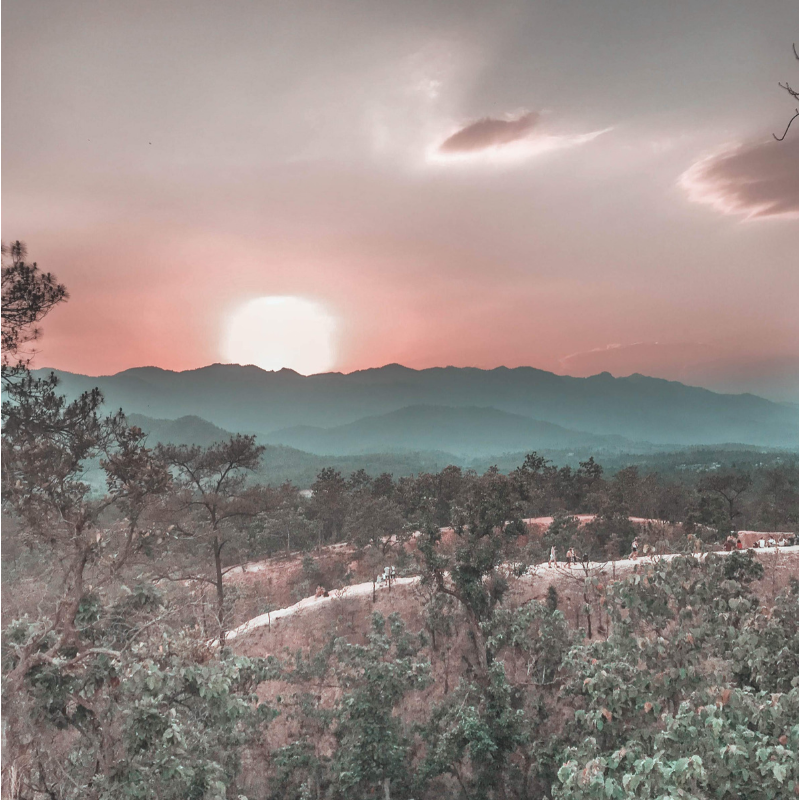
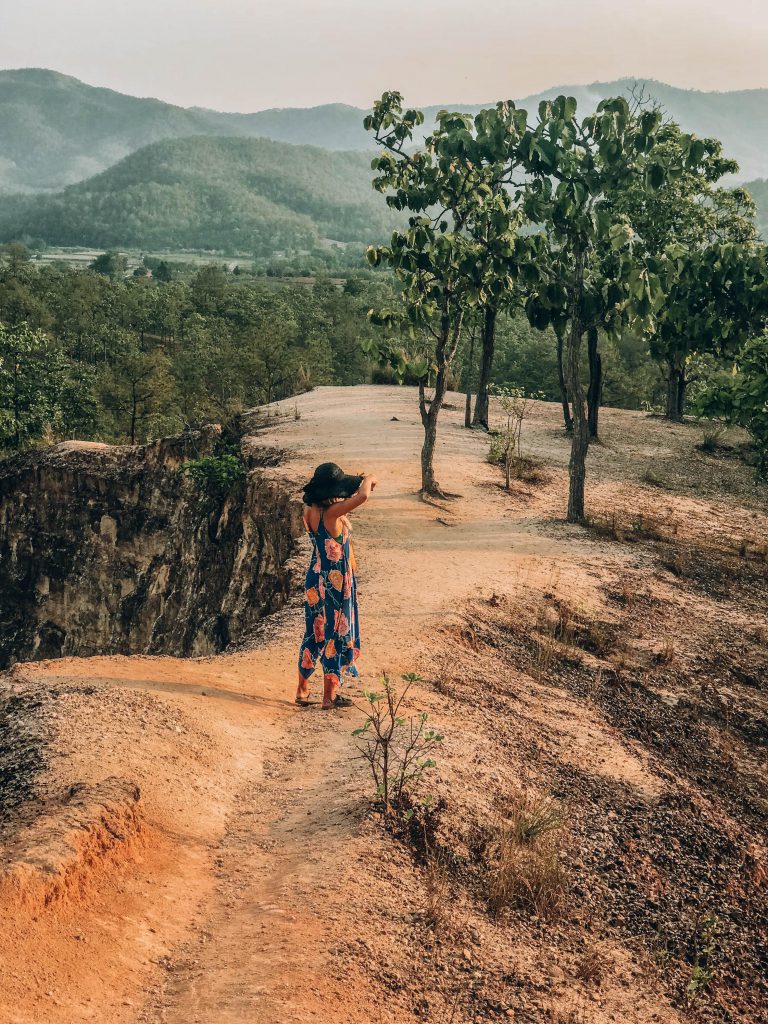
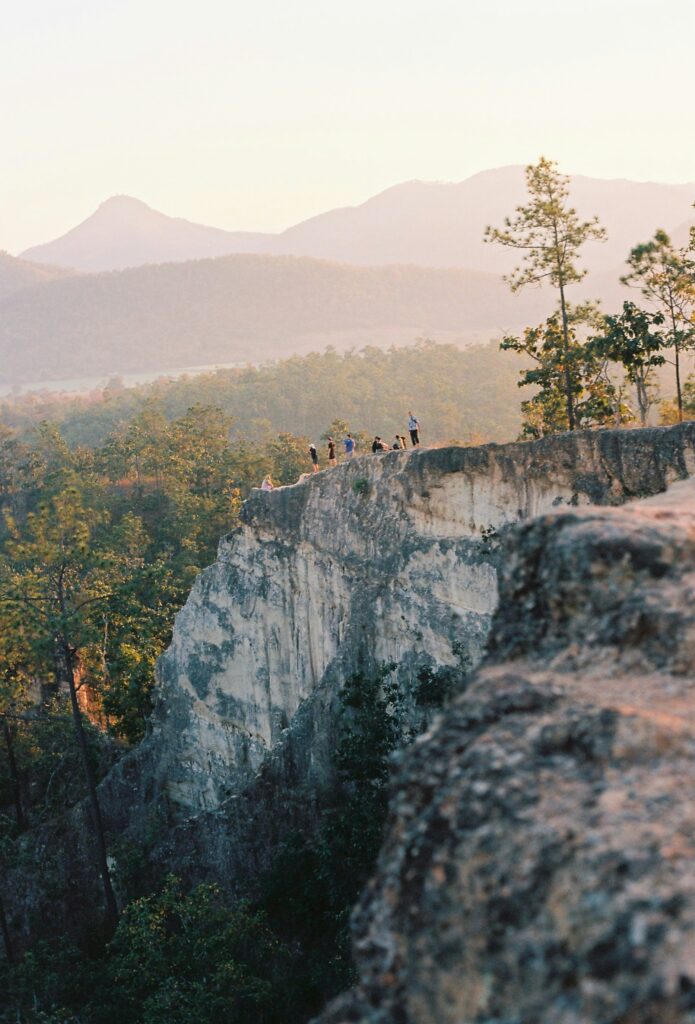
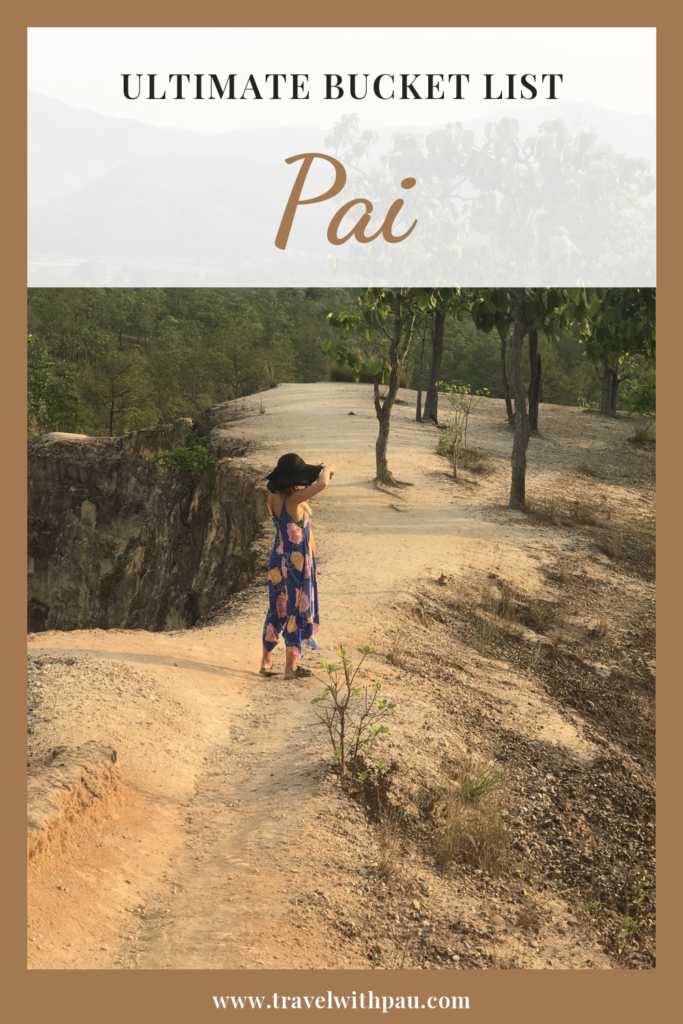
Less than 8km from town, Pai Canyon is a stunning natural formation of red-orange earth ridges, narrow trails, and dramatic drops, Pai’s answer to the Grand Canyon, just a bit more compact and entirely more accessible by scooter. You can hike along the thin ridge paths in the late afternoon as the light turns golden, and then stay for a sunset that will have your jaw properly on the floor. Wear sensible shoes, the paths are narrow and the drops are real. Go early to bag a good viewpoint spot, it gets busy. I’ll admit I was a bit skeptical going in, another sunset canyon on another travel itinerary, but it turned out to be a genuine highlight of the whole trip. Afterwards, head to Two Huts just up the road, a laid-back bar with cushions and low tables that’s the classic spot to keep watching the sky turn as it gets dark. Book the Yun Lai, Pai Canyon and Two Huts sunset tour if you want all three of the best golden hour spots covered in one evening.
2. Catch Sunrise at Yun Lai Viewpoint
If you can drag yourself out of bed before dawn (worth it, promise), Yun Lai Viewpoint rewards you with one of the most beautiful scenes in northern Thailand. A sea of clouds fills the valley below while the mountains glow pink and orange. It’s peaceful, it’s cool, and it feels like you’ve discovered Pai all over again from above. The viewpoint is accessible by scooter and gets busy fast once the sun rises, so aim to arrive before 6am. Book the Yun Lai sunrise, Two Huts sunset private tour if you want both golden hours covered by a private guide.
3. Visit the White Buddha
High on a hill overlooking town, the White Buddha (officially Wat Phra That Mae Yen) is a large seated Buddha statue reached by a steep flight of around 350 steps, or a short scooter ride most of the way up if you’d rather save your legs. The 360-degree view over Pai and the surrounding valley from the top is genuinely one of the best in town, and it’s free to visit. Go for sunset if you don’t mind sharing the view, or sunrise if you want it mostly to yourself. If you’d rather have it woven into a fuller day out, book the Pai day trip covering hot springs, waterfalls and lunch.
4. Explore the Coffin Caves (Nam Lod / Lod Cave)
About 35km west of Pai, Nam Lod Cave (also called Lod Cave) is one of northern Thailand’s most impressive natural wonders. You’ll travel through the large limestone cave system on a bamboo raft, pushed along by a local guide with a bamboo pole, while gas-powered lamps illuminate stalactites and stalagmites overhead. The caves also contain faint prehistoric paintings on the cavern walls alongside 1,400-year-old teakwood coffins left by the Lawa tribe, a haunting and fascinating piece of ancient history that makes this so much more than a standard cave visit. Budget around half a day for the round trip, or book the sunrise at Jabo Viewpoint and Nam Lod Cave private tour to pair it with an early sunrise stop beforehand.
5. Swim at Mor Paeng and Pambok Waterfalls
The closest and most accessible of Pai’s waterfalls, Mor Paeng is just 9km from the town centre and a brilliant spot for a refreshing dip. There’s a natural rock slide here that sends you straight into the cool plunge pool, it’s as fun as it sounds. A little further out, Pambok Waterfall (around 15km from town) is quieter and less visited, a good second stop if Mor Paeng feels crowded. Go on a weekday or early morning if you want to avoid the crowds either way, the ride there on a scooter along a winding jungle road is half the joy. Book the Pai day trip covering hot springs, waterfalls and lunch if you want Pambok included on a guided day out.
6. Soak in the Hot Springs
Slightly counterintuitively, Pai has natural hot springs, and yes, it is already warm in Pai, so arriving at a hot spring feels a little intense at first. Tha Pai Hot Spring, south of town, is the more accessible option, while Sai Ngam Hot Springs to the north are quieter and set among trees. Either way, the springs flow into pools surrounded by lush greenery, and there’s something wonderfully bizarre and relaxing about it. Go in the morning before it gets too hot outside to enjoy it properly. Book the Pai day trip covering hot springs, waterfalls and lunch if you’d rather have it woven into a fuller day out with a guide.

7. Visit the Land Split
One of Pai’s quirkiest attractions, the Land Split is exactly what it sounds like, a section of land that literally cracked open during a 2008 earthquake, creating a dramatic fissure that local farmers turned into a tourist attraction. You’ll find a charming bamboo walkway, coffee shop, and guesthouse set against the surreal sight of the split earth. It’s free to visit and worth a quick stop on a scooter loop around the area.
8. Explore Santichon Chinese Village
Santichon Village is a small Yunnanese Chinese settlement on the outskirts of town, distinctive mud-brick architecture, tea houses, and a genuinely different cultural flavour from the rest of Pai. There’s a small entry fee, and inside you’ll find simple activities like archery and a swing alongside tea tasting stalls. It’s a quick stop, but a good contrast to the jungle-and-waterfalls itinerary most of the day tends to be. Book the Pai day trip covering hot springs, waterfalls and lunch if you want it as part of a fuller guided day out.
9. Cross the Pai Memorial Bridge
This bamboo bridge over the Pai River is one of the most photographed spots in town and a gentle reminder of the region’s WWII history, it was built near the site of a bridge used by Japanese soldiers during the Second World War, and a small memorial honours those who lost their lives here. Walk across at sunset for gorgeous light and a peaceful moment away from the busier streets. Book the Pai day trip covering hot springs, waterfalls and lunch if you’d rather have it as one stop on a fuller guided day.
10. Ride a Motorbike Around the Mountains
This is, arguably, the single best thing to do in Pai. Hiring a scooter and just riding, winding up through rice paddies, past bamboo groves, over mountain passes, stopping at viewpoints, waterfalls, and villages, is pure freedom. The Mae Hong Son Loop that passes through Pai is one of Southeast Asia’s great motorcycle routes, and even a half-day loop out and back covers some breathtaking scenery. You don’t need to be an experienced rider, but do wear a helmet and take it slow on the bends.
11. Walk the Pai Walking Street Night Market
Every evening from around 6pm, Pai Walking Street transforms into a buzzing night market full of street food stalls, live music, handmade jewellery, tie-dye clothing, and incense. It’s relaxed, colourful, and very much the social heart of Pai. Don’t miss the mango sticky rice, the pad thai cooked fresh in front of you, and whatever mysterious skewered thing smells incredible from three stalls over. The sellers here are genuinely laid-back, sometimes not even watching their own stalls, which tells you everything about the Pai vibe. My one tip: walk the whole street once before you buy anything. I made the mistake of eating at the first stalls that looked good on my first night and missed out on some genuinely better options further down, once you’ve scoped it all out, go back for your favourites.
12. Go River Rafting on the Pai River
The Pai River flows right through town, and a bamboo rafting or tubing session is one of the most fun and relaxed ways to spend an afternoon. You’ll float past rice paddies and jungle banks, watch water buffalo wade through the shallows, and generally feel very smug about your life choices. For something more energetic, opt for white water rafting on the stretches between Pai and Mae Hong Son. Book the tipsy tubing tour with local DJs and watersports for the more sociable version of the float.
13. Hike to Mae Yen Waterfall
If you’re up for a more adventurous waterfall, Mae Yen requires a roughly 2-hour hike each way through rice fields and jungle, river crossings included, so this one is more of a proper adventure than a quick dip. It’s far more remote than Mor Paeng, which means far fewer people and a much more rewarding swim at the end. Take water, wear trainers, and start early to avoid hiking in the heat of the day. The route starts near Valhalla guesthouse, east of town, and is relatively easy to follow on Maps.me.
14. Get a Cheap Thai Massage
Pai is full of massage shops, and they are very, very cheap, think 150 to 250 THB for an hour. Some are on the walking street, others are in garden settings with bamboo huts and ambient music. This is not a thing to overthink, just wander until you find somewhere that feels right and treat yourself. In a place as chilled as Pai, a Thai massage is basically compulsory.
15. Visit the Eco Farms
Pai has a lovely cluster of eco farms and organic gardens in the surrounding countryside where you can learn about permaculture, pick fresh herbs, drink homemade herbal tea, and buy organic produce. Some offer cooking classes where you’ll go from garden to wok in an hour. It’s a genuinely peaceful way to spend a morning and connect with the slower, greener side of Pai. Browse cooking classes in Pai if you want to turn the visit into a proper lesson.
16. Discover Pai’s Art Scene
Pai has a quietly thriving art scene, think hand-painted signs, mural-covered walls, galleries in bamboo huts, and local artists selling prints and ceramics alongside the usual tourist tat. Wander the side streets off the walking street, pop into the independent galleries, and look out for the occasional live acoustic sets at cafes like Big’s Little Cafe, Witching Well, and Om Garden Cafe. Pai draws creative types, and it shows.
17. Take a Day Trip to Mae Hong Son
Mae Hong Son itself is a good half-day or full-day trip further out from Pai, about 2 to 2.5 hours away on the mountain loop, with a completely different, quieter character to Pai: traditional wooden Shan architecture, a lake-front temple in the town centre, and a slower pace again. A private car tour is the easiest way to do it in a day, most cover Ban Rak Thai (a Chinese Yunnanese tea village), Pang Oung (a pine-fringed lake often nicknamed the “Switzerland of Thailand”), waterfalls, temples, and a bamboo bridge along the way. Book the Mae Hong Son Highlights private car tour from Pai.
18. Sip a Coffee at Coffee in Love
Coffee in Love is a spacious cafe perched above rice paddies with sweeping mountain views, about a 10 to 15 minute scooter ride from the walking street. It became famous after appearing in the 2009 Thai film “Pai in Love” and later the 2012 Chinese hit “Lost in Thailand”, which is why it’s such a popular stop for Chinese visitors in particular. There’s no entrance fee, you just pay for food and drink, the chocolate brownies and banana cake are the local favourites, and the views are at their lushest during the green season from May to December.
Where to Stay in Pai
Pai is small enough that location barely matters, most of town is walkable and everything further out needs a scooter regardless. The real choice is pace and price: hostel energy in the centre, boutique comfort a short walk out, or a proper splurge on the riverside. I would thoroughly recommend Reverie Siam (where I stayed) and I explain more about it below.
Budget: Common Grounds Pai. A social hostel right in the centre of town, popular with solo travellers and backpackers. Great communal areas and easy to meet people.
Mid-range: Pai Village Boutique Resort. A charming, good-value resort a short walk from the walking street, right on the banks of the Pai River. Rustic wooden cottages, comfortable rooms, a pool, and a relaxed atmosphere. Best for couples and those who want a bit more privacy than a hostel.
Mid-range: Family House Zen Boutique Resort. A genuinely peaceful pick just across the river from the walking street, 5 to 10 minutes on foot from the centre but quiet enough that you’d never guess it. Saltwater pool, garden, and consistently excellent breakfast reviews.
Mid-range: The Quarter Pai. Spacious rooms with mountain-view balconies, a pool, and free bicycles and shuttles into town. A good option if you want resort comforts without the Reverie Siam price tag.
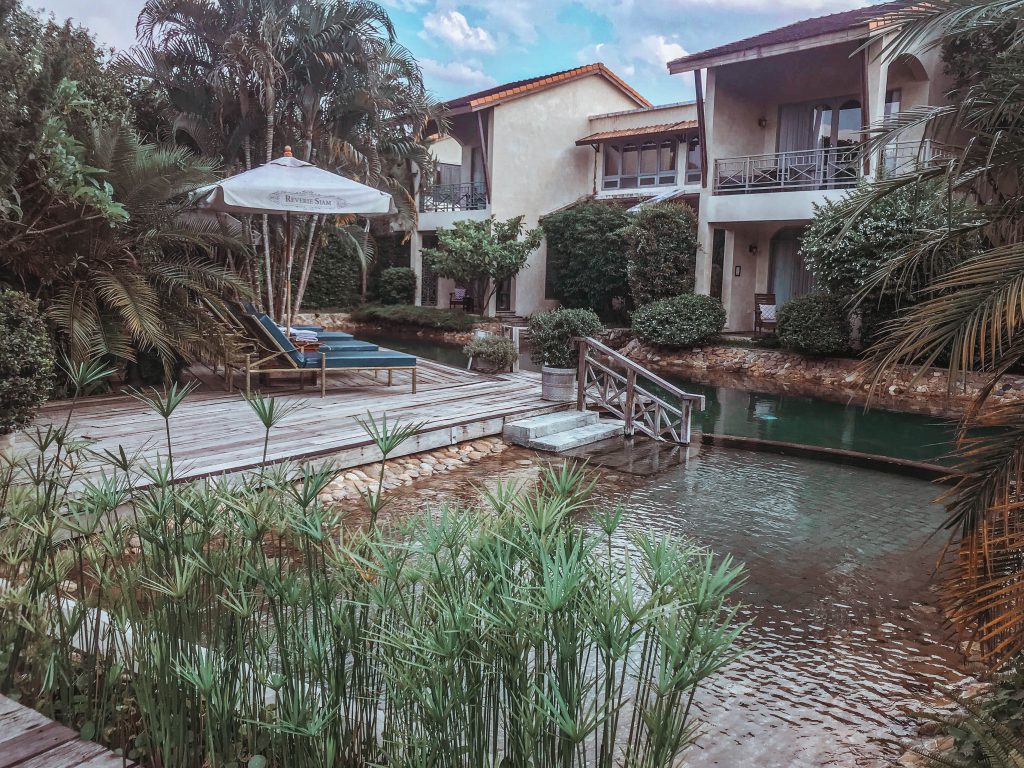
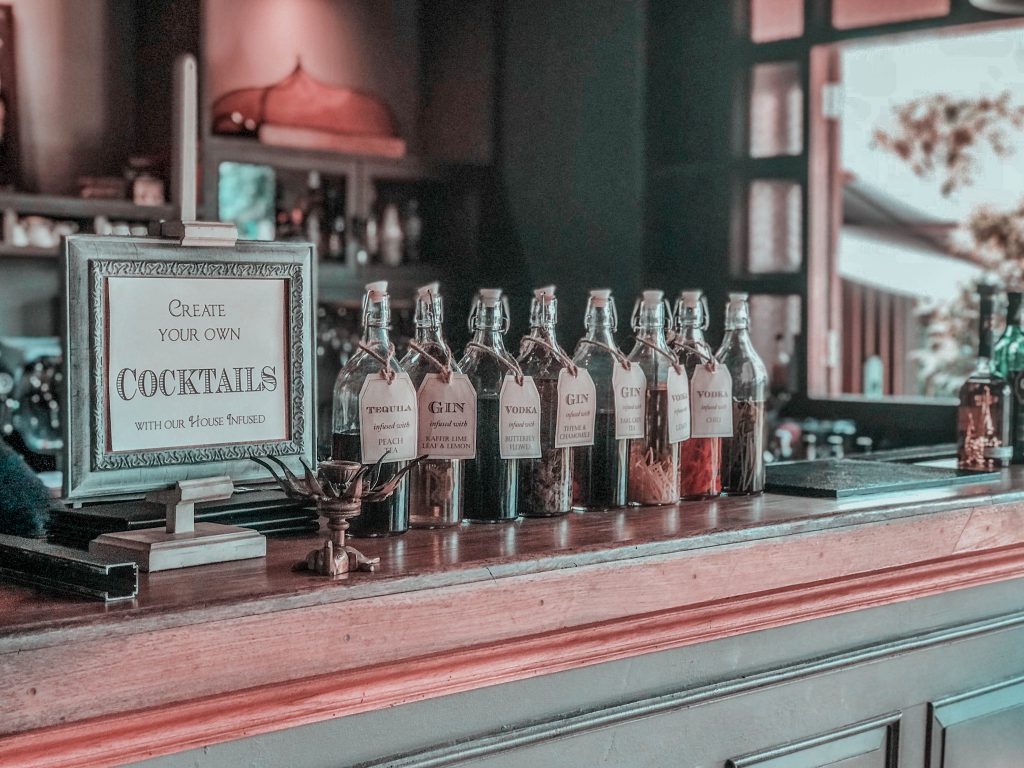
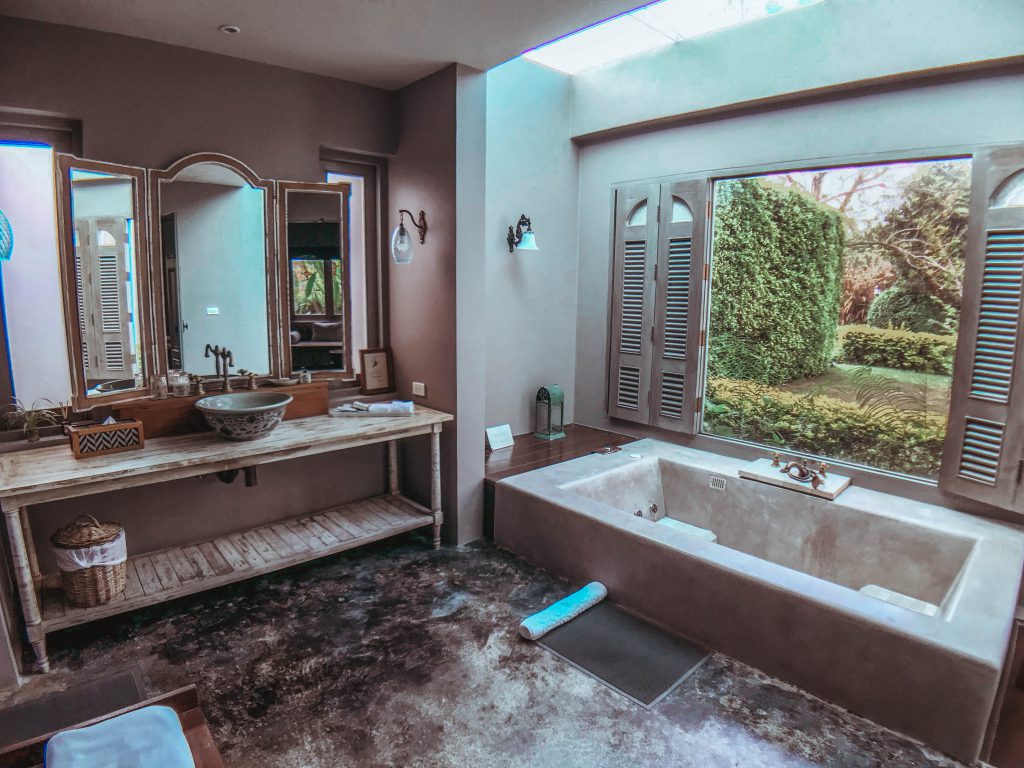
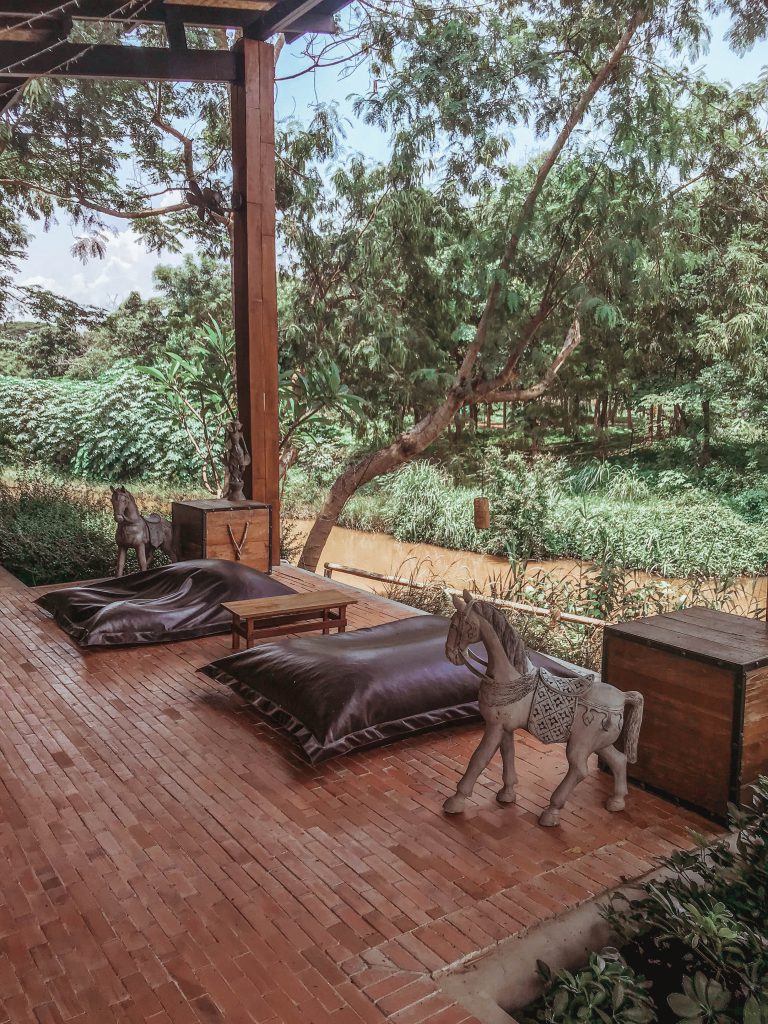
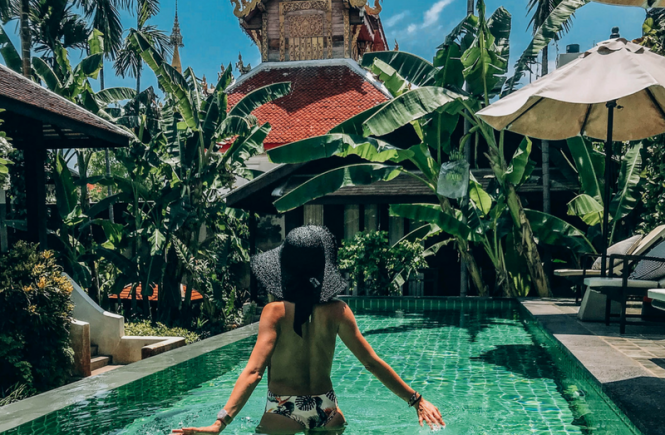
Splurge: Reverie Siam. This is the one. A French-inspired boutique hotel set in lush riverside gardens, Reverie Siam is genuinely unlike anywhere else in northern Thailand. Think infinity pools, a hedge maze, a Silhouette Bar, and Deluxe rooms with jacuzzi bathtubs overlooking the jungle. There’s a complimentary shuttle into town, so you don’t need to be on your scooter all the time. I stayed here and slept like an absolute baby, it’s a splurge, but it’s the kind of place that makes a trip feel truly special. If you can afford it, I would really encourage you to stay here. It’s one of a kind.
Where to Eat in Pai
Pai punches well above its weight for food, a mix of laid-back cafes, genuinely good Thai kitchens, and the walking street market covered above. If you only have time for a few meals, these are handpicked for consistently great reviews.
Breakfast: Bom Bowls
Smoothie bowls and pancakes in a relaxed, plant-filled setting, a good easy start before a day on the scooter.
Cafe stop: Earth Tone
Vegan and vegetarian-focused, with a genuinely loyal local following, worth building a slow morning around.
Dinner: Na’s Kitchen
A local favourite for proper Thai curries, unfussy and consistently good.
Dinner: Charlie & Lek
Highly rated by locals and travellers alike for home-style Thai cooking, one of the more reliable dinner picks in town.
Drinks: Jazz House
Live music and cheap drinks, with a laid-back door policy that lets you bring your walking street food in with you, a proper Pai institution.
How Long to Spend in Pai
You can technically do Pai in a day trip from Chiang Mai, as I did on my first visit, but I’d strongly recommend at least 2 to 3 nights. The whole point of Pai is slowing down, and you can’t do that in eight hours. Three days gives you time for a waterfall, the canyon, the caves, a sunrise, an evening on the walking street, and plenty of cafe-sitting in between. If you’re the sort of person who finds a place and never wants to leave, block out a week, plenty of people arrive for three days and stay for three weeks.
Best Time to Visit Pai
November to February is the sweet spot, cool, dry weather and those famous morning mists rolling through the valley, perfect for the viewpoints and waterfalls alike. If you don’t mind the heat, March to May is quieter but noticeably hotter and hazier due to seasonal burning in the region. Avoid June to October if you can, the monsoon brings heavy rain that makes roads slippery and some attractions harder to reach, though Pai is still charming, and much less crowded, even in the wet season if that’s the only time you can go.
Getting To & Around Pai
The journey to Pai is part of the adventure. From Chiang Mai, minibuses run regularly from the Arcade Bus Terminal and take 3 to 4 hours, winding through the famous 762-bend mountain road, so take motion sickness tablets if you’re at all prone to it. Book your minibus seat through 12Go Asia rather than turning up on the day. There’s no direct route from Bangkok, fly or take the overnight train to Chiang Mai first and pick up the minibus from there, search for flights into Thailand on Skyscanner. If you’d rather skip the public transfer game entirely, WelcomePickups offers reliable private transfers from Chiang Mai Airport. If you’re really tight on time and can’t stay overnight, it’s also possible to see Pai’s highlights as a long day trip, book a private day tour to Pai from Chiang Mai, though at around 7 hours round trip on that same mountain road, staying even one night is a far better way to experience the place.
Once you’re in Pai, the town centre itself is easily walkable, but almost everything else, the canyon, the waterfalls, the hot springs, the viewpoints, sits outside town and needs transport. Hiring a scooter (usually 150 to 200 THB a day) is by far the most popular option and gives you total freedom to roam, though tuk-tuks and songthaews are available for shorter hops if you’d rather not ride yourself.
Pai FAQs
Is Pai worth visiting from Chiang Mai?
Absolutely. The journey takes 3–4 hours each way, which is a lot for a day trip, but Pai offers a completely different atmosphere to Chiang Mai, slower, greener, and far more laid-back. If you have at least two nights to spare, it’s absolutely worth it.
Do you need a motorbike in Pai?
For the town centre, no, it’s very walkable. But to reach the canyon, waterfalls, hot springs, and viewpoints, you’ll need transport. A scooter rental is the best and cheapest option. If you’re not comfortable on a motorbike, book a guided tour that includes transport.
How bad is the road to Pai?
The 762-bend mountain road between Chiang Mai and Pai is infamous. The scenery is stunning but the motion can hit some people hard. Take travel sickness tablets an hour before departure, sit at the front if possible, and keep your eyes on the horizon rather than your phone.
Is Pai safe?
Pai is a very safe destination. The main risk is traffic accidents, the roads can be narrow and other riders inexperienced. Always wear a helmet when on a scooter, and be cautious on mountain bends.
How much does it cost to visit Pai?
Pai is one of Thailand’s cheapest destinations. Budget travellers can get by on 500–700 THB per day including food, accommodation, and scooter hire. Mid-range travellers should budget around 1,500–2,500 THB/day. Splurging at Reverie Siam will push costs higher but is worth every baht.
Enjoyed this article? Support my work by buying me a latte. Otherwise, do me a great favor of leaving a comment and following me on Instagram (@travelwithpau). Feel free to say ‘Hello!’ I don’t bite. And make sure you save the article for later on Pinterest!

This post contains affiliate links. If you click on one and make a purchase, I might make a small commission, at no extra cost to you in order to help support my blog.


7 Comments
What an utterly divine post! I’ll be amending the top spot on my travel bucket list ASAP!
This is making me dream of going! So many amazing things to do and see. My favorite has to be the eating part 😛
Wow that hotel looks delicious. What a place to be and explore from. Stunning.
Hi. How do you get there? Nearest airport in Thailand that we can fly in to get there please.
Hi Viven, Chiang Mai is the nearest airport you can fly to. Then book transport using 12goasia: https://12go.asia/?z=1943153
Anyone else find the 1861 viewpoint way more crowded than it was back in 2019? Was thinking of skipping it this trip unless you got a tip on going early.