If you’re based in London and looking for a day trip that genuinely takes your breath away, a Jurassic Coast day trip from London is one of the best you can make. Two hours from the capital (or just over by train), the Jurassic Coast stretches 154km from Exmouth in East Devon to Studland Bay in Dorset, a UNESCO World Heritage Site where 185 million years of geological history is exposed in the cliffs. Think towering limestone arches, chalk sea stacks, fossils tumbling onto the beach, and views that look like they belong in a BBC documentary (because they often do).
Wait, Jurassic Coast? Am I going to see dinosaurs? Sadly, no. But you will be walking along 185 million years of geological history instead, with rock formations from the Triassic, Jurassic, and Cretaceous periods and fossils still visible in the cliffs, and that’s honestly just as good.
JURASSIC COAST ESSENTIALS
🚆 Getting There / Trains run from London Waterloo to Weymouth, Dorchester, Bournemouth and Poole, with journey times from around 2 hours 15 minutes. Book on Trainline in advance, fares are significantly cheaper than walk-up tickets.
🚗 Getting Around / The sights are spread out along the coast, so a hire car gives you the flexibility to cover multiple spots (Durdle Door, Corfe Castle, Old Harry Rocks and West Bay, for instance) in one day. I hired a car in London for my visit and it made the whole trip far more enjoyable. Search deals on DiscoverCars.
🎟️ Tours / Rather not drive? Guided day tours from London and local boat cruises are a great option. The best ones to book in advance:
– Jurassic Coast and Isle of Purbeck Day Tour
– Jurassic Coast, Lulworth Cove and Durdle Door Bus Tour
– Poole Jurassic Coast Circular Cruise
Browse all Jurassic Coast tours
🏨 Stay / Options for every budget, see the full picks below:
– Budget: YHA Swanage
– Mid-range: Heights Hotel
– Splurge: Moonfleet Manor
📱 Connect / Visiting the UK? Stay connected even once you’re out on the coast path. I use Holafly, use code TRAVELWITHPAU for 5% off.
🛡️ Get Insured / If you are travelling from abroad, it’s worth having cover if you’re planning coastal walks or water activities. World Nomads offers flexible cover for adventure activities.
Things to Do on the Jurassic Coast
1. Stand Beneath Durdle Door
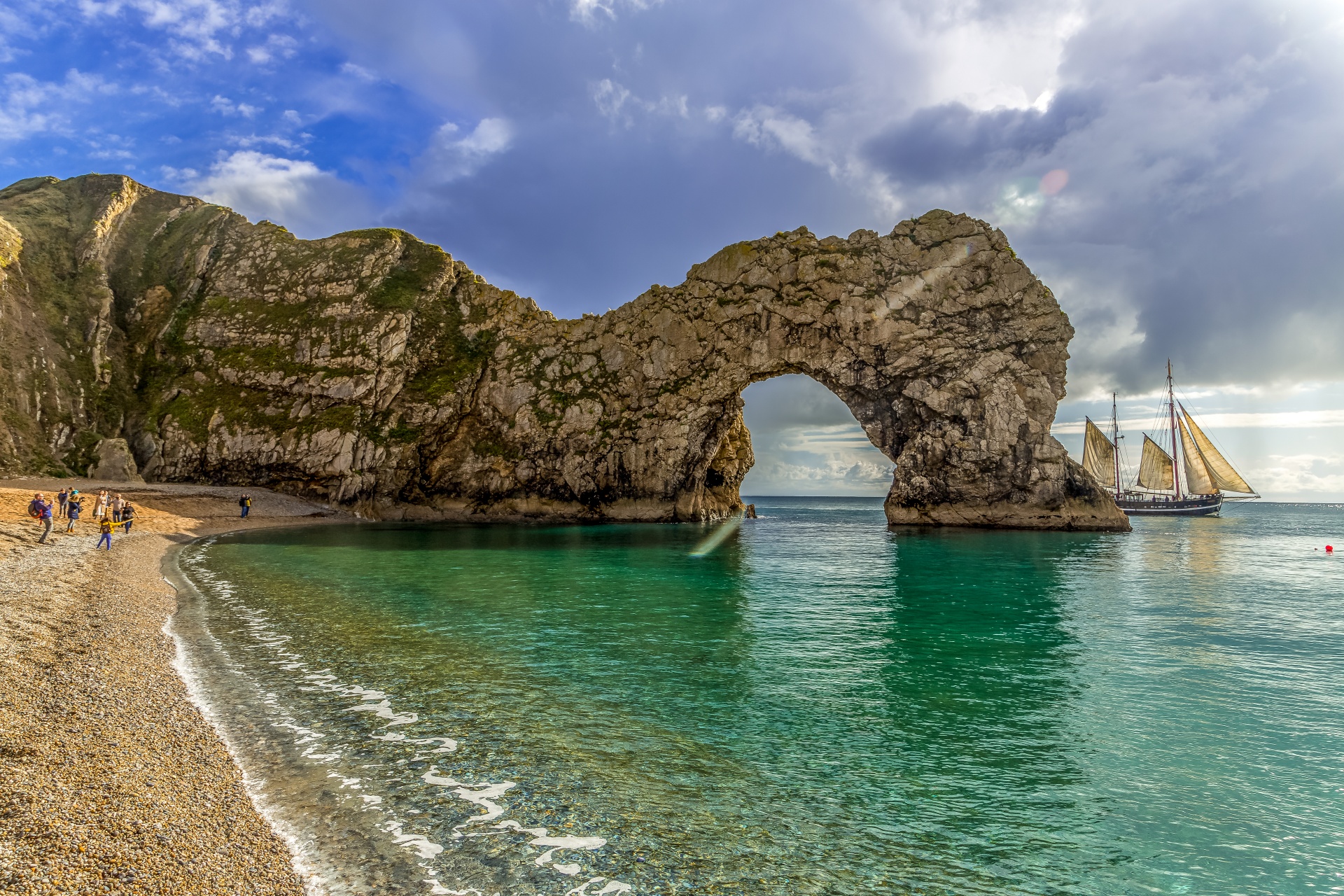
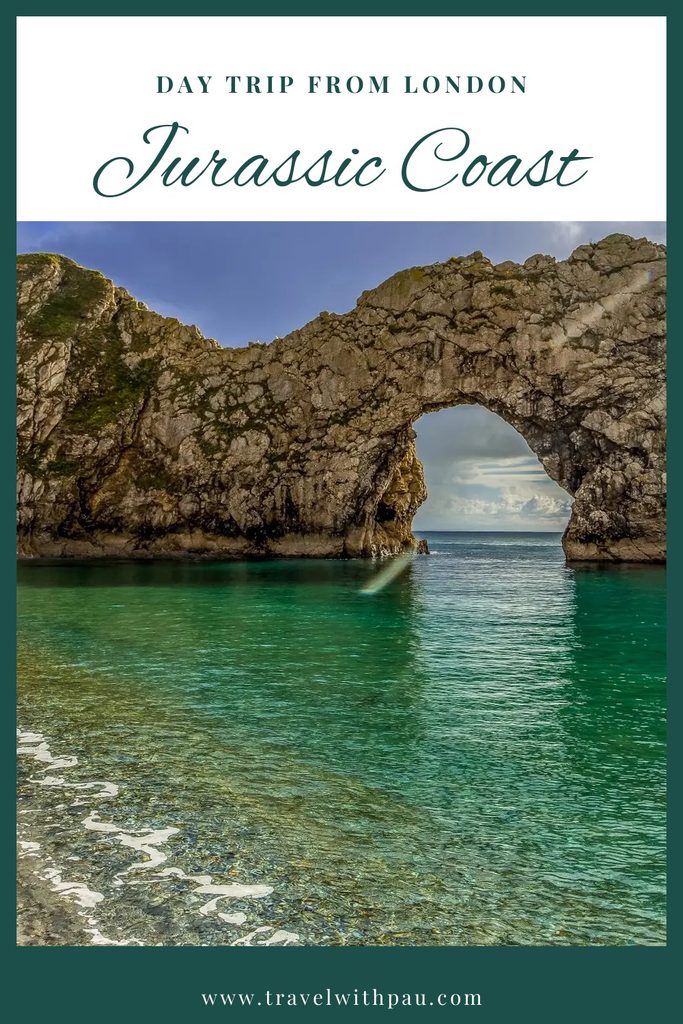
Durdle Door is the Jurassic Coast’s most iconic image: a natural limestone arch thrust out into the sea, with a pebble beach either side and views along the cliff line that stretch to the horizon. This natural wonder is the reason I wanted to come to the Jurassic Coast in the first place, and it’s undeniably breathtaking, absolutely earning its status as one of England’s most photographed spots.
Getting there involves parking at the top (book in advance in summer, the car park fills early) and walking down a steep path to the beach. It’s about 15 minutes down and a sweaty 15 minutes back up, but worth every step. Swim through the arch if the conditions allow, it’s a genuinely memorable experience.
Tip: visit as early as you can, especially at weekends. By mid-morning in summer the beach is rammed and the path down is a queue. At 8am it’s magical.
2. Explore Lulworth Cove
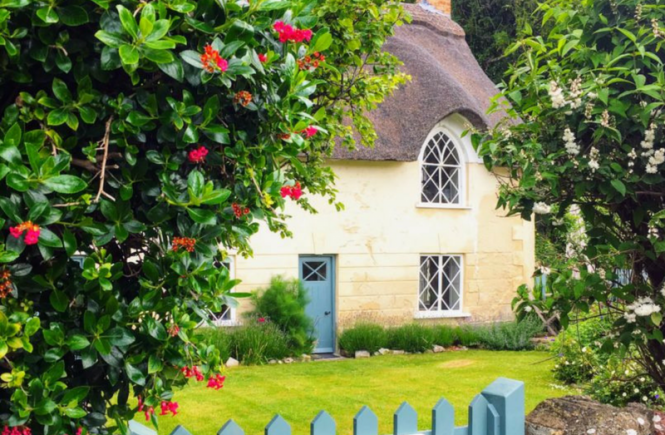
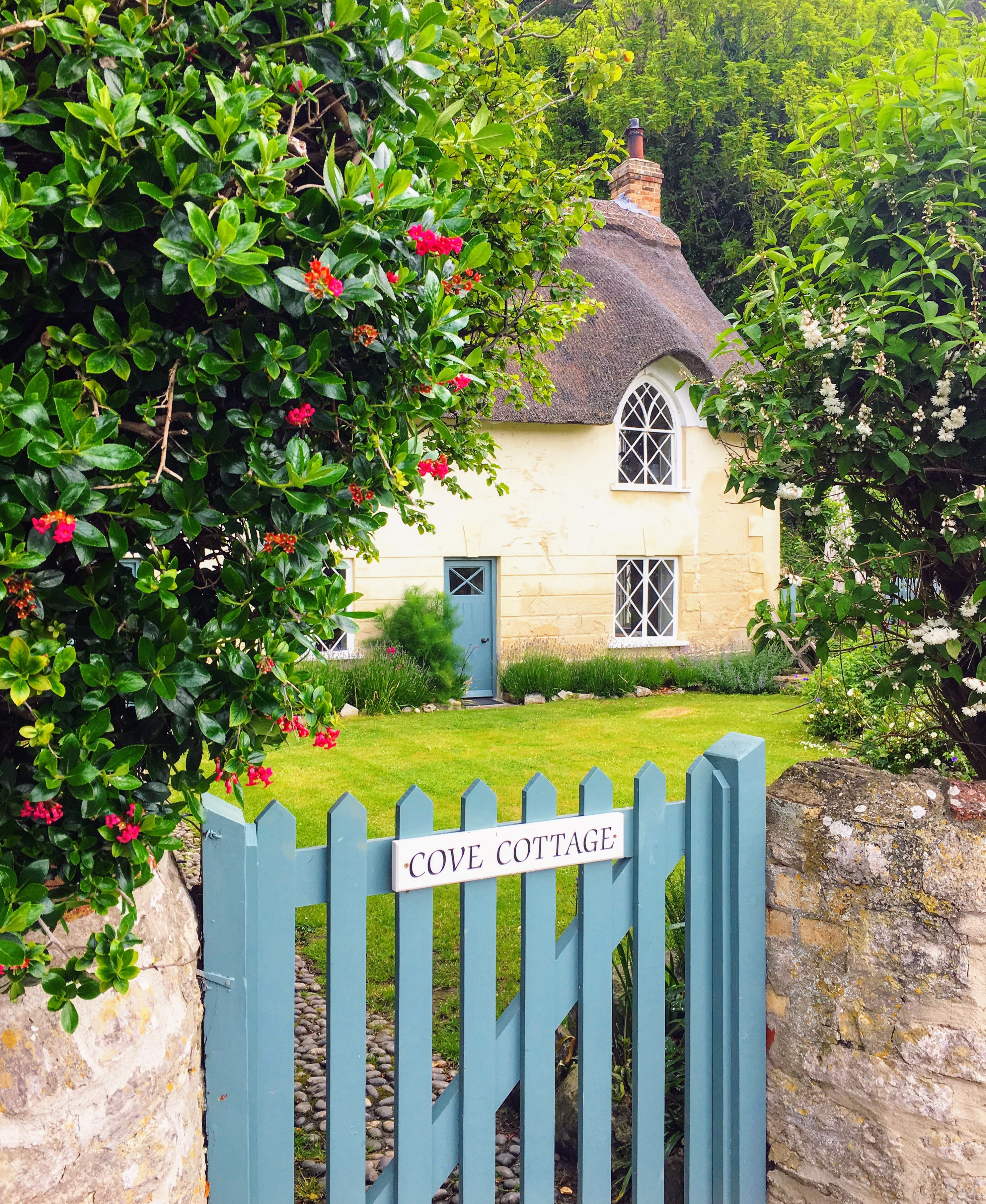
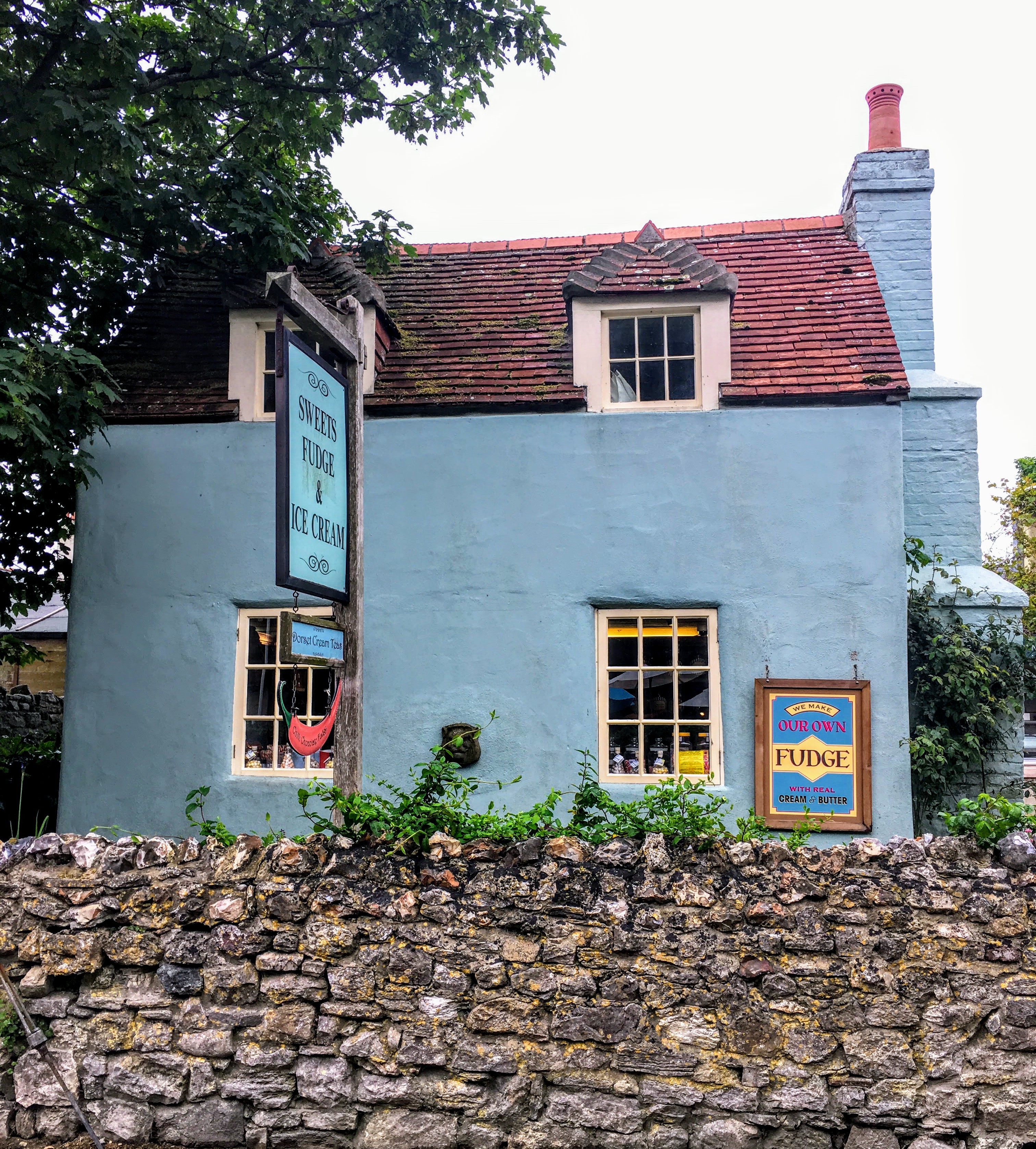
Lulworth Cove is a textbook-perfect natural cove, a near-circular bay carved out of the Jurassic limestone by centuries of wave action. It’s an A-level Geography case study come to life, and it’s genuinely beautiful. The village behind the cove is characterful too, with quaint stone cottages, small ponds in front gardens, and little shops selling coffee, fudge and ice cream.
From Lulworth, you can walk west to Durdle Door in about 30–40 minutes along the cliff path, which gives you spectacular views of both. The hike continues further east along the South West Coast Path towards Kimmeridge if you have the energy and the time.

3. Kayak to Old Harry Rocks
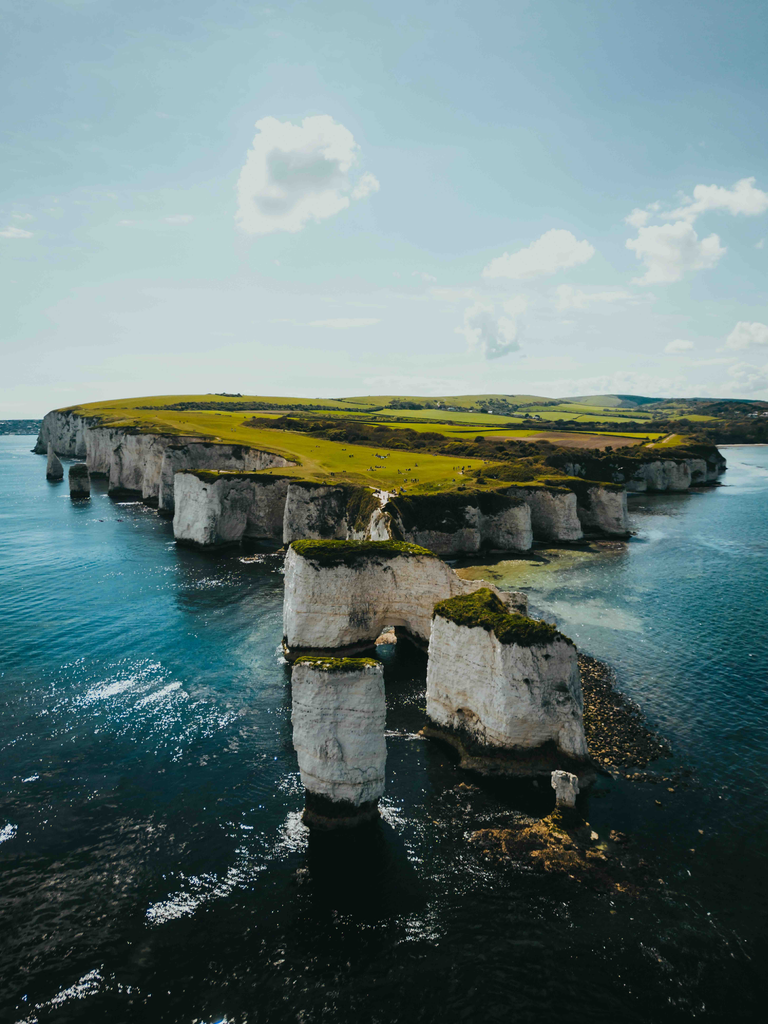
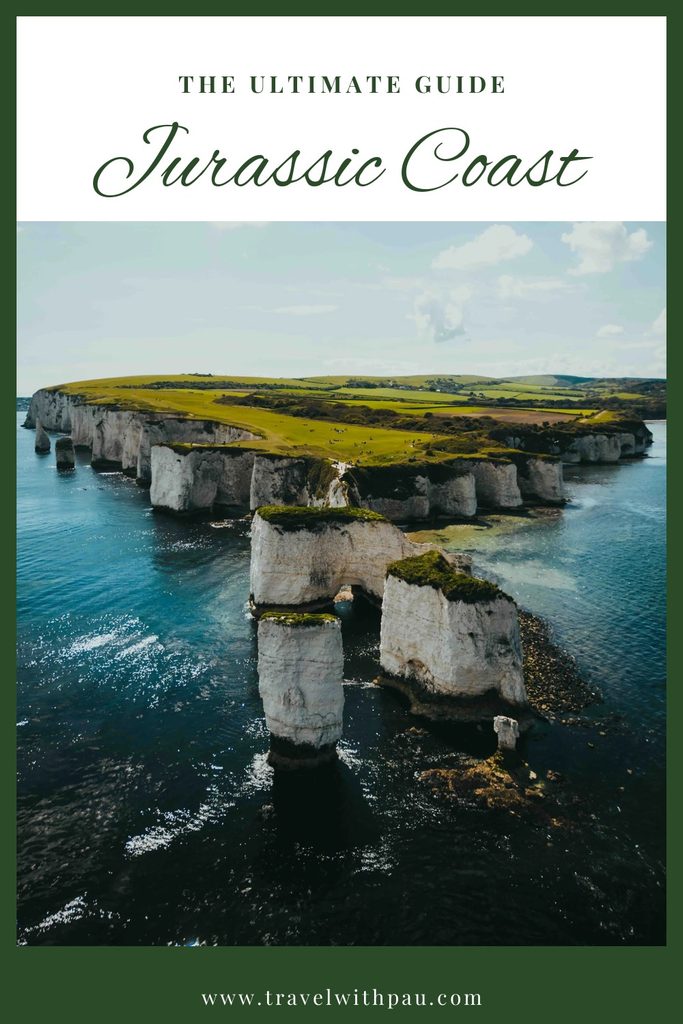
Old Harry Rocks are a series of chalk stacks that rise out of the sea at Handfast Point near Studland, a dramatic, crumbling headland that marks the eastern end of the Jurassic Coast World Heritage Site. They’re impressive from the cliff path, but the best way to see them is by water.
A guided kayaking tour launches from Middle Beach in Studland Bay and takes you paddling past sea caves and rugged cliffs before arriving at Old Harry from the sea, looking up at those white stacks from the waterline. It’s a brilliant experience and fully guided, so no prior kayaking experience is needed. Book the kayaking tour to Old Harry Rocks.
4. Visit Corfe Castle
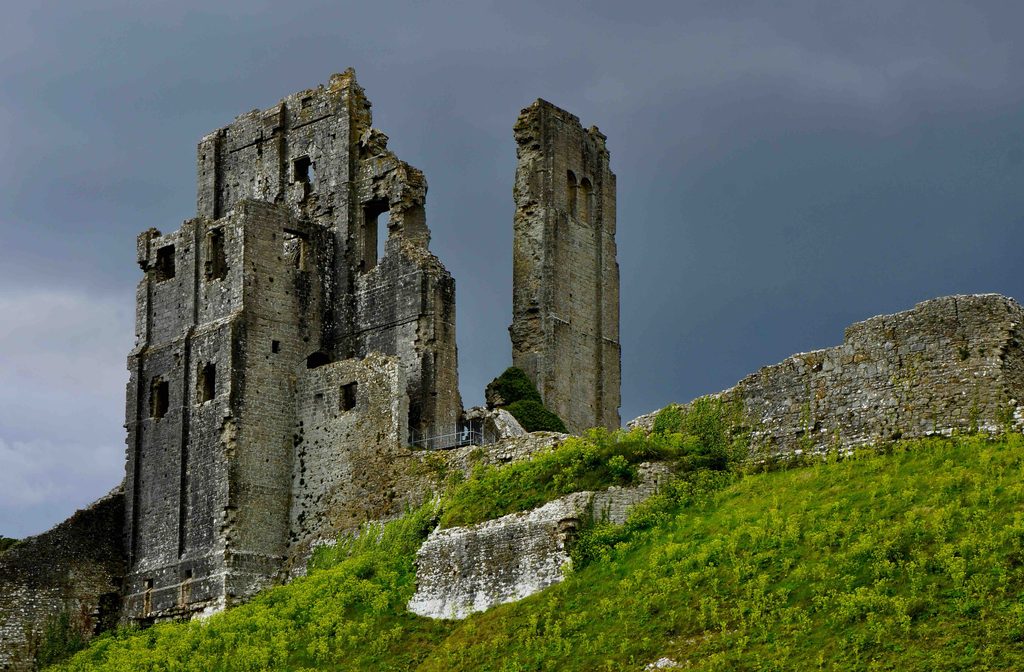
One of Dorset’s most dramatic sights, Corfe Castle sits on a steep hill above the village of the same name, a ruined Norman fortress that was partly demolished by the Parliamentarians in the 1640s and left in atmospheric collapse. The views from the top are outstanding in every direction. The village below is lovely too: stone houses, independent shops, and a great pub for lunch.
Corfe is also on the Swanage Steam Railway, which adds a nostalgic extra layer to the visit. Combine it with Swanage (a classic English seaside town just a short drive or a steam train ride away) for an excellent half-day.
5. Walk Chesil Beach
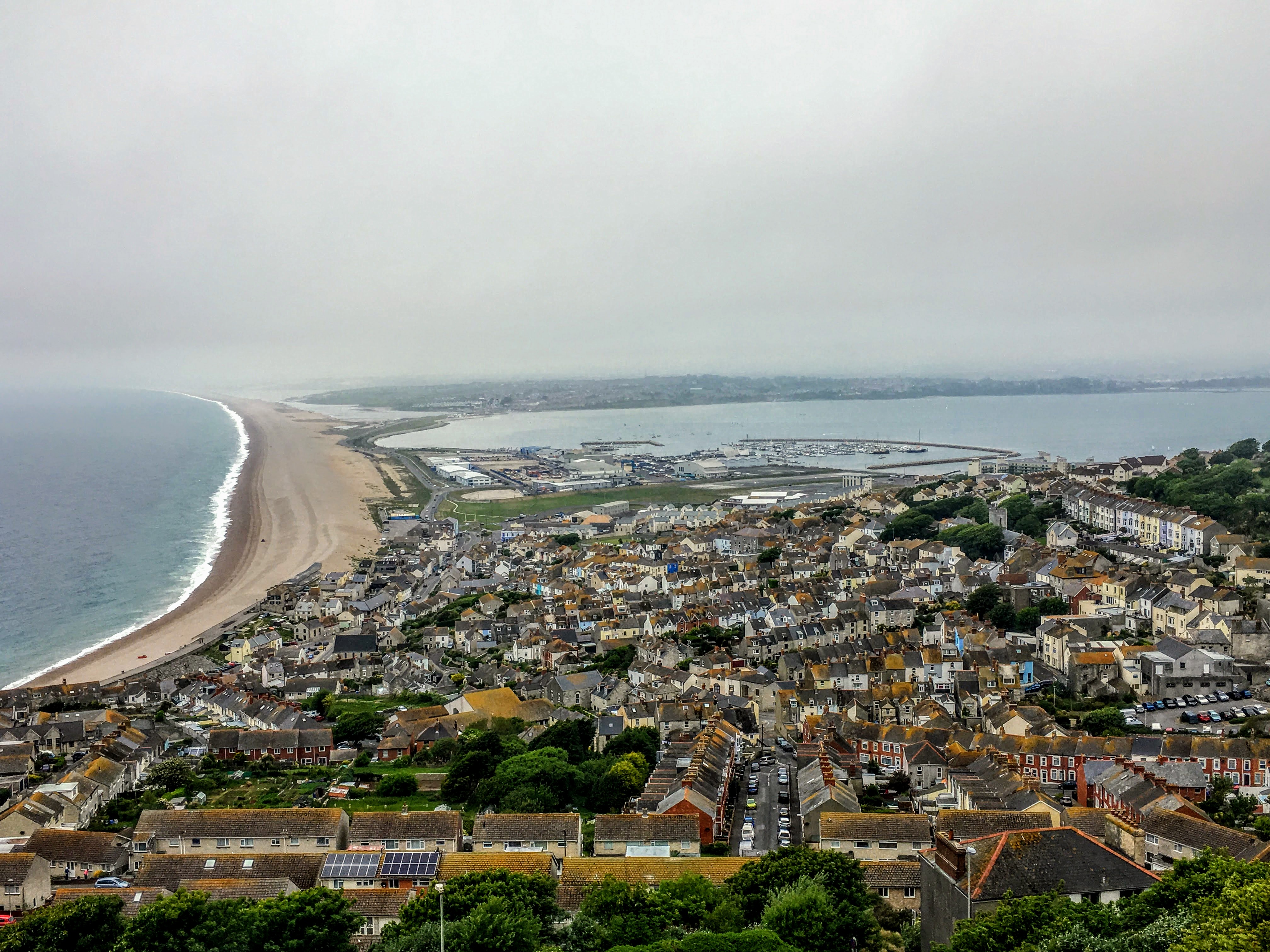
Chesil Beach is one of the most remarkable landforms in the UK: a 29km barrier beach (technically a tombolo) connecting the Isle of Portland to the mainland, made entirely of graduated pebbles, coarser at the Portland end, finer towards Abbotsbury. Walking along it in strong wind, with the sea churning on one side and the Fleet lagoon behind, feels genuinely elemental.
The Fleet lagoon behind the beach is an important wildlife habitat and home to a large colony of mute swans at the Abbotsbury Swannery. At the Portland end, the beach connects to the Isle of Portland, which is worth an afternoon of exploration in itself.
6. Explore the Isle of Portland
The Isle of Portland is connected to Weymouth by Chesil Beach, a narrow causeway that makes the approach feel almost theatrical. This is the home of Portland stone, which has been used for major buildings across Britain and the world, including St Paul’s Cathedral and Buckingham Palace. Once you’ve crossed the beach road, pop by Portland Castle before continuing towards the lighthouse, and stop at the Olympic Rings Stone Sculpture on the way, the sculpture itself isn’t much, but the views over Portland and Chesil Beach from up there are stunning.
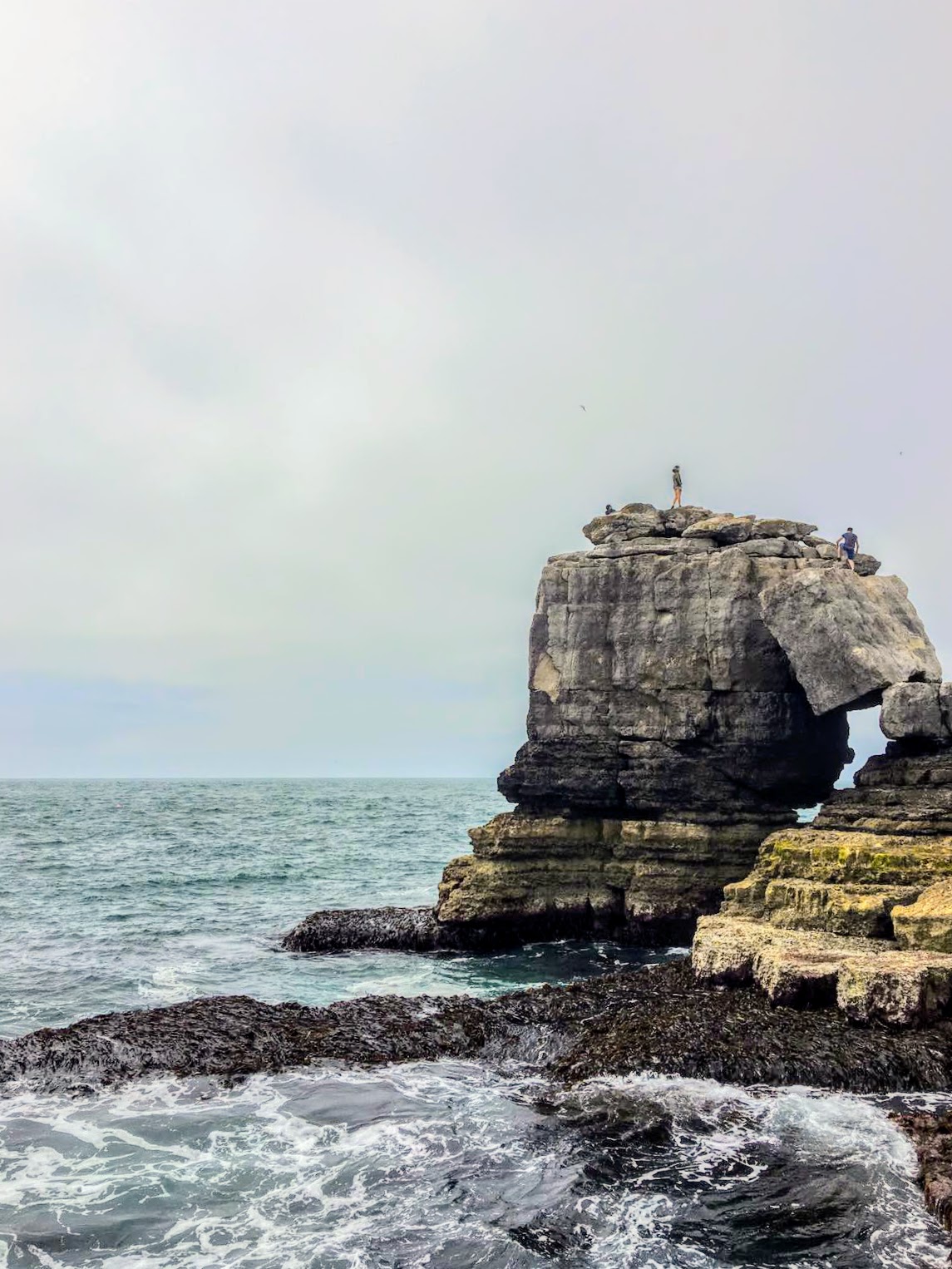
Head for Portland Bill Lighthouse at the southern tip, where you’ll find the remains of old quarries, strange rock formations, and sweeping views of the English Channel, the quarries here are what provided the white Portland stone in the first place. Park up and go for a walk on the rocks near the lighthouse, and have some fun climbing Pulpit Rock, an artificial stack set by quarrymen that mimics a slanted bible leaning on a pulpit, hence the name. Keep an eye on the rocks as you go, there are fossils visible in them too.
The cottages along the road to the lighthouse are some of the most characterful you’ll see anywhere in Dorset, small and slightly eccentric, with the sea visible from every angle.
7. Meet the Primates at Monkey World
Just inland from Lulworth, near the village of Wool, Monkey World is an ape rescue centre set across 65 acres of Dorset woodland, home to over 250 primates rescued from abuse and illegal smuggling: chimpanzees, orang-utans, gibbons, woolly monkeys, lemurs and more. It’s a brilliant break from clifftop walking if you’re travelling with kids (or just love primates), and genuinely one of the best family days out in the area. Open daily 10am to 5pm. Wool train station is about 1.5 miles away with taxis usually available, so it’s reachable even without a car. Check opening times and book tickets on the official site.
8. Hunt for Fossils at Charmouth
Charmouth is one of the best places in the UK for amateur fossil hunting, the beach regularly yields ammonites, ichthyosaur bones and belemnites, particularly after winter storms when new material is washed out of the eroding cliffs. The Charmouth Heritage Coast Centre (formerly the Lyme Regis Museum) has interactive displays, a fossil identification service, and guided fossil walks that take you onto the beach with an expert. Perfect for families and anyone who’s ever wanted to hold a 180-million-year-old ammonite. Book a guided fossil walk directly with the Heritage Coast Centre.
9. Spend an Afternoon in Lyme Regis
Lyme Regis is the Jurassic Coast’s most beloved town, a mix of fossil heritage, independent shops, good restaurants, and a working harbour with fishing boats. The famous Cobb harbour wall (made famous by The French Lieutenant’s Woman) is worth a stroll, and the town beach is excellent for fossil hunting at low tide. Grab fish and chips or fresh crab and eat on the beach wall. It’s exactly what a seaside town should be.
10. Find the Broadchurch Filming Locations at West Bay
Fans of the ITV crime drama Broadchurch will recognise the dramatic golden cliffs of West Bay, near Bridport, this small harbour village stood in for the fictional Broadchurch throughout the series, and the cliffs are just as imposing in real life. The Hive Beach Café nearby is one of the best places on the entire Jurassic Coast for a seafood lunch, their crab sandwiches and daily fish specials are exceptional, and the views across Lyme Bay are the kind that make you want to stay for another coffee.
11. Walk the South West Coast Path
The South West Coast Path runs the entire length of the English and Cornish coast, and the Jurassic Coast section between Lyme Regis and Poole is one of its finest stretches. You don’t have to walk the whole thing (it’s 1,014km end to end), but picking a section for a few hours is one of the best free things you can do here. The stretch from Lulworth Cove east to Kimmeridge Bay is particularly spectacular, as is the cliff walk above Old Harry Rocks.
12. Discover Weymouth
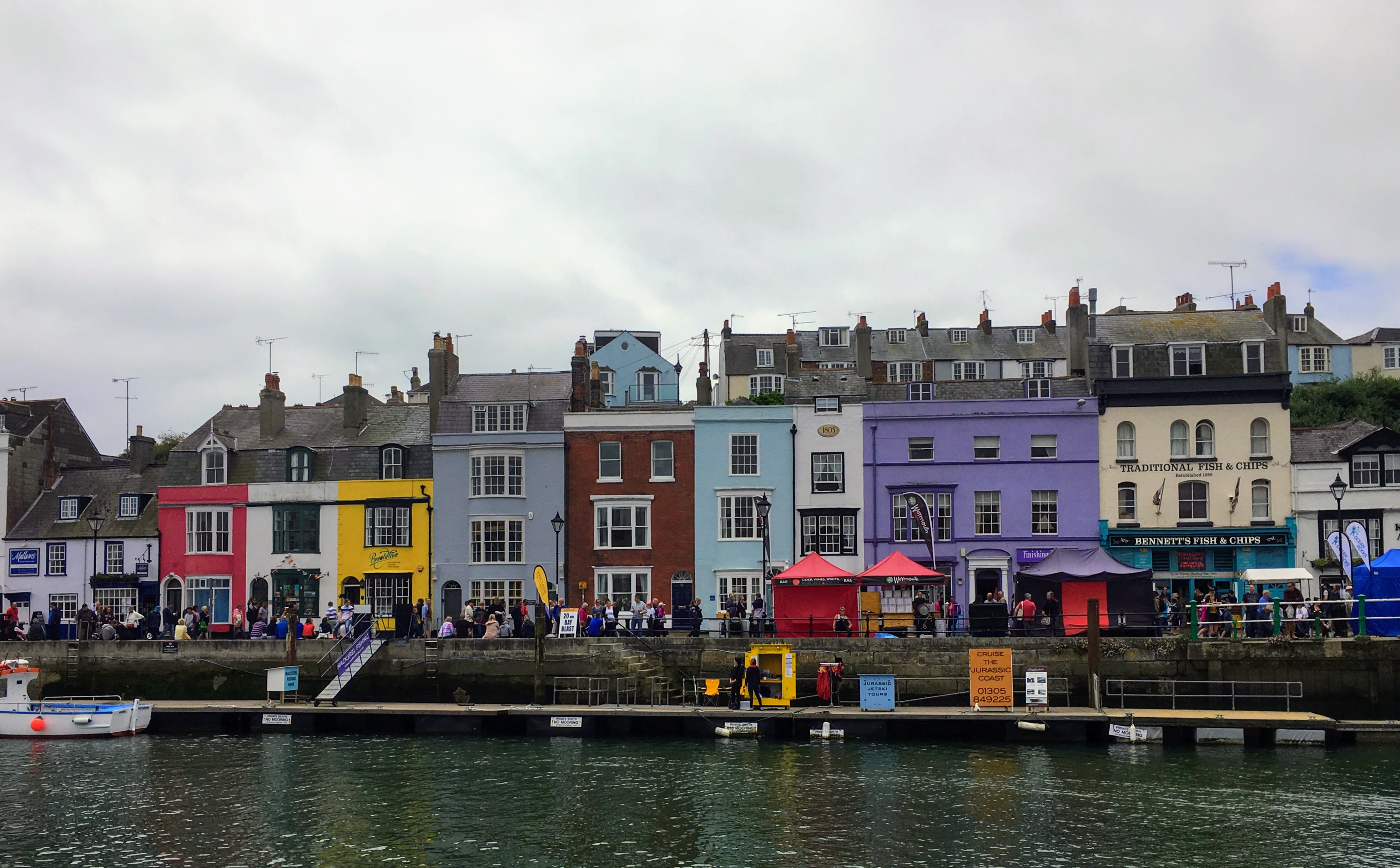
Weymouth sits roughly at the midpoint of the Jurassic Coast and makes an excellent base if you’re spending more than a day. The Georgian harbour is lovely for a wander, the esplanade stretches along a wide sandy beach, and there’s a proper seaside energy here, arcades, fish and chips, and people very much enjoying themselves. The Boat Café on the water is great for breakfast.
13. Explore Swanage
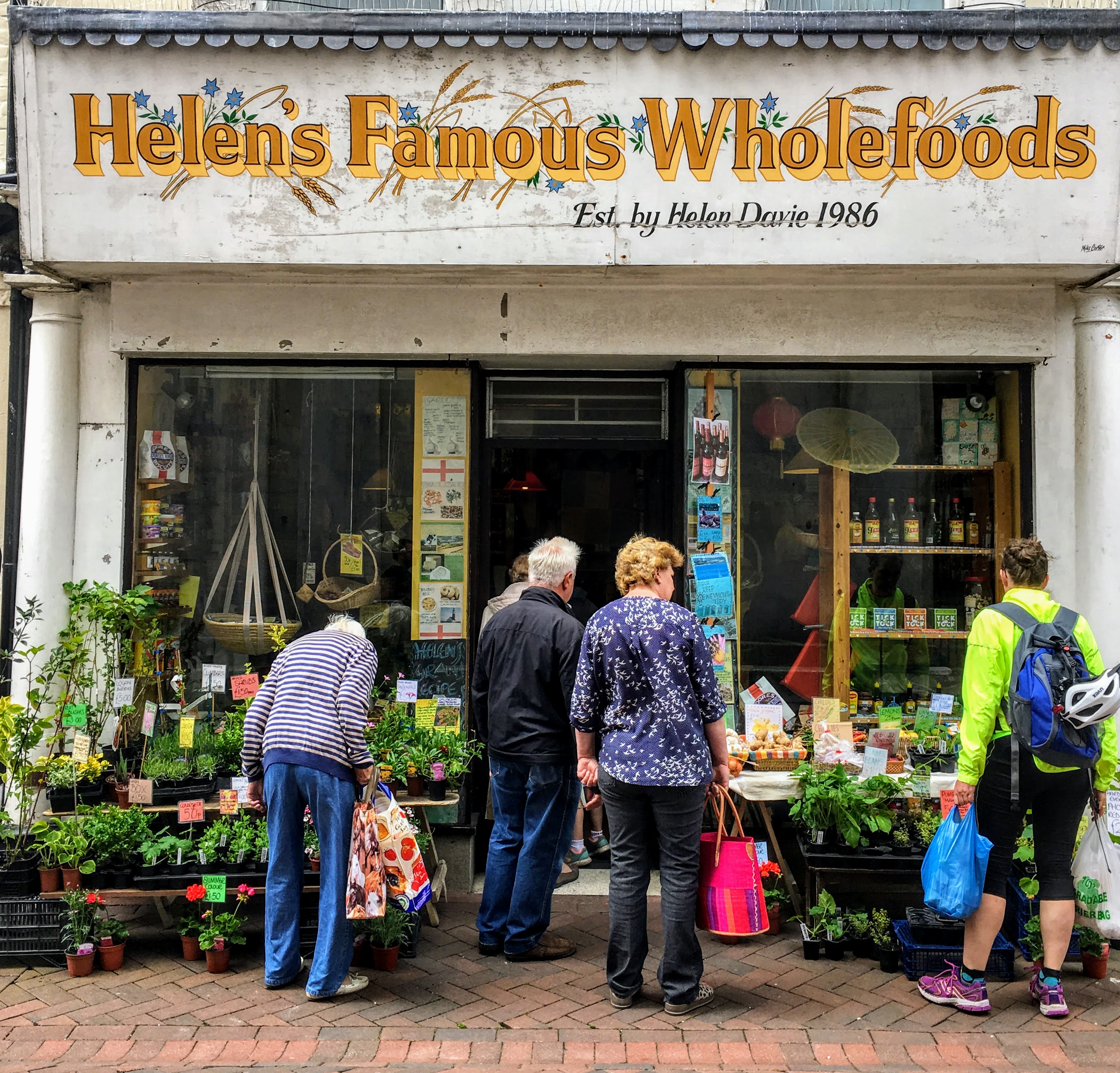
Swanage is a genuinely lovely, slightly under-the-radar seaside town at the southeastern end of the Isle of Purbeck. Clean beach, interesting architecture, good independent cafés, and a steam railway that chugs between here and Corfe Castle. It’s quieter than Weymouth and has a lovely unhurried feel, worth an afternoon if you’re in the area.
14. Take a Cruise Along the Coast
135 minutes round trip. For a different view of the coast entirely, the Poole Jurassic Coast Circular Cruise sails from Poole Harbour to Swanage and back, taking in the Sandbanks Peninsula, Brownsea Island, Studland Bay and the famous Old Harry Rocks along the way. There’s live commentary from the captain throughout and a fully licensed bar onboard, and it’s genuinely well-reviewed, 4.4 out of 5 from over 400 bookings.
Where to Stay on the Jurassic Coast
You can stay anywhere along the coast depending on your itinerary, here are the best-reviewed options by budget:
Budget Accommodation
- YHA Swanage: Clean, friendly hostel close to the beach and close to the South West Coast Path. Good for solo travellers and those prioritising getting out early for walking. Best for: solo walkers, backpackers, budget-conscious visitors.
Mid-range
- Heights Hotel (Isle of Portland): Perched above Chesil Beach with excellent views and easy access to both Portland and Weymouth. Good value and a practical base for the central section of the Jurassic Coast. Best for: explorers, couples, longer stays.
Splurge
- Moonfleet Manor (near Weymouth): A country house hotel with spa, sea views, and extensive family facilities. If you’re making a proper weekend of it rather than a day trip, this is a beautiful retreat, the kind of place where you arrive planning to check emails and end up spending the whole afternoon by the pool. Best for: couples, families, a romantic weekend.
Camping is also fantastic along this stretch of coast, there are excellent coastal campsites near Lulworth and Charmouth. None of these float your boat? Search all Dorset accommodation.
Where to Eat on the Jurassic Coast
Burton Bradstock
Hive Beach Café: Arguably the best seafood spot on the coast. Famous for fresh crab sandwiches and daily fish specials, with panoramic views of Lyme Bay. Arrive early or outside peak hours, it gets busy.
The Seaside Boarding House: A beautiful spot for an evening cocktail with panoramic sea views. The kind of place you go for a drink and end up staying for dinner.
Weymouth
Crab House Café: A relaxed, oyster-shack-style spot right on the water, another excellent lunch option if Hive Beach is too much of a detour.
Catch at The Old Fish Market: Seafood-focused fine dining with a Michelin recommendation. Perfect for a special dinner if you’re staying overnight.
The Boat Café: A floating café on the harbour serving hearty breakfasts, good coffee, and a relaxed waterfront vibe. My pick for a morning start.
Lyme Regis
Hix Oyster & Fish House: Mark Hix’s Dorset seafood restaurant, unfussy dishes built around whatever the local fishermen brought in that day, floor-to-ceiling windows over the bay and a covered deck that’s perfect for a sundowner.
Rockfish: Proper fish and chips done well, whatever’s been landed that morning cooked to order with your choice of new potatoes, salad or chips. Casual, reliable, and dog-friendly if you’re travelling with one.
Beyond these, the town has a good range of independent cafés and fish and chip shops along the seafront too, it’s the best place for a casual sit-down lunch on the coast.
How Long to Spend
One day: Absolutely doable as a day trip from London. Focus on one area: either Durdle Door and Lulworth Cove (western section) or Old Harry Rocks and Corfe Castle (eastern section). Don’t try to do both in a day on your own, you’ll feel rushed. If you’d rather let someone else handle the logistics, the Jurassic Coast and Isle of Purbeck Day Tour actually covers both sections in a single 10-hour day, Corfe Castle and Old Harry Rocks in the morning, Lulworth Cove and Durdle Door in the afternoon.
Two days: The ideal amount of time to cover the main highlights: Durdle Door, Lulworth, Corfe Castle, Weymouth, and either West Bay or Lyme Regis. Add a fossil hunt at Charmouth if time allows.
Weekend or longer: Stay for 3 to 4 nights and walk sections of the South West Coast Path, explore the Isle of Portland properly, and genuinely slow down. This coastline rewards those who linger.
Best Time to Visit the Jurassic Coast
The Jurassic Coast is walkable year-round, but the experience varies significantly by season.
Spring (April–June) is my personal recommendation for a Jurassic Coast day trip from London: wildflowers on the cliff paths, fewer crowds than summer, and long enough daylight hours to make the most of a day out. The water is still cold for swimming but the coastal walks are at their best.
Summer (July–August) is peak season, Durdle Door and Lulworth Cove get extremely busy, especially at weekends. If you’re visiting in summer, go early. I cannot stress this enough: arriving at Durdle Door at 8am on a summer Saturday is a completely different experience to arriving at 11am. The car parks fill fast and the steps down to the arch become bottlenecked with people.
Autumn (September–October) offers a great balance, the sea is at its warmest for swimming, crowds thin out noticeably from September, and the light on the cliffs in early autumn is absolutely gorgeous.
Winter (November–March) is dramatically quiet and can be stunning for photography, dramatic skies, rough seas, the cliffs looking their most ancient and wild. Fossil hunting on Charmouth beach is particularly good after winter storms when fresh material is washed up. Just dress warmly and check weather forecasts before you go.
Getting To & Around the Jurassic Coast
The most straightforward way to do a Jurassic Coast day trip from London without a car is by train. Services run from London Waterloo to Weymouth (around 2h30), Bournemouth (around 2h) and Poole (around 2h15), and from Bournemouth or Poole you can pick up local buses to Swanage, Corfe Castle and the Isle of Purbeck. Book advance tickets on Trainline, fares are much cheaper when booked ahead. National Express coaches also run to Bournemouth from London Victoria, the most affordable option if you don’t mind a longer journey.
A hire car is the most flexible option and really does make a big difference to how much you can see in a day. I drove from London and it gave me the freedom to visit Durdle Door, Lulworth, Corfe Castle, the Isle of Portland and West Bay all in one trip, which would be logistically tricky by public transport. Search for the best rates on DiscoverCars. Once you’re in Dorset, the Jurassic Coaster bus service runs along the coast between Bournemouth and Exeter, stopping at key spots, and the Swanage Steam Railway connects Swanage to Corfe Castle and Norden.
Jurassic Coast FAQ
How do I get to the Jurassic Coast from London?
By train, take a service from London Waterloo to Weymouth, Bournemouth or Poole, journey times are 2h15 to 2h30 depending on the destination. Book in advance on Trainline for the best fares. From Bournemouth or Poole, local buses and the Swanage Steam Railway connect to key sites like Corfe Castle and Studland. By car, it’s just over two hours from London, and it’s the easier option if you want to cover multiple spots in one day. Search DiscoverCars for hire rates.
What is the most iconic thing to see on the Jurassic Coast?
Durdle Door, a natural limestone arch above a pebble beach, is the Jurassic Coast’s most photographed landmark. Lulworth Cove, Old Harry Rocks, and the cliffs at West Bay (as seen in Broadchurch) are close runners-up.
Is a car necessary for a Jurassic Coast day trip?
Not essential, but it makes a huge difference to how much you can see. Trains get you to Weymouth or Bournemouth easily, and buses connect some coastal spots, but to visit Durdle Door, Corfe Castle and West Bay in the same day, a car is the most practical option. Search DiscoverCars for hire rates.
When is the best time to visit the Jurassic Coast?
Spring (April–June) and early autumn (September–October) offer the best combination of good weather, manageable crowds and beautiful light. Summer is stunning but Durdle Door and Lulworth Cove get very busy, visit early morning on summer weekends. Winter is dramatic and brilliant for fossil hunting after storms.
Can you swim at Durdle Door?
Yes, and it’s one of the best swims you can have in England. The beach is pebbly and the water is cold even in summer, but swimming through the arch is a genuinely memorable experience. Always check conditions before swimming, the area can have unpredictable currents.
Where is the best place to find fossils on the Jurassic Coast?
Charmouth and Lyme Regis are the best locations for amateur fossil hunters. The beach at Charmouth (particularly at low tide after winter storms) regularly yields ammonites and belemnites. The Charmouth Heritage Coast Centre runs guided fossil walks and can help you identify what you find.
More from the blog: Brighton Bucket List | Visiting Rye & Camber Sands | Southend-on-Sea & Leigh-on-Sea
Enjoyed this article? Support my work by buying me a latte. Otherwise, do me a great favor of leaving a comment and following me on Instagram (@travelwithpau). Feel free to say ‘Hello!’ I don’t bite. And make sure you save the article for later on Pinterest!

This post contains affiliate links. If you click one and make a booking, I may earn a small commission at no extra cost to you. I only recommend services I genuinely use and trust.