
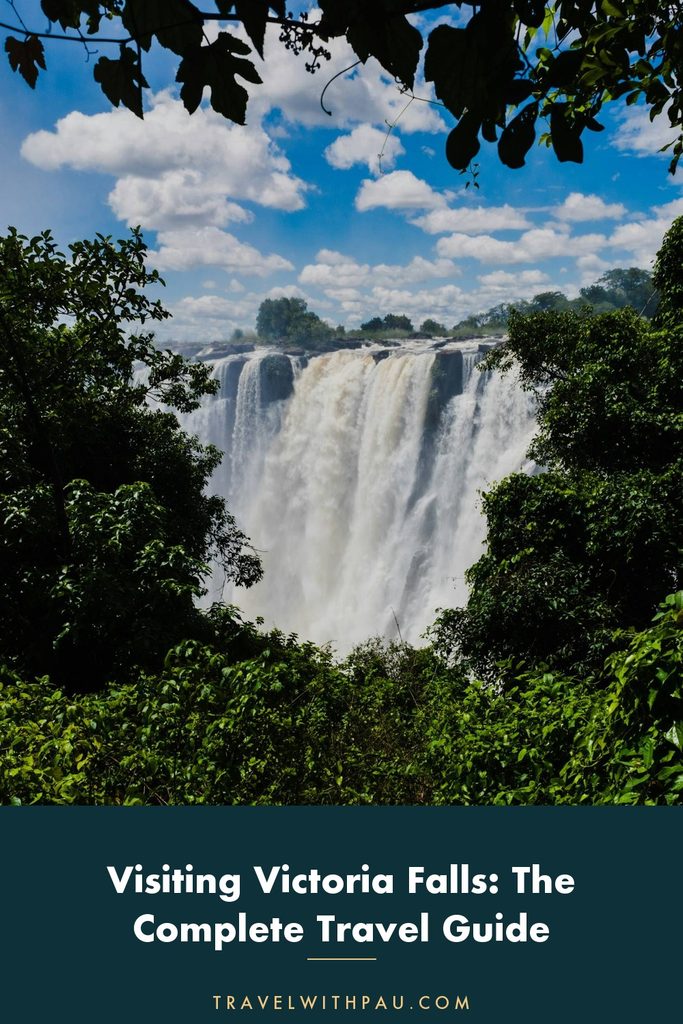
Visiting Victoria Falls: The Complete Travel Guide
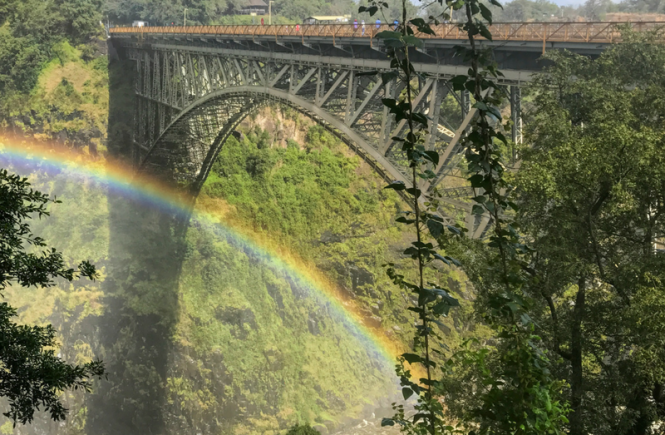
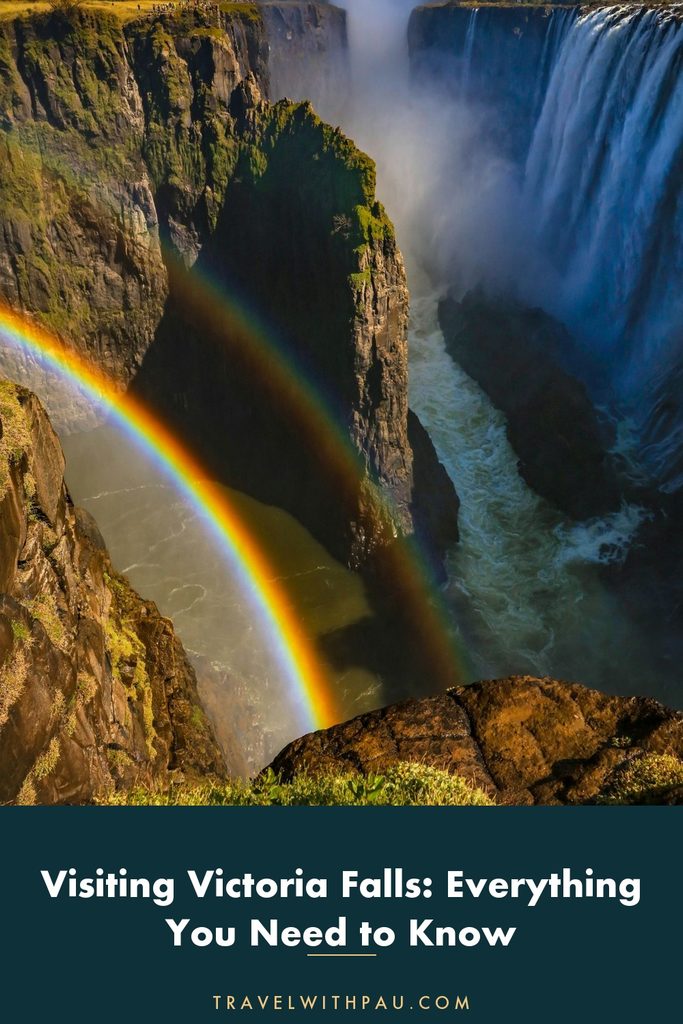
Victoria Falls is one of those places you see in photos and think, “yes, but it’s probably not actually like that.” It is. It’s exactly like that, and then some. The Zambezi River drops over a cliff edge that’s nearly 2km wide, and the roar, the spray, the rainbows, it genuinely makes you feel small in the best possible way. Trust me, you don’t want to die without experiencing this. Here’s everything you need to know about visiting Victoria Falls.
Visiting Victoria Falls: Everything You Need to Know
Victoria Falls was ‘discovered’ by the outside world in 1855, when British explorer and missionary David Livingstone became the first European to see it, writing in his diary that the sight “must have been gazed upon by angels in their flight.” He renamed it after Queen Victoria, though the name that mattered long before he ever arrived was already in use: the local Tonga people call it Mosi-oa-Tunya, “the smoke that thunders”, a name that makes complete sense the moment you’re standing in the spray.
The Tonga also believe the Zambezi is home to Nyami-nyami, a river spirit, part serpent, part fish, said to control the river’s floods and the fortunes of the people who live along it. When the Kariba Dam was built downstream in the 1950s, locals blamed a string of construction disasters and floods on his fury at being separated from his wife on the other side of the dam wall. It’s the kind of story that sticks with you once you’ve heard it, standing on that bridge over the gorge.
For the record: Victoria Falls isn’t the tallest or the widest waterfall in the world, but it holds the record for the largest single sheet of falling water on the planet, roughly double the height of Niagara Falls.
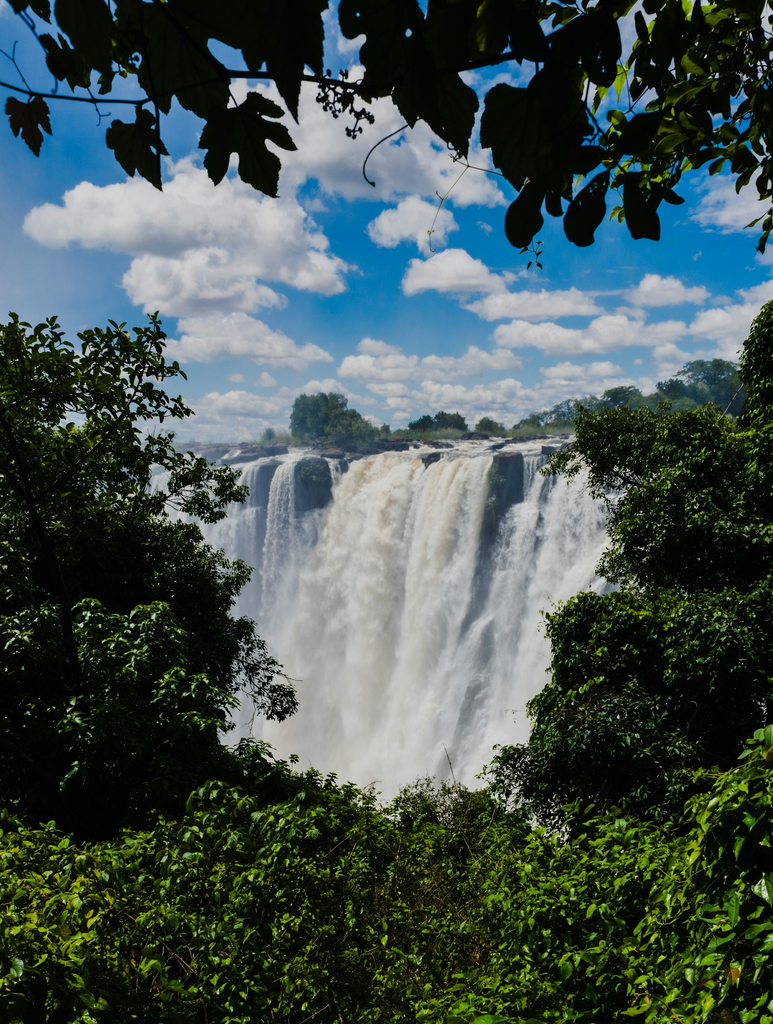
VICTORIA FALLS ESSENTIALS
✈️ Getting There / Victoria Falls town in Zimbabwe has its own airport (VFA), as does Livingstone in Zambia (LVI). Book a private airport transfer with WelcomePickups, it’s only a few kilometres to the falls from either town, but a fixed-price meet-and-greet beats negotiating with airport touts when you’ve just landed. Search for international flights on Skyscanner.
🎟️ Tours / The activities at Victoria Falls range from sublime to ridiculous (in the best possible way). Book the most popular ones in advance, they do sell out:
– Victoria Falls Zimbabwe National Park Entry + Tour
– Devil’s Pool at the Edge of Victoria Falls (Zambia)
– Victoria Falls Bungee Jump from the Bridge
– White Water Rafting on the Zambezi
– Zambezi Sunset Cruise with Drinks
– Flight of Angels Helicopter over the Falls
– Chobe National Park Day Trip with Lunch
Browse all Victoria Falls tours and activities
🏨 Stay / Victoria Falls town (Zimbabwe side) is my recommendation for a base, it’s quiet, walkable, and close to everything:
– Budget: Joyful Vista Guest Lodge
– Mid-range: Shoestrings Backpackers & Budget Lodge
– Splurge: Victoria Falls Hotel
📱 Connect / Worth knowing before you land: Zimbabwe isn’t covered by any regional African eSIM plan, so if you’re staying in Victoria Falls town, pick up a local Econet SIM instead, they’re cheap and widely available at the airport or in town. If you’re crossing over to the Zambia side too, I use Holafly there, use code TRAVELWITHPAU for 5% off, it works well on that side of the border, just not the Zimbabwean one.
🛡️ Get Insured / With activities like bungee jumping, white water rafting, and helicopter flights on offer, travel insurance is non-negotiable here. World Nomads covers adventure activities and is what I use every trip.
Zimbabwe vs Zambia: Which Side Should You Visit?
You can visit from both countries, and I’d recommend doing and staying in both if you have the time.
Zimbabwe side is generally considered to give better overall views of the falls, more of the main curtain is visible from the pathway, and the walk through Mosi-oa-Tunya park on the Zimbabwe side is excellent. The town of Victoria Falls is more tourist-friendly, with more accommodation options, restaurants, and activity operators. This is where I stayed and I’d recommend it as your base.
Zambia side is where you access Livingstone Island and the Devil’s Pool (dry season only), this alone makes it worth crossing for a day. The Zambia side is also better for views of the Eastern Cataract. The town of Livingstone is slightly less polished than Victoria Falls town but has a good backpacker scene.
Practical info for crossing: The two sides are connected by the Victoria Falls Bridge, which includes an immigration post. You’ll need to pay entry fees on each side (around US$20–30 per person per park) and most nationalities will need a visa for both Zimbabwe and Zambia, a KAZA UNIVISA covers both countries and is the easiest option (around US$50). You can get it on arrival at Victoria Falls Airport or the border, or apply online in advance at evisa.gov.zw to skip the queue. Always check current visa requirements for your nationality before you travel.
Allow about 30 minutes for the crossing, including immigration.
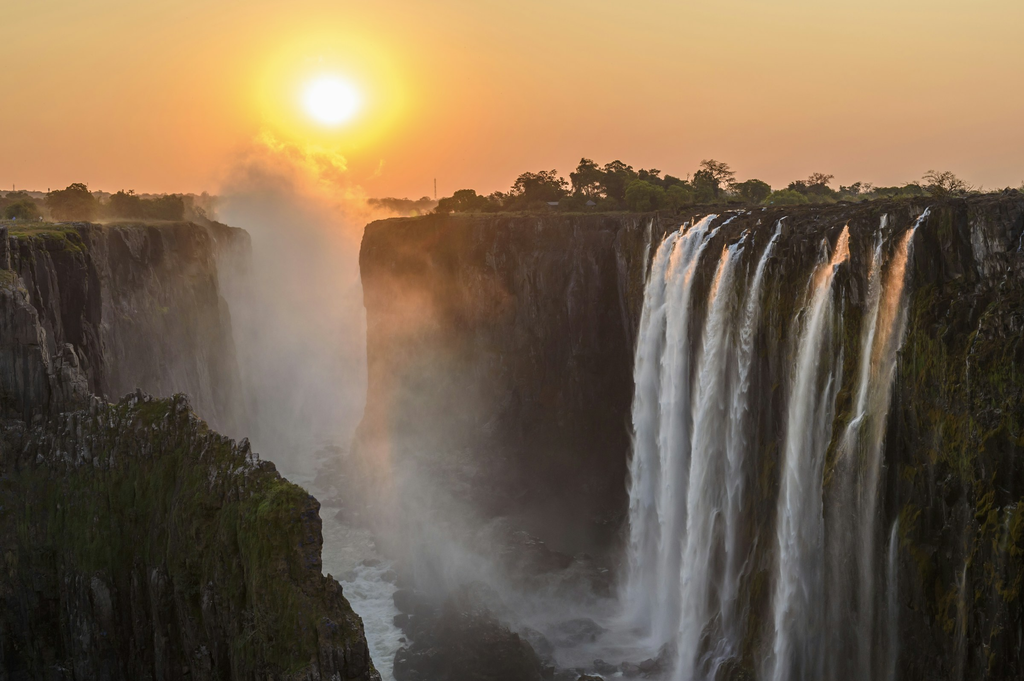
Things to Do at Victoria Falls
1. Visit the Falls Themselves: Zimbabwe Side
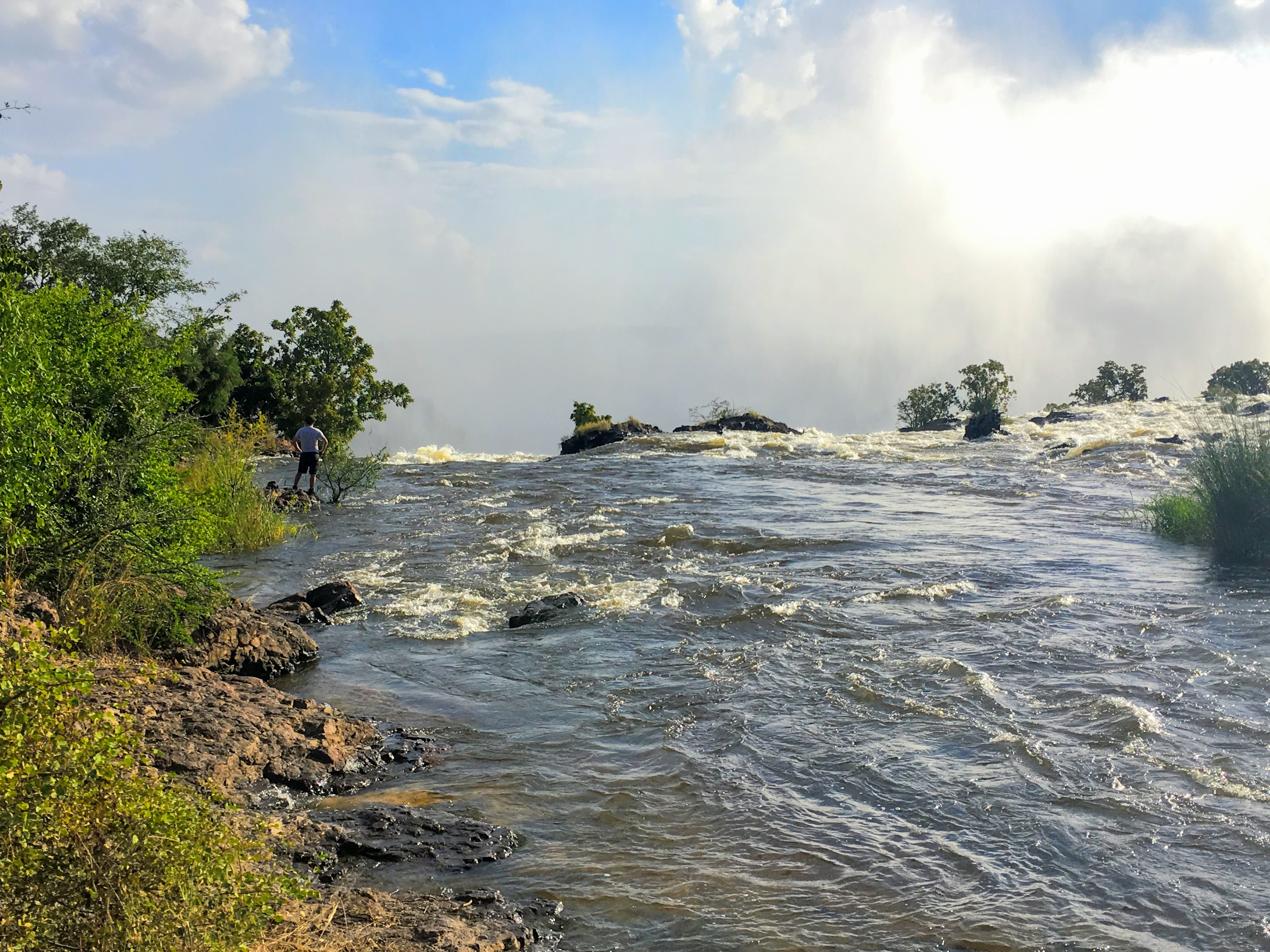
The Zimbabwe side of Mosi-oa-Tunya National Park gives you the best overall perspective on the falls. A pathway runs along the top of the gorge with a series of viewing points, some closer, some more panoramic, each one revealing a different angle on the spectacle. Bring a waterproof jacket and a dry bag for your phone: you will get soaked, even on a dry day. In wet season, expect to be completely drenched within minutes. I was completely soaked from head to toe, the equivalent of being under water.
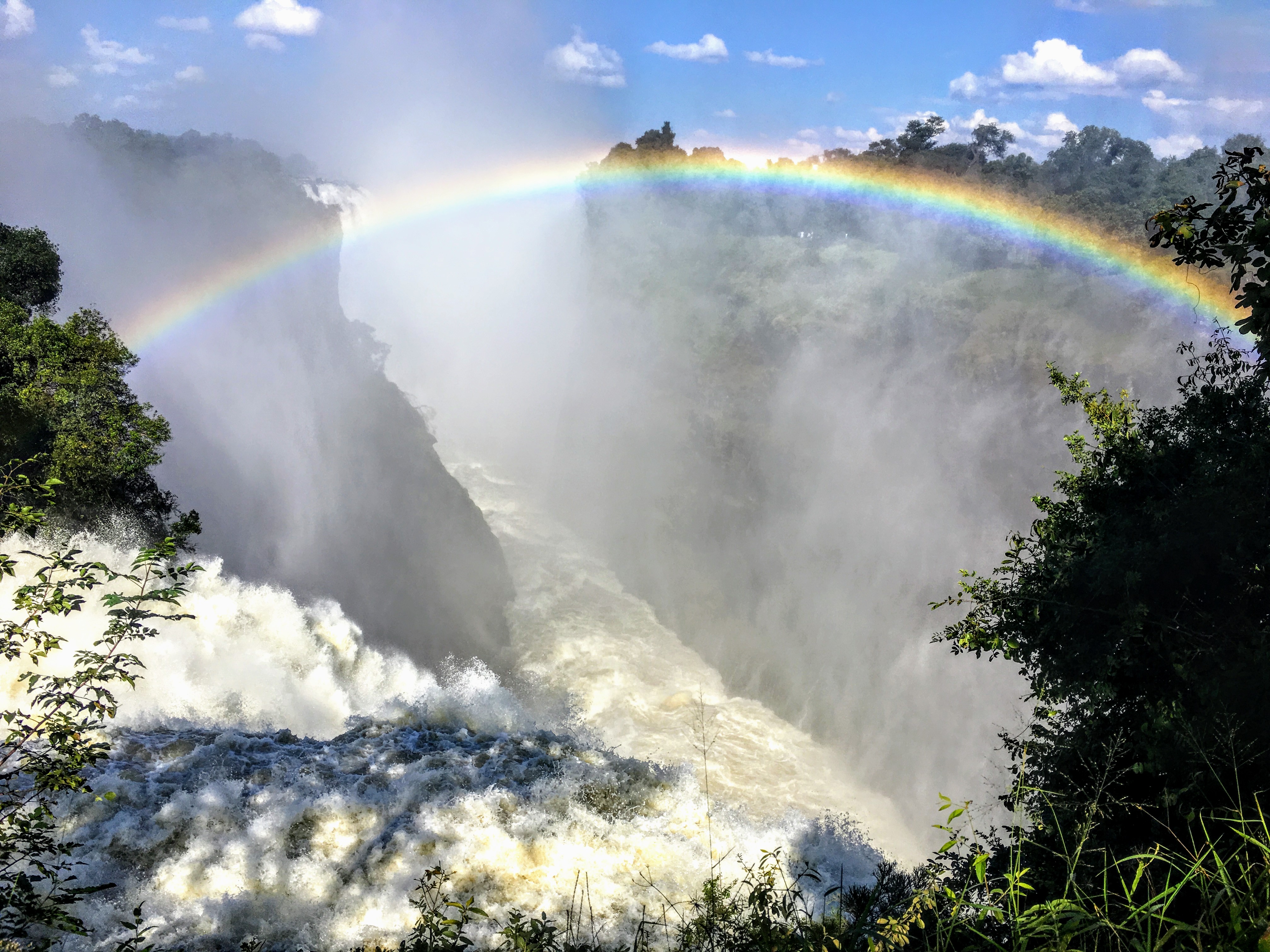
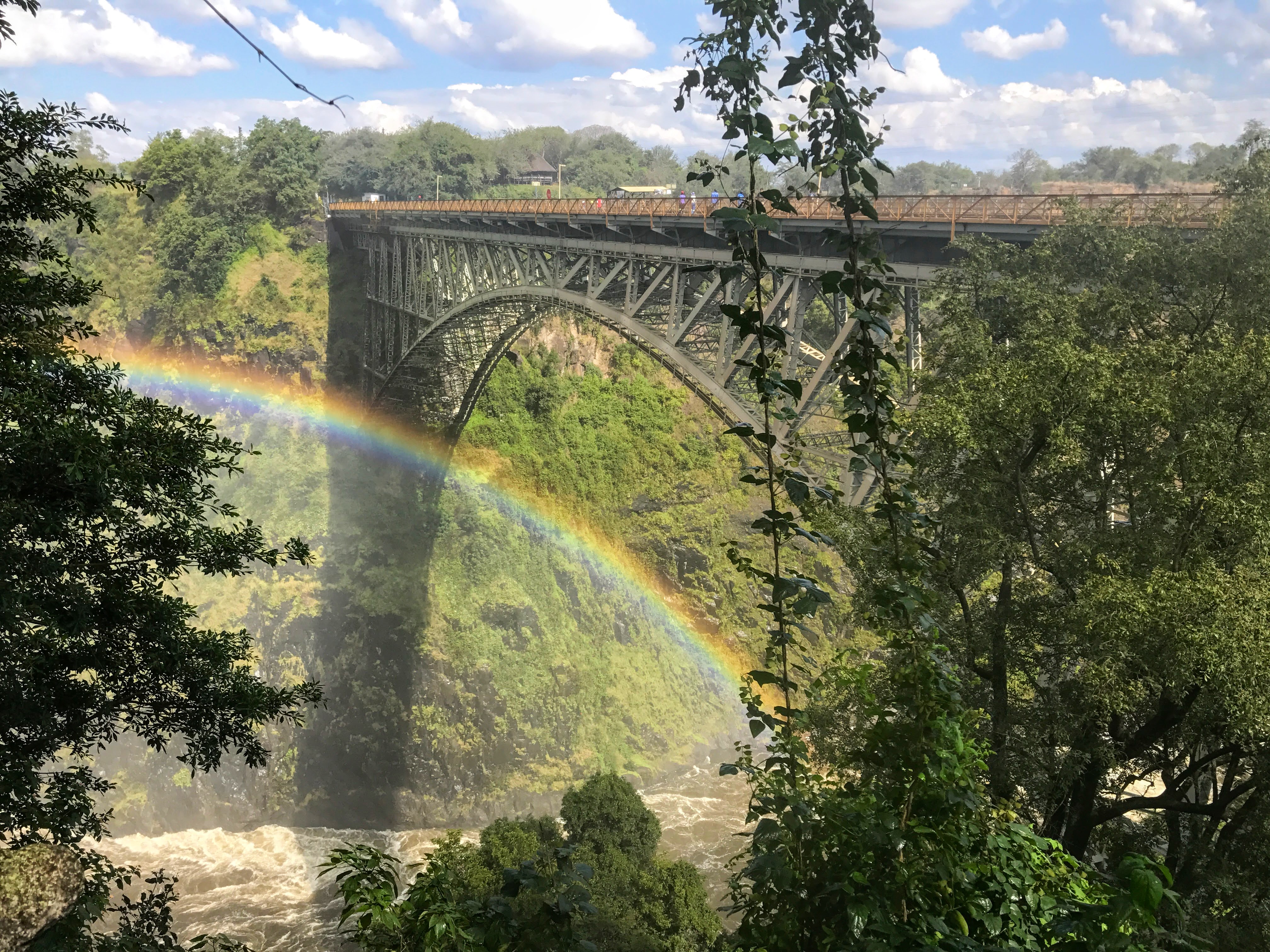
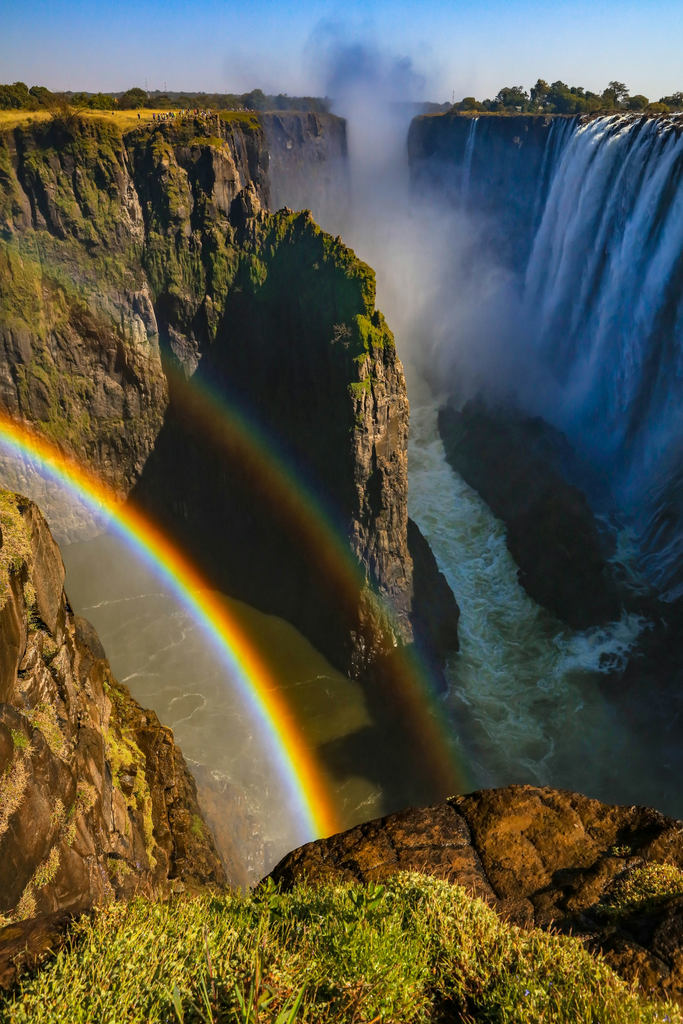
The rainbows here are some of the most beautiful I’ve ever seen, arc after arc forming in the permanent mist above the gorge. On full moon nights, a lunar rainbow appears. Book a Victoria Falls Zimbabwe National Park guided tour for the full historical and ecological context.
2. Swim in the Devil’s Pool (Zambia, Dry Season Only)
The Devil’s Pool is a natural rock pool right at the edge of the falls, and when water levels are low enough (roughly August to January), you can swim in it. You’re lying in this pool with the full width of Victoria Falls dropping away just centimetres beyond the lip of rock. It’s genuinely terrifying and genuinely extraordinary.
Access is via Livingstone Island on the Zambia side. You must go with an authorised operator, this is not something to attempt independently. Tours run several times a day with a breakfast, lunch, or high-tea package included, prices vary by option but expect somewhere in the region of $110-$200pp. If you can, book the breakfast slot, the sun is high enough by mid-morning to give you the best chance of a rainbow while you’re actually in the pool. Book Devil’s Pool in advance as spaces are extremely limited and it sells out weeks ahead. If Devil’s Pool is full or the water’s too high, ask about Angel’s Armchair, a similar edge-of-the-falls pool nearby that opens when Devil’s Pool doesn’t, a good backup rather than a lesser experience.
3. Bungee Jump off the Victoria Falls Bridge
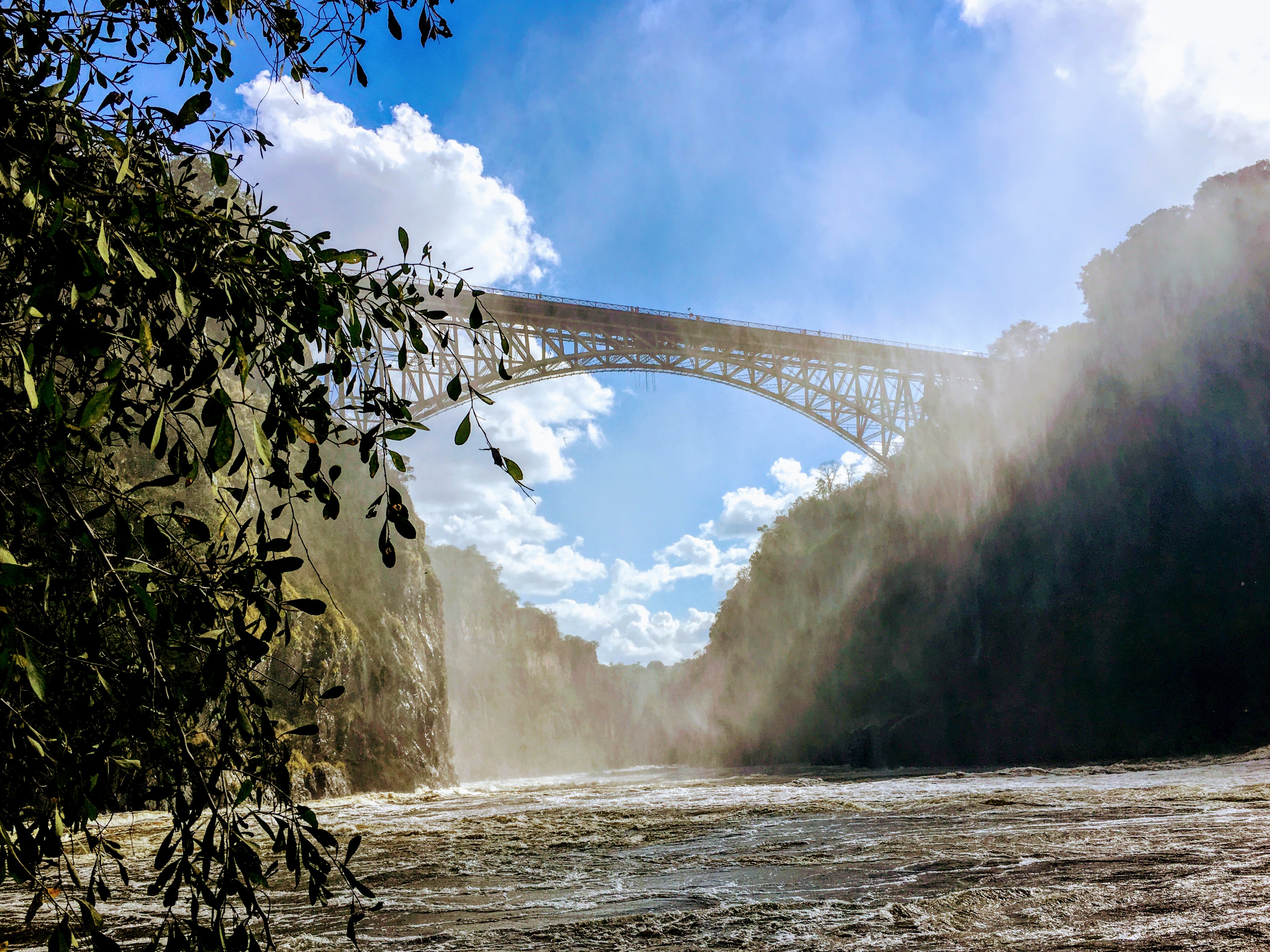
The Victoria Falls Bridge spans the gorge between Zimbabwe and Zambia, 111 metres above the Zambezi River, and you can jump off it. The bungee jump here is one of the most iconic in the world, and it’s been on many a bucket list for good reason. You leap from the middle of the bridge with both countries in view and the gorge and river below. Absolutely wild.
Book the Victoria Falls Bridge bungee jump and tick off one of Africa’s great adventure experiences.
4. Zip Line and Gorge Swing
If bungee jumping sounds a step too far, the zip line and gorge swing offer a slightly less terrifying way to experience the drama of the gorge. The zip line runs across the gorge; the swing sends you pendulum-style into it. Both are operated from the Zambia side near the bridge. Excellent fun and the views are spectacular.
Book the Victoria Falls Bridge zip line in advance to guarantee your slot.
5. White Water Rafting on the Zambezi
Below the falls, the Zambezi churns through a dramatic gorge and produces some of the best white water rafting in the world, consistently rated among the top five rafting destinations on the planet. The rapids (particularly on the Zimbabwe side) are Grade 4 and 5, proper, terrifying, brilliant. Half-day and full-day trips are available from both sides.
This one’s seasonal too: rafting on certain sections is not possible in peak wet season when water levels are too high. Book Zambezi white water rafting here.
6. Take a Sunset Cruise on the Zambezi
For something more relaxed, a sunset cruise on the Zambezi is one of the loveliest ways to spend an evening here. You drift upstream from Victoria Falls town on a flat-bottomed boat with drinks in hand, watching hippos, elephants, crocodiles, and various birds on the banks as the sun goes down over the river. The light at sunset is extraordinary.
Dinner and drinks are typically included. Book a Zambezi sunset cruise here.
7. Fly Over the Falls: The Flight of Angels
Seeing Victoria Falls from a helicopter is genuinely one of the most spectacular things you can do in Africa. The “Flight of Angels” gives you a bird’s-eye view of the full width of the falls, the gorge, and the Zambezi winding away in both directions, scale and perspective that you simply cannot get from the ground. Yes, it’s expensive. Yes, it’s worth it.
Book the Flight of Angels helicopter tour.
8. Soar Over the Falls in a Microlight
If the helicopter feels a bit too enclosed, a microlight flight is the more exposed, more thrilling alternative, open-air, strapped in behind the pilot, nothing between you and the view. Flights depart from the Zambian side and run 15 or 30 minutes, circling the falls and the Zambezi, with a good chance of spotting wildlife in Mosi-oa-Tunya National Park below. Prices start from around $190 for the shorter flight. Book a scenic microlight flight over Victoria Falls.
9. Game Drive in Zambezi National Park
Immediately upstream of the falls on the Zimbabwe side, Zambezi National Park is a proper game reserve with elephant, buffalo, giraffe, zebra, sable antelope, and lion, all within a few kilometres of town. A morning or afternoon game drive here is extremely easy to organise (most hotels can book one for you) and can be combined with a visit to the falls on the same day.
Book a Zambezi National Park game drive for a guided 3-hour small-group drive with hotel pickup included.
For a more ambitious wildlife experience, Chobe National Park in Botswana is just over an hour away and is one of the best game-viewing destinations in Africa, particularly famous for its extraordinary elephant population. Day trips and overnight safaris to Chobe from Victoria Falls are easy to arrange, book a full-day Chobe safari with lunch and a river cruise if you want it sorted for you.
10. Visit the Local Markets
Victoria Falls town has several craft markets worth exploring, Elephant’s Walk is particularly charming, with local artisans selling wood carvings, stone sculptures, woven baskets, and colourful fabrics. You’ll find far more interesting things here than in airport souvenir shops, and the prices are negotiable. Allow a couple of hours and don’t be in a rush.
11. Sunrise Walk to the Falls
Get up early, genuinely early, and walk to the falls as the sun is coming up. The light is extraordinary, the spray catches the early morning colour, and the crowds haven’t arrived yet. On my walk one morning, I rounded a corner two blocks from town and found a herd of elephants feeding on the vegetation along the road. The locals seemed pretty impressed too, apparently this doesn’t happen every day. But it speaks to how close the wildlife is to the town here.
12. The Boma Dinner and Drum Show
For a proper cultural evening, The Boma on the Victoria Falls Safari Lodge estate is a four-course feast (a shared platter, campfire soup, a barbecue buffet with game meats, and dessert) alongside traditional dancing, storytelling, face painting and interactive drumming, you’ll be dressed in a chitenge on arrival and drawn into the show rather than just watching it. It’s touristy, deliberately so, and genuinely good fun for it. Prices run from around $45 to $60 per person, drinks not included. Book The Boma Dinner and Drum Show.
13. Dinner on the Royal Livingstone Express
For something completely different, board the Royal Livingstone Express, a beautifully restored 1920s steam train that departs from Livingstone in the late afternoon for a 5-course dinner as you rattle through the bush in elegant, linen-and-crystal dining cars. The train stops in the middle of the Victoria Falls Bridge as the sun goes down, a genuinely unforgettable photo opportunity, before you continue on to a guided tour of the bridge itself. It’s not cheap (around $399 per person), but it’s exactly the kind of splurge experience worth having once.
Book the Royal Livingstone Express dinner train.
Where to Eat in Victoria Falls
Honestly, just go to The Three Monkeys every night, it’s that good. I was vegan at the time and they did me a great vegan pizza; if you’re not, there’s plenty else on offer, including a trio of wildebeest, zebra and beef that my friend is still talking about. Take a photo with the “I ❤ Vic Falls” sign while you’re there, everyone does.
For something with a view, Lookout Café perches high above Batoka Gorge, one of the best spots in town for a sundowner or a meal while you watch bungee jumpers and zip-liners across the gorge, and the menu leans into local specialities like crocodile kebabs and a Baobab cocktail. Baines Restaurant is another gorge-view option worth knowing about, more of a sit-down meal over the Zambezi if Lookout Café is booked out.
Where to Stay in Victoria Falls
I stayed on the Zimbabwe side in Victoria Falls town and would do so again without hesitation, it’s quiet, charming (in a low-key, slightly faded way), and walkable to the falls and restaurants.
Budget Accommodation
- Joyful Vista Guest Lodge: A recently renovated guesthouse with a private garden and free parking, consistently rated Superb (9.0) on Booking.com, well-located and very good value. If you’re watching the pennies but don’t want to compromise on comfort, stay here. Best for: budget travellers who don’t want to compromise on comfort.
Mid-range
- Ilala Lodge: A lovely mid-range option with a pool and a great location. Relaxed atmosphere, helpful staff, and close enough to hear the falls on a quiet night. Best for: couples and first-timers.
Splurge
- The Victoria Falls Hotel: This is the grande dame of Victoria Falls accommodation, an Edwardian colonial hotel dating from 1904, with a stunning terrace that looks straight towards the spray rising above the falls. It’s genuinely beautiful. If you’re not staying there, at the very minimum stop in for a Mojito on the terrace at sunset. Iconic. Best for: a special occasion, honeymoon, or classic Africa experience.
Search all Victoria Falls hotels
Basing yourself on the Zambia side instead? Livingstone has its own excellent options. For something special, Avani Victoria Falls Resort sits right at the entrance to the Zambian side of the falls, with zebras and giraffes roaming freely across the grounds (rated 8.1 on Booking.com). For something more relaxed and affordable, Maramba River Lodge is a lovely riverside spot with a pool and garden, and a proper taste of nature (you may well hear elephants at night) without the splurge price tag (rated 8.0).
Getting To & Around Victoria Falls
By Air: Victoria Falls has its own international airport (VFA) with direct or one-stop connections from most major hubs. Airlink, Ethiopian Airlines, Kenya Airways, South African Airways, Fastjet, and Safair all serve it, with regional connections from Johannesburg, Nairobi, and Addis Ababa. From the UK, expect one stop. Search for flights on Skyscanner.
From Zambia, fly into Livingstone Airport (LVI), served by Airlink from Johannesburg and Cape Town, plus Proflight Zambia connecting internally from Lusaka. Proflight and Ethiopian Airlines both also fly the short hop directly between Livingstone and Victoria Falls, useful if you’re planning to see both sides but base yourself on one.
By Road from Botswana: Victoria Falls is extremely close to Kasane in Botswana, a transfer between the two takes just over an hour and costs around US$35 per person. If you’re combining a safari in Chobe with the falls (which I’d highly recommend), this is an easy route to plan around.
By Bus or Train: If you’re already travelling overland in the region, Intercape Pathfinder runs buses from Harare to Victoria Falls (around 12 hours) and from Windhoek in Namibia to Livingstone, while Mazhandu connects Lusaka to Livingstone in around 5-6 hours. For something slower and considerably more scenic, Rovos Rail runs a multi-day luxury train from Pretoria in South Africa to Victoria Falls, a proper old-world adventure if you have the time and budget for it.
Getting Around: Victoria Falls town is tiny and almost everything is walkable, the falls, markets, restaurants, and activity operators are all within a few minutes on foot. For Zambezi National Park, the Zambia side, or further afield, use a local taxi or arrange transport through your hotel.
How Long to Spend at Victoria Falls
1–2 days is enough if your only goal is visiting the falls, you can comfortably see both the Zimbabwe and Zambia sides in a day and have time for a sunset cruise in the evening.
3–4 days gives you time to add activities (rafting, bungee, game drive) and explore more leisurely. This is the sweet spot for most visitors.
5–7 days makes sense if you’re combining Victoria Falls with a Chobe/Botswana safari, one of the great southern Africa combinations and very logistically straightforward. I’ve been to Chobe myself, and my honest advice is to give it more than a rushed single day if you can, it’s genuinely one of the best wildlife destinations in Africa and deserves the time. It’s also very remote out there, so I wouldn’t cheap out on where you stay or who you go with, comfort and a solid operator matter more than they would somewhere more accessible.
For the multi-day version, book the 5-Day Triple Country Safari: Zimbabwe, Zambia & Botswana, it covers all three countries with proper lodge accommodation, a sunset cruise, a guided Falls tour, a full day in Chobe, and a helicopter flight and night game drive thrown in, exactly the kind of comfort I’d point you towards for somewhere this remote. If you’d rather rough it, the 3-Day Chobe Camping Safari is a proper bush-camping alternative, basic toilets and showers, but reviewers rave about the game viewing.
Best Time to Visit Victoria Falls
This is the most important decision you’ll make for this trip, and there’s a genuine trade-off.
Wet Season (November–June), for the full force of the falls The Zambezi River is at its highest between February and April, and the falls are at their most spectacular, the sheer volume of water is staggering. At peak wet season, so much spray is generated that you can barely see the falls themselves; you’re just standing in what feels like the heaviest rain of your life, grinning. This is when the Zimbabwe side is the better viewpoint, as the mist makes the Zambia side harder to see from. The downside: the Devil’s Pool is closed (too dangerous), and your camera and phone will struggle.
I visited in the wet season and while my GoPro was mostly useless, the experience of standing on that bridge with water running past my feet and the full force of the falls just metres away was something I’ll never forget.
Dry Season (August–January), for activities and the Devil’s Pool Water levels drop, the falls are less overwhelming but far more photogenic, you can actually see them clearly. The Devil’s Pool on Livingstone Island is open (roughly August to January), which is one of the most extraordinary experiences on the planet. Wildlife viewing in nearby national parks is also at its best. If you want to swim at the edge of the falls, come in the dry season.
Best Compromise: May–June or September–October May–June catches the tail end of the wet season, still impressive water levels, the mist is starting to clear, and some dry-season activities are becoming available. September–October is post-dry season: water levels rising again, good wildlife, and excellent weather.
Practical Info: Safety, Money & Health
Safety: Victoria Falls town and Livingstone are both very safe for tourists, crime against visitors is low and both places are geared towards tourism. You’ll get the usual attention from craft-market touts and curio sellers, especially around the bridge, a firm “no thank you” works fine. Keep an eye out for wildlife on the roads too, elephants and baboons wander freely around town, and baboons in particular can be cheeky around food, don’t leave anything out or in an open bag.
Money: The US dollar is the practical currency here on both sides of the border. Zimbabwe’s local currency (the ZiG) exists, but hotels, restaurants, and tour operators overwhelmingly quote and accept USD, so bring clean, small-denomination notes as change can be hard to come by. Don’t rely on ATMs for USD cash, bring what you need with you. Card payments are widely accepted at hotels and larger operators, but cash is still king for tips, markets, and smaller vendors.
Health: Victoria Falls is a malaria zone, so speak to your GP about anti-malarials before you travel (I use Malarone). Cover up in the evenings and pack a strong DEET repellent. You may also encounter tsetse flies, especially in the bush and during the rainy season, they’re drawn to dark colours like navy and black, so stick to lighter clothing where you can. Stick to bottled water throughout your trip.
Victoria Falls FAQ
Which side of Victoria Falls is better, Zimbabwe or Zambia?
For the overall falls experience, the Zimbabwe side is generally considered better, you get a broader, more comprehensive view of the falls from the walkway. But the Zambia side has Livingstone Island and the Devil’s Pool (dry season), which is extraordinary. Visit both if you can, the crossing takes about 30 minutes.
When is the best time to visit Victoria Falls?
It depends what you want. For the full volume and force of the falls, visit February to April (wet season). For the Devil’s Pool, activities, and better visibility, visit August to January (dry season). May–June and September–October are popular compromise months.
Do I need a visa for Zimbabwe and Zambia?
Most nationalities need visas for both countries. The KAZA UNIVISA (around US$50) covers both Zimbabwe and Zambia and is the most convenient option. It’s available on arrival at Victoria Falls Airport and at the border, or you can apply online in advance at evisa.gov.zw. Always check current requirements for your specific passport before travel.
Is Victoria Falls worth visiting in the wet season?
Absolutely, in fact, the wet season (February–May) shows the falls at their most powerful and awe-inspiring. Yes, you’ll get soaked. Yes, your photos might not turn out. But the experience of standing in that spray with the full force of the Zambezi pouring over the edge is something I can’t recommend highly enough. Just pack waterproof gear and a dry bag.
What else is near Victoria Falls?
Chobe National Park in Botswana is just over an hour away and is one of the greatest wildlife destinations in Africa, particularly famous for having the largest elephant population on the continent. Day trips and multi-day safaris to Chobe can be arranged easily from Victoria Falls. It’s the perfect add-on if you have a few extra days.
More on this trip: The Wildest Wilderness: Self-Drive Safari in Botswana | Planning for Self-Drive Safari in Chobe & Moremi
Travel insurance is non-negotiable here, with bungee jumps, rafting, and safaris on the itinerary, you want proper cover. World Nomads covers adventure activities and has excellent medical evacuation coverage, which matters in southern Africa.
Enjoyed this article? Support my work by buying me a latte. Otherwise, do me a great favor of leaving a comment and following me on Instagram (@travelwithpau). Feel free to say ‘Hello!’ I don’t bite. And make sure you save the article for later on Pinterest!

This post contains affiliate links. If you book through them, I earn a small commission at no extra cost to you, it helps keep this blog running. I only recommend things I’d genuinely use myself.
Jurassic Coast Day Trip from London: The Ultimate Guide (2026)
If you’re based in London and looking for a day trip that genuinely takes your breath away, a Jurassic Coast day trip from London is one of the best you can make. Two hours from the capital (or just over by train), the Jurassic Coast stretches 154km from Exmouth in East Devon to Studland Bay in Dorset, a UNESCO World Heritage Site where 185 million years of geological history is exposed in the cliffs. Think towering limestone arches, chalk sea stacks, fossils tumbling onto the beach, and views that look like they belong in a BBC documentary (because they often do).
Wait, Jurassic Coast? Am I going to see dinosaurs? Sadly, no. But you will be walking along 185 million years of geological history instead, with rock formations from the Triassic, Jurassic, and Cretaceous periods and fossils still visible in the cliffs, and that’s honestly just as good.
JURASSIC COAST ESSENTIALS
🚆 Getting There / Trains run from London Waterloo to Weymouth, Dorchester, Bournemouth and Poole, with journey times from around 2 hours 15 minutes. Book on Trainline in advance, fares are significantly cheaper than walk-up tickets.
🚗 Getting Around / The sights are spread out along the coast, so a hire car gives you the flexibility to cover multiple spots (Durdle Door, Corfe Castle, Old Harry Rocks and West Bay, for instance) in one day. I hired a car in London for my visit and it made the whole trip far more enjoyable. Search deals on DiscoverCars.
🎟️ Tours / Rather not drive? Guided day tours from London and local boat cruises are a great option. The best ones to book in advance:
– Jurassic Coast and Isle of Purbeck Day Tour
– Jurassic Coast, Lulworth Cove and Durdle Door Bus Tour
– Poole Jurassic Coast Circular Cruise
Browse all Jurassic Coast tours
🏨 Stay / Options for every budget, see the full picks below:
– Budget: YHA Swanage
– Mid-range: Heights Hotel
– Splurge: Moonfleet Manor
📱 Connect / Visiting the UK? Stay connected even once you’re out on the coast path. I use Holafly, use code TRAVELWITHPAU for 5% off.
🛡️ Get Insured / If you are travelling from abroad, it’s worth having cover if you’re planning coastal walks or water activities. World Nomads offers flexible cover for adventure activities.
Things to Do on the Jurassic Coast
1. Stand Beneath Durdle Door
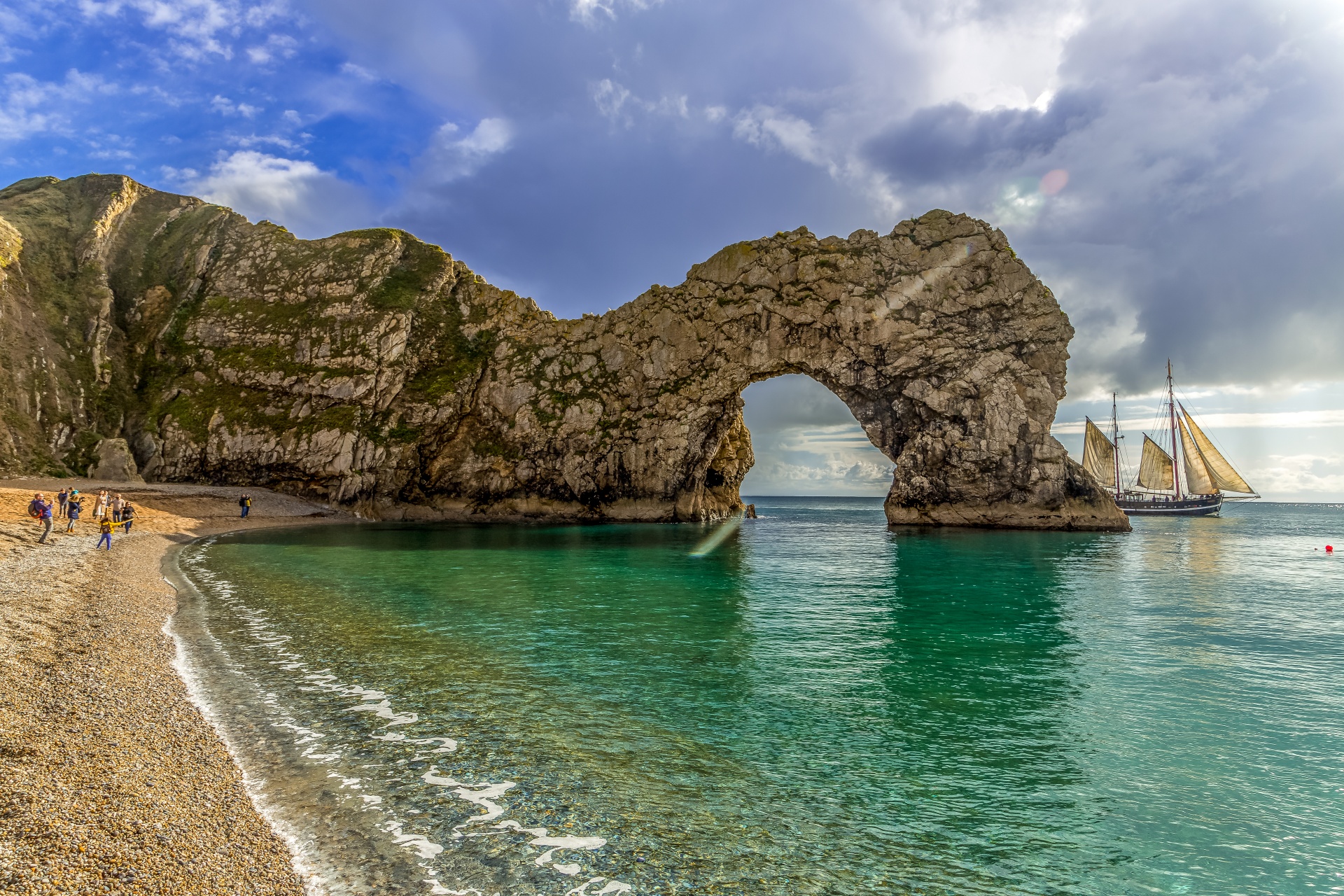
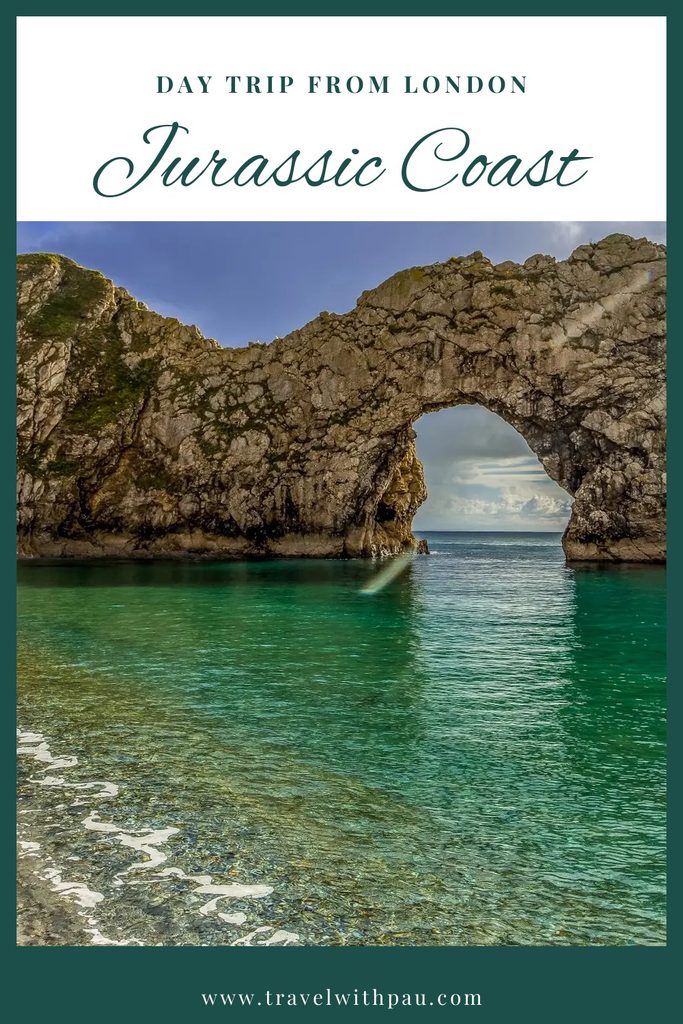
Durdle Door is the Jurassic Coast’s most iconic image: a natural limestone arch thrust out into the sea, with a pebble beach either side and views along the cliff line that stretch to the horizon. This natural wonder is the reason I wanted to come to the Jurassic Coast in the first place, and it’s undeniably breathtaking, absolutely earning its status as one of England’s most photographed spots.
Getting there involves parking at the top (book in advance in summer, the car park fills early) and walking down a steep path to the beach. It’s about 15 minutes down and a sweaty 15 minutes back up, but worth every step. Swim through the arch if the conditions allow, it’s a genuinely memorable experience.
Tip: visit as early as you can, especially at weekends. By mid-morning in summer the beach is rammed and the path down is a queue. At 8am it’s magical.
2. Explore Lulworth Cove
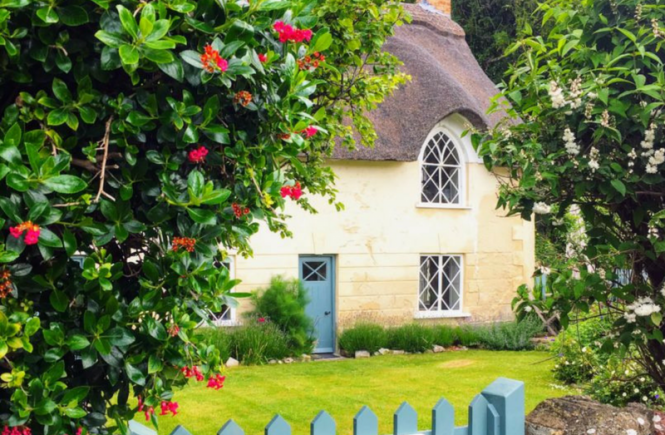
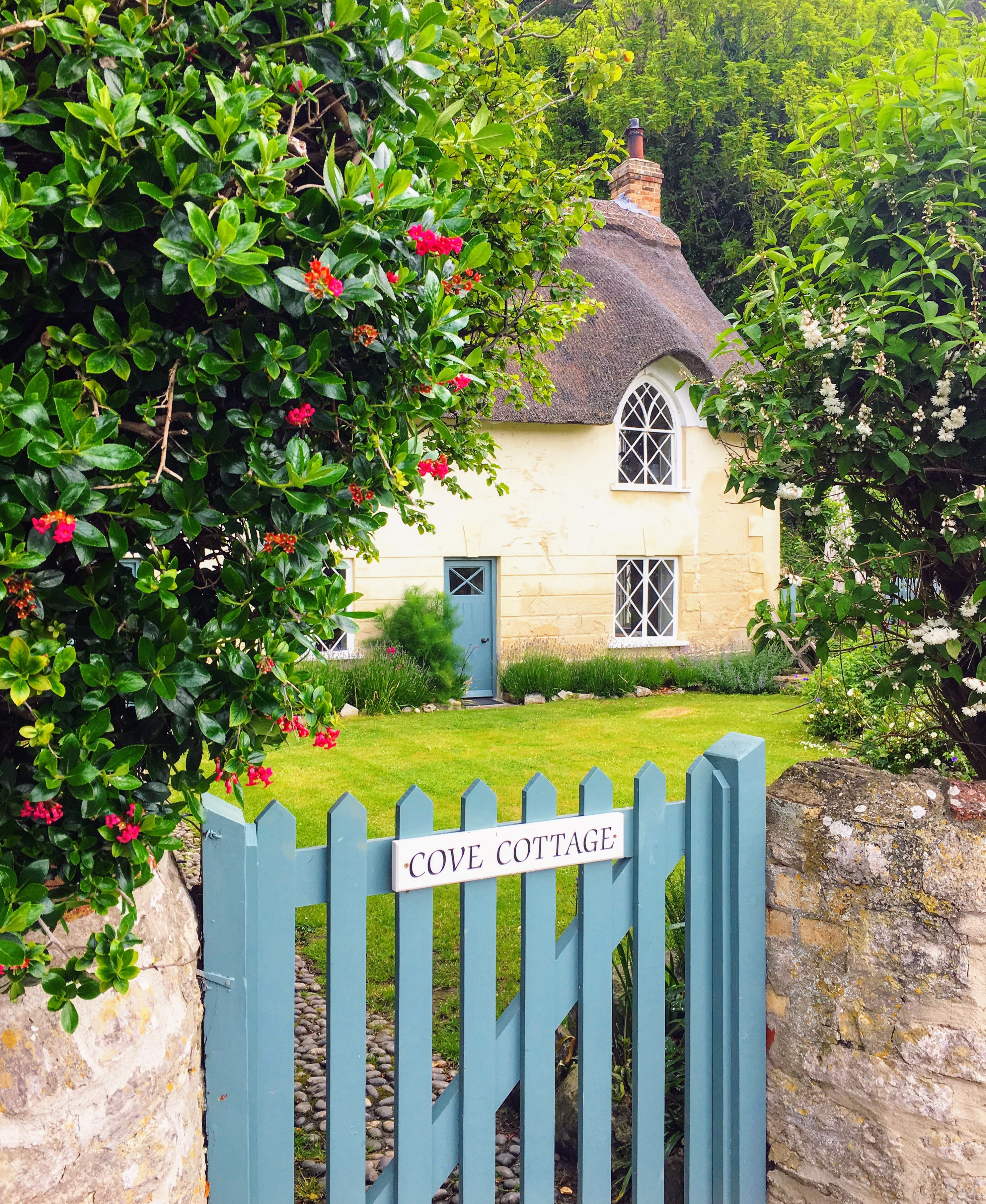
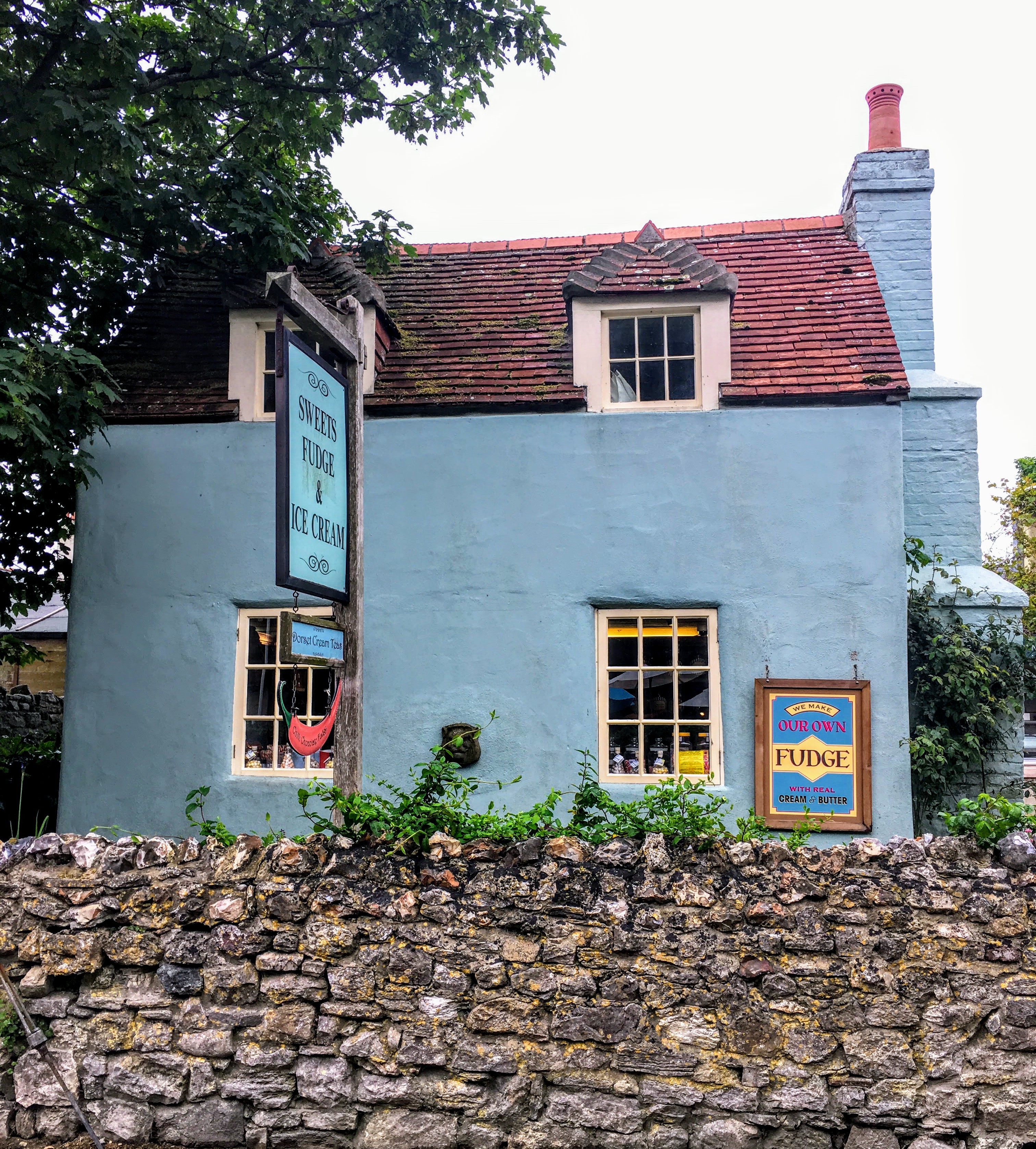
Lulworth Cove is a textbook-perfect natural cove, a near-circular bay carved out of the Jurassic limestone by centuries of wave action. It’s an A-level Geography case study come to life, and it’s genuinely beautiful. The village behind the cove is characterful too, with quaint stone cottages, small ponds in front gardens, and little shops selling coffee, fudge and ice cream.
From Lulworth, you can walk west to Durdle Door in about 30–40 minutes along the cliff path, which gives you spectacular views of both. The hike continues further east along the South West Coast Path towards Kimmeridge if you have the energy and the time.

3. Kayak to Old Harry Rocks
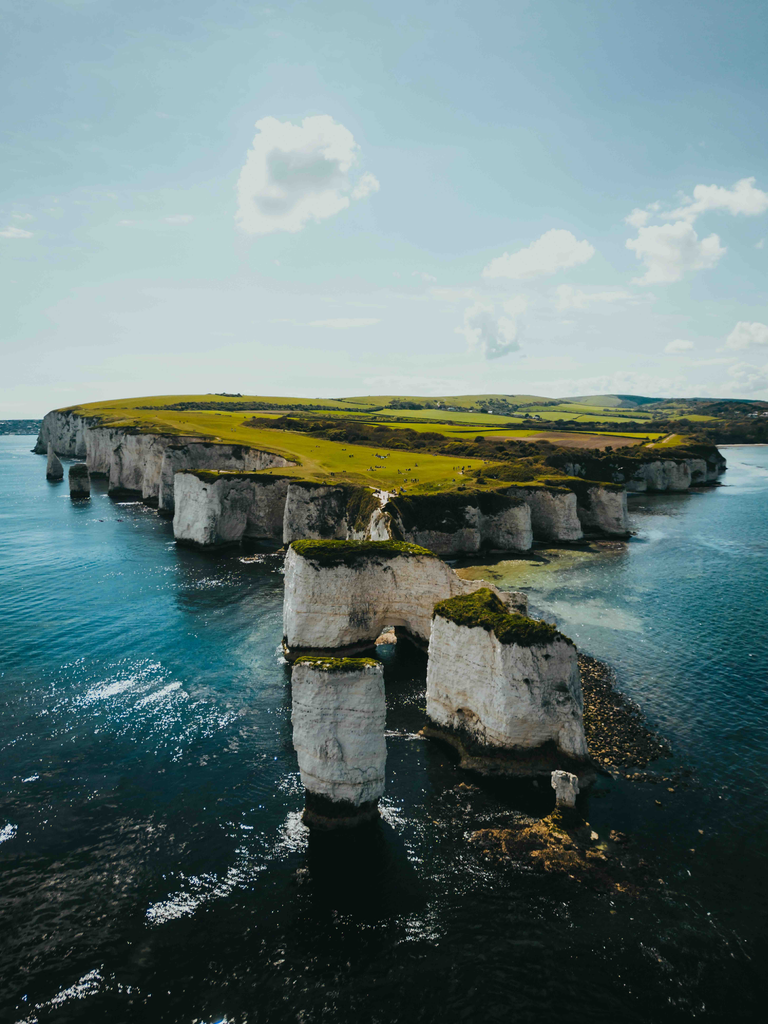
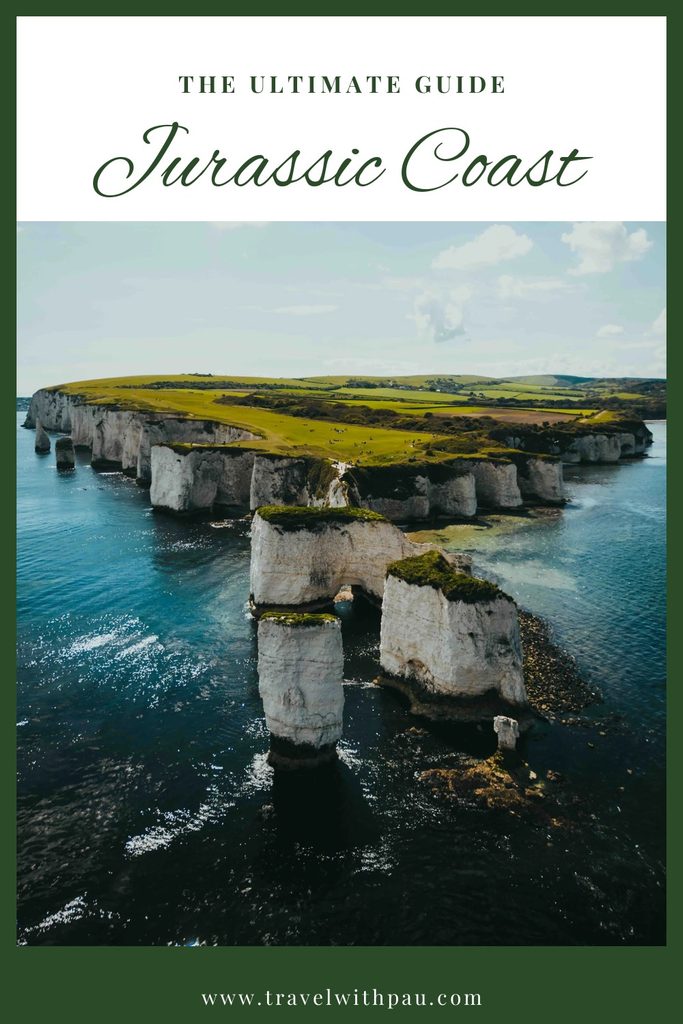
Old Harry Rocks are a series of chalk stacks that rise out of the sea at Handfast Point near Studland, a dramatic, crumbling headland that marks the eastern end of the Jurassic Coast World Heritage Site. They’re impressive from the cliff path, but the best way to see them is by water.
A guided kayaking tour launches from Middle Beach in Studland Bay and takes you paddling past sea caves and rugged cliffs before arriving at Old Harry from the sea, looking up at those white stacks from the waterline. It’s a brilliant experience and fully guided, so no prior kayaking experience is needed. Book the kayaking tour to Old Harry Rocks.
4. Visit Corfe Castle
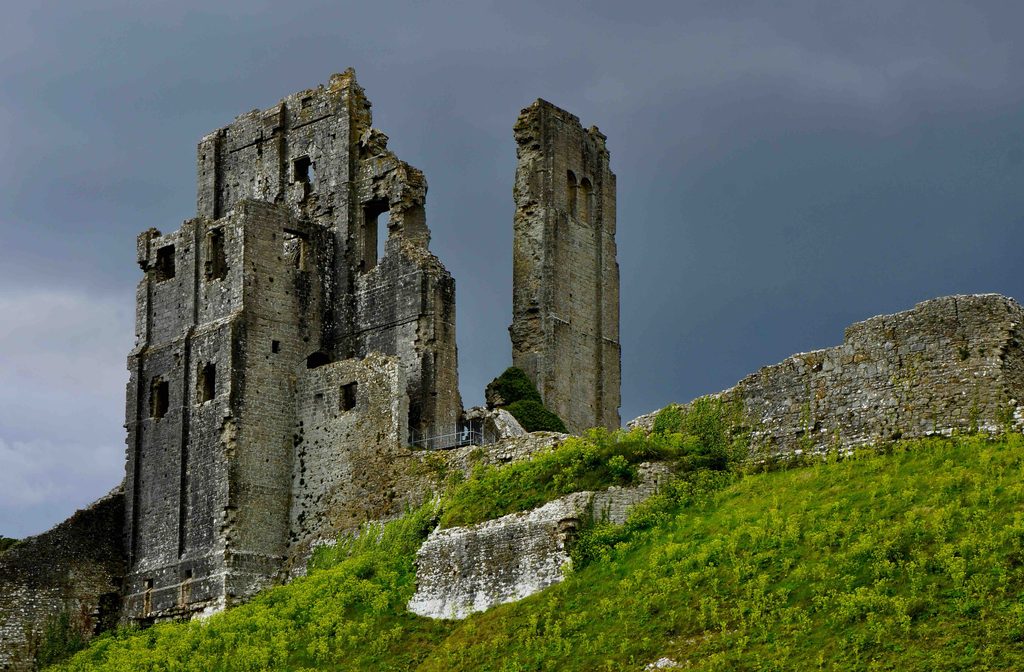
One of Dorset’s most dramatic sights, Corfe Castle sits on a steep hill above the village of the same name, a ruined Norman fortress that was partly demolished by the Parliamentarians in the 1640s and left in atmospheric collapse. The views from the top are outstanding in every direction. The village below is lovely too: stone houses, independent shops, and a great pub for lunch.
Corfe is also on the Swanage Steam Railway, which adds a nostalgic extra layer to the visit. Combine it with Swanage (a classic English seaside town just a short drive or a steam train ride away) for an excellent half-day.
5. Walk Chesil Beach
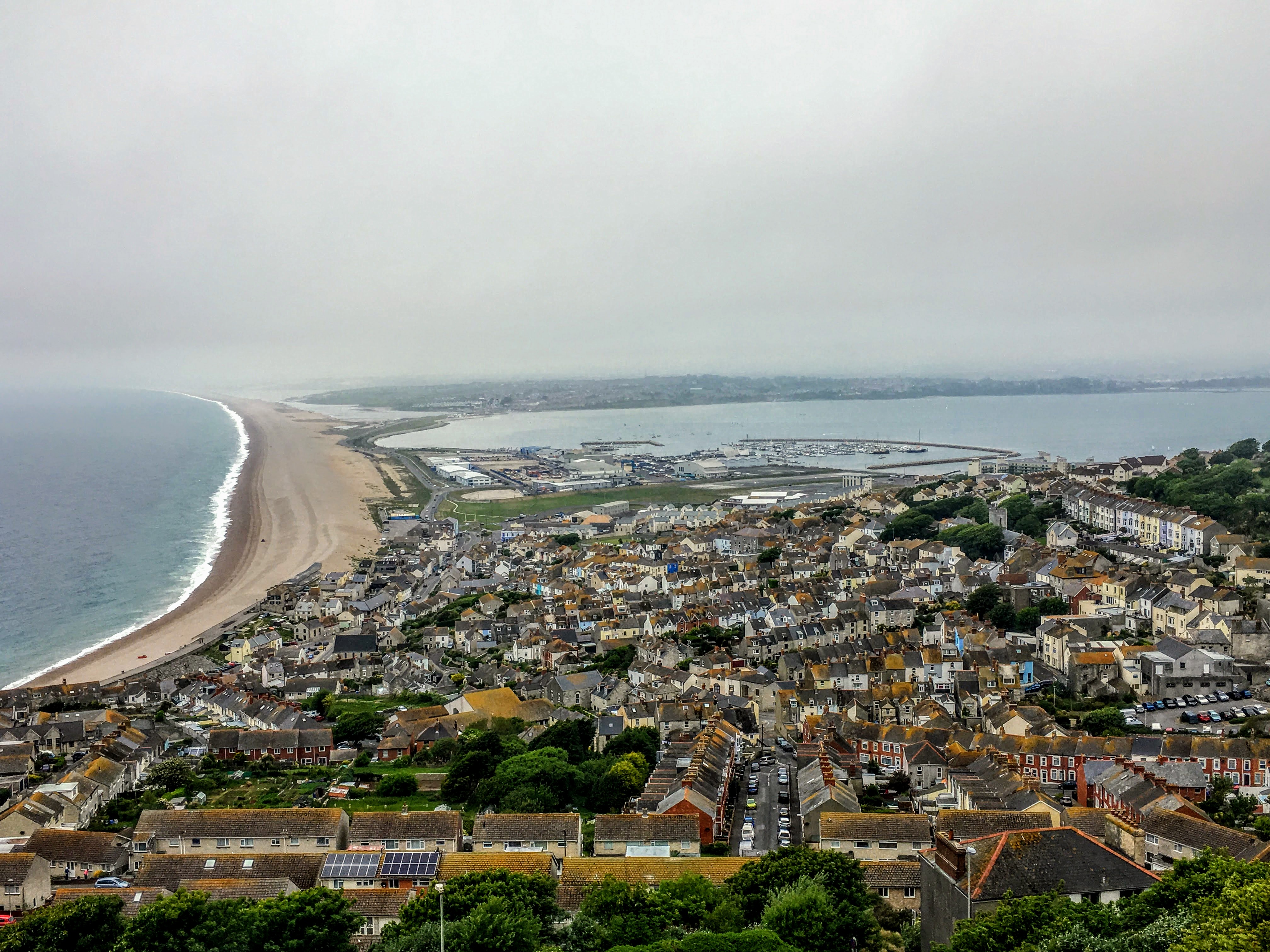
Chesil Beach is one of the most remarkable landforms in the UK: a 29km barrier beach (technically a tombolo) connecting the Isle of Portland to the mainland, made entirely of graduated pebbles, coarser at the Portland end, finer towards Abbotsbury. Walking along it in strong wind, with the sea churning on one side and the Fleet lagoon behind, feels genuinely elemental.
The Fleet lagoon behind the beach is an important wildlife habitat and home to a large colony of mute swans at the Abbotsbury Swannery. At the Portland end, the beach connects to the Isle of Portland, which is worth an afternoon of exploration in itself.
6. Explore the Isle of Portland
The Isle of Portland is connected to Weymouth by Chesil Beach, a narrow causeway that makes the approach feel almost theatrical. This is the home of Portland stone, which has been used for major buildings across Britain and the world, including St Paul’s Cathedral and Buckingham Palace. Once you’ve crossed the beach road, pop by Portland Castle before continuing towards the lighthouse, and stop at the Olympic Rings Stone Sculpture on the way, the sculpture itself isn’t much, but the views over Portland and Chesil Beach from up there are stunning.
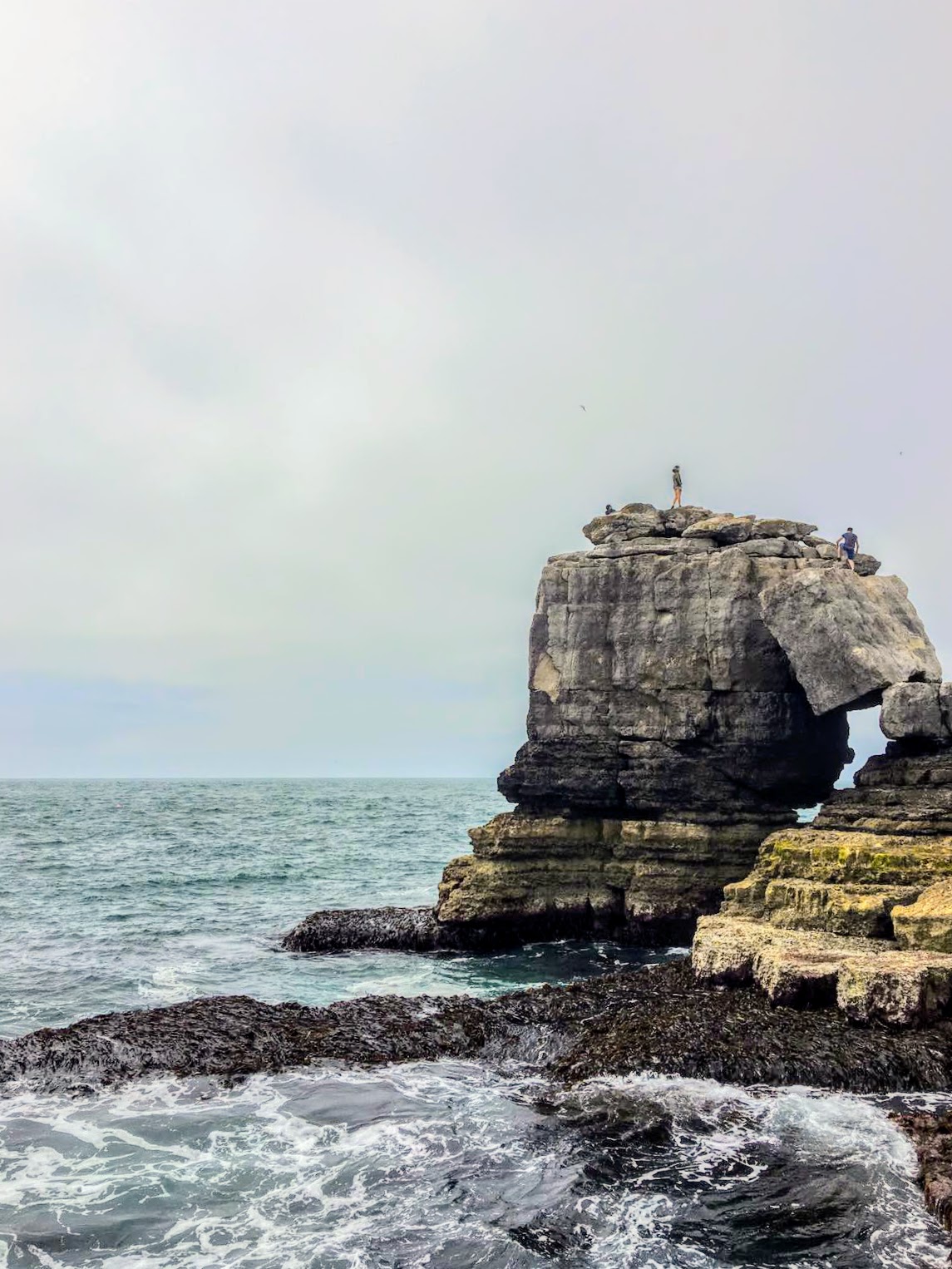
Head for Portland Bill Lighthouse at the southern tip, where you’ll find the remains of old quarries, strange rock formations, and sweeping views of the English Channel, the quarries here are what provided the white Portland stone in the first place. Park up and go for a walk on the rocks near the lighthouse, and have some fun climbing Pulpit Rock, an artificial stack set by quarrymen that mimics a slanted bible leaning on a pulpit, hence the name. Keep an eye on the rocks as you go, there are fossils visible in them too.
The cottages along the road to the lighthouse are some of the most characterful you’ll see anywhere in Dorset, small and slightly eccentric, with the sea visible from every angle.
7. Meet the Primates at Monkey World
Just inland from Lulworth, near the village of Wool, Monkey World is an ape rescue centre set across 65 acres of Dorset woodland, home to over 250 primates rescued from abuse and illegal smuggling: chimpanzees, orang-utans, gibbons, woolly monkeys, lemurs and more. It’s a brilliant break from clifftop walking if you’re travelling with kids (or just love primates), and genuinely one of the best family days out in the area. Open daily 10am to 5pm. Wool train station is about 1.5 miles away with taxis usually available, so it’s reachable even without a car. Check opening times and book tickets on the official site.
8. Hunt for Fossils at Charmouth
Charmouth is one of the best places in the UK for amateur fossil hunting, the beach regularly yields ammonites, ichthyosaur bones and belemnites, particularly after winter storms when new material is washed out of the eroding cliffs. The Charmouth Heritage Coast Centre (formerly the Lyme Regis Museum) has interactive displays, a fossil identification service, and guided fossil walks that take you onto the beach with an expert. Perfect for families and anyone who’s ever wanted to hold a 180-million-year-old ammonite. Book a guided fossil walk directly with the Heritage Coast Centre.
9. Spend an Afternoon in Lyme Regis
Lyme Regis is the Jurassic Coast’s most beloved town, a mix of fossil heritage, independent shops, good restaurants, and a working harbour with fishing boats. The famous Cobb harbour wall (made famous by The French Lieutenant’s Woman) is worth a stroll, and the town beach is excellent for fossil hunting at low tide. Grab fish and chips or fresh crab and eat on the beach wall. It’s exactly what a seaside town should be.
10. Find the Broadchurch Filming Locations at West Bay
Fans of the ITV crime drama Broadchurch will recognise the dramatic golden cliffs of West Bay, near Bridport, this small harbour village stood in for the fictional Broadchurch throughout the series, and the cliffs are just as imposing in real life. The Hive Beach Café nearby is one of the best places on the entire Jurassic Coast for a seafood lunch, their crab sandwiches and daily fish specials are exceptional, and the views across Lyme Bay are the kind that make you want to stay for another coffee.
11. Walk the South West Coast Path
The South West Coast Path runs the entire length of the English and Cornish coast, and the Jurassic Coast section between Lyme Regis and Poole is one of its finest stretches. You don’t have to walk the whole thing (it’s 1,014km end to end), but picking a section for a few hours is one of the best free things you can do here. The stretch from Lulworth Cove east to Kimmeridge Bay is particularly spectacular, as is the cliff walk above Old Harry Rocks.
12. Discover Weymouth
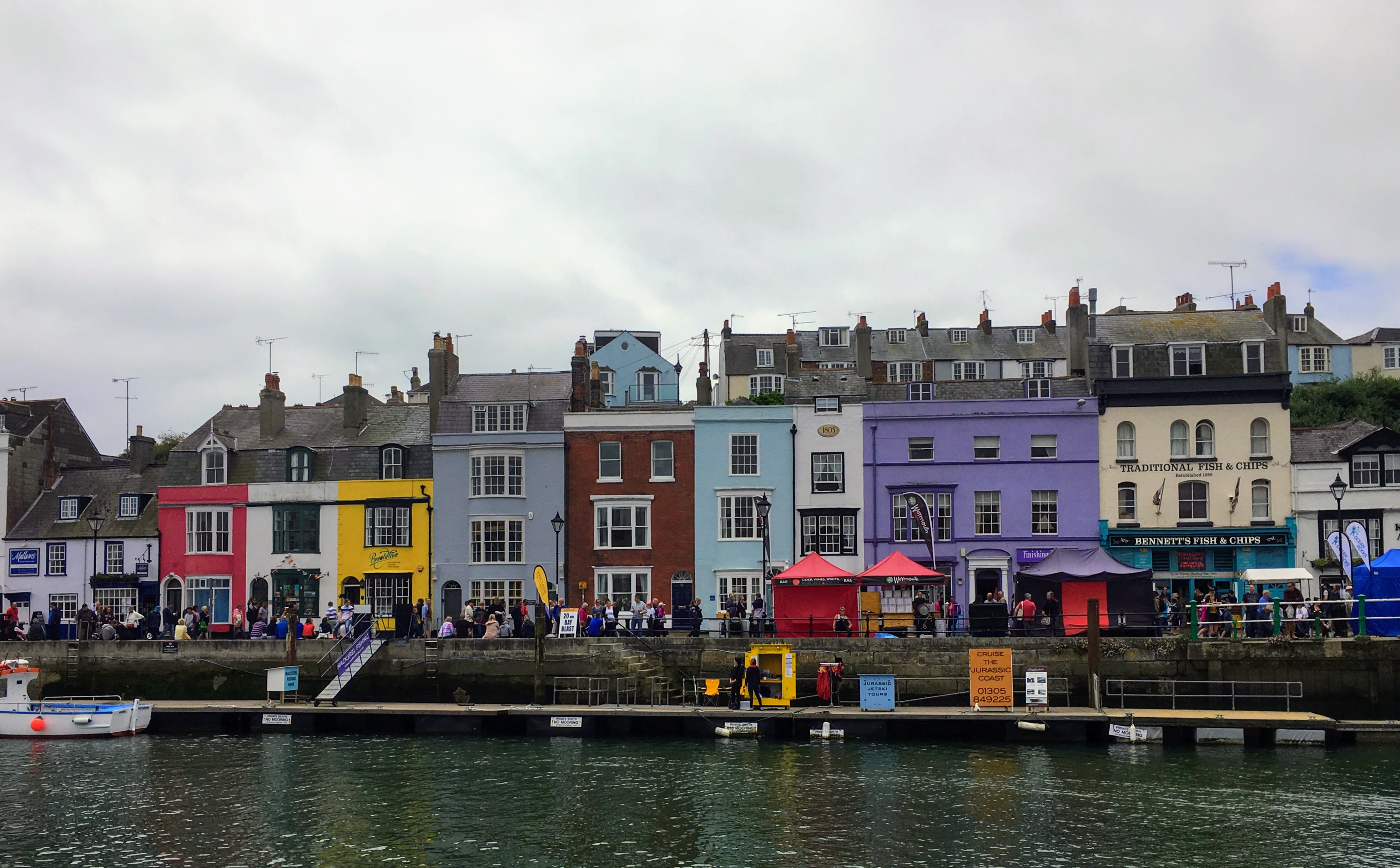
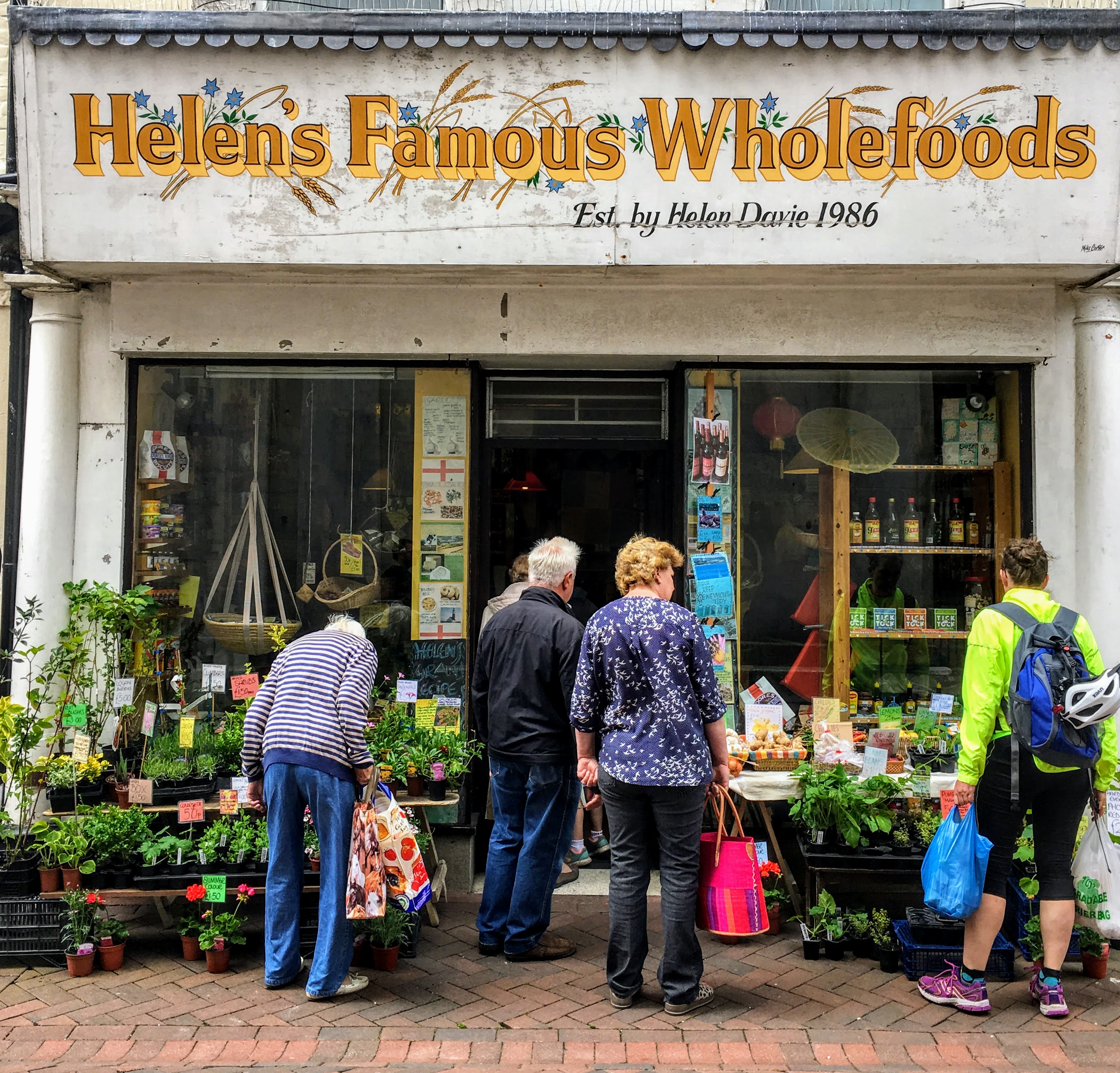
Weymouth sits roughly at the midpoint of the Jurassic Coast and makes an excellent base if you’re spending more than a day. The Georgian harbour is lovely for a wander, the esplanade stretches along a wide sandy beach, and there’s a proper seaside energy here, arcades, fish and chips, and people very much enjoying themselves. The Boat Café on the water is great for breakfast.
13. Explore Swanage
Swanage is a genuinely lovely, slightly under-the-radar seaside town at the southeastern end of the Isle of Purbeck. Clean beach, interesting architecture, good independent cafés, and a steam railway that chugs between here and Corfe Castle. It’s quieter than Weymouth and has a lovely unhurried feel, worth an afternoon if you’re in the area.
14. Take a Cruise Along the Coast
135 minutes round trip. For a different view of the coast entirely, the Poole Jurassic Coast Circular Cruise sails from Poole Harbour to Swanage and back, taking in the Sandbanks Peninsula, Brownsea Island, Studland Bay and the famous Old Harry Rocks along the way. There’s live commentary from the captain throughout and a fully licensed bar onboard, and it’s genuinely well-reviewed, 4.4 out of 5 from over 400 bookings.
Where to Stay on the Jurassic Coast
You can stay anywhere along the coast depending on your itinerary, here are the best-reviewed options by budget:
Budget Accommodation
- YHA Swanage: Clean, friendly hostel close to the beach and close to the South West Coast Path. Good for solo travellers and those prioritising getting out early for walking. Best for: solo walkers, backpackers, budget-conscious visitors.
Mid-range
- Heights Hotel (Isle of Portland): Perched above Chesil Beach with excellent views and easy access to both Portland and Weymouth. Good value and a practical base for the central section of the Jurassic Coast. Best for: explorers, couples, longer stays.
Splurge
- Moonfleet Manor (near Weymouth): A country house hotel with spa, sea views, and extensive family facilities. If you’re making a proper weekend of it rather than a day trip, this is a beautiful retreat, the kind of place where you arrive planning to check emails and end up spending the whole afternoon by the pool. Best for: couples, families, a romantic weekend.
Camping is also fantastic along this stretch of coast, there are excellent coastal campsites near Lulworth and Charmouth. None of these float your boat? Search all Dorset accommodation.
Where to Eat on the Jurassic Coast
Burton Bradstock
Hive Beach Café: Arguably the best seafood spot on the coast. Famous for fresh crab sandwiches and daily fish specials, with panoramic views of Lyme Bay. Arrive early or outside peak hours, it gets busy.
The Seaside Boarding House: A beautiful spot for an evening cocktail with panoramic sea views. The kind of place you go for a drink and end up staying for dinner.
Weymouth
Crab House Café: A relaxed, oyster-shack-style spot right on the water, another excellent lunch option if Hive Beach is too much of a detour.
Catch at The Old Fish Market: Seafood-focused fine dining with a Michelin recommendation. Perfect for a special dinner if you’re staying overnight.
The Boat Café: A floating café on the harbour serving hearty breakfasts, good coffee, and a relaxed waterfront vibe. My pick for a morning start.
Lyme Regis
Hix Oyster & Fish House: Mark Hix’s Dorset seafood restaurant, unfussy dishes built around whatever the local fishermen brought in that day, floor-to-ceiling windows over the bay and a covered deck that’s perfect for a sundowner.
Rockfish: Proper fish and chips done well, whatever’s been landed that morning cooked to order with your choice of new potatoes, salad or chips. Casual, reliable, and dog-friendly if you’re travelling with one.
Beyond these, the town has a good range of independent cafés and fish and chip shops along the seafront too, it’s the best place for a casual sit-down lunch on the coast.
How Long to Spend
One day: Absolutely doable as a day trip from London. Focus on one area: either Durdle Door and Lulworth Cove (western section) or Old Harry Rocks and Corfe Castle (eastern section). Don’t try to do both in a day on your own, you’ll feel rushed. If you’d rather let someone else handle the logistics, the Jurassic Coast and Isle of Purbeck Day Tour actually covers both sections in a single 10-hour day, Corfe Castle and Old Harry Rocks in the morning, Lulworth Cove and Durdle Door in the afternoon.
Two days: The ideal amount of time to cover the main highlights: Durdle Door, Lulworth, Corfe Castle, Weymouth, and either West Bay or Lyme Regis. Add a fossil hunt at Charmouth if time allows.
Weekend or longer: Stay for 3 to 4 nights and walk sections of the South West Coast Path, explore the Isle of Portland properly, and genuinely slow down. This coastline rewards those who linger.
Best Time to Visit the Jurassic Coast
The Jurassic Coast is walkable year-round, but the experience varies significantly by season.
Spring (April–June) is my personal recommendation for a Jurassic Coast day trip from London: wildflowers on the cliff paths, fewer crowds than summer, and long enough daylight hours to make the most of a day out. The water is still cold for swimming but the coastal walks are at their best.
Summer (July–August) is peak season, Durdle Door and Lulworth Cove get extremely busy, especially at weekends. If you’re visiting in summer, go early. I cannot stress this enough: arriving at Durdle Door at 8am on a summer Saturday is a completely different experience to arriving at 11am. The car parks fill fast and the steps down to the arch become bottlenecked with people.
Autumn (September–October) offers a great balance, the sea is at its warmest for swimming, crowds thin out noticeably from September, and the light on the cliffs in early autumn is absolutely gorgeous.
Winter (November–March) is dramatically quiet and can be stunning for photography, dramatic skies, rough seas, the cliffs looking their most ancient and wild. Fossil hunting on Charmouth beach is particularly good after winter storms when fresh material is washed up. Just dress warmly and check weather forecasts before you go.
Getting To & Around the Jurassic Coast
The most straightforward way to do a Jurassic Coast day trip from London without a car is by train. Services run from London Waterloo to Weymouth (around 2h30), Bournemouth (around 2h) and Poole (around 2h15), and from Bournemouth or Poole you can pick up local buses to Swanage, Corfe Castle and the Isle of Purbeck. Book advance tickets on Trainline, fares are much cheaper when booked ahead. National Express coaches also run to Bournemouth from London Victoria, the most affordable option if you don’t mind a longer journey.
A hire car is the most flexible option and really does make a big difference to how much you can see in a day. I drove from London and it gave me the freedom to visit Durdle Door, Lulworth, Corfe Castle, the Isle of Portland and West Bay all in one trip, which would be logistically tricky by public transport. Search for the best rates on DiscoverCars. Once you’re in Dorset, the Jurassic Coaster bus service runs along the coast between Bournemouth and Exeter, stopping at key spots, and the Swanage Steam Railway connects Swanage to Corfe Castle and Norden.
Jurassic Coast FAQ
How do I get to the Jurassic Coast from London?
By train, take a service from London Waterloo to Weymouth, Bournemouth or Poole, journey times are 2h15 to 2h30 depending on the destination. Book in advance on Trainline for the best fares. From Bournemouth or Poole, local buses and the Swanage Steam Railway connect to key sites like Corfe Castle and Studland. By car, it’s just over two hours from London, and it’s the easier option if you want to cover multiple spots in one day. Search DiscoverCars for hire rates.
What is the most iconic thing to see on the Jurassic Coast?
Durdle Door, a natural limestone arch above a pebble beach, is the Jurassic Coast’s most photographed landmark. Lulworth Cove, Old Harry Rocks, and the cliffs at West Bay (as seen in Broadchurch) are close runners-up.
Is a car necessary for a Jurassic Coast day trip?
Not essential, but it makes a huge difference to how much you can see. Trains get you to Weymouth or Bournemouth easily, and buses connect some coastal spots, but to visit Durdle Door, Corfe Castle and West Bay in the same day, a car is the most practical option. Search DiscoverCars for hire rates.
When is the best time to visit the Jurassic Coast?
Spring (April–June) and early autumn (September–October) offer the best combination of good weather, manageable crowds and beautiful light. Summer is stunning but Durdle Door and Lulworth Cove get very busy, visit early morning on summer weekends. Winter is dramatic and brilliant for fossil hunting after storms.
Can you swim at Durdle Door?
Yes, and it’s one of the best swims you can have in England. The beach is pebbly and the water is cold even in summer, but swimming through the arch is a genuinely memorable experience. Always check conditions before swimming, the area can have unpredictable currents.
Where is the best place to find fossils on the Jurassic Coast?
Charmouth and Lyme Regis are the best locations for amateur fossil hunters. The beach at Charmouth (particularly at low tide after winter storms) regularly yields ammonites and belemnites. The Charmouth Heritage Coast Centre runs guided fossil walks and can help you identify what you find.
More from the blog: Brighton Bucket List | Visiting Rye & Camber Sands | Southend-on-Sea & Leigh-on-Sea
Enjoyed this article? Support my work by buying me a latte. Otherwise, do me a great favor of leaving a comment and following me on Instagram (@travelwithpau). Feel free to say ‘Hello!’ I don’t bite. And make sure you save the article for later on Pinterest!
This post contains affiliate links. If you click one and make a booking, I may earn a small commission at no extra cost to you. I only recommend services I genuinely use and trust.
Milan Bucket List: The Best Things to Do in Milan (2026)
I’ll be honest, Milan wasn’t on my original Italian radar. Rome, Florence, the Amalfi Coast, those were the ones everyone raved about. But then I actually went to Milan, and something clicked. This city is different. It’s cooler, sleeker, and somehow more real than you’d expect from one of the EU’s wealthiest cities. Yes, the designer boutiques are everywhere and the Aperol Spritzes are €14, but scratch beneath the surface and you’ll find Gothic cathedrals, Renaissance masterpieces, neighbourhood aperitivo bars, and some of the best risotto you’ll ever eat.
Whether you’re spending a weekend or a full week, there are so many brilliant things to do in Milan. It’s a city that rewards slow wandering just as much as ticking off the big sights. Get lost in Brera, stumble across a canal bar at golden hour, stand on the Duomo rooftop as the sun sets over the Alps, and then wonder why you didn’t come sooner.
This guide covers everything: my Milan bucket list, where to stay, where to eat, the best tours, day trips, and all the practical info you need to plan your trip.
MILAN ESSENTIALS
✈️ Getting There / Milan has two main airports. Malpensa (MXP) is the larger international hub, about 50km from the city centre, budget around 50 to 60 minutes by road. Linate (LIN) is much closer, just 7km east, and is often used for European short-haul flights. From London, you’re looking at roughly 2 hours in the air. Book a private airport transfer with WelcomePickups: fixed prices, professional drivers, no taxi rank stress. Search flights on Skyscanner.
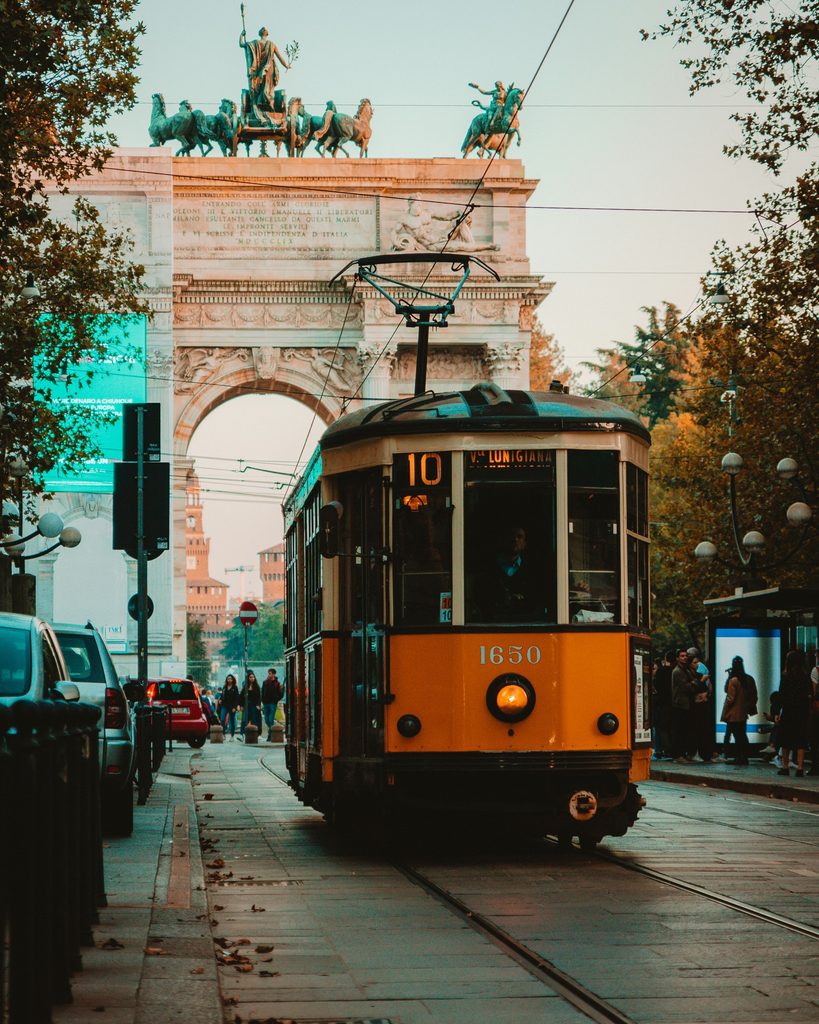
🚗 Getting Around / Milan’s metro is excellent, clean, affordable, and fast. The main lines to know are M1 (red), M2 (green), M3 (yellow) and M5 (lilac). Trams are charming and great for getting around the centre, and much of the historic core is very walkable. Avoid taxis and Uber, they’re expensive in Milan. A 24-hour travel pass is great value if you’re planning to cover a lot of ground.
🎟️ Tours / Milan rewards you enormously when you have a good guide to unlock the context. The best ones to book in advance:
Last Supper Skip-the-Line Guided Tour
Duomo and Rooftop Guided Tour
Navigli Canal Boat Tour with Aperitivo
San Siro Stadium and Museum Guided Tour
🏨 Stay / Skip the endless scrolling, these are the ones I’d point a friend toward:
Budget: Hotel Milano Castello
Mid-range: Rosa Grand Milano
Splurge: Bvlgari Hotel Milano
🧳 Luggage Storage / If you’re early for check-in or have time to kill before a flight, no stress, there are luggage storage points all over Milan. Use this website to find one nearby.
📱 Connect / Stay connected the moment you land. I use Holafly, use code TRAVELWITHPAU for 5% off.
🛡️ Get Insured / Don’t travel without it. World Nomads is brilliant for independent travellers and covers most adventure activities.
Milan Bucket List: 19 Things to Do in Milan
1. Climb the Duomo di Milano
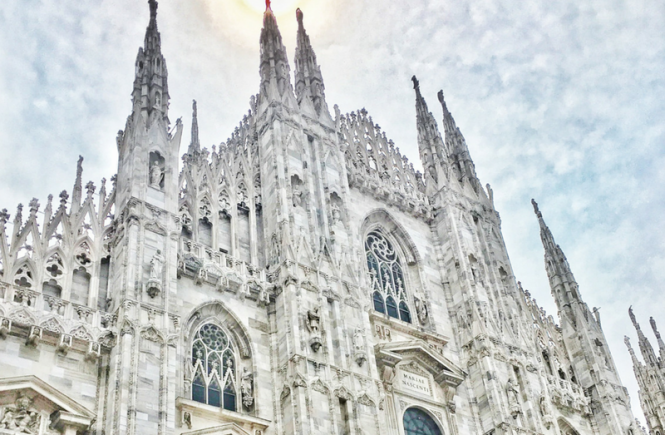
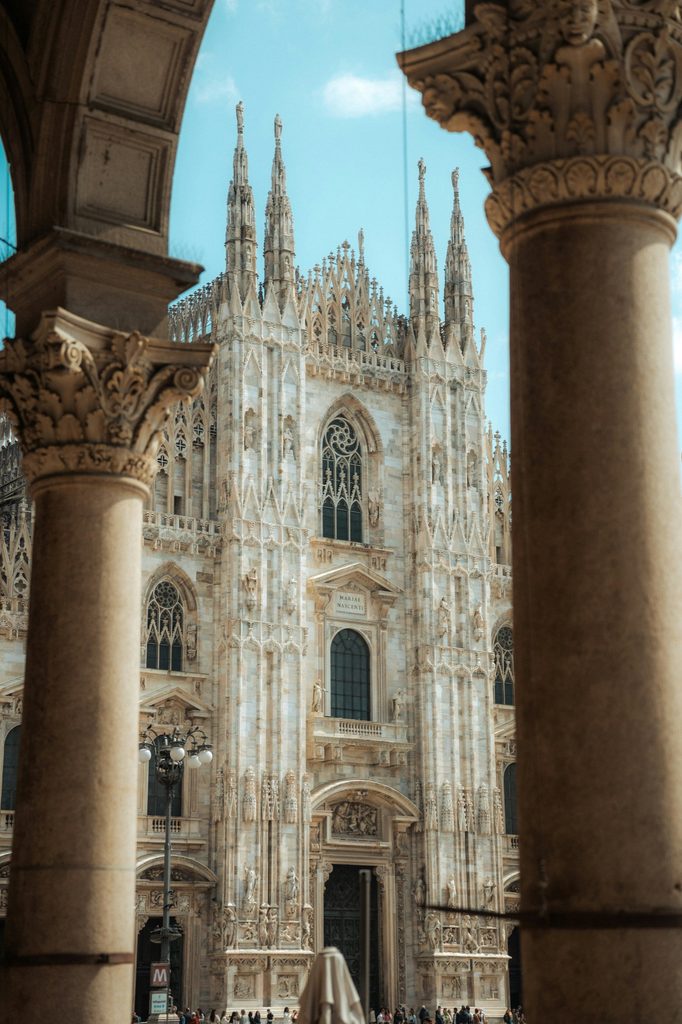
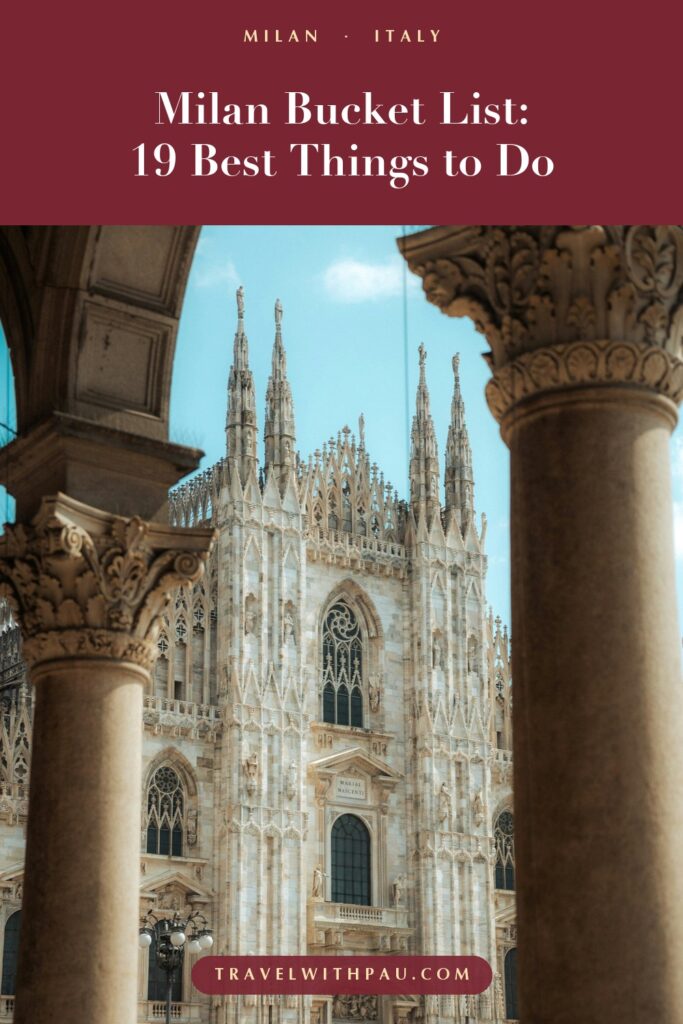
The Duomo is Milan, this Gothic cathedral has been under construction for over 600 years and is the third largest in the world. Even if you’ve seen plenty of European cathedrals, nothing quite prepares you for this one. The white marble facade, the forest of spires, the sheer scale of it all. But the real highlight? Getting up on the rooftop terraces and weaving between 135 spires and 3,200 statues with the Alps as your backdrop on a clear day. It’s genuinely one of Italy’s greatest views.
Practical info: Entry to the terraces costs around €15 via stairs or €20 by lift. Rooftop access is included in the Duomo Pass. Book well ahead to skip the queues, this is one Milan attraction where winging it will cost you time, or skip the stress entirely with a guided Duomo and rooftop tour that includes tickets. Dress code applies (no bare shoulders or knees inside the cathedral). Open daily from around 9am.
2. See Da Vinci’s The Last Supper
This is the one you cannot miss, and also the one that requires the most planning. Leonardo da Vinci’s The Last Supper (Il Cenacolo) is housed in the refectory of Santa Maria delle Grazie, and viewings are strictly limited to 15 minutes with groups capped at 30 people. Tickets can sell out months in advance. I am not exaggerating. Do not leave this to chance.
The painting depicts the moment Christ announces his betrayal, the expressions on each apostle’s face are extraordinary, and seeing it in person, understanding its scale (roughly 4.6m x 8.8m), is a genuinely moving experience.
Practical info: Viewings run in timed slots. Independent tickets via the official website sell out fastest, or book a skip-the-line guided tour instead, which is often easier to secure and gives you valuable context on the painting. €15+ for entry. Address: Piazza di Santa Maria delle Grazie, 2.
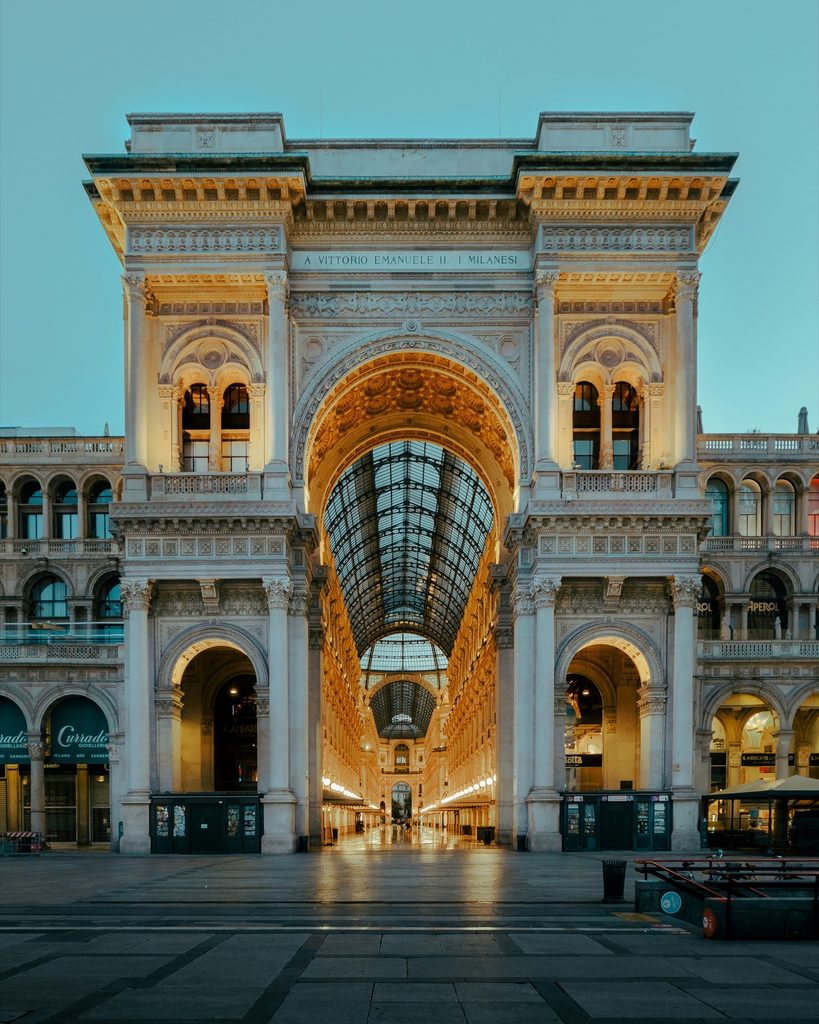
3. Explore Galleria Vittorio Emanuele II
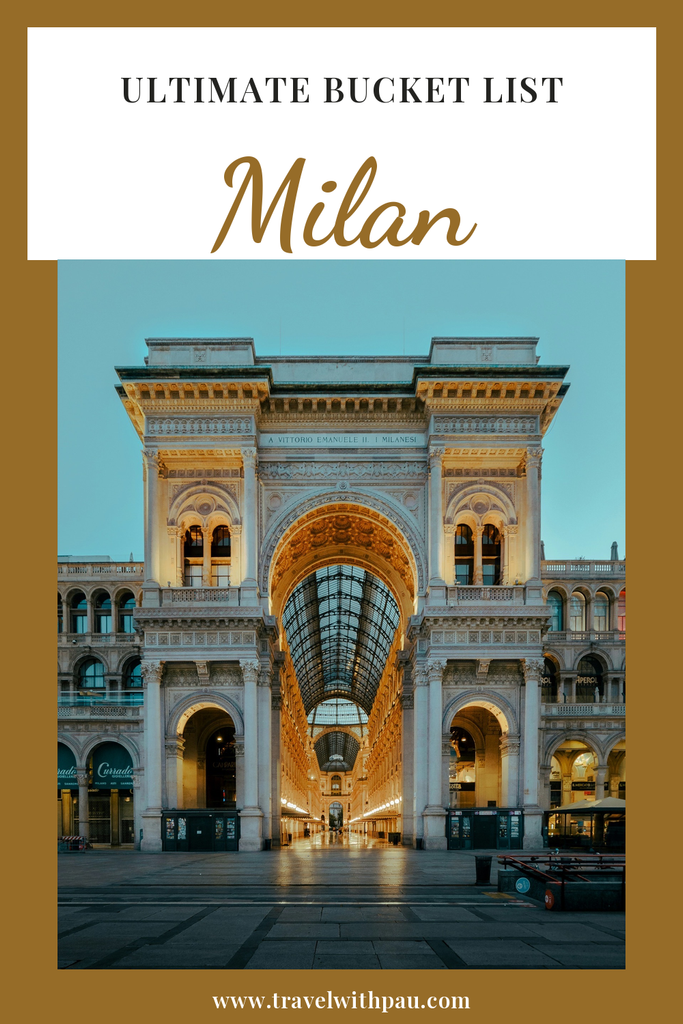
Right next to the Duomo, the Galleria is one of the world’s oldest shopping malls, a soaring 19th-century glass-and-iron arcade housing luxury brands, historic cafés, and the famous mosaic of the bull in the floor (spin on its bits for good luck, apparently). Even if you’re not in the market for Prada, it’s worth wandering through just for the architecture.
Practical info: Free to enter and explore. The cafés inside (Biffi, Savini) are expensive but atmospheric for a coffee. Open all hours as it’s a public walkway, and it’s usually one of the stops on this Milan highlights walking tour if you’d rather see it with context alongside the Duomo and Sforza Castle.
4. Castello Sforzesco and Michelangelo’s Pietà Rondanini
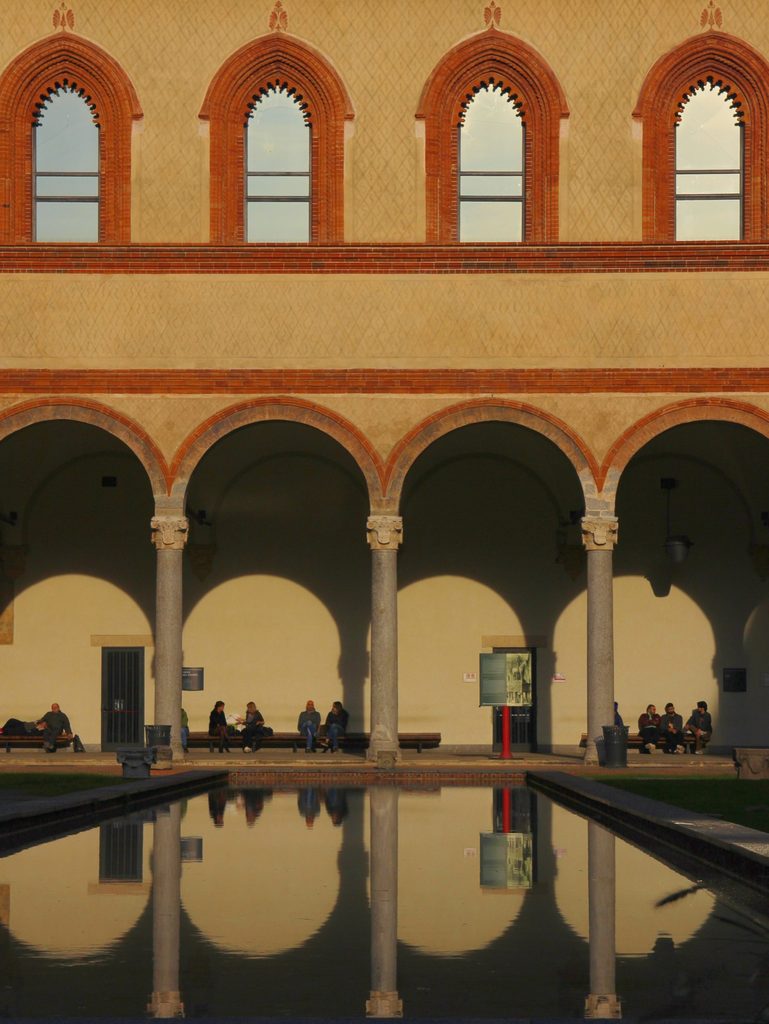
The Sforza Castle is one of Milan’s most impressive landmarks, a massive 15th-century fortress built by Francesco Sforza, Duke of Milan. What most people don’t know until they get there is that it houses several excellent museums, including Michelangelo’s final and unfinished sculpture: the Pietà Rondanini. He was working on it just days before his death at 88. It’s raw, haunting, and unlike anything else you’ll see in Italy.
Practical info: Entry to the castle grounds is free; museums cost €5–10, or book a guided tour with an audioguide if you want the Pietà Rondanini’s story properly explained. The Museo della Pietà Rondanini is open Tuesday–Sunday, 10am–5:30pm. The castle is a 10-minute walk from the Duomo.
5. Wander the Brera Neighbourhood
Brera is the artistic heart of Milan and one of those rare city neighbourhoods that manages to feel both genuinely historic and genuinely cool. Cobblestone streets, independent boutiques, art galleries, great coffee shops, and some of Milan’s best restaurants. It’s where you wander without a plan and end up having the best afternoon of your trip.
Practical info: Best explored on foot. The neighbourhood clusters around Via Brera and Via Fiori Chiari. It’s very walkable from the Sforza Castle and the Duomo.
6. Pinacoteca di Brera
While you’re in Brera, don’t skip the Pinacoteca, one of Italy’s finest art galleries, housed in a beautiful Baroque palace. The collection spans medieval and Renaissance masterpieces including Raphael’s The Marriage of the Virgin, Mantegna’s Dead Christ, and works by Caravaggio, Tintoretto, and Leonardo. It’s less hectic than the Uffizi in Florence and the collection is genuinely world-class.
Practical info: Entry €15, free on the first Sunday of each month, or book a guided experience if you want an expert walking you through the highlights. Open Tuesday–Sunday, 8:30am–7:15pm. Address: Via Brera, 28.
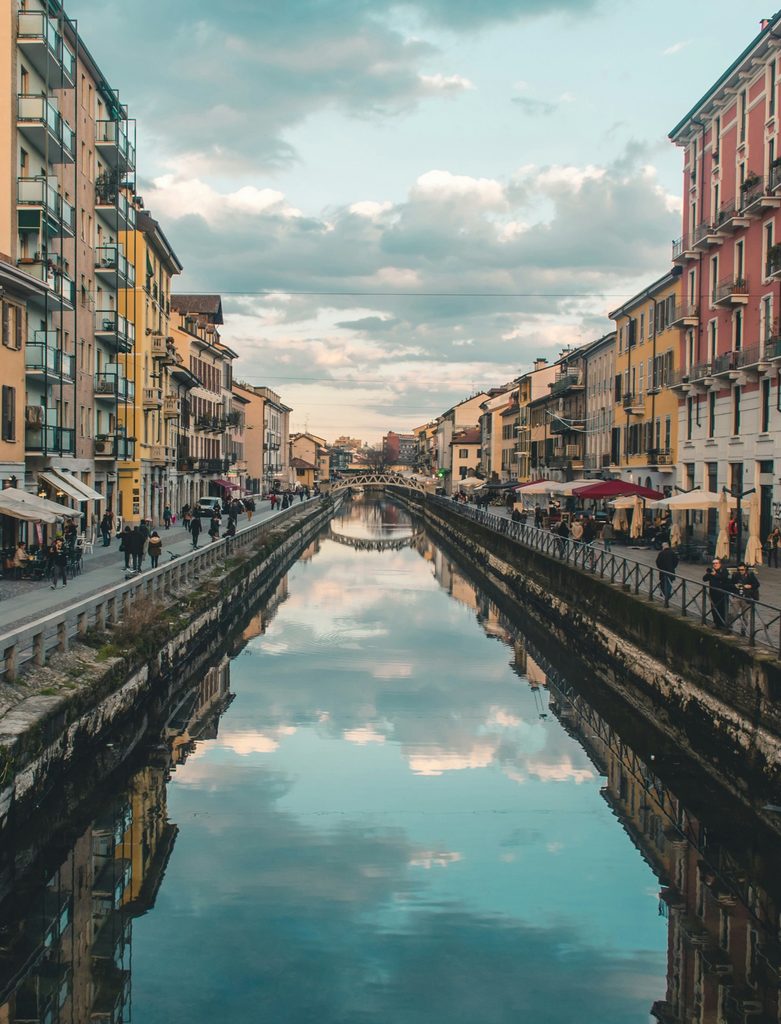
7. Aperitivo in the Navigli District
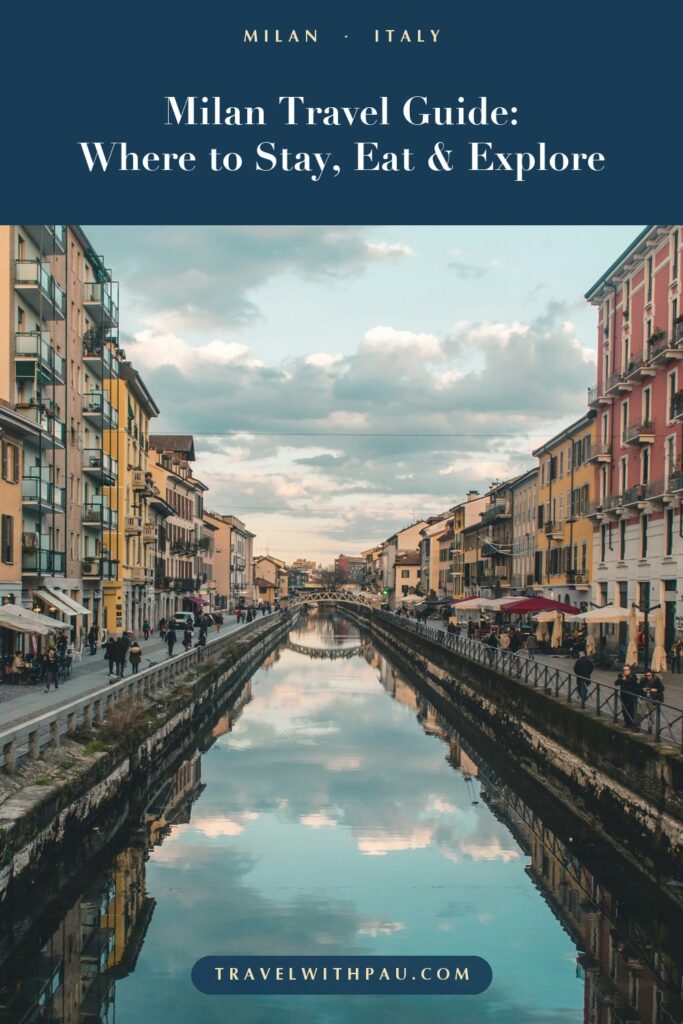
If you only do one evening activity in Milan, make it aperitivo in the Navigli. The Naviglio Grande canal dates back to the 12th century and today its banks are lined with bars that do the most gloriously generous happy hours, buy a drink and you get a spread of snacks laid out like a proper meal. Arrive between 6 and 9pm when the vibe is at its best, the lights hit the water, and the whole neighbourhood feels like it’s exhaling after a long day.
Practical info: It’s worth doing an evening canal boat tour to see the canals from the water before settling in for aperitivo, this one bundles the boat ride and aperitivo together so you don’t have to plan the two separately. Most bars along the Naviglio Grande do aperitivo from around €8 to €12 including food. The Navigli is in the south of the city, reachable by metro (Porta Genova, M2 green line).
8. Santa Maria delle Grazie
Even setting aside The Last Supper (which is in an adjacent building), Santa Maria delle Grazie is a stunning church worth visiting in its own right. The external dome, designed by Bramante in the late 15th century, is a masterpiece of Renaissance architecture. The interior is serene and beautiful.
Practical info: Entry to the church is free. The refectory housing The Last Supper requires a separate timed ticket (see item 2 above). Address: Piazza di Santa Maria delle Grazie, 2. Closed Monday.
9. Via Montenapoleone and the Fashion District
Even if couture isn’t your thing, a stroll through the Quadrilatero della Moda (Fashion Quadrangle) is a Milan experience. Via Montenapoleone is the most famous street, think Gucci, Prada, Versace, Dolce & Gabbana, all lined up in beautiful historic buildings. The window displays alone are an art form. For slightly more affordable shopping, Via della Spiga and the streets around it have independent Italian brands alongside the big names.
Practical info: Free to wander. The fashion district is a 15-minute walk northeast of the Duomo. Peak shopping hours can get very busy; go early morning for a more peaceful experience.
10. San Siro Stadium Tour
San Siro, or to give it its proper name, Stadio Giuseppe Meazza, is one of football’s most iconic venues and the shared home of AC Milan and Inter Milan. Even if you’re not a huge football fan, the stadium tour is surprisingly excellent: you walk through the players’ tunnel, see the changing rooms, stand on the pitch, and visit the museum packed with shirts and memorabilia from two legendary clubs.
Practical info: Stadium tours run daily (9:30am to 5pm October to March; until 6pm April to September), book your spot on the stadium and museum tour here, tickets from around €20. Note: tours are suspended on match days. The stadium is in the northwest of the city, take the M5 (lilac line) to San Siro Stadio.
11. Bosco Verticale and Porta Nuova
This one won’t likely be in any other Milan travel guide, but in my opinion it’s totally worth looking at. Bosco Verticale (Vertical Forest) is one of the most photographed buildings in Milan, twin residential towers literally covered in over 900 trees and 20,000 plants. The concept is extraordinary and the execution is genuinely impressive, super environmentally friendly but also very photogenic. It sits in the regenerated Porta Nuova district, which is Milan’s modern business quarter and a fascinating counterpoint to the historic centre.
Practical info: You can’t go inside the towers (they’re private residences) but the external view is free and the surrounding Biblioteca degli Alberi park is a lovely spot to sit and take it all in. From the Gae Aulenti square, the buildings are about a 5-minute walk. Reachable by metro (Porta Garibaldi, M2/M5).

12. Cimitero Monumentale
One of Milan’s most unexpected highlights. The Monumental Cemetery opened in 1866 and is essentially an open-air museum of funerary sculpture, elaborate mausoleums, dramatic statues, and artistic monuments commissioned by Milan’s wealthy families over the centuries. It’s extraordinarily beautiful in a very particular way and often overlooked by visitors in favour of more traditional sights.
Practical info: Free entry, or book a guided tour if you want the stories behind the mausoleums explained rather than wandering blind. Open Tuesday–Sunday, 8am–6pm (closed Monday). Address: Piazzale Cimitero Monumentale. Reachable by tram (lines 12/14) or a short walk from Monumentale metro (M5 lilac line).
13. Aperitivo Culture: Do It Like a Local
Aperitivo isn’t just a drink in Milan, it’s an institution. The tradition of serving a generous spread of food with your pre-dinner drink is particularly Milanese (it’s different from the rest of Italy, where you usually just get crisps and olives). Do it properly: order a Negroni, an Aperol Spritz, or a local Campari Soda, find a bar with a good buffet spread, and spend an hour not rushing.
Practical info: Classic aperitivo runs 6pm–9pm. Beyond the Navigli, good areas include Brera, Corso Como, and Isola neighbourhood. Budget €8–15 per drink including food.
14. Peck Delicatessen
Peck is a Milan institution, a legendary delicatessen on Via Spadari that’s been feeding the city since 1883. The ground floor is a temple to Italian food: aged cheeses, cured meats, truffles, olive oils, fresh pasta, and hundreds of other things you’ll want to buy and carry home. Upstairs there’s a restaurant. It’s pricey, but even just browsing is an experience.
Practical info: Address: Via Spadari, 9 (2 minutes from the Duomo). Open Tuesday–Sunday. A small treat from the deli counter makes an excellent picnic companion for Parco Sempione.
15. Parco Sempione
Milan’s green lung and the park that stretches behind the Sforza Castle. On sunny days this is where Milanese come to read, cycle, picnic, and generally exhale, and it has real charm too: ducks and turtles in the ponds, buskers and musicians dotted around, and the Arco della Pace at one end with the Sforza Castle at the other. There are several interesting structures within the park including the Torre Branca viewing tower and the Triennale design museum, but honestly the best thing to do is just find a bench and spend an hour people-watching in one of Europe’s most style-conscious cities.
Practical info: Open daily from 6:30am. Free entry. The main entrance is via the Sforza Castle courtyard. Worth combining with a castle visit.
16. Teatro alla Scala
La Scala is simply one of the greatest opera houses in the world. Even if opera isn’t your thing, the building itself is magnificent, the ornate auditorium with its six tiers of boxes is exactly what you imagine when you picture 19th-century Italian theatre grandeur. The museum is excellent and you can often access the auditorium as part of the visit.
Practical info: The Museo Teatrale alla Scala is open daily 9am to 12:30pm and 1:30pm to 5:30pm; entry around €9. Performance tickets vary hugely in price, check the schedule at teatroallascala.org. If you’d rather see it as part of a wider route, this 3-hour city highlights walking tour includes La Scala alongside the Duomo and Galleria. Address: Piazza della Scala.
17. Chiesa di San Maurizio al Monastero Maggiore
Known as “Milan’s Sistine Chapel,” this 16th-century Benedictine church on Corso Magenta looks almost plain from the outside, which is exactly why it’s such a good surprise. Step in and every surface, walls, vaults, arches, is covered in Renaissance frescoes, most of them by Bernardino Luini, one of Leonardo da Vinci’s most talented followers. It’s genuinely one of Milan’s best hidden gems and most visitors walk straight past it.
Practical info: Entry is free. Address: Corso Magenta, 15, a short walk from Santa Maria delle Grazie, easy to combine with a Last Supper visit.
18. Bar Basso and the Birth of the Negroni Sbagliato
If you only make one cocktail pilgrimage in Milan, make it this one. Bar Basso, open since 1947, is where the Negroni Sbagliato was accidentally invented in the early 1970s when founder Mirko Stocchetto reached for prosecco instead of gin. It’s still served the same way today, in huge custom Murano glasses, and the bar itself has barely changed either. Expect a proper old-school Milanese crowd and a genuinely historic drink in your hand.
Practical info: Address: Via Plinio, 39. Get there for a pre-dinner drink, it gets busy.
19. San Bernardino alle Ossa, Milan’s Bone Chapel
Tucked a short walk from the Duomo, San Bernardino alle Ossa looks like an ordinary Baroque church from outside, until you step into the small side chapel and find every wall covered in thousands of human skulls and bones, arranged in deliberate, almost decorative patterns. It’s not for everyone, but it’s one of the strangest and most memorable things I’ve seen in any Italian city, and most visitors have no idea it’s there.
Practical info: Free entry, donations welcome. Address: Piazza Santo Stefano / Via Carlo Giuseppe Merlo, 4. Open Monday to Friday 8am to 6pm, Saturday 9:30am to 6pm, the ossuary itself is closed on Sundays.
Milan Day Trips
Milan’s position in northern Italy makes it an excellent base for day trips. Here are the best ones:
Lake Como
The most popular day trip from Milan, and for good reason. Lake Como is impossibly beautiful: crystal-clear water, dramatic Alpine mountains, and elegant villages like Bellagio, Varenna, and Menaggio strung along the shoreline. Bellagio is the jewel, a perfectly preserved lakeside village that justifies every postcard it’s ever appeared on. Como is about an hour from Milan by train (direct services from Milano Centrale) and there’s a regular ferry network between villages. Allow a full day, ideally combining the train to Como with a ferry hop between villages, or skip the planning entirely and book a Lake Como and Bellagio day trip from Milan that handles the transport for you.
Lake Garda
Lake Garda is Italy’s largest lake and a very different character to Como, wider, grander, with a slight Mediterranean feel in the south. Worth it for Sirmione (a beautiful peninsula with a fairy-tale castle), Gardaland (if you have kids), or the northern shore around Riva del Garda for dramatic mountain scenery. Around 1.5 hours from Milan by train.
Bergamo
Bergamo is one of Italy’s most underrated cities and just 45 minutes from Milan by train. The Città Alta (upper town) is a perfectly preserved medieval walled city perched on a hill above the modern lower town, reachable by funicular. Fewer tourists than most Italian destinations of this quality, and the food (polenta, casoncelli pasta, moscato wine) is outstanding.
Turin
About 1 hour by high-speed train from Milan, Turin is elegant, baroque, and seriously underappreciated, the original Italian capital, home to the Shroud of Turin, some of the best chocolate in Europe, and a brilliant Egyptian museum. Great for a day trip or an overnight add-on.
Where to Stay in Milan
Staying in the centre of Milan is recommended but not at all essential in my opinion. On my trip I stayed north of the centre, near a concert venue, and found it noticeably cheaper, getting into the centre on the metro was still super quick and easy, though the specific place I picked wasn’t great so I won’t be recommending it here. It’s worth knowing that hotels inside the very centre (near the Duomo) command a premium. The areas around Brera, Porta Garibaldi, and Porta Romana offer great value with easy metro access.
Budget: Hotel Milano Castello
Excellent location just a short walk from the Sforza Castle and Duomo, with consistently high guest ratings (9.6 for location and comfort). Clean, comfortable rooms with a lovely breakfast buffet, and the staff are notably helpful. One of the best budget picks in the city centre. Best for: First-timers who want to be central without overspending.
Mid-range: Rosa Grand Milano, Starhotels Collezione
A stylish 4-star right on Piazza Fontana, just a 2-minute walk from the Duomo. 330 rooms with a sharp, contemporary Italian look; the food and beverage programme is run by Eataly, which is a very good sign. Strong ratings across the board and a genuinely premium feel without the full luxury price tag. Best for: A special occasion stay in the heart of Milan.
Splurge: Bvlgari Hotel Milano
If you’re going to splash out in Milan, this is the place to do it. Tucked on a private garden street between Via Montenapoleone and La Scala, in other words, exactly where you want to be in Milan, the Bulgari Hotel is housed in a beautifully restored 18th-century Milanese palazzo. A gold-tiled spa pool, 61 impeccably designed rooms, and the kind of service that makes you feel like the most important person in the city. Best for: Honeymoons, milestone celebrations, living your best life.
None of these float your boat? Search all Milan hotels.
Where to Eat in Milan
Milan is a genuinely excellent food city, here’s what I’d actually recommend from my own trip:
Risotto alla milanese: Ratana and Trattoria Masuelli San Marco are both excellent for the classic saffron risotto Milan is known for.
Pizza: Maruzella and Piccola Ischia are solid all-rounders, Pizza AM is the one for a proper Neapolitan version, and S.P.I.B. is the one to know for proper thin-crust.
Panzerotto: Luini, a Milan institution near the Duomo serving fried and baked panzerotti (think a pocket-sized calzone) since 1888, is an essential quick bite between sights.
Ice cream: La Gelateria della Musica and Gelato Giusto are both consistently excellent, Cioccolatti Italiani does a lovely chocolate-dipped cone if you want to make it a bit extra, and Ciacco is the pick if you want organic or vegan gelato, I had the vegan pistachio there and it was a dream come true.
How Long to Spend in Milan
2 days is enough to hit the main highlights: Duomo and rooftop, The Last Supper, Galleria Vittorio Emanuele, Sforza Castle, Brera neighbourhood, and an evening in the Navigli. It’s a tight itinerary but doable if you pre-book everything.
3 days is the sweet spot. Add the Pinacoteca di Brera, a morning in the fashion district, the Cimitero Monumentale, and a proper long aperitivo evening without feeling rushed.
4 to 5 days gives you time to breathe, explore the Porta Nuova area, fit in a day trip to Lake Como, discover neighbourhood restaurants properly, and generally feel like you’ve understood the city rather than just ticked off its sights.
Getting To & Around Milan
Most UK airports have direct flights to Milan Malpensa (MXP) or Milan Linate (LIN), around 2 hours flying time from London, with Ryanair and easyJet flying to both from multiple UK cities, often very cheaply. Book a private airport transfer in advance with WelcomePickups for fixed-price pickups with meet-and-greet service, and note that Malpensa is much further from the city (50km) so factor in extra journey time and cost. If you fancy a scenic, low-carbon alternative, it’s possible to reach Milan from the UK by train via Eurostar to Paris, then a high-speed train through the Mont Cenis tunnel to Turin and on to Milan, it’s a long day, but a genuinely scenic one. Check routes and prices on Trainline.
Once you’re in Milan, the metro is excellent, clean, affordable, and fast, and trams and walking cover the rest of the historic core easily, so avoid taxis and Uber, which are expensive here. If you’re exploring further afield within Italy, Milan is well-connected by high-speed rail: Florence is about 2 hours away, Venice about 2.5 hours, and Rome about 3 hours, with Trenitalia and Italo as the main operators, book in advance for the best prices, again via Trainline.
Best Time to Visit Milan
Milan is a year-round destination, but some times are better than others. April to June and September to October are the sweet spots, mild temperatures, lovely light, and the city feels alive without being overwhelmingly busy.
Avoid August if you can. Milan empties out dramatically in August, locals leave for the coast, many restaurants and shops close, and the city has a strange, hollow energy. It can also be brutally hot.
Fashion Weeks in September and February are worth knowing about. They bring an exciting creative buzz to the city, but hotel prices surge and the Quadrilatero della Moda area gets very crowded. Book well in advance if you’re visiting during these periods, or factor in the premium.
Winter (November to February) has fewer tourists and lower prices, which has its appeal, but Milan in grey, drizzly weather is less inspiring than in the golden light of spring or autumn.
Milan FAQ
Is Milan worth visiting?
Absolutely. Milan often gets unfairly dismissed as just a shopping and business destination, but it has world-class art, architecture, food, and some of Italy’s most fascinating neighbourhoods. It’s simply a different kind of Italian city, more cosmopolitan and modern, and that’s part of its appeal.
How many days do you need in Milan?
Minimum 2 days to cover the highlights. 3 days is the sweet spot. If you want to add a day trip to Lake Como, plan for 4 days minimum.
What is the best area to stay in Milan?
For first-timers, anywhere within walking distance of the Duomo or in the Brera neighbourhood puts you close to everything. Porta Garibaldi and Isola are great for a more local, neighbourhood feel.
How far is Lake Como from Milan?
Lake Como is about 50km from Milan. The town of Como is roughly 1 hour by direct train from Milano Centrale, or 30 minutes by regional express. Bellagio is an additional 50-minute ferry ride from Como.
Do I need to book The Last Supper in advance?
Yes, and I cannot stress this enough. Tickets can sell out months in advance, especially in peak season. Book as early as humanly possible. If you’ve left it too late for official tickets, booking via a guided tour is often the best way to still secure access.
When is the best time to visit Milan?
April to June and September to October are the best months, good weather, vibrant atmosphere, and manageable crowds. Avoid August (the city empties out) and be prepared for premium prices during Fashion Weeks in February and September.
Planning more of Italy? Check out my guides to Venice, Cinque Terre, and Genoa for the perfect Italian trip.
Enjoyed this article? Support my work by buying me a latte. Otherwise, do me a great favor of leaving a comment and following me on Instagram (@travelwithpau). Feel free to say ‘Hello!’ I don’t bite. And make sure you save the article for later on Pinterest!
This post contains affiliate links. If you book through them, I earn a small commission at no extra cost to you, thank you for supporting Travel with Pau!
Birmingham Bucket List: The Best Things to Do in Birmingham, UK (2026)
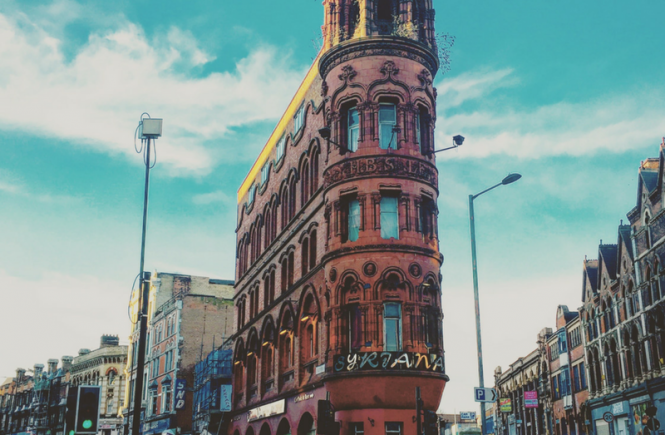
I’ve visited Birmingham from London more than seven times now, and I even lived there for a couple of weeks while renovating my own apartment just a minute from New Street Station. It’s the second largest city in the UK, the youngest too, with over 40% of the population under 25, and it has more canal waterways than Venice. Add in fine dining, serious greenery, an industrial-meets-artsy vibe (Digbeth alone could keep you busy for a day), and the fact it’s home to Cadbury’s chocolate factory, the Peaky Blinders, and the birthplace of heavy metal, and it’s a city that deserves a lot more than a rushed day trip.
This guide covers everything: my Birmingham bucket list, where to stay, where to eat, and every practical detail you need, whether you’re doing it as a day trip from London or making a proper weekend of it.
BIRMINGHAM ESSENTIALS
🚆 Getting There / Birmingham is very walkable once you’re there, and getting to it from anywhere in England is easy. Check train and coach options together on Trainline so you can pick whichever is cheapest and fastest, New Street Station puts you right in the centre of everything.
🚗 Getting Around / The city centre is compact enough to walk between most of the big sights, and there’s a solid bus network for anything further out. If you want to combine Birmingham with a Cotswolds or Stonehenge day trip, compare rental cars on DiscoverCars.
🎟️ Tours / Birmingham rewards a bit of context, especially for the Peaky Blinders history and the canal quarter. The best ones to book in advance:
Birmingham Guided City Centre Walking Tour
Slogging Gangs Walking Tour with Edward Shelby
Victorian Canals and Modern-Day Birmingham Tour
Digbeth, Public Art and Peaky Blinders Film Locations Walking Tour
🏨 Stay / I’ve stayed all over the city centre, from budget to splurge, these are the picks worth booking:
Budget: EasyHotel Birmingham
Mid-range: Hotel du Vin & Bistro Birmingham
Splurge: The Grand Hotel Birmingham
🧳 Luggage Storage / If you’re early for check-in or have time to kill before your train home, no stress, there are luggage storage points all over Birmingham. Use this website to find one nearby.
📱 Connect / Stay connected the moment you arrive. I use Holafly, use code TRAVELWITHPAU for 5% off.
🛡️ Get Insured / Even for a UK trip, it’s worth having cover. World Nomads offers coverage for over 150 activities as well as emergency medical, lost luggage, trip cancellation and more.
Birmingham Bucket List: 27 Things to Do
1. Take a Walking Tour to Get Your Bearings
If you only do one organised thing, make it this: a guided walk through the city centre to understand how Birmingham grew from a small market town into the UK’s second largest city. It’s a great way to get authentic insight into modern Birmingham life and spot a few hidden gems you’d otherwise walk straight past. Book the Birmingham Guided City Centre Walking Tour.
2. Explore the Bullring and Grand Central
Birmingham has been a marketplace since the 12th century, and that legacy has only grown over the years. The Bullring is the shopping district around Grand Central station, and it’s genuinely worth a wander even if shopping isn’t your priority, Selfridges looks like it landed from space, the Western Arcade has splendid architecture and lovely independent stores, and the Mailbox nearby is where you go for the luxury brands.
Practical info: Free to explore. Selfridges and the Bullring are a couple of minutes from New Street Station.
3. Take a Selfie with The Bull
Just outside the Bullring in Rotunda Square stands The Bull, a 6-tonne bronze sculpture by artist Laurence Broderick that’s become the symbol of the whole shopping district. It’s undoubtedly the most photographed spot in the city, and it’s impossible to walk past without stopping.
Practical info: Free, outdoors, accessible any time.
4. Wander the Canal Quarter and Brindleyplace
Birmingham’s canal quarter houses the city’s best bars, restaurants, and views, and it just makes for a lovely stroll. Brindleyplace is a beautiful square with restaurants, bars, shops and cafes right on the water, and the area is also home to the National Sealife Centre and the IKON Gallery if you want to make a proper afternoon of it. Book National Sea Life Centre entry tickets.
Practical info: Free to walk. National Sealife Centre and IKON Gallery both charge separate entry (IKON is free on Mondays).
5. Wander Gas Street Basin
Just around the corner from Brindleyplace, Gas Street Basin is the historic junction where several of Birmingham’s canals meet, all cobbled towpaths, narrowboats moored three-deep, and canalside pubs. It’s one of the prettiest, most photogenic corners of the city, and a proper reminder of why Birmingham genuinely does have more miles of canal than Venice.
Practical info: Free to walk. Right next to Brindleyplace and the ICC.
6. Admire Victoria Square and the Birmingham Museum and Art Gallery
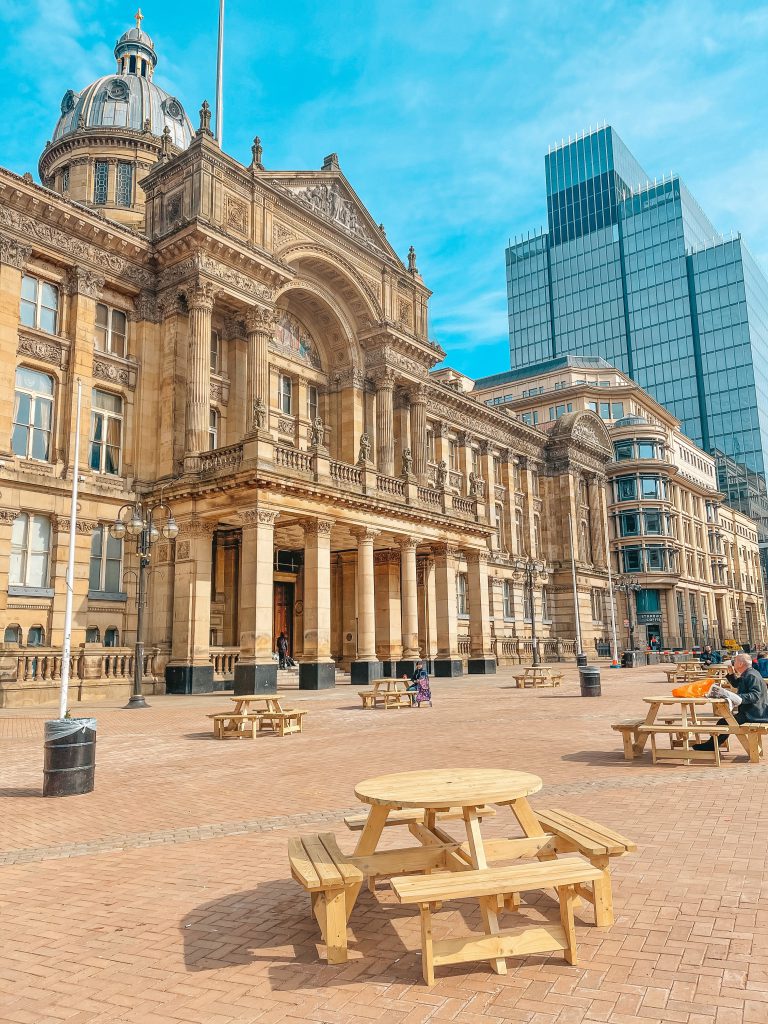
Victoria Square is best described as Birmingham’s answer to Trafalgar Square, and at its edge sits the Birmingham Museum and Art Gallery, home to the largest collection of pre-Raphaelite paintings in the world, occupying one of the city’s finest buildings. It’s also where you’ll find the Staffordshire Hoard, the largest hoard of Anglo-Saxon gold and silver metalwork ever discovered, on permanent display.
Practical info: Free entry. Located right on Victoria Square in the city centre.
7. Look Up at the Frescoes of Piccadilly Arcade
Opposite New Street Station, this picturesque arcade has beautiful architecture and an eclectic mix of independent stores, but what really gets my attention every time is the hand-painted ceiling frescoes, they’re rather unusual and easy to walk straight under without noticing.
Practical info: Free to walk through, open during shopping hours.
8. See Tolkien’s Inspiration at Moseley Bog
Moseley Bog is a green idyll on the fringes of the city, sitting on the site of an old millpond. J.R.R. Tolkien grew up around it in the 1890s, and it’s said to be the inspiration for hobbit-hangout the Shire, while a Victorian waterworks down the road in Edgbaston is said to have inspired Sauron’s towering lair. Wander around the nature reserve full of plants, animals, gnarled old trees, and gorgeous carpets of bluebells each spring. There’s real archaeological interest here too, including two burnt mounds and the remains of an old mill dam.
Practical info: Free entry. Best in spring for the bluebells. Find it on Google Maps.
9. Admire the Street Art in Digbeth
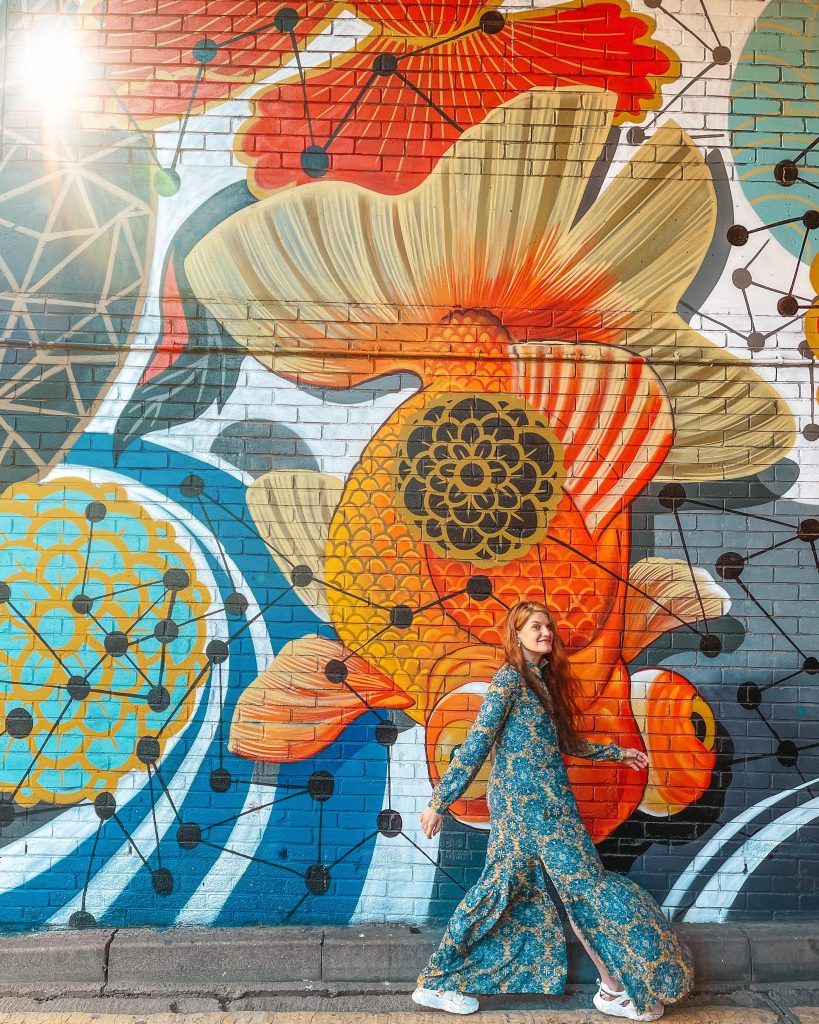
Recently named the Coolest Neighbourhood in Britain by the Sunday Times, Digbeth is less than ten minutes’ walk from the Bullring and Grand Central, and it’s completely worth the detour. The Custard Factory is the heart of it, cafes, independent shops, cinemas, arts venues, and the weekly food and drink festival, Digbeth Dining Club. Digbeth is also Birmingham’s street art hotspot, so a walk around doubles as an open-air gallery, Bath Place is one of the best spots for it. Book the Digbeth, Public Art and Peaky Blinders Film Locations Walking Tour to get the context behind it all.
10. Explore the Jewellery Quarter
Birmingham’s Jewellery Quarter has been producing jewellery for over 250 years and still is, this is a working district, not a museum piece, with independent workshops, the Jewellers’ Clock, and genuine working goldsmiths behind unassuming shopfronts. It’s a completely different pace and character to the Bullring, well worth the wander if you want to see a side of Birmingham most day-trippers miss. Book the Discovering Birmingham Walking Tour, which winds through the “secret canal” on its way into the Quarter.
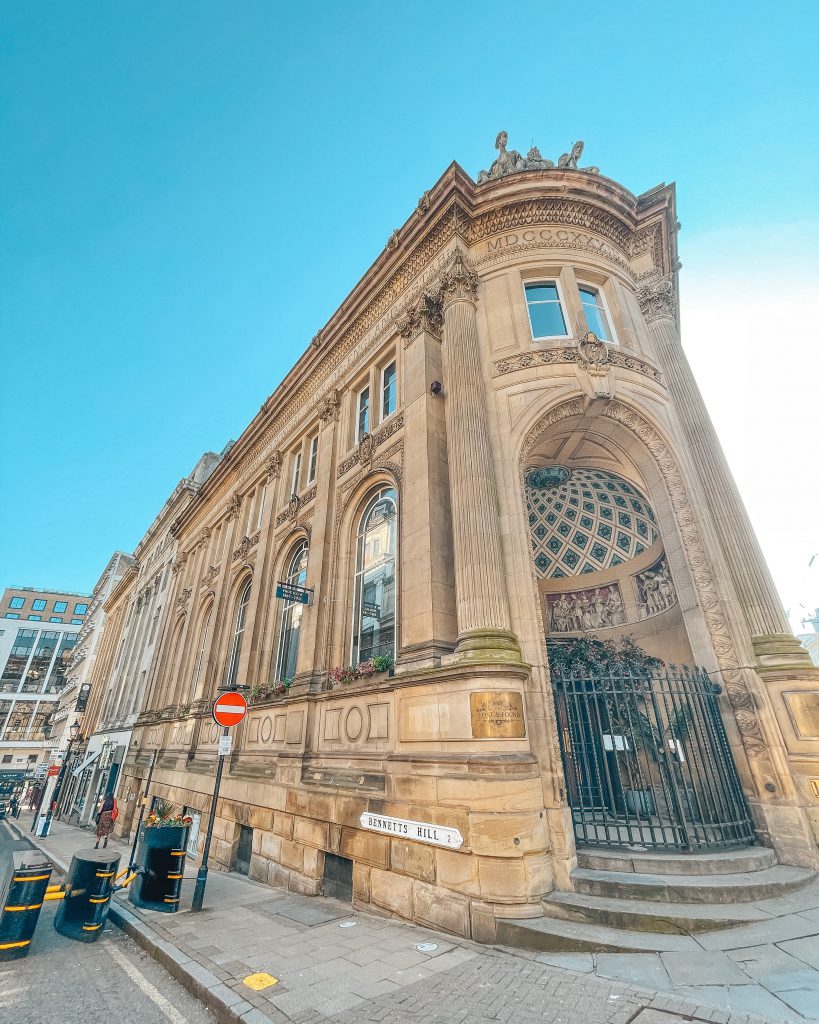
11. Eat Your Way Through the Chinese Quarter
Curry isn’t the only food scene worth crossing town for. Birmingham’s Chinese Quarter, centred around Hurst Street and Arcadian Centre, is strung with lanterns and packed with genuinely authentic Vietnamese, Japanese, Thai, and Korean restaurants alongside the Chinese ones, a proper contrast to the Balti Triangle further out.
Practical info: Find the Chinese Quarter on Google Maps.
12. Drink at Birmingham’s Craft Breweries
I’m a craft beer fan, so this one’s close to my heart. Head to Indian Brewery in Snowhill, the craft brewery behind Birmingham Lager, for a proper pint made in the city.
Practical info: Find Indian Brewery on Google Maps.
13. Play a Round at Golf Fang (formerly Ghetto Golf)
Golf Fang, inside the Custard Factory, is an 18-hole graffiti-themed crazy golf course paired with a full cocktail bar, arcade games, AR darts, and pool, adults-only and thoroughly ridiculous in the best way. It went through a £500k refurb and rebrand from its old name, Ghetto Golf, in 2026, so don’t be surprised if you see the old name still floating around online. Book Golf Fang Birmingham.
14. Play Retro Games at NQ64
Also in the Custard Factory, NQ64 is a neon-splattered arcade bar packed with retro cabinets and pinball machines alongside a proper cocktail menu, open late every night of the week. A great one to pair with Golf Fang for a full evening in Digbeth.
Practical info: Find NQ64 on Google Maps.
15. Visit The Old Crown, Birmingham’s Oldest Pub
The Old Crown is Birmingham’s oldest secular building, standing since 1368. Having survived the English Civil War, the pub and its events garden now sit proudly in the heart of Digbeth, Birmingham’s thriving creative quarter. Fun fact: it has some of the coolest, most original bar snacks in the city.
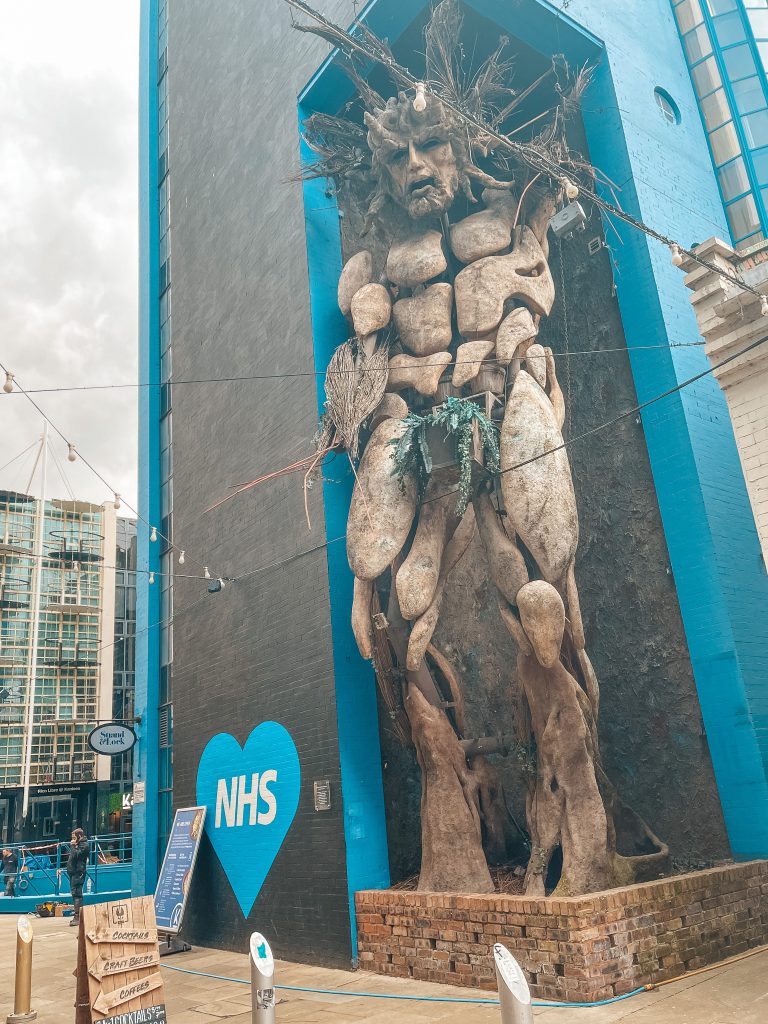
Practical info: Located in Digbeth, easily combined with a street art wander.
16. Feel Like Charlie at Cadbury World
A chocolate-focused attraction? I’m in. Just 13 minutes by train from New Street takes you to the red-brick, old-world Bournville village, built for the workers of what was once the centre of England’s chocolate empire. The demonstration area involves actual molten chocolate (and you get to eat it), and the world’s biggest Cadbury store awaits at the end, stocking concoctions you won’t find anywhere else. Book Cadbury World entry tickets.
17. Follow the Footsteps of the Peaky Blinders
Learn about the real Peaky Blinders and the Birmingham slogging gangs that inspired the show on a guided walking tour through the streets they actually roamed. Book the Slogging Gangs Walking Tour with Edward Shelby.
18. Browse a Music Album Cover Fine Art Gallery
St Pauls Gallery is the world’s leading retailer of signed limited edition album cover fine art, with well over 100 signed prints on permanent show and sale. It’s not to be missed if music is your thing, especially if you’re into 60s or 70s rock, prints signed by Pink Floyd, Deep Purple, and plenty more are all on sale here, alongside exclusive musician portrait photography.
Practical info: Free to browse. Located in the city centre.
19. Sip a Cocktail in a Speakeasy
Some of Birmingham’s best bars are hidden behind unassuming storefronts and doorways. 18/81 on Thorp Street has no obvious signage, just ring the bell. 40 St Pauls is equally discreet, look for the door with the number 40 off St Paul’s Square.
Practical info: Both bars in or near the Jewellery Quarter and St Paul’s Square.
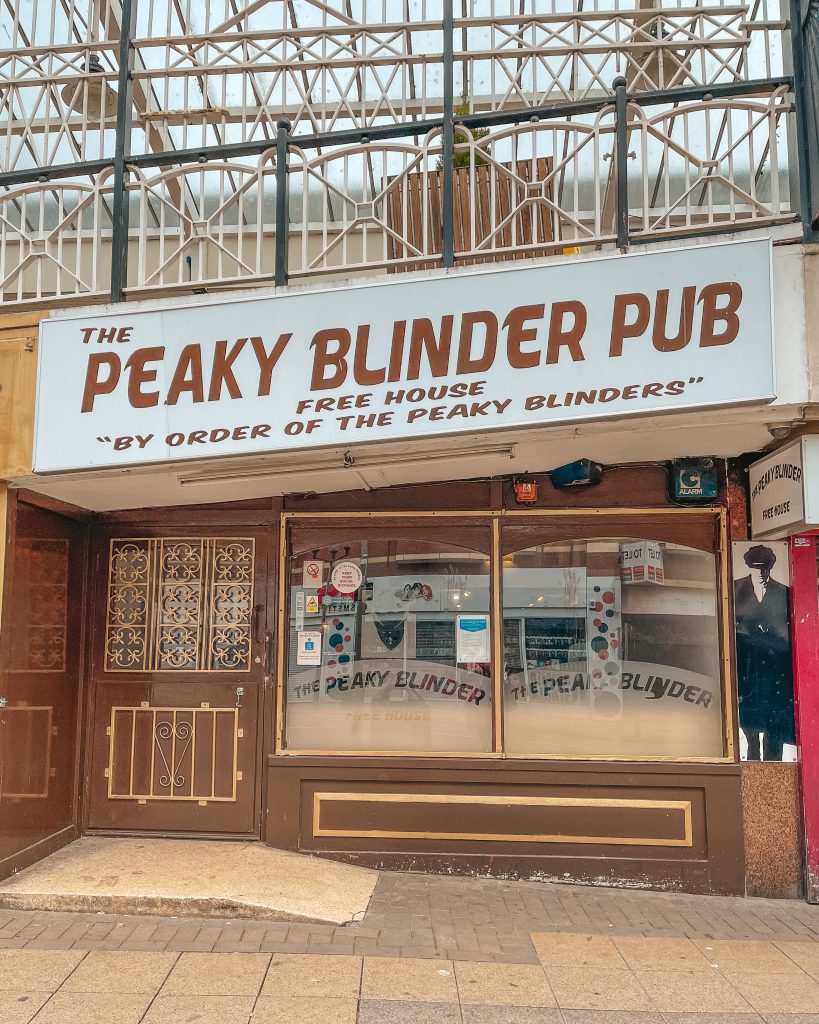
20. Have a Curry in the Balti Triangle
Birmingham is the original home of the Balti. The Birmingham Balti was born here in the late 70s, when curry chefs started making dishes lighter, healthier, and faster to serve to suit Western tastes. There’s even an area called the Balti Triangle, just south of the city centre along Ladypool Road, Stoney Lane, and Stratford Road, named for the sheer number of eateries serving curries the balti way. See the Where to Eat section below for my picks.
21. Visit Winterbourne House and Garden
Step back in time at Winterbourne House and Garden, a beautifully preserved Edwardian gem a short distance from the city centre. Built in 1903, the house offers a genuine glimpse into early 20th-century middle-class life, with many rooms restored to their original charm. Surrounding it are seven acres of exquisite botanical gardens with over 6,000 plant species from around the globe, a picturesque walled garden, and a tranquil Japanese bridge, a peaceful escape from the city and a must for history and nature lovers alike. Book Winterbourne House and Garden entry tickets.
Practical info: Entry fee applies, check the official Winterbourne website for current prices and opening days.
22. Relax in Cannon Hill Park
Cannon Hill Park is Birmingham’s biggest and most popular green space, 200 acres of formal gardens, woodland, and lakes down in Moseley. Hire a swan-shaped pedalo on the ornamental lake, play a round on the 36-hole mini-golf course, or just find a patch of grass, and it’s also home to MAC Birmingham, an arts centre with a cinema, theatre, and gallery space if the weather turns.
Practical info: Free entry to the park. Find Cannon Hill Park on Google Maps.
23. Wander the Birmingham Botanical Gardens
A different, more curated green escape to Cannon Hill or Winterbourne, the Birmingham Botanical Gardens in Edgbaston pack glasshouses, aviaries, and beautifully maintained grounds into 15 acres, a proper afternoon out if gardens are your thing. Book Birmingham Botanical Gardens entry tickets.
24. Step Inside the Library of Birmingham
The Library of Birmingham is the largest public library in Europe, and even if libraries aren’t usually your thing, this one is worth popping into for the building alone, a striking, filigree-wrapped structure in Centenary Square with a rooftop garden and sweeping views over the city. It also holds one of the most significant Shakespeare collections in the world.
Practical info: Free entry. Open Monday to Saturday, closed Sundays. Located in Centenary Square, Broad Street.
25. See How Birmingham Really Lived at the Back to Backs
The Birmingham Back to Backs is the city’s last surviving court of back-to-back houses, once the standard working-class housing across Birmingham, and now preserved and restored by the National Trust to show life there across different decades. It’s guided-tour only and genuinely moving, a side of the city’s industrial history that’s easy to miss among the shopping centres. Book your Back to Backs visit through the National Trust.
Practical info: Booking essential, tickets are released a few weeks ahead. Located in the city centre near the Bullring.
26. Go to a Candlelight Concert
Experience live music illuminated entirely by candlelight at a Candlelight Concert in Birmingham. These intimate performances feature talented musicians playing everything from classical to contemporary, all under the soft glow of hundreds of candles, a lovely, low-key evening activity. Browse Candlelight Concerts in Birmingham.
27. Catch an Immersive Experience
The best immersive experiences tend to cluster in London, but a city the size of Birmingham gets its fair share too, worth checking what’s on while you’re in town. Check what’s currently available in Birmingham.
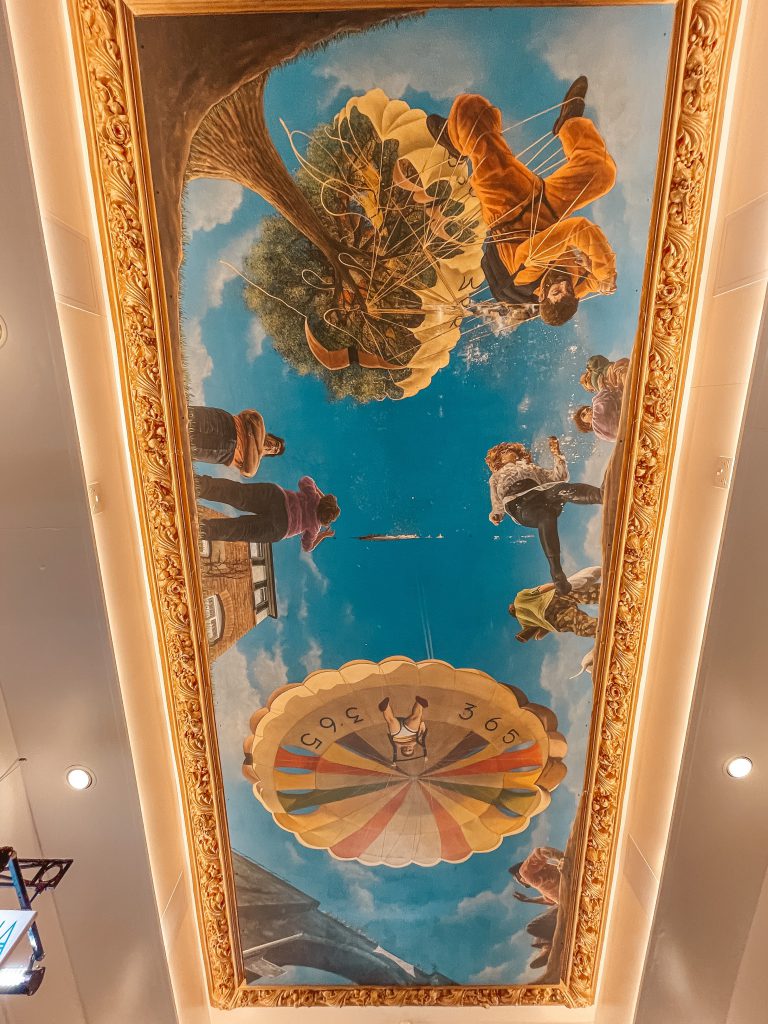
Birmingham Day Trips
The Cotswolds: While Birmingham is a vibrant urban hub, the idyllic Cotswolds are just a short drive away and make for an excellent day trip. Known for rolling hills, picturesque villages, and honey-coloured stone cottages, the Cotswolds offer a quintessential English countryside experience, explore charming villages like Broadway or Stow-on-the-Wold and soak in the tranquillity. Book the Cotswolds Full-Day Tour from Birmingham.
Stonehenge and Bath: A longer but genuinely worthwhile day out, combining England’s most famous prehistoric monument with the Roman baths and Georgian architecture of Bath. Book the Stonehenge and Bath Day Tour from Birmingham.
Warwick Castle and Stratford-upon-Avon: The closest day trip on this list, both are only around 40 minutes from Birmingham by car or train, and just nine miles apart from each other, easily combined into one day. Climb the ramparts of the medieval Warwick Castle, then wander Stratford-upon-Avon, Shakespeare’s birthplace and final resting place. Book Warwick Castle entry tickets.
Where to Stay in Birmingham
Make a weekend of it if you can, get to Birmingham on a Friday and stay through Saturday for two full days of exploring.
Budget: EasyHotel Birmingham
An affordable choice for travellers on a budget, offering clean, compact rooms in a central location, perfect for a simple and practical stay.
Mid-range: Hampton by Hilton Birmingham Broad Street
A budget-friendly yet comfortable option with well-appointed rooms, free breakfast, and a convenient location close to nightlife and attractions.
Mid-range: Staybridge Suites Birmingham
Perfect for longer stays, this all-suite hotel offers modern, spacious accommodation with kitchenettes and complimentary breakfast, right in the city centre.
Mid-range: Hotel du Vin & Bistro Birmingham
A charming, characterful hotel housed in a historic building, known for cosy rooms, exceptional dining, and a central location.
Splurge: Malmaison Birmingham
A stylish boutique hotel in the Mailbox district, with chic rooms, a trendy bar, and a relaxing spa. Ideal for a modern, upscale stay.
Splurge: The Grand Hotel Birmingham
A beautifully restored historic hotel with luxurious rooms, elegant interiors, and excellent dining, right in the heart of the city centre.
None of these float your boat? Search all Birmingham hotels.
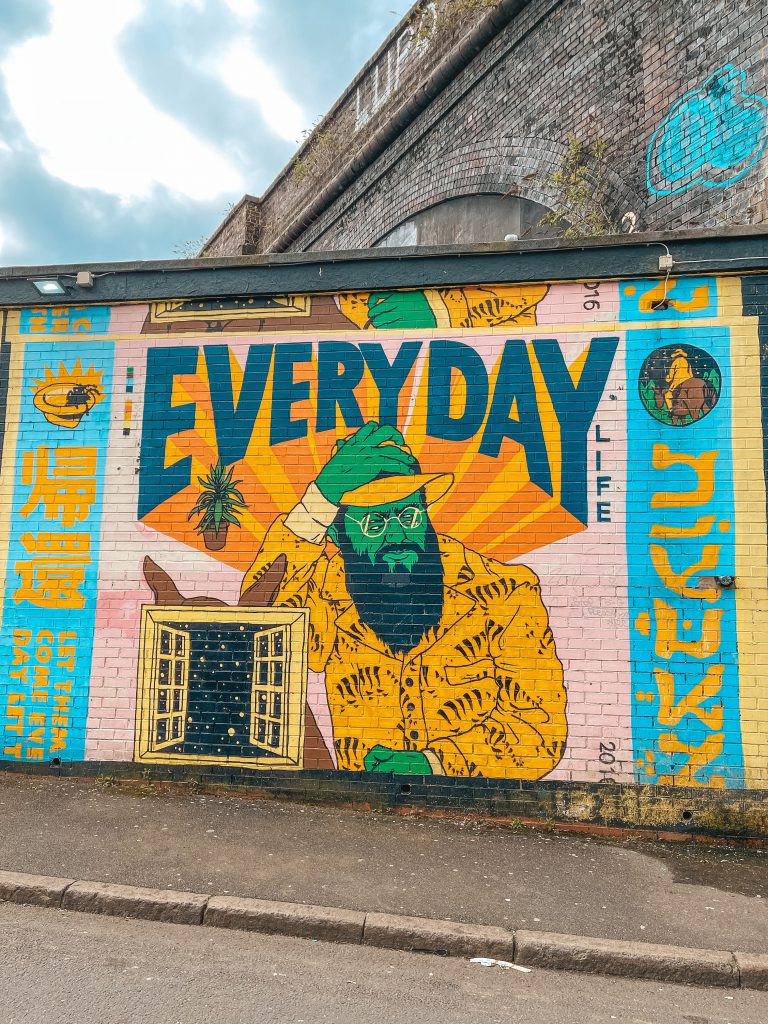
Where to Eat in Birmingham
Breakfast: try Medicine Bakery, a lovely, relaxed spot for brunch and pastries before a day of exploring.
Drinks: try Indian Brewery, the craft brewery behind Birmingham Lager, in Snowhill, a proper local pint.
For curry, head to the Balti Triangle along Ladypool Road, Stoney Lane, and Stratford Road, or one of these standout spots across the city:
- Opheem: Michelin-starred, for a proper special-occasion curry.
- Lasan: A long-standing favourite pairing Indian food with cocktails.
- Raja Monkey: A local favourite for a laid-back curry night.
- Asha’s: Named after the legendary Bollywood playback singer, glamorous and reliably good.
- Itihaas: A step above the average Balti house, worth it for a treat.
- Tamatanga: More relaxed and social, great for a group.
- Rajdoot: One of the Balti Triangle originals.
One Day and Weekend Itinerary
If you only have one day, start at the Bullring, stroll around and make sure to visit both arcades (Piccadilly and Western), then walk through the canal quarter and drop into St Pauls Gallery, have a curry for lunch, then head to Digbeth for another stroll, drinks, and food in the evening at Digbeth Dining Club, and make sure to pop into The Old Crown.
If you make a weekend of it (which I recommend), use the second day to visit Moseley Bog, Cadbury World, and the Peaky Blinders walking tour.
Getting To & Around Birmingham
You can take a bus or train from pretty much anywhere in England. Check train and coach options together on Trainline so you can compare and pick whichever is cheapest and fastest, New Street Station drops you right in the middle of the action. If you’re planning day trips out to the Cotswolds or further, a rental car gives you more flexibility, compare rates on DiscoverCars.
Once you’re there, Birmingham is a genuinely walkable city with a great bus system for anywhere slightly further out, you won’t need a car for the city centre itself.
Birmingham FAQ
Is Birmingham worth visiting?
Absolutely. It’s the UK’s second largest city, with world-class museums, a thriving food scene (it’s the birthplace of the Balti), a genuinely cool street art neighbourhood in Digbeth, and enough history and quirky attractions to fill a full weekend.
How many days do you need in Birmingham?
One full day covers the city centre highlights, the Bullring, the canal quarter, and a curry in the evening. A weekend lets you add Cadbury World, Moseley Bog, and the Peaky Blinders walking tour without rushing.
Is Birmingham a good day trip from London?
Yes, trains from London take around 1.5 hours, making it a very doable day trip, though a weekend gives you a much fuller picture of the city.
What is Birmingham famous for?
The Bullring, the Peaky Blinders, being the birthplace of heavy metal, Cadbury’s chocolate, the Balti curry, and having more canals than Venice.
What is the best area to stay in Birmingham?
The city centre around New Street Station and the Mailbox puts you within walking distance of almost everything. Digbeth is a great alternative if you want to be closer to the nightlife and street art scene.
Do I need a car in Birmingham?
No, the city centre is very walkable and the bus network covers everything else. A car is only useful if you’re planning day trips out to the Cotswolds or further afield.
Enjoyed this article? Support my work by buying me a latte. Otherwise, do me a great favor of leaving a comment and following me on Instagram (@travelwithpau). Feel free to say ‘Hello!’ I don’t bite. And make sure you save the article for later on Pinterest!
This post contains affiliate links. If you click on one and make a purchase, I might make a small commission, at no extra cost to you in order to help support my blog.