
25 Unmissable Things to Do in Venice, Italy (2026)
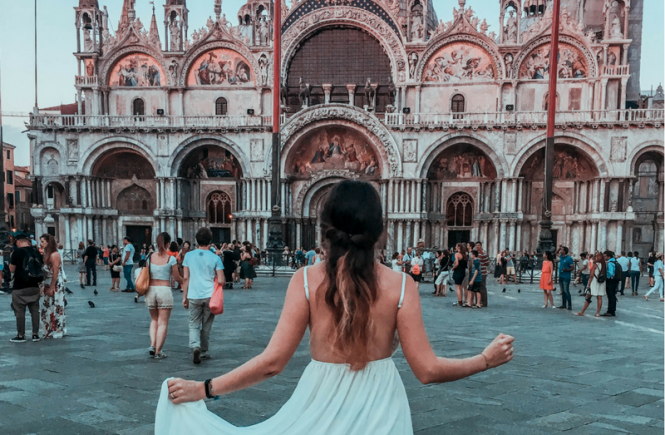
Oh Venice. It is a city like no other. A car-free city where you can walk everywhere along canals, where the only transport is a boat or a gondola. Venice is unique, different from the rest of Italy, so romantic and charming that you’ll fall in love with it, guaranteed. Below a selection of things you must do when in Venice, as well as how to get there and where to stay, in this Venice bucket list.
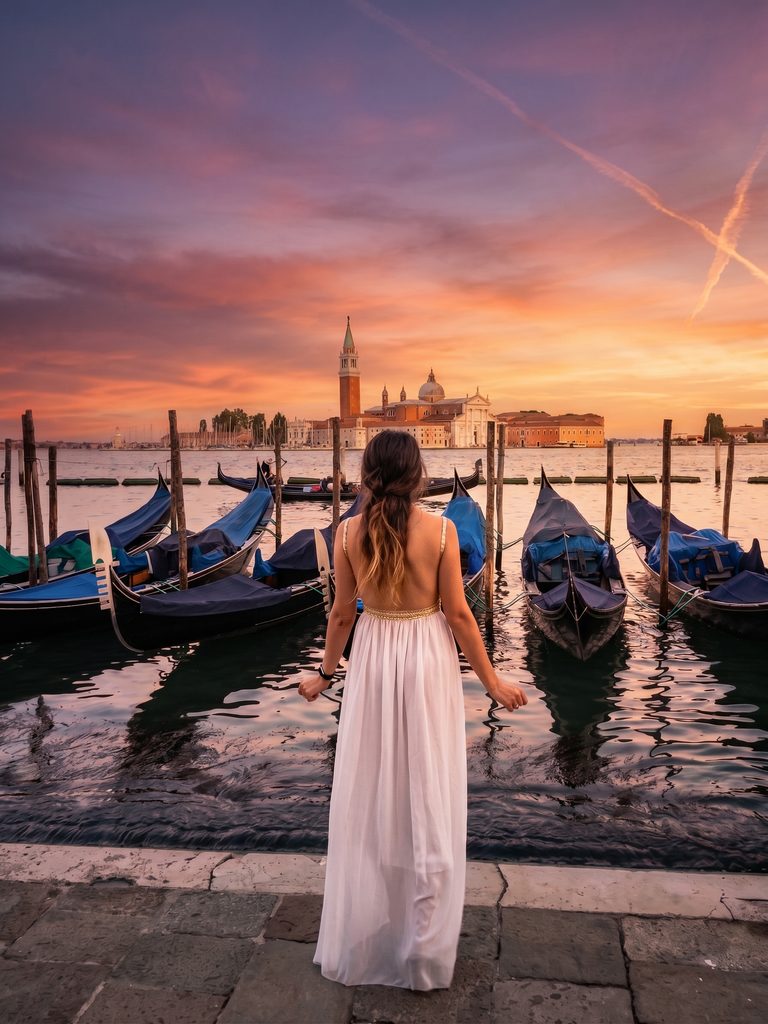
VENICE ESSENTIALS
✈️ Getting There / Marco Polo Airport is a short hop from the city, from there you can take the Alilaguna water bus straight into Venice, a slow, scenic introduction to the city. Book a private airport transfer with WelcomePickups if you’d rather have it sorted in advance. Search flights on Skyscanner.
🚗 Getting Around / Venice is entirely car-free, the only way to get around is on foot or by vaporetto (the public water bus). No need to think about car rental here at all. If you’re planning to hop between islands or into Mestre, a waterbus and mainland bus pass works out cheaper than buying individual tickets each time.
🎟️ Tours / A few things are worth booking ahead, especially the gondola ride. The best ones to book in advance:
Private Gondola Ride on the Grand Canal
Doge’s Palace Reserved Entry Ticket
Murano and Burano Glass and Lace Half-Day Tour
🏨 Stay / Skip the endless scrolling, these are the ones I’d point a friend toward (full picks in Where to Stay below):
Budget: Porta Orientalis Venice
Mid-range: Palazzo Keller
Splurge: Danieli, Venezia, A Four Seasons Hotel
🧳 Luggage Storage / If you’re early for check-in or have time to kill after checkout, no stress, there are luggage storage points all over Venice, including near Santa Lucia Station and Piazzale Roma. Use this website to find one nearby.
📱 Connect / Stay connected from the moment you land with an eSIM. I use Holafly, use code TRAVELWITHPAU for 5% off.
🛡️ Get Insured / Things can and do go wrong when you travel. World Nomads offers coverage for over 150 activities as well as emergency medical, lost luggage, trip cancellation and more.
Venice Bucket List: 25 Things to Do
1. Wander the Narrow Winding Streets
If you do one thing in Venice, do this one. It’s free and it’s the one I enjoyed the most. The main streets of Venice may be packed with tourists but if you let yourself get lost you’ll wind up in quiet gorgeous streets where you’ll go like “Ah, this is why everybody talks about Venice”. If you’d rather have a local point you toward the quiet corners instead of finding them by chance, book a city highlights walking tour with a local guide, a good way to get your bearings on day one before you go off wandering solo.
2. Drink an Aperol Spritz
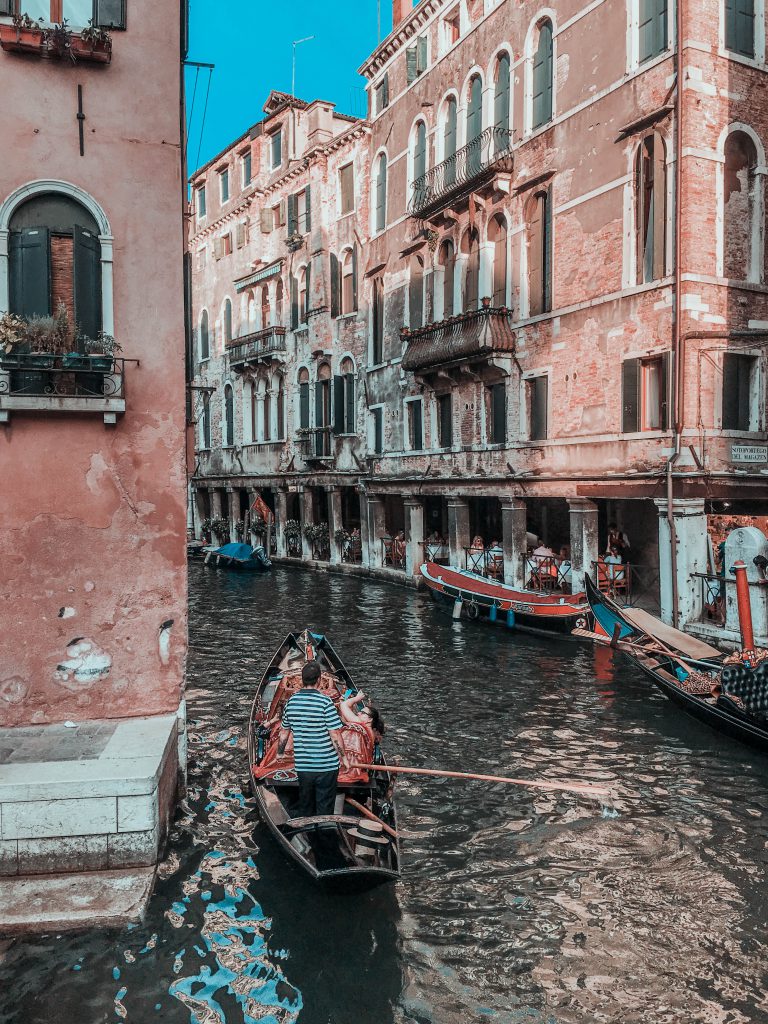
The Spritz originated in Venice when it was part of the Austrian empire. It’s a version of the Austrian Spritzer, which is white wine and soda in equal parts. Today the spritz is the most common aperitif in Venice, and it’s drunk with Aperol, Campari, or Cynar. That’s what the orange, red and brown watery drinks you’ll see on the streets of Venice are about!
3. Have an Espresso at Caffè Florian in Piazza San Marco
Yes, of course an espresso in Piazza San Marco will be overpriced, but how expensive can an espresso be? Caffè Florian, founded in 1720, is one of the oldest cafés in the world, and sipping a coffee beneath its chandeliers while you gaze at San Marco Basilica and people watch is worth the price alone. It’s also really nice to walk the Piazza when the sun comes down and the lights come on.
4. Watch Sunset at the Rialto Bridge
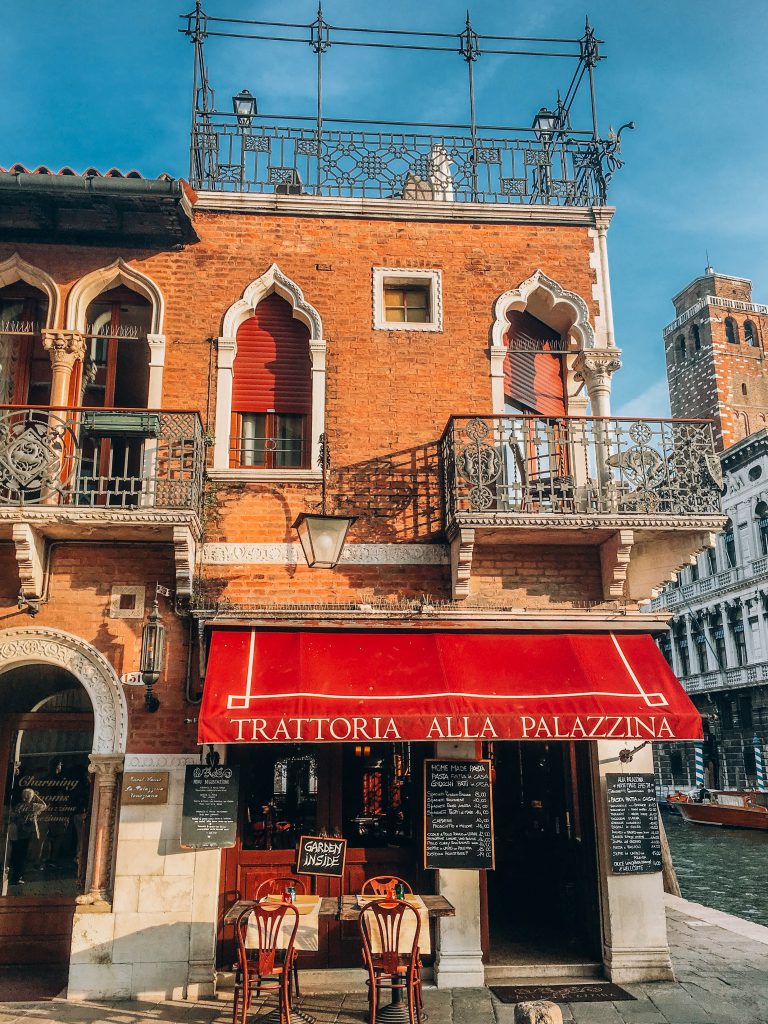
The Rialto Bridge in Venice is one of those bridges you’ll never forget. If you watch sunset from here then you’ll also watch a sunset you’ll never forget! Fun fact: the stone bridge you’re standing on was built in the 1590s after the previous wooden one collapsed twice under crowds, and the winning design came from a competition that beat out Michelangelo himself. It still has 24 shops built directly into it today, the same way it’s had for 500 years.
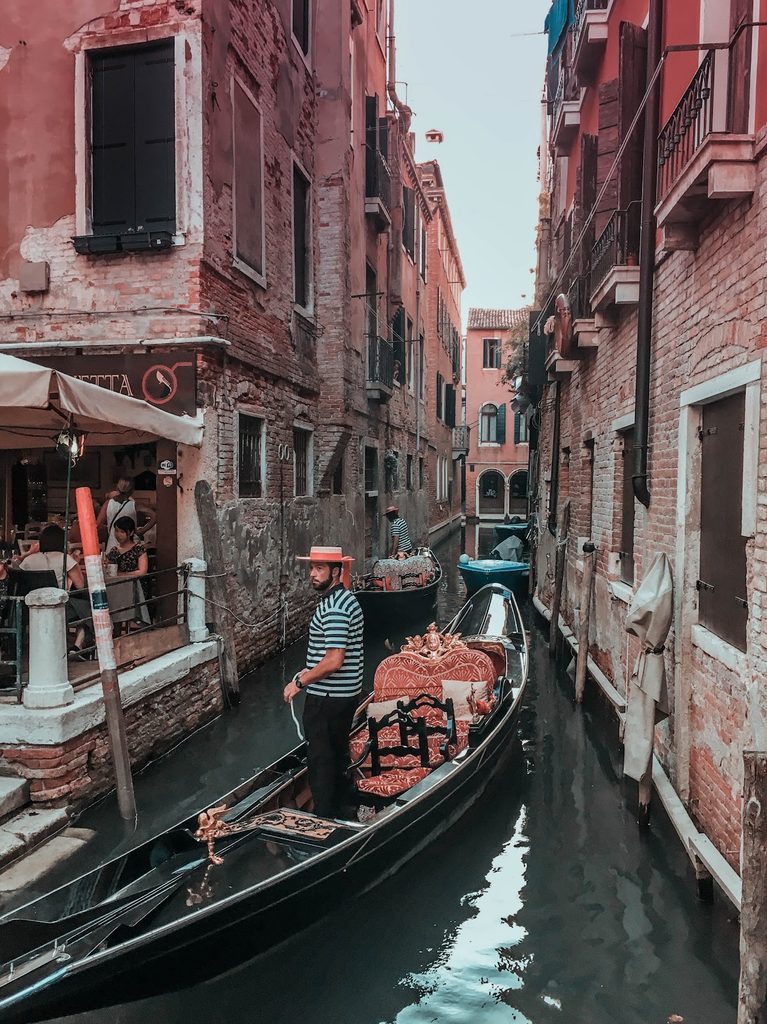
5. Take a Gondola Ride
Of course a huge cliché but you can’t really skip this when in Venice, sorry. The rides come at a hefty price though, last time I checked it was 80 EUR for 40 mins, and the price goes up at night to I believe 120 EUR. Worth it, specially if you are trying to be extra romantic. You can also book a private gondola ride in advance here, roughly €145 for a private group of up to 5, note this is pricier than a shared ride since you’re not paired up with strangers, but it means the whole boat is just your group.
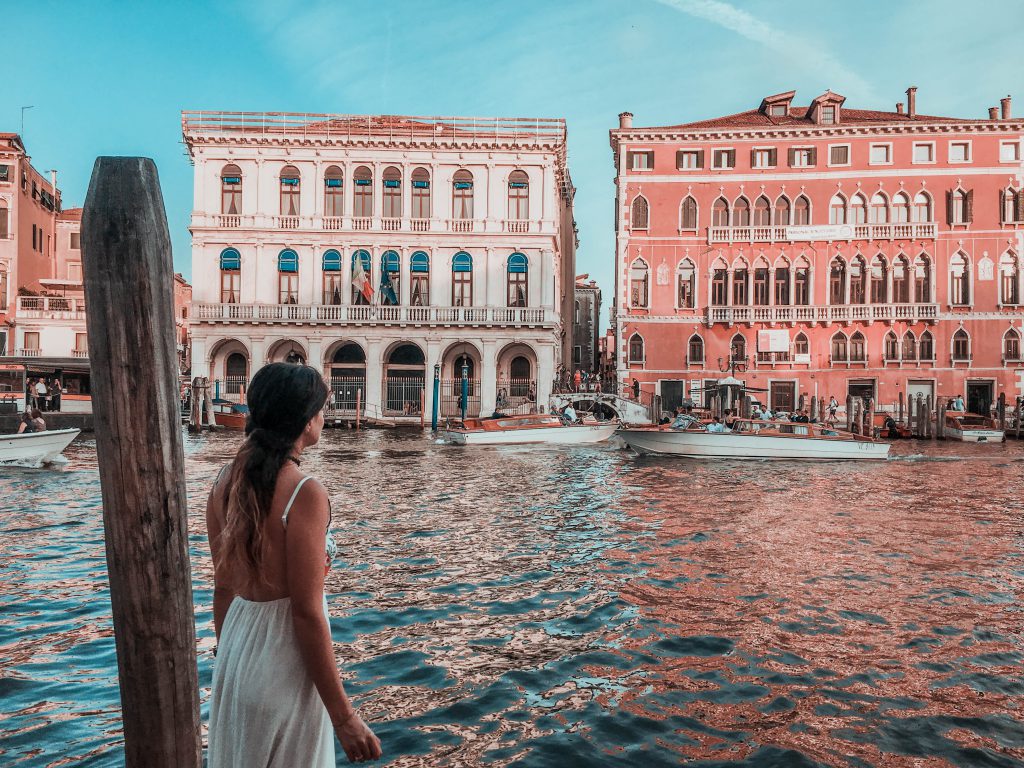
6. Eat Like a Venetian
Polenta and seafood dishes are traditional from Venetian as well as Bigoli, which are thick fresh noodles which you can eat with a variety of sauces. Some restaurants to try: La Zucca, Trattoria Antiche Carampane, Osteria alle Testiere, Osteria Enoteca Ai Artisti, El Magazen in Cannaregio, and, for something splashier, Il Porticciolo at Hotel Cipriani on Giudecca or the terrace at The Gritti Palace on the Grand Canal. For dessert, Suso Gelatoteca near the Rialto does some of the best gelato in the city, and La Terrazza Bar is worth it for a rooftop drink over the Grand Canal. If you’d rather have it all explained to you, book a cicchetti and wine tasting tour with a local that takes you through Venice’s bacari culture, the little wine bars where locals gather for small plates and a glass of wine.
7. Cross the Bridge of Sighs
This bridge takes its name because it is where convicts would get the “last view of Venice” before their imprisonment, or execution. There is a nicer legend around this bridge which says that if a couple kisses while drifting under the bridge at sunset, as the bells of St Mark’s Campanile ring out, it will enjoy eternal love and happiness. The bridge is beautiful, by the way. Access to it is included in every Doge’s Palace ticket, so you’ll walk across it anyway if you visit the palace itself.
8. Tour the Doge’s Palace
The Doge’s Palace was the seat of Venetian political power for over a thousand years, Gothic on the outside, gilded state rooms and Tintoretto ceilings on the inside. It’s where the Bridge of Sighs leads through to the old prisons, so the history and the drama come as one visit. Book a reserved entry ticket to skip the queue at the door.
9. Admire St Mark’s Basilica
This is one of the most iconic sites of Venice. It’s located in Piazza San Marco, and it’s known for its gorgeous mosaic and golden details. It is impressive to say the least. The queue to get in can be brutal in high season, so if you don’t want to lose half a morning standing outside, book priority access with a guided tour, you’ll skip the line and get the mosaics and history explained rather than just wandering through.
10. View Venice from Above at St Mark’s Campanile
St Mark’s Campanile is the bell tower of St Mark’s Basilica. Climb the stairs to get a panoramic view of the city. Lines can get pretty lengthy in the summer, so arrive early or invest in a skip-the-line ticket.
11. Visit La Fenice Opera House
Make your time in Venice more memorable by visiting the La Fenice Opera House. Even if you don’t have the time to watch a performance, use this skip-the-line ticket with audio guide to admire its sensational avant-garde design. The name literally means “The Phoenix”, and it’s lived up to it: the theatre has burned down and been rebuilt three separate times, most dramatically in 1996 when a fire gutted it in under nine hours, leaving only the outer walls standing. It was rebuilt to the exact original design and reopened in 2003, so what you’re walking into today looks exactly as it did before the fire.
12. Create Your Own Carnival Mask
The wearing of masks in Venice is a tradition which goes back as far as the 12th century, and historians speculate that it was a response to one of the most rigid class structures in all of Europe. Eventually the wearing of masks was so ubiquitous that the government had to pass laws restricting it to the Carnival season. Instead of buying one, learn more about this tradition and make your own mask in this workshop.
13. Admire the View from Palazzo Contarini del Bovolo
Get an amazing view of Venice and its network of canals from the top of the famous spiral staircase of the Palazzo Contarini del Bovolo. You can buy the entrance ticket in advance here, it’s cheaper than if you buy it on the spot.
14. Get Lost in Libreria Acqua Alta
Libreria Acqua Alta is touted as one of the most beautiful bookshops in the world, and it’s easy to see why: bathtubs, gondolas, and even full-size boats are all stacked with books to protect them from the flooding the shop is named after. There’s a staircase made entirely of old hardback novels out the back, worth the visit for that alone. It’s free to wander in and browse.
15. Visit the Peggy Guggenheim Collection
The Peggy Guggenheim Collection fills a Grand Canal palazzo, Peggy Guggenheim’s own former home, with modern art by Picasso, Pollock, and Kandinsky. Wander the airy rooms and the sculpture garden, then linger on the terrace for the canal views. Book a skip-the-line ticket.
16. Hear Vivaldi’s Four Seasons at the Church He Played In
Vivaldi was born in Venice, and the Church of the Pietà (also known as the Vivaldi Church) is where he actually played and composed, a genuinely different experience to hearing the Four Seasons anywhere else. The Vivaldi Baroque Ensemble performs it live in the same space, and it’s a lovely, low-effort evening to add onto a day of sightseeing. Book your Vivaldi Four Seasons concert ticket here.
17. Watch Sunset from Punta della Dogana
If the Rialto Bridge crowd isn’t your thing, Punta della Dogana, the tip of land where the Grand Canal meets the Giudecca Canal, is a quieter sunset spot with a wide-open view back across the water to Piazza San Marco. Grab a drink first and just sit.
18. Ride Vaporetto Line 1 Down the Grand Canal at Night
This is the closest thing to a gondola ride at a fraction of the price. Vaporetto Line 1 runs the full length of the Grand Canal, and taking it after dark, when the palazzos are lit up, is a genuinely romantic way to see the city for the price of a normal bus ticket. Grab a waterbus and mainland bus pass in advance if you’re planning to use the vaporetto more than a couple of times anyway, it works out cheaper than single tickets.
19. Get Gelato at Suso Gelatoteca
Suso Gelatoteca, tucked away near the Rialto Bridge, does some of the best gelato in Venice. Try the Manet flavour, chocolate, caramel and salt, if you only try one.
20. Lunch at Il Porticciolo, Hotel Cipriani
For a proper splurge, Il Porticciolo at the Hotel Cipriani on Giudecca Island is a seafood and oyster restaurant right on the water, with a Bellini basically mandatory. It’s a boat ride away from the main island, which makes it feel like even more of an occasion.
21. Dine at El Magazen
El Magazen in Cannaregio is a small, contemporary osteria that’s worth booking ahead for, especially if you’re celebrating something. Good for a proper sit-down dinner away from the tourist-menu spots near San Marco.
22. Rooftop Drinks at La Terrazza Bar
La Terrazza Bar at the H10 Palazzo Canova hotel has one of the best rooftop views in the city, right over the Grand Canal and the Rialto Bridge. Go for sunset if you can, it gets busy.
23. Lunch on the Terrace at The Gritti Palace
The Gritti Palace, a historic 5-star hotel right on the Grand Canal, is worth it for a lunch on its terrace alone, even if you’re not staying there. Between April and October you can eat al fresco with views over Punta della Dogana and the Santa Maria della Salute basilica, or dine year-round at its Club del Doge Restaurant. Another proper splurge, but one of the most iconic dining views in Venice.
24. Escape the Crowds at Giardini Reali
Right between Piazza San Marco and the water, the Giardini Reali (Royal Gardens) are a genuinely peaceful 5,000-square-metre green space that most tourists walk straight past. Commissioned by Napoleon in the early 1800s and reopened after a full restoration in 2019, it’s free to get in and a good spot to sit down for ten minutes when the crowds around San Marco get overwhelming.
25. Climb the Bell Tower at San Giorgio Maggiore
For the view every postcard is trying to capture, head across the water to San Giorgio Maggiore and go up its bell tower instead of St Mark’s Campanile. Entry to the church is free, and the lift to the top of the tower costs around €8, taking you up for a 360° view of St Mark’s Basin, the lagoon, and the whole skyline, with far fewer people up there than the Campanile.
Best Day Trips from Venice
Murano, Burano and Torcello
Both Murano and Burano are islands you can travel to as a day trip from Venice by taking a vaporetto (public ferry), and Torcello, Venice’s original settlement, makes a genuinely worthwhile third stop if you have the time. Burano would be my first choice, this cute little island with colourful houses just makes postcard-perfect photos, some consider it a slice of paradise. Murano is a must for glass lovers, you can get all sorts of hand-blown glass ornaments and even watch a demonstration. If you’re in Venice for a couple of days you can visit them separately, or take a tour that covers both Murano and Burano in half a day.
Verona
If you fancy a day away from the canals, Verona is about an hour from Venice by train, the mainland city of Romeo and Juliet, with a Roman arena still used for opera in summer, Juliet’s House and its famous balcony, and the medieval Piazza delle Erbe. Book a Verona, Sirmione and Lake Garda tour with a boat cruise if you want to combine it with Lake Garda in the same day, or check train times and prices on Trainline if you’d rather do Verona alone at your own pace.
The Dolomites
For something completely different to the canals, the Dolomites make a genuinely spectacular full day out from Venice, dramatic mountain scenery that feels like a different country entirely. Book a Dolomites day trip with Cortina d’Ampezzo and Lake Misurina, a 9-hour round trip with a driver, panoramic viewpoints, and a walk around the lake. It’s a long day, so worth it only if you’ve got the extra time in Venice to spare.
Where to Stay in Venice
Venice is small and super touristy so staying there is expensive and even more so on weekends. To avoid the steep prices some people stay in Mestre, the first city on the mainland, and commute in. In my experience that’s not worth it. To get the real Venetian experience, I’d strongly recommend you stay in the city. Evenings and walking at night are the nicest thing about Venice and there is nothing better than knowing that you are a short walk back from your bed.
Budget Accommodation
- Porta Orientalis Venice: This is where I stayed, standard and not too expensive, but the location is unbeatable. A quiet, colourful apartment in Cannaregio, close to Santa Lucia Station and a walkable stretch to Piazza San Marco. Best for: anyone who wants a genuine, affordable base without sacrificing location.
Mid-range
- Palazzo Keller: Tucked down Calle del Pestrin, you could genuinely walk straight past this one without noticing it, which is exactly the appeal. It’s a converted 15th-century noble palace, some rooms still have their original ceiling frescoes, and the common areas keep the vintage floor tiles and chandeliers. Close enough to Piazza San Marco to walk over whenever you fancy, far enough down the side street to escape most of the crowds. Best for: anyone who wants a proper Venetian palazzo feel without the Splurge-tier price tag.
Splurge
- Danieli, Venezia, A Four Seasons Hotel: A historic palazzo facing the lagoon, steps from San Marco, with a rooftop restaurant looking out over the water. One of Venice’s most iconic addresses. Best for: a genuine once-in-a-while, no-expense-spared Venice trip.
None of these float your gondola? Search all Venice hotels.
How Long to Spend in Venice
2 to 3 days is the sweet spot, enough time to wander without rushing, tick off the main sights, and still have a slow morning or two.
4 to 5 days lets you add a day trip to Murano, Burano, and Torcello without feeling rushed on the mainland side too.
A week or more only really makes sense if you’re using Venice as a base for the wider Veneto region, Venice itself is small enough that most people find 3-4 days genuinely enough.
Getting To & Around Venice
If you’re travelling from abroad, search flights on Skyscanner, Marco Polo Airport is just a short trip from the city. From the airport, the Alilaguna water bus is the most scenic way in, or book a private airport transfer with WelcomePickups if you’d rather have it sorted in advance. If you’re travelling within Italy, the best way to get to Venice is by train, Santa Lucia station is right in the centre so you can most likely walk to your hotel from there.
Once you’re here, Venice is entirely car-free, the only ways to get around are on foot or by vaporetto. If you’re planning to hop between islands or into Mestre, a waterbus and mainland bus pass works out cheaper than buying individual tickets each time.
Best Time to Visit Venice
The best time to visit Venice is spring (April to May) or autumn (September to October), mild weather and thinner crowds than peak summer. Summer (June to August) is hot, humid, and busy. Winter brings acqua alta (occasional flooding) but also Carnival season and far fewer tourists, worth it if you don’t mind bundling up.
Venice FAQs
How many days do I need in Venice?
2 to 3 days is genuinely enough to see the main sights and get properly lost in the backstreets. Add a 4th day if you want to fit in Murano, Burano, and Torcello without rushing.
Is Venice expensive?
Venice is one of the pricier Italian cities, especially for hotels and anything right in Piazza San Marco. Staying in the city itself (rather than commuting from Mestre) costs more but is worth it for the evenings and night walks alone.
Do I need to book a gondola ride in advance?
You don’t have to, but booking ahead online works out considerably cheaper than hailing one on the spot, and guarantees you a slot rather than queueing.
Is Venice worth visiting if it’s touristy?
Yes. The main streets around Piazza San Marco and the Rialto Bridge are genuinely packed, but wander a few streets away and you’ll find quiet canals and squares with barely anyone around, that contrast is part of what makes Venice special.
Can I visit Murano and Burano as a day trip?
Yes, easily, both are a short vaporetto ride from Venice, or book a half-day tour that covers both if you’d rather not sort the ferry timetables yourself.
Enjoyed this article? Support my work by buying me a latte. Otherwise, do me a great favor of leaving a comment and following me on Instagram (@travelwithpau). Feel free to say ‘Hello!’ I don’t bite. And make sure you save the article for later on Pinterest!

This post contains affiliate links. If you click on one and make a purchase, I might make a small commission, at no extra cost to you in order to help support my blog.
16 Best Things to Do in Pisa (2026 Guide)
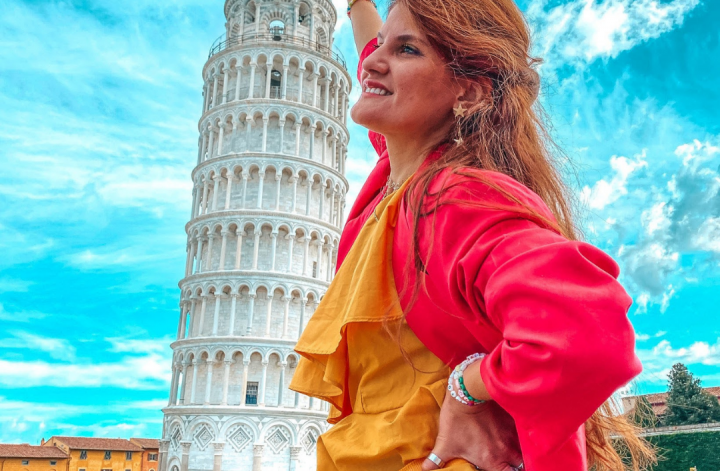
Pisa is a small city, perfect to cover on foot in one day. Everyone knows it for its Leaning Tower, but there’s more to this beautiful Tuscan city than that one photo.
PISA ESSENTIALS
✈️ Getting There / Search flights on Skyscanner. If you’re coming from elsewhere in Italy, book your train on Trainline, Pisa pairs really well with a wider Tuscany road trip or a stop on the way to Cinque Terre. Book a private airport transfer with WelcomePickups if you’re flying directly into Pisa Airport.
🚗 Getting Around / Pisa is small enough to walk in full, no need for public transport at all, it’s about 25 minutes on foot from the train station to Piazza dei Miracoli.
🎟️ Tours / The Leaning Tower climb needs a booked slot, don’t leave it to chance. The best ones to book in advance:
Pisa 2-Hour Walking Tour
Skip-the-Line Leaning Tower with Square of Miracles Visit
Guided Cathedral Tour with Optional Leaning Tower Entry
🏨 Stay / Skip the endless scrolling, these are the ones I’d point a friend toward:
Budget: Casa Carducci 33
Mid-range: La Lu Cozy Rooms
Splurge: Grand Hotel Duomo
🧳 Luggage Storage / If you’re doing Pisa as a day trip and don’t want to lug your bags around, no stress, there are luggage storage points near the station. Use this website to find one nearby.
📱 Connect / Stay connected from the moment you land with an eSIM. I use Holafly, use code TRAVELWITHPAU for 5% off.
🛡️ Get Insured / Things can and do go wrong when you travel. World Nomads offers coverage for over 150 activities as well as emergency medical, lost luggage, trip cancellation and more.
Pisa Bucket List: 16 Things to Do
1. Take a Walking Tour of Pisa
Pisa grew from a Roman colony into a powerful maritime republic long before that tower ever started leaning, and a walking tour is the easiest way to actually understand that history rather than just photograph it. A good one covers Piazza dei Cavalieri, the narrow streets of Borgo Stretto where Galileo Galilei was born, and Piazza delle Vettovaglie, an old market square the Medici turned into a Renaissance cloister. Book this 2-hour walking tour of Pisa.
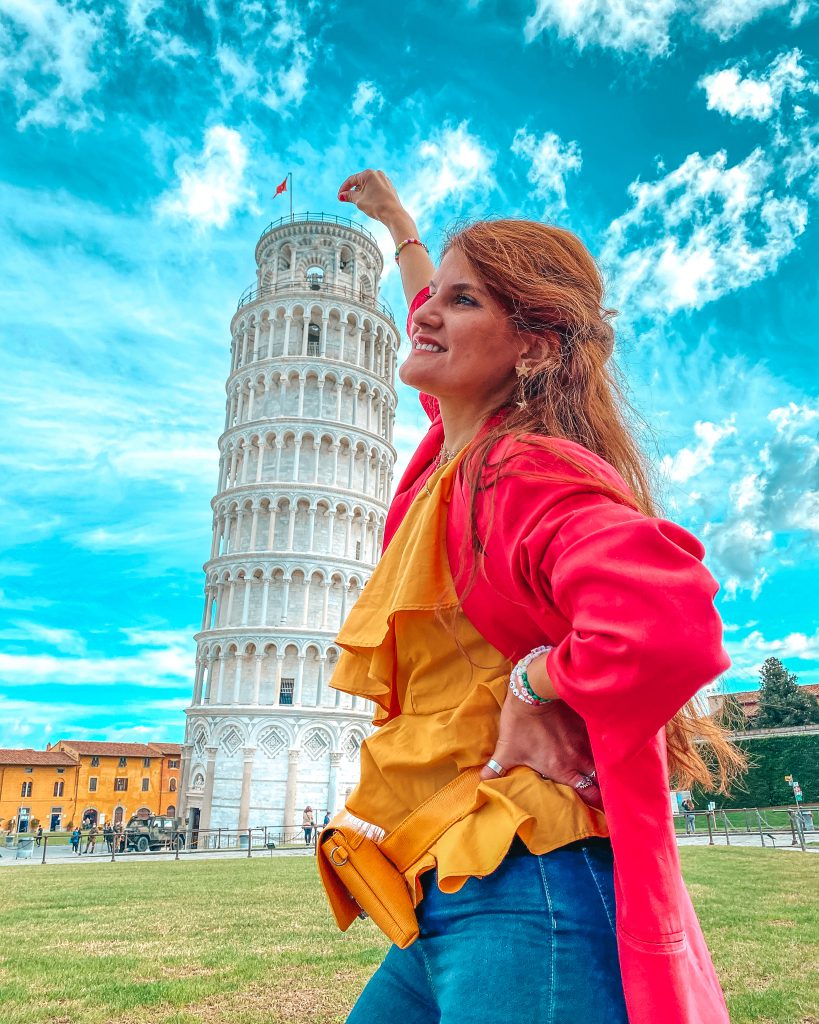
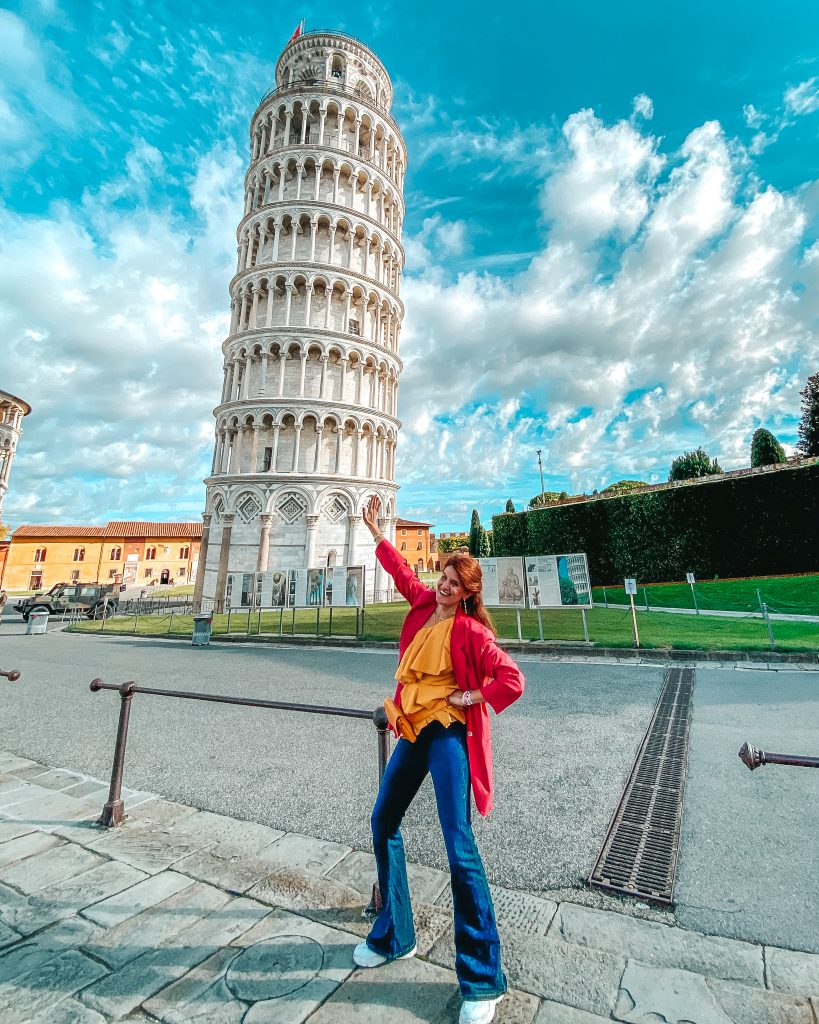
2. Take Ridiculous Photos with the Leaning Tower
No shame here. The Leaning Tower of Pisa was built in 1173 as the bell tower of the Duomo, and it was built on sandy ground, so it started leaning even before construction finished. After many attempts to correct it, some of which actually made it worse, engineers finally stabilised it between 1993 and 2001, settling the tilt at its current 3.97 degrees, officially stable for at least another 300 years. Book skip-the-line entry if you want to climb the 294 steps to the top, worth booking well ahead as slots are limited. The tower is the only monument in the square you pay for separately, and it has to be booked online in advance no matter what.
3. Explore the Duomo di Pisa
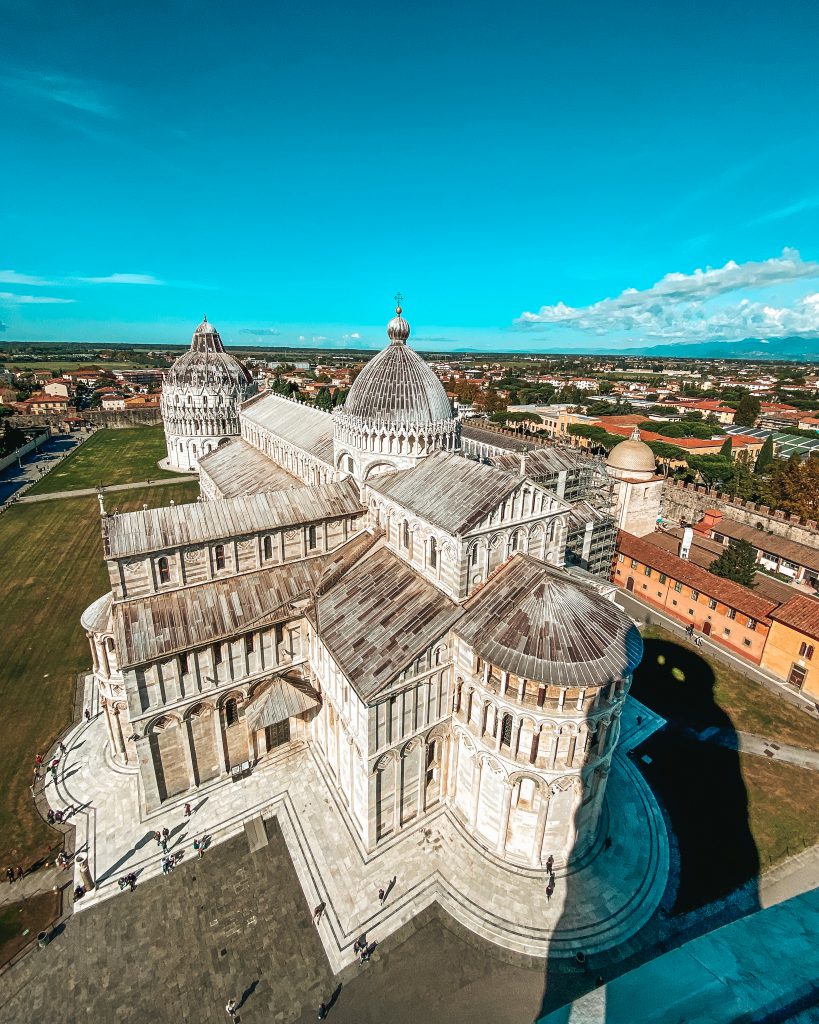
The Duomo is a medieval cathedral dedicated to the Assumption of the Virgin, construction began in 1064 under Buscheto, though it was Rainaldo who’s credited with the impressive facade of white and grey stone. Entrance is free, but you still need to collect a free timed-entry ticket at the office in the square, it’s not a walk-straight-in kind of free. If you’ve already bought a ticket to any other monument in the complex, that covers your Duomo entry too. If you’d rather skip the ticket office altogether, book a combined Leaning Tower and Cathedral entrance ticket in advance.
4. Visit the Baptistery
The Baptistery, right in the same square, is the largest in Italy, built around the same time as the Tower. Its double dome design gives it remarkable acoustics, every half hour or so a guardian sings a few notes and the reverberation is genuinely worth the wait to hear.
5. Wander the Camposanto
The Camposanto is the monumental cemetery within the same complex, built in 1277 to give the graves next to the cathedral a more orderly setting. Mathematician Fibonacci, of the sequence you learned in school, is buried here. It’s filled with frescoes, sarcophagi, and arches, quieter and far less crowded than the Tower itself. Money-saving tip: a combined ticket covering the Baptistery, Camposanto, and the Opera del Duomo and Sinopie museums costs around €10-11, far cheaper than paying for each separately, buy it at the ticket office in the square or book it online in advance.
6. Wander Piazza dei Cavalieri
A 10-minute walk from the Tower, Piazza dei Cavalieri is the university heart of the city, free of the souvenir shops that crowd Piazza dei Miracoli. Cosimo I de’ Medici had it redesigned by Vasari in the 16th century to headquarter the Knights of St. Stephen, a Tuscan naval military order, and the Palazzo della Carovana they trained in still has the most elaborate sgraffito facade in all of Italy. The statue in the centre of the square is Cosimo I himself, dressed as the order’s Grand Master with a foot resting on a dolphin, a nod to Pisa’s old maritime power. The Palazzo is now home to the Scuola Normale, one of Italy’s most prestigious universities. If you’re here on the second weekend of the month, there’s a genuinely good antiques and flea market too.
7. Explore the Orto Botanico
The Orto Botanico di Pisa is one of the oldest botanical gardens in the world, founded in 1544, and a quiet, green escape if you need a break from the crowds around the Tower, just a few minutes’ walk south of it. Expect a botanical school, tranquil lakes, greenhouses, and a proper mix of trees, flowers, and herbs. Entry costs around €6, but it’s free on the first Sunday of every month.
8. Admire the “Tuttomondo” by Keith Haring
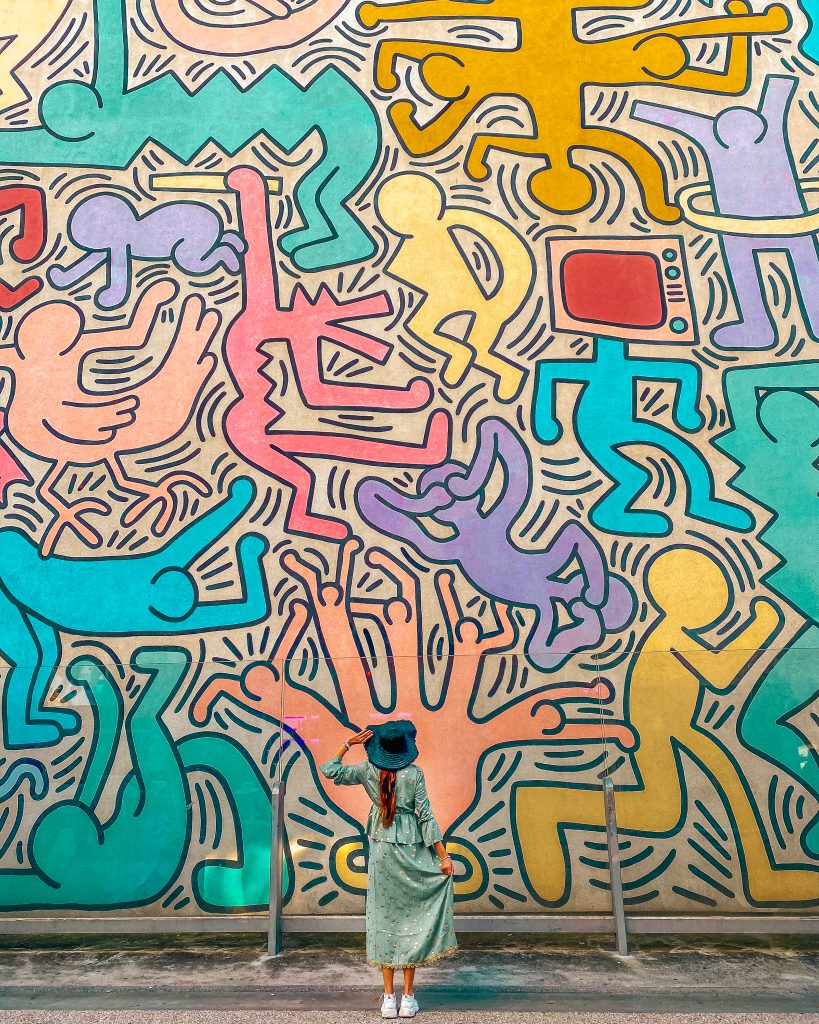
A few metres from the station, in Vittorio Emanuele II square, you’ll find the Parish of San Antonio Abad, home to Tuttomondo, a mural by Keith Haring painted in 1989, just months before he died. It’s made up of 30 interlocking figures representing peace and harmony in the world.
9. Admire the Architecture Along the Arno River
Follow the river past Chiesa di Santa Maria della Spina, a tiny Gothic gem right on the riverbank that once housed a thorn supposedly from Christ’s crown of thorns, brought to Pisa in the 1300s (the relic itself has since moved to the church of Santa Chiara, but the building’s still worth the stop for the facade alone), Ponte Solferino (lovely views of the colourful houses), Palazzo Agostini, also known as Palazzo dell’Ussero, with its curious 15th-century brick facade, and Piazza Garibaldi. Continue to Ponte di Mezzo, overlooking Piazza XX Settembre and Pisa’s City Hall, past Palazzo Gambacorti, a 14th-century Gothic building with a clock tower and loggia, and Palazzo Blu, the dusty light-blue palace that stands out from Pisa’s earth-toned streets. Entry to the permanent collection is free, which is unusually generous, while the temporary exhibitions run around €5 for adults.
10. Have Mind-Blowing Gelato
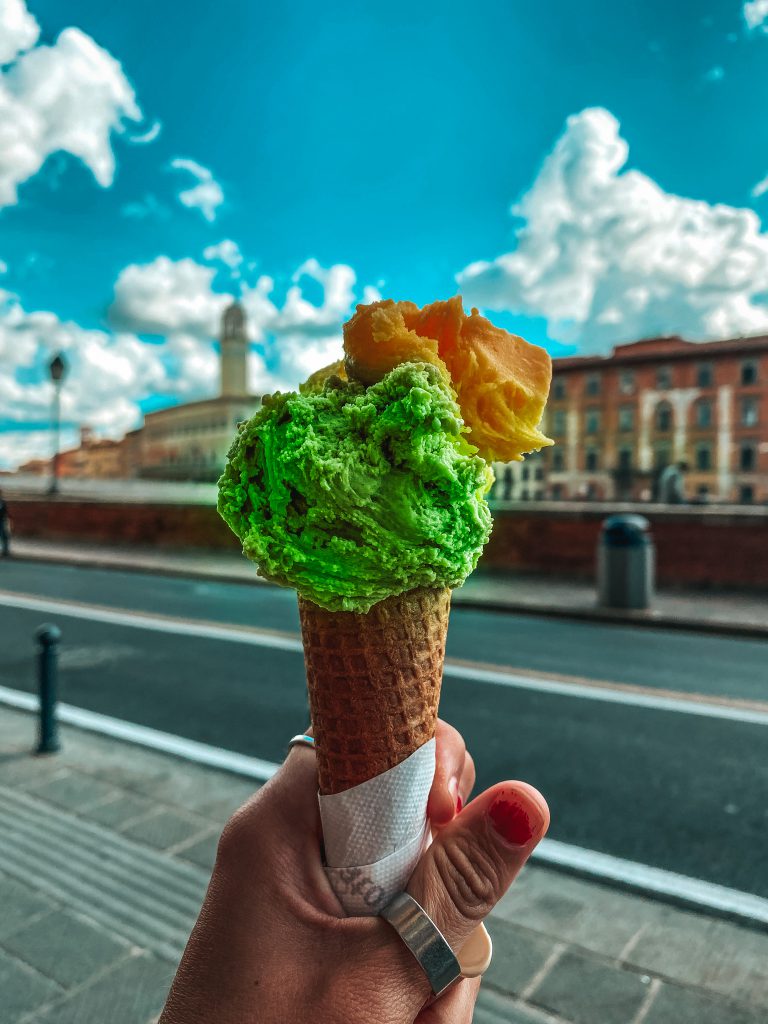
I had the best gelato of my life in Pisa, at Gelateria De’ Coltelli by the river. I saw so many locals having gelato there, not tourists, which is why I picked it, and it turned out to be genuinely delicious, they even do a pistachio vegan flavour, which is unheard of.
11. Eat and Shop at Borgo Stretto
After visiting the Arno, walk through Borgo Stretto, one of the liveliest and most picturesque streets in Pisa, where the true charm of the city comes out. It’s also full of good restaurants and cheaper than the more touristy areas near the Tower, and it’s where Galileo Galilei was born, keep an eye out for the marker.
12. Enjoy a Proper Tuscan Meal
Try Tuscan classics like pici pasta, cecina, and cinghiale (wild boar) at L’Ostellino, Ristorante Allabona Pisa, or Ristoro Pecorino. If you’d rather have it all explained to you, book a guided Pisa food tour that works through cheeses, cured meats, pici, and gelato with a local over a few hours. For something more low-key, there’s also a wine tasting with local bites near the Tower, four wines paired with cold cuts and cheeses in a cosy wine shop just a short walk away.
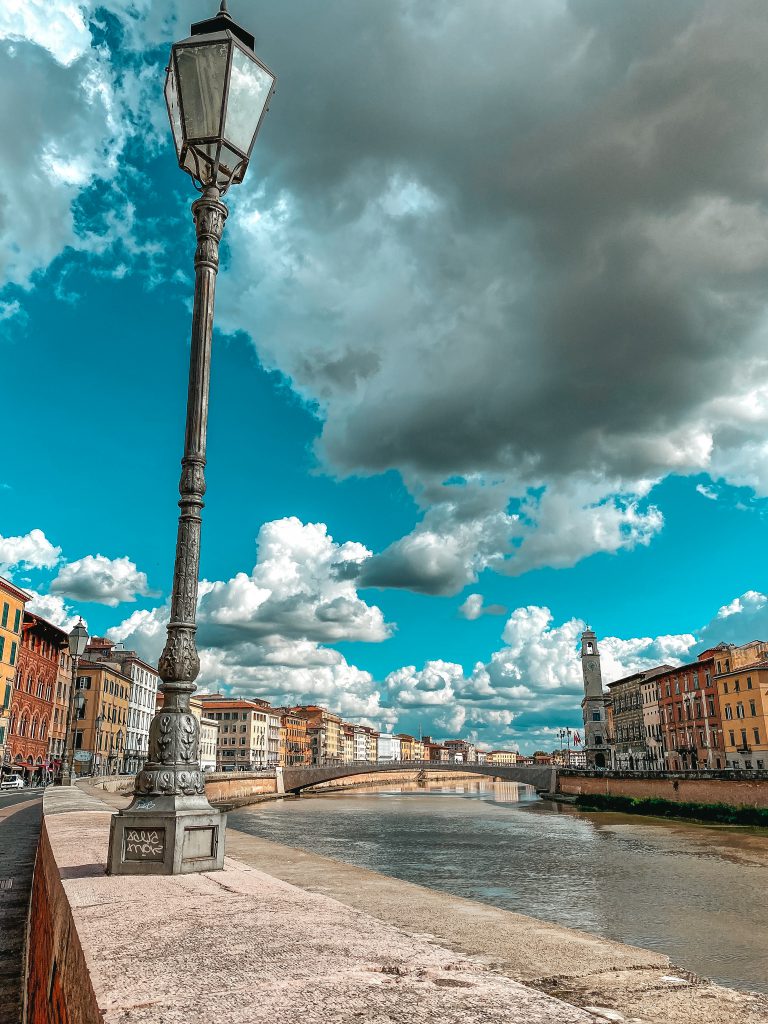
13. Soak in the Greenery at Giardino Scotto
If you need a bit of green space and free wifi at the same time, Giardino Scotto is a genuine oasis of tranquillity in Pisa.
14. Visit the Basilica of San Piero a Grado
Slightly outside the centre, the Romanesque Basilica of San Piero a Grado is a true pilgrimage site that few tourists ever find, away from the crowds of Piazza dei Miracoli, with beautiful mosaics and altars inside. Take extra-urban bus 10 (towards Livorno) or 20 (towards Calambrone) to get there.
15. Make Your Own Pasta
For something a bit different, book a hands-on pasta-making class at a traditional farmhouse in the Tuscan hills, about 15 minutes outside Pisa. You knead and shape the dough yourself, then sit down to eat what you made with the day’s sauce and a glass of local wine, optionally with a walk round the farm’s own vegetable garden first.
16. Kayak Along the River Arno
For a proper change of pace, get on the water itself with a kayak tour on the River Arno. An instructor teaches you the basics before you paddle past the Benedictine Monastery, Santa Maria della Spina, and Palazzo Blu, the same riverside landmarks from the Arno walk, just seen from a completely different angle, sunset slots are the ones to grab if you can.
Best Day Trips from Pisa
Lucca
Just 20-25 minutes away by train, Lucca is one of the easiest and most rewarding day trips in Tuscany, a beautifully preserved walled city where you can walk, cycle, or just wander the ramparts that still fully encircle the historic centre. Trains run roughly every half hour, so there’s no need to book anything in advance, though you can check times and prices on Trainline. If you’d rather make the journey itself part of the day, book a self-guided bike ride from Pisa to Lucca along the Puccini Trail, a scenic route along the Serchio River, with the option to bike back or return by train.
Chianti Wine Tasting
If you want to see the Tuscan countryside without renting a car, a half-day trip into the Chianti hills covers vineyards, olive groves, and a proper wine tasting with the winery owner. Book a half-day Chianti wine tasting tour from Pisa or Lucca.
Florence
Florence is only about an hour away on a direct train, and it’s an easy one to do independently, no tour needed unless you specifically want a guide for the Uffizi or Accademia. Trains run frequently throughout the day from Pisa Centrale, book yours on Trainline. It’s usually the other way round, Pisa is normally the day trip people tack onto a Florence base, but it works both ways, and there’s a well-reviewed day trip from Florence covering Pisa, Siena, and San Gimignano with lunch if you’d rather have it all sorted for you.
San Gimignano and Volterra
Nicknamed the “Manhattan of the Middle Ages” for its skyline of medieval towers, San Gimignano is best combined with Volterra‘s Etruscan ruins and Roman theatre on a single guided day out, neither is easily reachable by public transport from Pisa, so this one’s really a Florence-based add-on rather than a straight Pisa day trip. Book a San Gimignano and Volterra day trip with food and wine departing from Florence, worth it if you’re already planning a Florence stop.
Where to Stay in Pisa
Budget Accommodation
- Casa Carducci 33: A guesthouse on a quiet central street, just a 5-10 minute walk from the Leaning Tower, with a friendly host, easy self check-in, and consistently glowing reviews for cleanliness and location. Best for: anyone who wants a genuinely well-reviewed budget stay right in the centre.
Mid-range
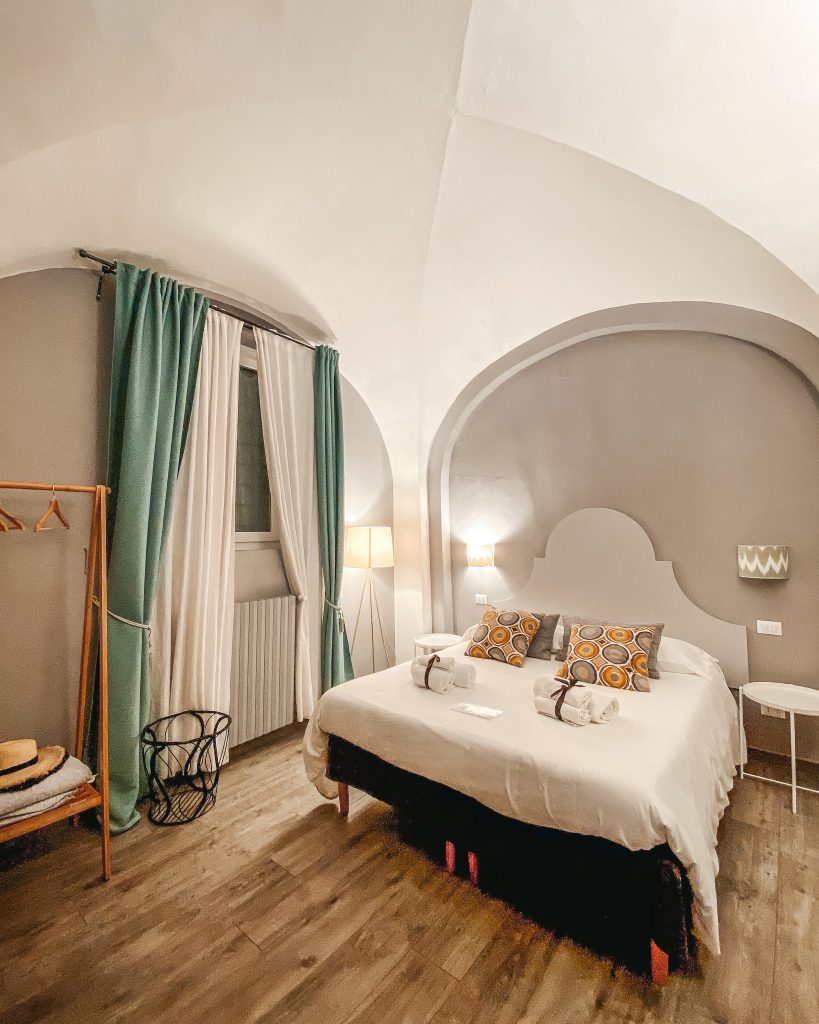
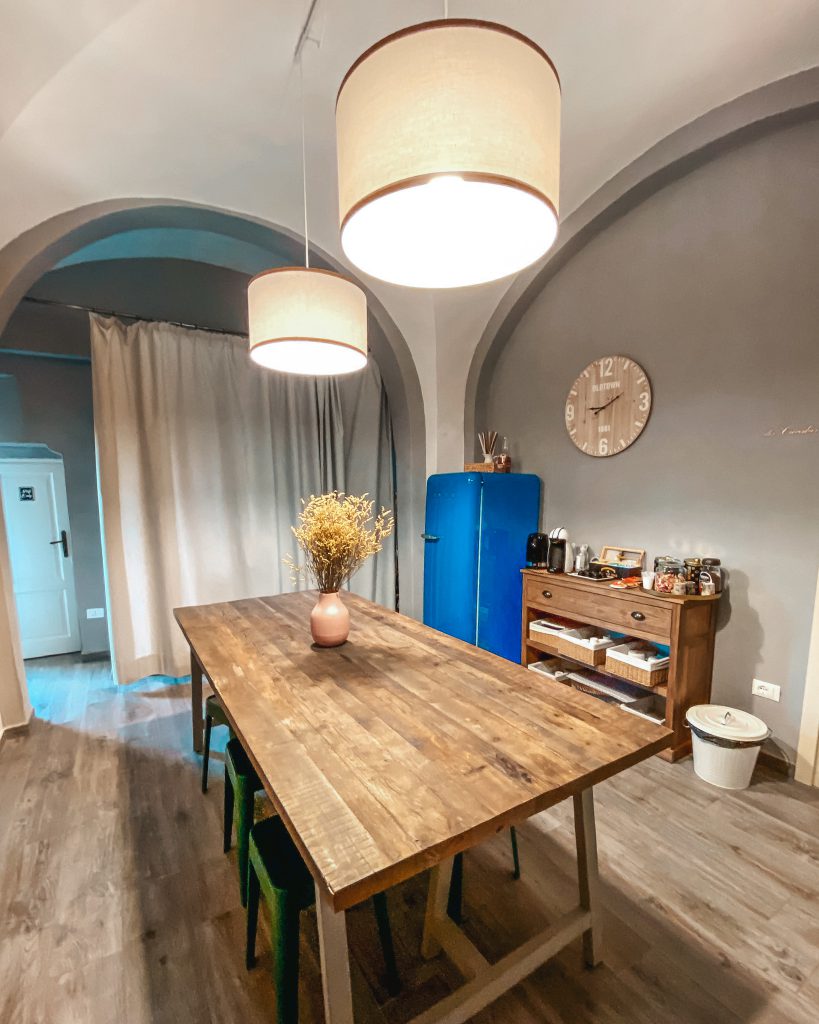
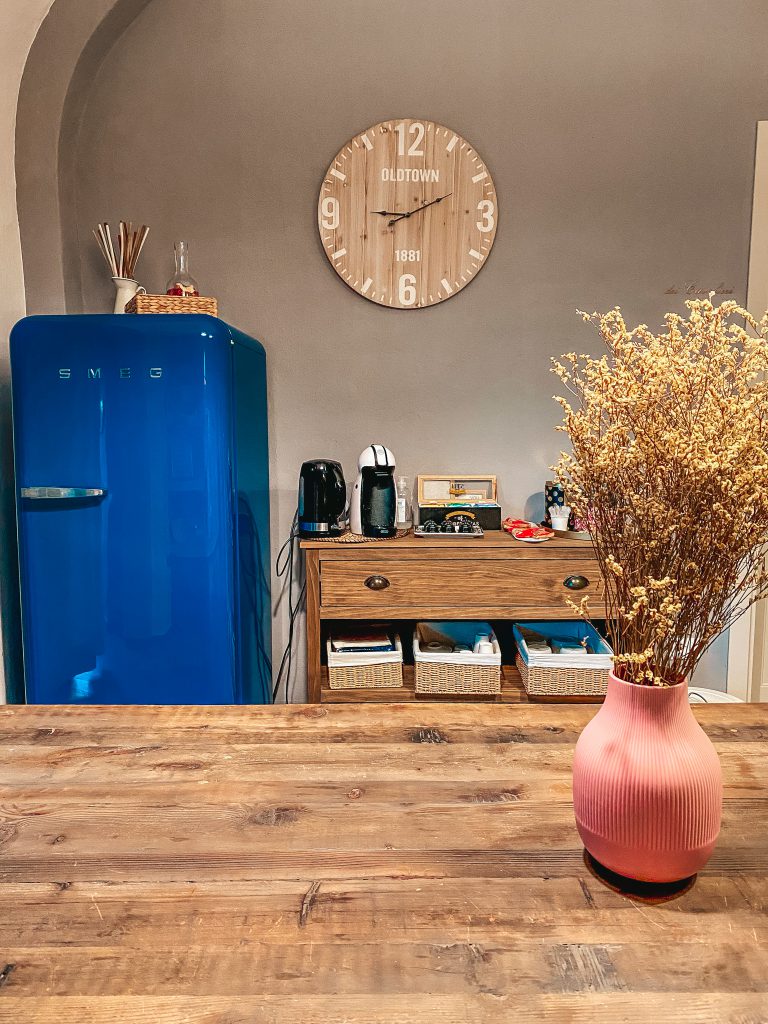
- La Lu Cozy Rooms: A guest house owned by Luisa, a gorgeous host. It has three tastefully decorated bedrooms, each with its own bathroom and air conditioning, plus a shared room where you can relax with a coffee, tea, or herbal tea and some genuinely good cookies. Vault ceilings, a blue Smeg fridge, and views over Piazza dei Cavalieri from the windows, just a 30-second walk away. The Leaning Tower is a 10-minute walk. Best for: anyone who wants a personal, hosted stay right in the centre.
Splurge
- Grand Hotel Duomo: A comfortable, classic hotel practically overlooking Piazza dei Miracoli itself, about as close to the Tower as you can get without staying inside it.
None of these float your boat? Search all Pisa hotels.
How Long to Spend in Pisa
One day and one night is genuinely perfect for Pisa itself. The city is small enough that you can walk all of it, no public transport needed at all, and it’s about 25 minutes on foot from the station to Piazza dei Miracoli. Add a second day if you want to fit in Lucca or a Chianti wine trip from the Day Trips section below, or pair it with Cinque Terre or a wider Tuscany road trip rather than treating it as its own multi-day destination.
Getting To & Around Pisa
Search flights on Skyscanner, Pisa has its own airport (PSA), just a short hop from the centre. If you’re coming from elsewhere in Italy, book your train on Trainline, it’s often the easiest way in, especially if you’re combining Pisa with Florence, Cinque Terre, or a wider Tuscany trip.
Once you’re here, Pisa is small enough to walk entirely on foot, no need for buses or trams unless you’re heading slightly further out, like to the Basilica of San Piero a Grado.
Best Time to Visit Pisa
The best time to visit Pisa is spring (April to June) or early autumn (September to October), pleasant temperatures and fewer crowds around the Tower. Summer gets hot and busy with day-trippers, since Pisa is such a popular add-on to Florence and Cinque Terre itineraries.
Pisa FAQs
How many days do I need in Pisa?
One day and one night is genuinely enough, it’s a small, very walkable city. Most people pair it with Florence, Cinque Terre, or a wider Tuscany trip rather than staying longer.
Do I need to book Leaning Tower tickets in advance?
Yes, especially to actually climb it, slots are limited and it does sell out in peak season. Book skip-the-line entry ahead of time rather than risk it.
Is Pisa worth visiting beyond the Leaning Tower?
Yes, the Baptistery, Camposanto, Piazza dei Cavalieri, the Orto Botanico, Keith Haring’s Tuttomondo mural, and the walk along the Arno are all genuinely worth the extra time, most visitors only see the Tower and miss the rest.
Can I visit Pisa as a day trip from Florence?
Yes, easily, it’s about an hour by train, or book a guided day trip from Florence covering Pisa, Siena, and San Gimignano with lunch if you’d rather have it all arranged. That said, staying one night lets you see the city in the evening and morning light without the day-tripper crowds, which is worth it if your schedule allows.
Enjoyed this article? Support my work by buying me a latte. Otherwise, do me a great favor of leaving a comment and following me on Instagram (@travelwithpau). Feel free to say ‘Hello!’ I don’t bite. And make sure you save the article for later on Pinterest!
This post contains affiliate links. If you click on one and make a purchase, I might make a small commission, at no extra cost to you in order to help support my blog.
Milan Bucket List: The Best Things to Do in Milan (2026)
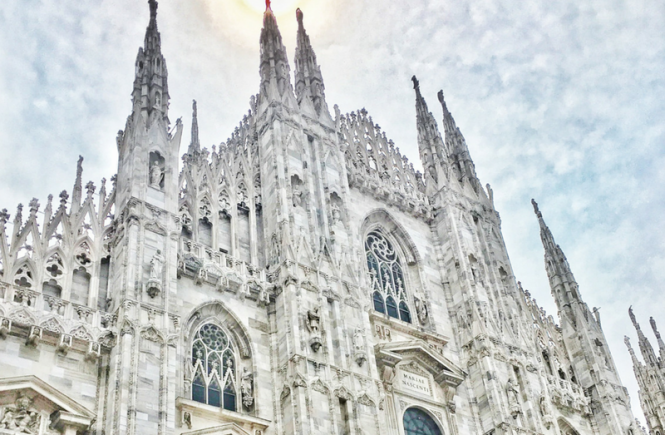
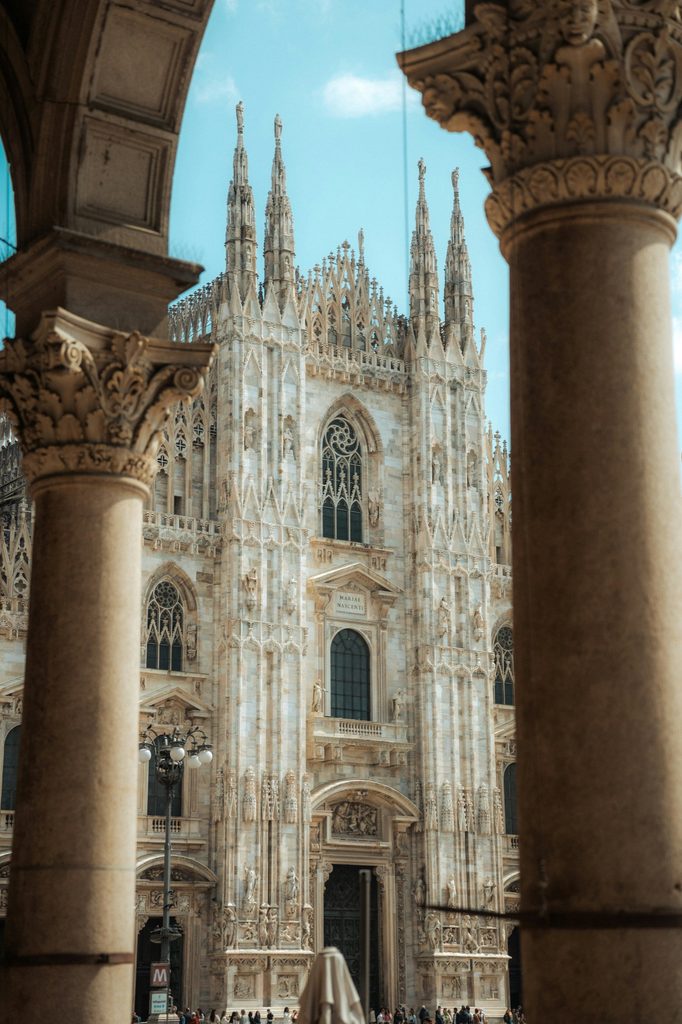
I’ll be honest, Milan wasn’t on my original Italian radar. Rome, Florence, the Amalfi Coast, those were the ones everyone raved about. But then I actually went to Milan, and something clicked. This city is different. It’s cooler, sleeker, and somehow more real than you’d expect from one of the EU’s wealthiest cities. Yes, the designer boutiques are everywhere and the Aperol Spritzes are €14, but scratch beneath the surface and you’ll find Gothic cathedrals, Renaissance masterpieces, neighbourhood aperitivo bars, and some of the best risotto you’ll ever eat.
Whether you’re spending a weekend or a full week, there are so many brilliant things to do in Milan. It’s a city that rewards slow wandering just as much as ticking off the big sights. Get lost in Brera, stumble across a canal bar at golden hour, stand on the Duomo rooftop as the sun sets over the Alps, and then wonder why you didn’t come sooner.
This guide covers everything: my Milan bucket list, where to stay, where to eat, the best tours, day trips, and all the practical info you need to plan your trip.
MILAN ESSENTIALS
✈️ Getting There / Milan has two main airports. Malpensa (MXP) is the larger international hub, about 50km from the city centre, budget around 50 to 60 minutes by road. Linate (LIN) is much closer, just 7km east, and is often used for European short-haul flights. From London, you’re looking at roughly 2 hours in the air. Book a private airport transfer with WelcomePickups: fixed prices, professional drivers, no taxi rank stress. Search flights on Skyscanner.
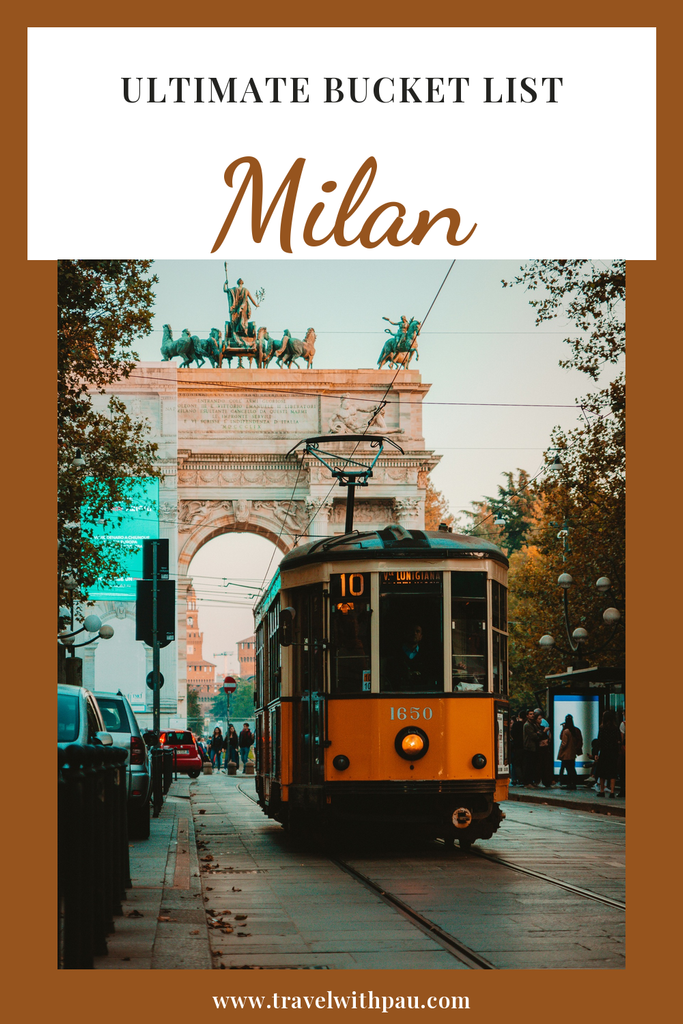
🚗 Getting Around / Milan’s metro is excellent, clean, affordable, and fast. The main lines to know are M1 (red), M2 (green), M3 (yellow) and M5 (lilac). Trams are charming and great for getting around the centre, and much of the historic core is very walkable. Avoid taxis and Uber, they’re expensive in Milan. A 24-hour travel pass is great value if you’re planning to cover a lot of ground.
🎟️ Tours / Milan rewards you enormously when you have a good guide to unlock the context. The best ones to book in advance:
Last Supper Skip-the-Line Guided Tour
Duomo and Rooftop Guided Tour
Navigli Canal Boat Tour with Aperitivo
San Siro Stadium and Museum Guided Tour
🏨 Stay / Skip the endless scrolling, these are the ones I’d point a friend toward:
Budget: Hotel Milano Castello
Mid-range: Rosa Grand Milano
Splurge: Bvlgari Hotel Milano
🧳 Luggage Storage / If you’re early for check-in or have time to kill before a flight, no stress, there are luggage storage points all over Milan. Use this website to find one nearby.
📱 Connect / Stay connected the moment you land. I use Holafly, use code TRAVELWITHPAU for 5% off.
🛡️ Get Insured / Don’t travel without it. World Nomads is brilliant for independent travellers and covers most adventure activities.
Milan Bucket List: 19 Things to Do in Milan
1. Climb the Duomo di Milano
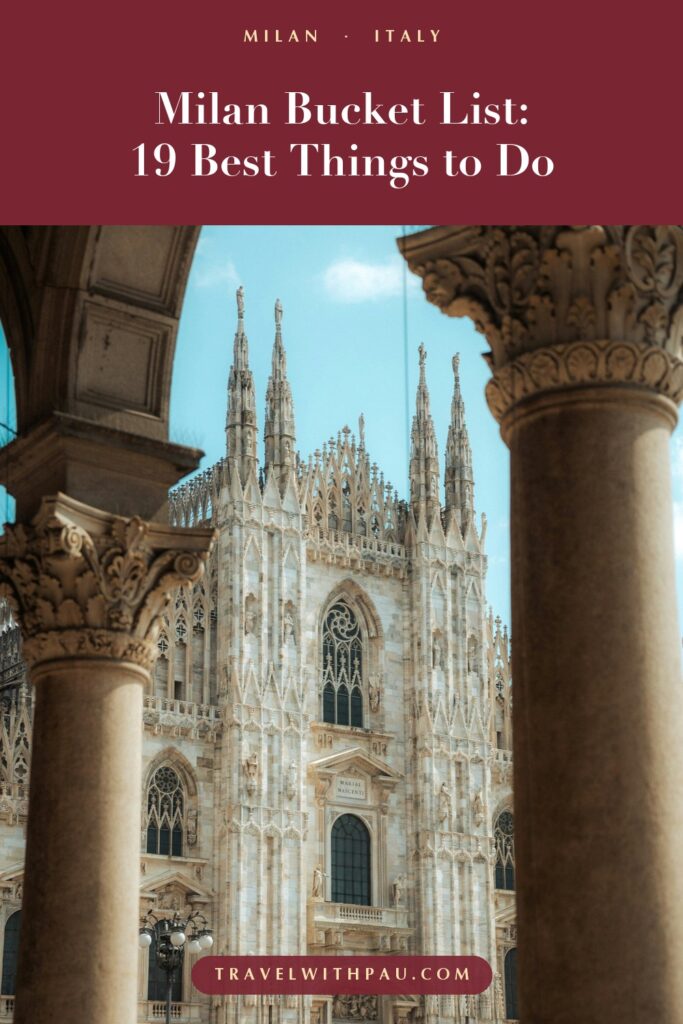
The Duomo is Milan, this Gothic cathedral has been under construction for over 600 years and is the third largest in the world. Even if you’ve seen plenty of European cathedrals, nothing quite prepares you for this one. The white marble facade, the forest of spires, the sheer scale of it all. But the real highlight? Getting up on the rooftop terraces and weaving between 135 spires and 3,200 statues with the Alps as your backdrop on a clear day. It’s genuinely one of Italy’s greatest views.
Practical info: Entry to the terraces costs around €15 via stairs or €20 by lift. Rooftop access is included in the Duomo Pass. Book well ahead to skip the queues, this is one Milan attraction where winging it will cost you time, or skip the stress entirely with a guided Duomo and rooftop tour that includes tickets. Dress code applies (no bare shoulders or knees inside the cathedral). Open daily from around 9am.
2. See Da Vinci’s The Last Supper
This is the one you cannot miss, and also the one that requires the most planning. Leonardo da Vinci’s The Last Supper (Il Cenacolo) is housed in the refectory of Santa Maria delle Grazie, and viewings are strictly limited to 15 minutes with groups capped at 30 people. Tickets can sell out months in advance. I am not exaggerating. Do not leave this to chance.
The painting depicts the moment Christ announces his betrayal, the expressions on each apostle’s face are extraordinary, and seeing it in person, understanding its scale (roughly 4.6m x 8.8m), is a genuinely moving experience.
Practical info: Viewings run in timed slots. Independent tickets via the official website sell out fastest, or book a skip-the-line guided tour instead, which is often easier to secure and gives you valuable context on the painting. €15+ for entry. Address: Piazza di Santa Maria delle Grazie, 2.
3. Explore Galleria Vittorio Emanuele II
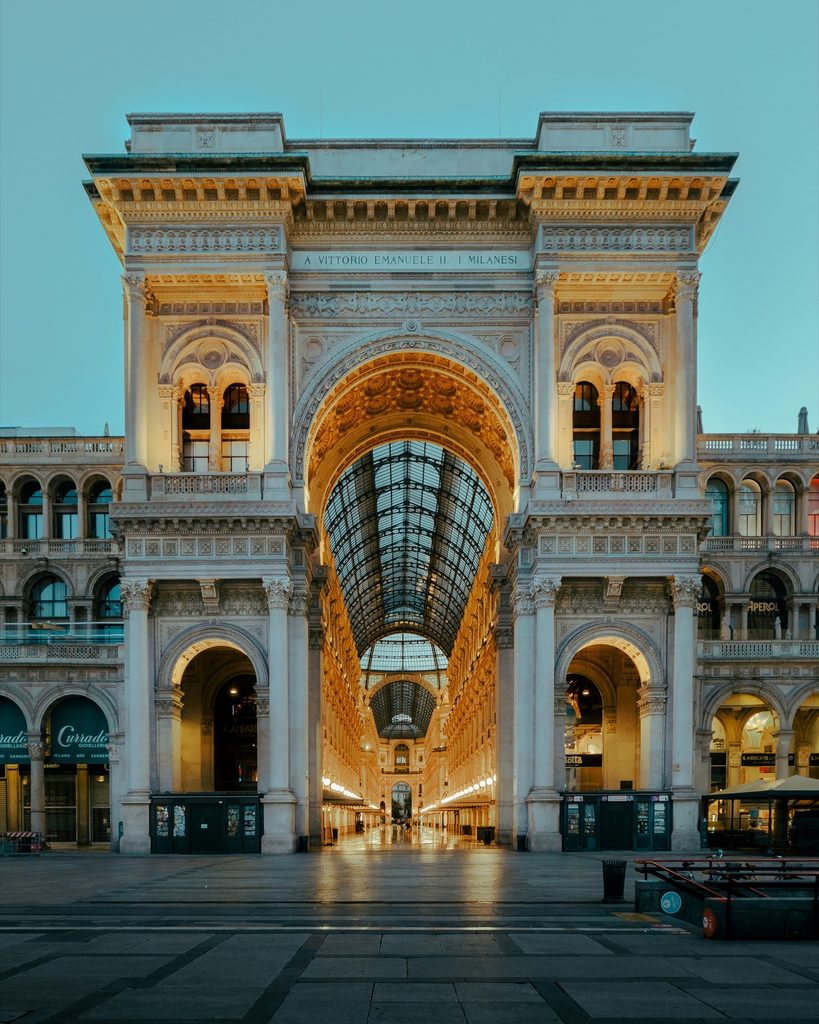
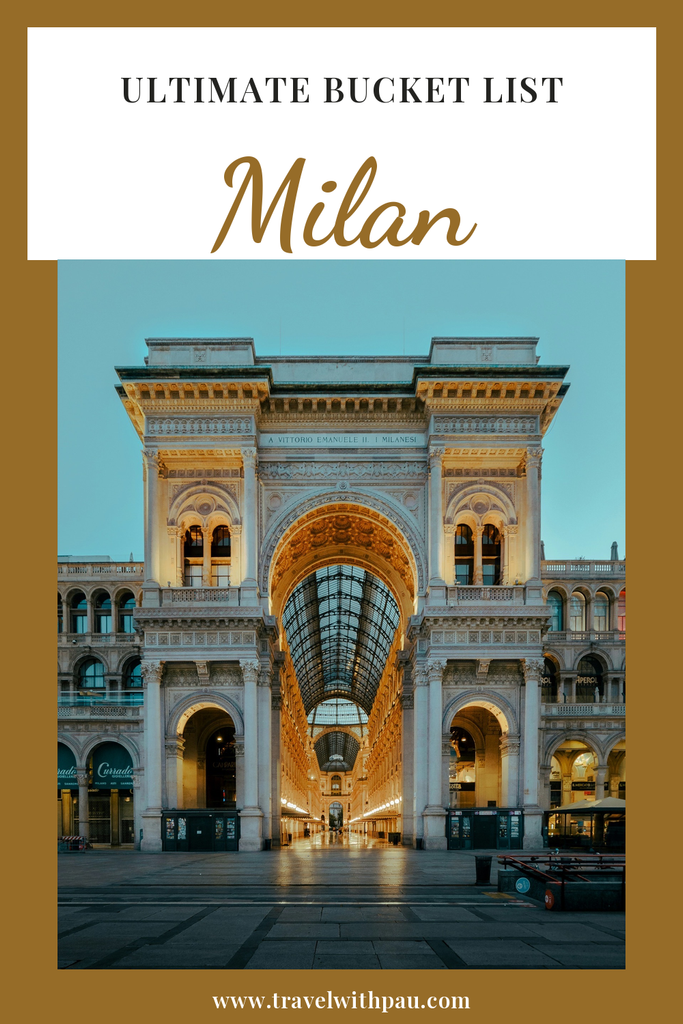
Right next to the Duomo, the Galleria is one of the world’s oldest shopping malls, a soaring 19th-century glass-and-iron arcade housing luxury brands, historic cafés, and the famous mosaic of the bull in the floor (spin on its bits for good luck, apparently). Even if you’re not in the market for Prada, it’s worth wandering through just for the architecture.
Practical info: Free to enter and explore. The cafés inside (Biffi, Savini) are expensive but atmospheric for a coffee. Open all hours as it’s a public walkway, and it’s usually one of the stops on this Milan highlights walking tour if you’d rather see it with context alongside the Duomo and Sforza Castle.
4. Castello Sforzesco and Michelangelo’s Pietà Rondanini
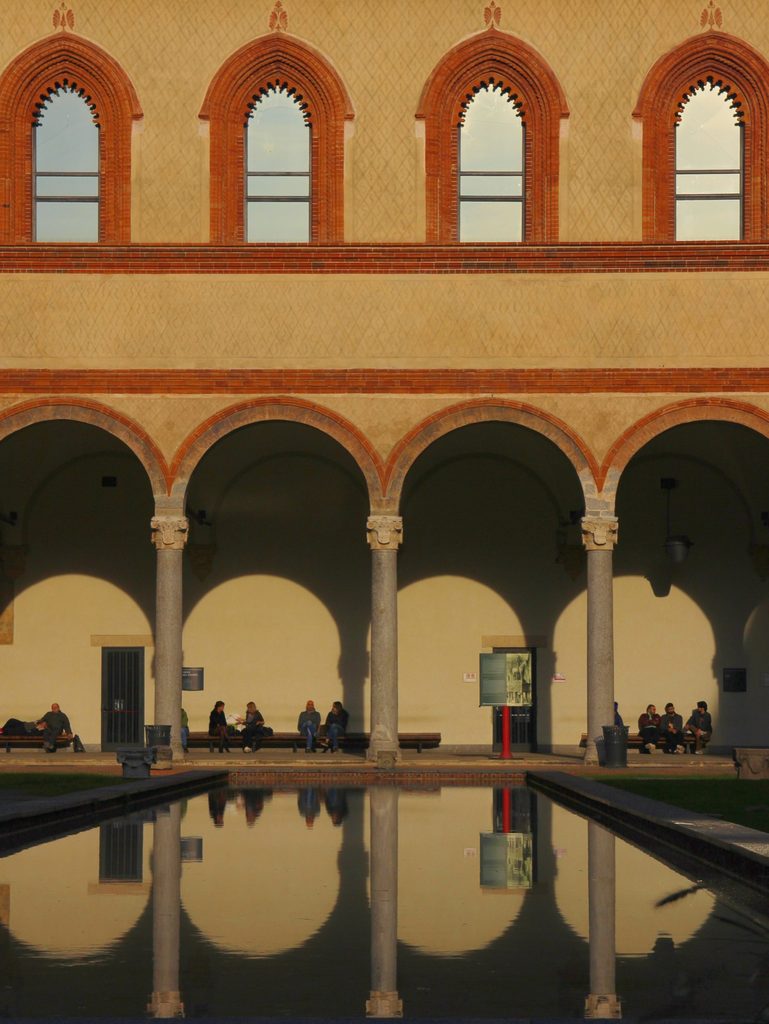
The Sforza Castle is one of Milan’s most impressive landmarks, a massive 15th-century fortress built by Francesco Sforza, Duke of Milan. What most people don’t know until they get there is that it houses several excellent museums, including Michelangelo’s final and unfinished sculpture: the Pietà Rondanini. He was working on it just days before his death at 88. It’s raw, haunting, and unlike anything else you’ll see in Italy.
Practical info: Entry to the castle grounds is free; museums cost €5–10, or book a guided tour with an audioguide if you want the Pietà Rondanini’s story properly explained. The Museo della Pietà Rondanini is open Tuesday–Sunday, 10am–5:30pm. The castle is a 10-minute walk from the Duomo.
5. Wander the Brera Neighbourhood
Brera is the artistic heart of Milan and one of those rare city neighbourhoods that manages to feel both genuinely historic and genuinely cool. Cobblestone streets, independent boutiques, art galleries, great coffee shops, and some of Milan’s best restaurants. It’s where you wander without a plan and end up having the best afternoon of your trip.
Practical info: Best explored on foot. The neighbourhood clusters around Via Brera and Via Fiori Chiari. It’s very walkable from the Sforza Castle and the Duomo.
6. Pinacoteca di Brera
While you’re in Brera, don’t skip the Pinacoteca, one of Italy’s finest art galleries, housed in a beautiful Baroque palace. The collection spans medieval and Renaissance masterpieces including Raphael’s The Marriage of the Virgin, Mantegna’s Dead Christ, and works by Caravaggio, Tintoretto, and Leonardo. It’s less hectic than the Uffizi in Florence and the collection is genuinely world-class.
Practical info: Entry €15, free on the first Sunday of each month, or book a guided experience if you want an expert walking you through the highlights. Open Tuesday–Sunday, 8:30am–7:15pm. Address: Via Brera, 28.
7. Aperitivo in the Navigli District
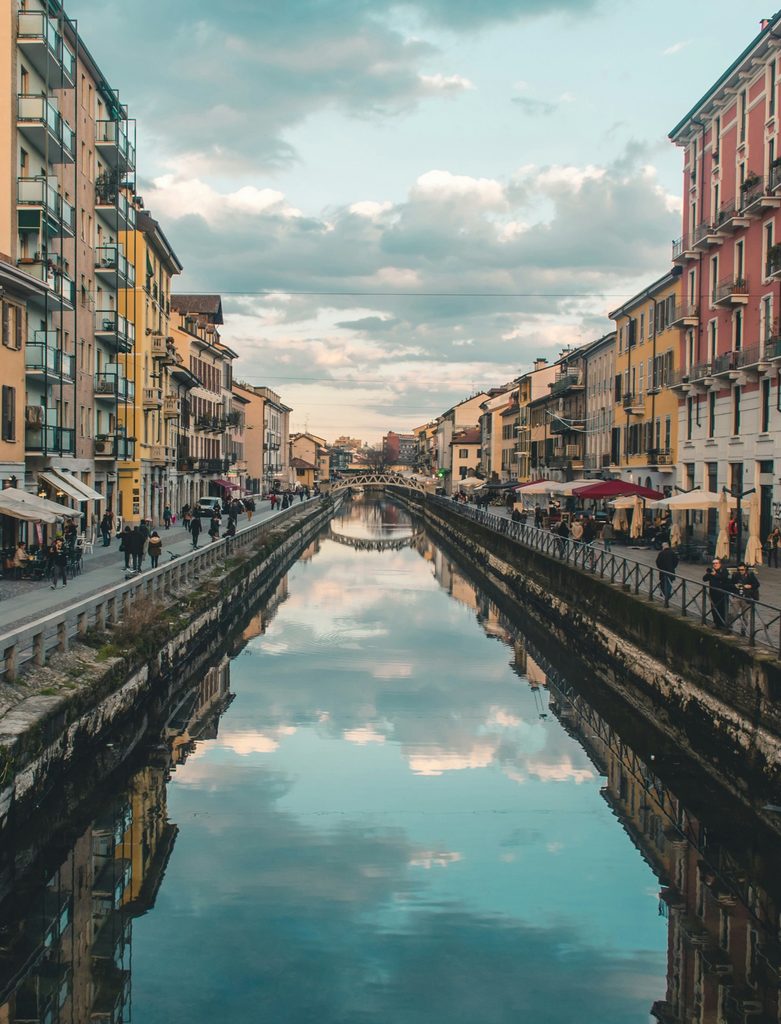
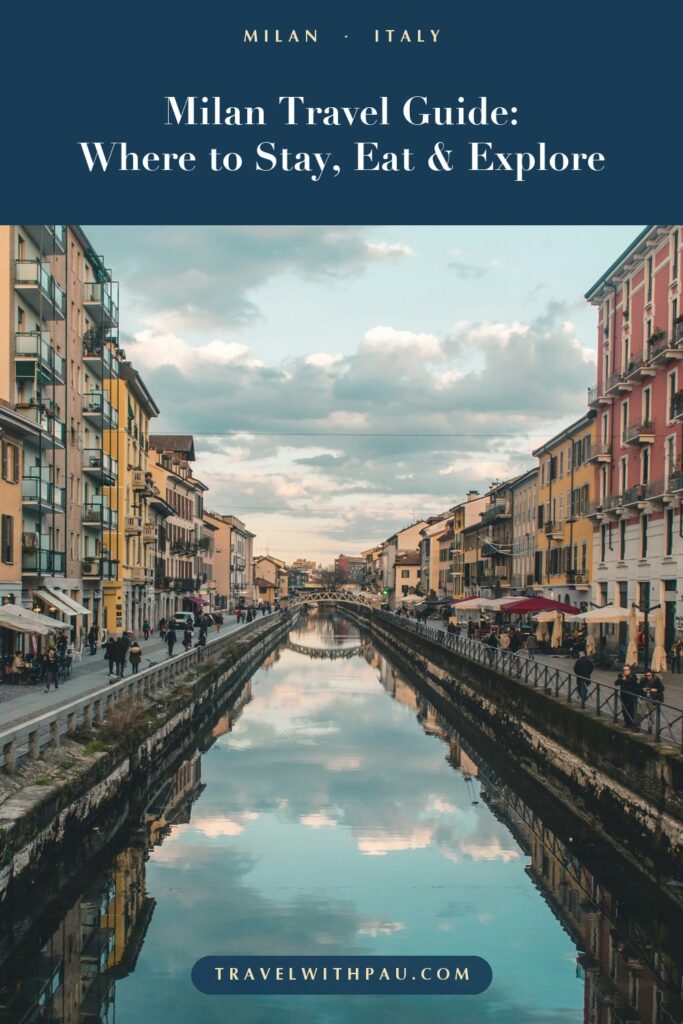
If you only do one evening activity in Milan, make it aperitivo in the Navigli. The Naviglio Grande canal dates back to the 12th century and today its banks are lined with bars that do the most gloriously generous happy hours, buy a drink and you get a spread of snacks laid out like a proper meal. Arrive between 6 and 9pm when the vibe is at its best, the lights hit the water, and the whole neighbourhood feels like it’s exhaling after a long day.
Practical info: It’s worth doing an evening canal boat tour to see the canals from the water before settling in for aperitivo, this one bundles the boat ride and aperitivo together so you don’t have to plan the two separately. Most bars along the Naviglio Grande do aperitivo from around €8 to €12 including food. The Navigli is in the south of the city, reachable by metro (Porta Genova, M2 green line).
8. Santa Maria delle Grazie
Even setting aside The Last Supper (which is in an adjacent building), Santa Maria delle Grazie is a stunning church worth visiting in its own right. The external dome, designed by Bramante in the late 15th century, is a masterpiece of Renaissance architecture. The interior is serene and beautiful.
Practical info: Entry to the church is free. The refectory housing The Last Supper requires a separate timed ticket (see item 2 above). Address: Piazza di Santa Maria delle Grazie, 2. Closed Monday.
9. Via Montenapoleone and the Fashion District
Even if couture isn’t your thing, a stroll through the Quadrilatero della Moda (Fashion Quadrangle) is a Milan experience. Via Montenapoleone is the most famous street, think Gucci, Prada, Versace, Dolce & Gabbana, all lined up in beautiful historic buildings. The window displays alone are an art form. For slightly more affordable shopping, Via della Spiga and the streets around it have independent Italian brands alongside the big names.
Practical info: Free to wander. The fashion district is a 15-minute walk northeast of the Duomo. Peak shopping hours can get very busy; go early morning for a more peaceful experience.
10. San Siro Stadium Tour
San Siro, or to give it its proper name, Stadio Giuseppe Meazza, is one of football’s most iconic venues and the shared home of AC Milan and Inter Milan. Even if you’re not a huge football fan, the stadium tour is surprisingly excellent: you walk through the players’ tunnel, see the changing rooms, stand on the pitch, and visit the museum packed with shirts and memorabilia from two legendary clubs.
Practical info: Stadium tours run daily (9:30am to 5pm October to March; until 6pm April to September), book your spot on the stadium and museum tour here, tickets from around €20. Note: tours are suspended on match days. The stadium is in the northwest of the city, take the M5 (lilac line) to San Siro Stadio.
11. Bosco Verticale and Porta Nuova
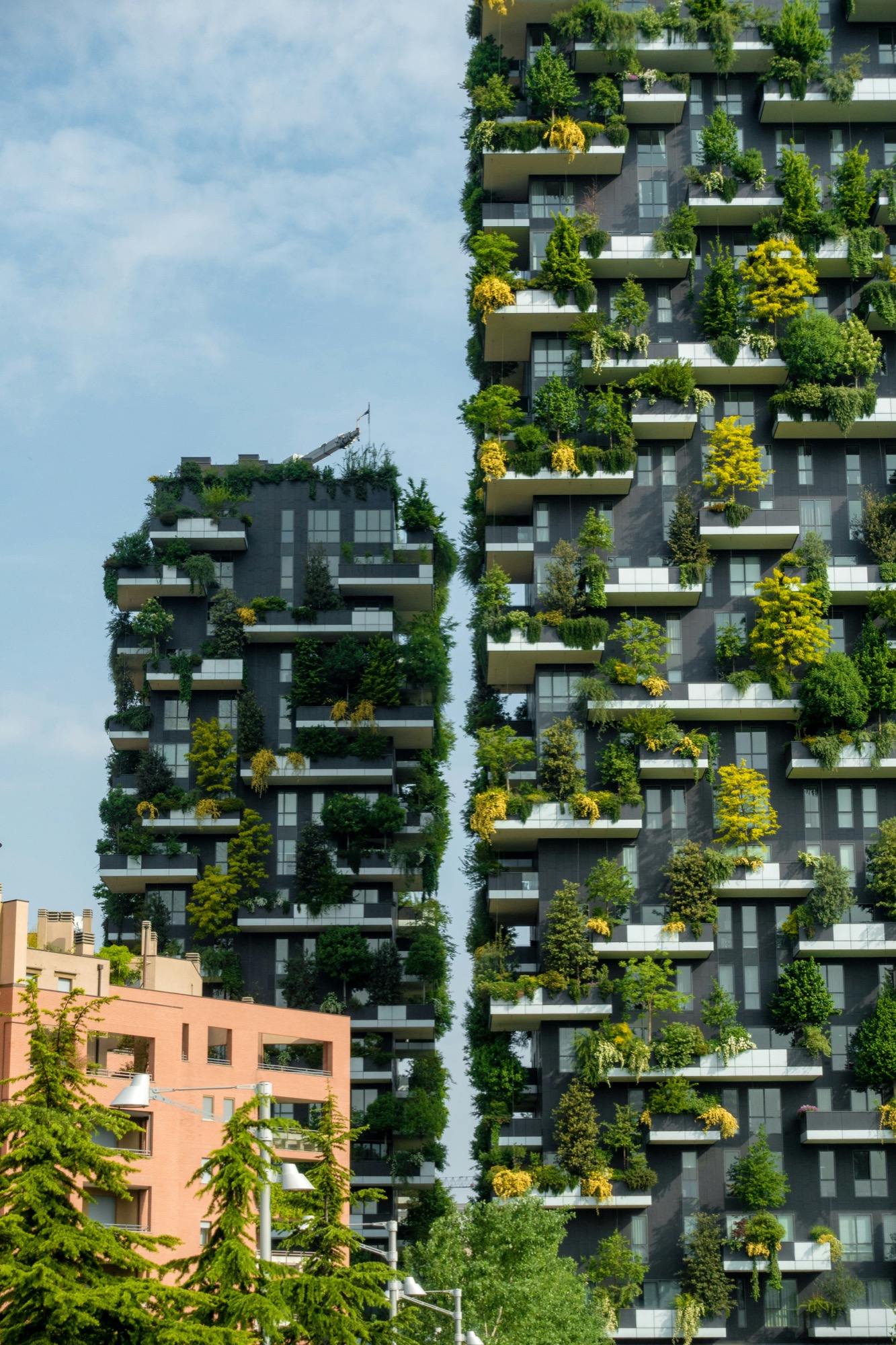
This one won’t likely be in any other Milan travel guide, but in my opinion it’s totally worth looking at. Bosco Verticale (Vertical Forest) is one of the most photographed buildings in Milan, twin residential towers literally covered in over 900 trees and 20,000 plants. The concept is extraordinary and the execution is genuinely impressive, super environmentally friendly but also very photogenic. It sits in the regenerated Porta Nuova district, which is Milan’s modern business quarter and a fascinating counterpoint to the historic centre.
Practical info: You can’t go inside the towers (they’re private residences) but the external view is free and the surrounding Biblioteca degli Alberi park is a lovely spot to sit and take it all in. From the Gae Aulenti square, the buildings are about a 5-minute walk. Reachable by metro (Porta Garibaldi, M2/M5).
12. Cimitero Monumentale
One of Milan’s most unexpected highlights. The Monumental Cemetery opened in 1866 and is essentially an open-air museum of funerary sculpture, elaborate mausoleums, dramatic statues, and artistic monuments commissioned by Milan’s wealthy families over the centuries. It’s extraordinarily beautiful in a very particular way and often overlooked by visitors in favour of more traditional sights.
Practical info: Free entry, or book a guided tour if you want the stories behind the mausoleums explained rather than wandering blind. Open Tuesday–Sunday, 8am–6pm (closed Monday). Address: Piazzale Cimitero Monumentale. Reachable by tram (lines 12/14) or a short walk from Monumentale metro (M5 lilac line).
13. Aperitivo Culture: Do It Like a Local
Aperitivo isn’t just a drink in Milan, it’s an institution. The tradition of serving a generous spread of food with your pre-dinner drink is particularly Milanese (it’s different from the rest of Italy, where you usually just get crisps and olives). Do it properly: order a Negroni, an Aperol Spritz, or a local Campari Soda, find a bar with a good buffet spread, and spend an hour not rushing.
Practical info: Classic aperitivo runs 6pm–9pm. Beyond the Navigli, good areas include Brera, Corso Como, and Isola neighbourhood. Budget €8–15 per drink including food.
14. Peck Delicatessen
Peck is a Milan institution, a legendary delicatessen on Via Spadari that’s been feeding the city since 1883. The ground floor is a temple to Italian food: aged cheeses, cured meats, truffles, olive oils, fresh pasta, and hundreds of other things you’ll want to buy and carry home. Upstairs there’s a restaurant. It’s pricey, but even just browsing is an experience.
Practical info: Address: Via Spadari, 9 (2 minutes from the Duomo). Open Tuesday–Sunday. A small treat from the deli counter makes an excellent picnic companion for Parco Sempione.
15. Parco Sempione
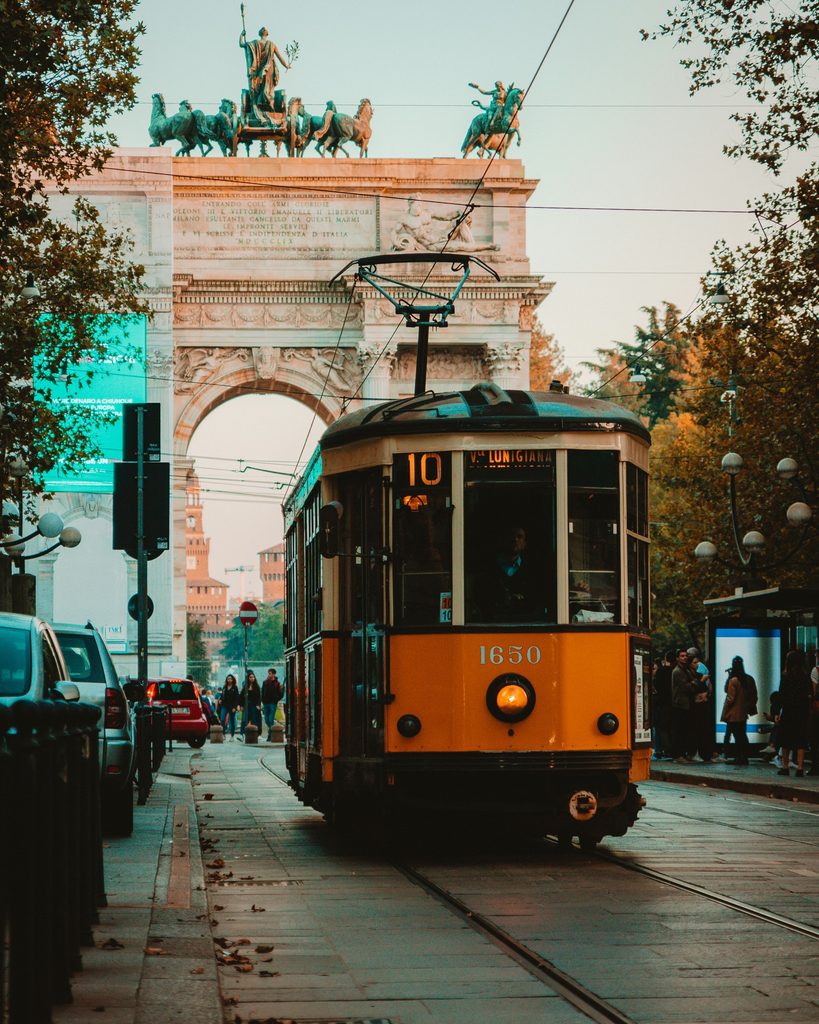
Milan’s green lung and the park that stretches behind the Sforza Castle. On sunny days this is where Milanese come to read, cycle, picnic, and generally exhale, and it has real charm too: ducks and turtles in the ponds, buskers and musicians dotted around, and the Arco della Pace at one end with the Sforza Castle at the other. There are several interesting structures within the park including the Torre Branca viewing tower and the Triennale design museum, but honestly the best thing to do is just find a bench and spend an hour people-watching in one of Europe’s most style-conscious cities.
Practical info: Open daily from 6:30am. Free entry. The main entrance is via the Sforza Castle courtyard. Worth combining with a castle visit.
16. Teatro alla Scala
La Scala is simply one of the greatest opera houses in the world. Even if opera isn’t your thing, the building itself is magnificent, the ornate auditorium with its six tiers of boxes is exactly what you imagine when you picture 19th-century Italian theatre grandeur. The museum is excellent and you can often access the auditorium as part of the visit.
Practical info: The Museo Teatrale alla Scala is open daily 9am to 12:30pm and 1:30pm to 5:30pm; entry around €9. Performance tickets vary hugely in price, check the schedule at teatroallascala.org. If you’d rather see it as part of a wider route, this 3-hour city highlights walking tour includes La Scala alongside the Duomo and Galleria. Address: Piazza della Scala.
17. Chiesa di San Maurizio al Monastero Maggiore
Known as “Milan’s Sistine Chapel,” this 16th-century Benedictine church on Corso Magenta looks almost plain from the outside, which is exactly why it’s such a good surprise. Step in and every surface, walls, vaults, arches, is covered in Renaissance frescoes, most of them by Bernardino Luini, one of Leonardo da Vinci’s most talented followers. It’s genuinely one of Milan’s best hidden gems and most visitors walk straight past it.
Practical info: Entry is free. Address: Corso Magenta, 15, a short walk from Santa Maria delle Grazie, easy to combine with a Last Supper visit.
18. Bar Basso and the Birth of the Negroni Sbagliato
If you only make one cocktail pilgrimage in Milan, make it this one. Bar Basso, open since 1947, is where the Negroni Sbagliato was accidentally invented in the early 1970s when founder Mirko Stocchetto reached for prosecco instead of gin. It’s still served the same way today, in huge custom Murano glasses, and the bar itself has barely changed either. Expect a proper old-school Milanese crowd and a genuinely historic drink in your hand.
Practical info: Address: Via Plinio, 39. Get there for a pre-dinner drink, it gets busy.
19. San Bernardino alle Ossa, Milan’s Bone Chapel
Tucked a short walk from the Duomo, San Bernardino alle Ossa looks like an ordinary Baroque church from outside, until you step into the small side chapel and find every wall covered in thousands of human skulls and bones, arranged in deliberate, almost decorative patterns. It’s not for everyone, but it’s one of the strangest and most memorable things I’ve seen in any Italian city, and most visitors have no idea it’s there.
Practical info: Free entry, donations welcome. Address: Piazza Santo Stefano / Via Carlo Giuseppe Merlo, 4. Open Monday to Friday 8am to 6pm, Saturday 9:30am to 6pm, the ossuary itself is closed on Sundays.
Milan Day Trips
Milan’s position in northern Italy makes it an excellent base for day trips. Here are the best ones:
Lake Como
The most popular day trip from Milan, and for good reason. Lake Como is impossibly beautiful: crystal-clear water, dramatic Alpine mountains, and elegant villages like Bellagio, Varenna, and Menaggio strung along the shoreline. Bellagio is the jewel, a perfectly preserved lakeside village that justifies every postcard it’s ever appeared on. Como is about an hour from Milan by train (direct services from Milano Centrale) and there’s a regular ferry network between villages. Allow a full day, ideally combining the train to Como with a ferry hop between villages, or skip the planning entirely and book a Lake Como and Bellagio day trip from Milan that handles the transport for you.
Lake Garda
Lake Garda is Italy’s largest lake and a very different character to Como, wider, grander, with a slight Mediterranean feel in the south. Worth it for Sirmione (a beautiful peninsula with a fairy-tale castle), Gardaland (if you have kids), or the northern shore around Riva del Garda for dramatic mountain scenery. Around 1.5 hours from Milan by train.
Bergamo
Bergamo is one of Italy’s most underrated cities and just 45 minutes from Milan by train. The Città Alta (upper town) is a perfectly preserved medieval walled city perched on a hill above the modern lower town, reachable by funicular. Fewer tourists than most Italian destinations of this quality, and the food (polenta, casoncelli pasta, moscato wine) is outstanding.
Turin
About 1 hour by high-speed train from Milan, Turin is elegant, baroque, and seriously underappreciated, the original Italian capital, home to the Shroud of Turin, some of the best chocolate in Europe, and a brilliant Egyptian museum. Great for a day trip or an overnight add-on.
Where to Stay in Milan
Staying in the centre of Milan is recommended but not at all essential in my opinion. On my trip I stayed north of the centre, near a concert venue, and found it noticeably cheaper, getting into the centre on the metro was still super quick and easy, though the specific place I picked wasn’t great so I won’t be recommending it here. It’s worth knowing that hotels inside the very centre (near the Duomo) command a premium. The areas around Brera, Porta Garibaldi, and Porta Romana offer great value with easy metro access.
Budget: Hotel Milano Castello
Excellent location just a short walk from the Sforza Castle and Duomo, with consistently high guest ratings (9.6 for location and comfort). Clean, comfortable rooms with a lovely breakfast buffet, and the staff are notably helpful. One of the best budget picks in the city centre. Best for: First-timers who want to be central without overspending.
Mid-range: Rosa Grand Milano, Starhotels Collezione
A stylish 4-star right on Piazza Fontana, just a 2-minute walk from the Duomo. 330 rooms with a sharp, contemporary Italian look; the food and beverage programme is run by Eataly, which is a very good sign. Strong ratings across the board and a genuinely premium feel without the full luxury price tag. Best for: A special occasion stay in the heart of Milan.
Splurge: Bvlgari Hotel Milano
If you’re going to splash out in Milan, this is the place to do it. Tucked on a private garden street between Via Montenapoleone and La Scala, in other words, exactly where you want to be in Milan, the Bulgari Hotel is housed in a beautifully restored 18th-century Milanese palazzo. A gold-tiled spa pool, 61 impeccably designed rooms, and the kind of service that makes you feel like the most important person in the city. Best for: Honeymoons, milestone celebrations, living your best life.
None of these float your boat? Search all Milan hotels.
Where to Eat in Milan
Milan is a genuinely excellent food city, here’s what I’d actually recommend from my own trip:
Risotto alla milanese: Ratana and Trattoria Masuelli San Marco are both excellent for the classic saffron risotto Milan is known for.
Pizza: Maruzella and Piccola Ischia are solid all-rounders, Pizza AM is the one for a proper Neapolitan version, and S.P.I.B. is the one to know for proper thin-crust.
Panzerotto: Luini, a Milan institution near the Duomo serving fried and baked panzerotti (think a pocket-sized calzone) since 1888, is an essential quick bite between sights.
Ice cream: La Gelateria della Musica and Gelato Giusto are both consistently excellent, Cioccolatti Italiani does a lovely chocolate-dipped cone if you want to make it a bit extra, and Ciacco is the pick if you want organic or vegan gelato, I had the vegan pistachio there and it was a dream come true.
How Long to Spend in Milan
2 days is enough to hit the main highlights: Duomo and rooftop, The Last Supper, Galleria Vittorio Emanuele, Sforza Castle, Brera neighbourhood, and an evening in the Navigli. It’s a tight itinerary but doable if you pre-book everything.
3 days is the sweet spot. Add the Pinacoteca di Brera, a morning in the fashion district, the Cimitero Monumentale, and a proper long aperitivo evening without feeling rushed.
4 to 5 days gives you time to breathe, explore the Porta Nuova area, fit in a day trip to Lake Como, discover neighbourhood restaurants properly, and generally feel like you’ve understood the city rather than just ticked off its sights.
Getting To & Around Milan
Most UK airports have direct flights to Milan Malpensa (MXP) or Milan Linate (LIN), around 2 hours flying time from London, with Ryanair and easyJet flying to both from multiple UK cities, often very cheaply. Book a private airport transfer in advance with WelcomePickups for fixed-price pickups with meet-and-greet service, and note that Malpensa is much further from the city (50km) so factor in extra journey time and cost. If you fancy a scenic, low-carbon alternative, it’s possible to reach Milan from the UK by train via Eurostar to Paris, then a high-speed train through the Mont Cenis tunnel to Turin and on to Milan, it’s a long day, but a genuinely scenic one. Check routes and prices on Trainline.
Once you’re in Milan, the metro is excellent, clean, affordable, and fast, and trams and walking cover the rest of the historic core easily, so avoid taxis and Uber, which are expensive here. If you’re exploring further afield within Italy, Milan is well-connected by high-speed rail: Florence is about 2 hours away, Venice about 2.5 hours, and Rome about 3 hours, with Trenitalia and Italo as the main operators, book in advance for the best prices, again via Trainline.
Best Time to Visit Milan
Milan is a year-round destination, but some times are better than others. April to June and September to October are the sweet spots, mild temperatures, lovely light, and the city feels alive without being overwhelmingly busy.
Avoid August if you can. Milan empties out dramatically in August, locals leave for the coast, many restaurants and shops close, and the city has a strange, hollow energy. It can also be brutally hot.
Fashion Weeks in September and February are worth knowing about. They bring an exciting creative buzz to the city, but hotel prices surge and the Quadrilatero della Moda area gets very crowded. Book well in advance if you’re visiting during these periods, or factor in the premium.
Winter (November to February) has fewer tourists and lower prices, which has its appeal, but Milan in grey, drizzly weather is less inspiring than in the golden light of spring or autumn.
Milan FAQ
Is Milan worth visiting?
Absolutely. Milan often gets unfairly dismissed as just a shopping and business destination, but it has world-class art, architecture, food, and some of Italy’s most fascinating neighbourhoods. It’s simply a different kind of Italian city, more cosmopolitan and modern, and that’s part of its appeal.
How many days do you need in Milan?
Minimum 2 days to cover the highlights. 3 days is the sweet spot. If you want to add a day trip to Lake Como, plan for 4 days minimum.
What is the best area to stay in Milan?
For first-timers, anywhere within walking distance of the Duomo or in the Brera neighbourhood puts you close to everything. Porta Garibaldi and Isola are great for a more local, neighbourhood feel.
How far is Lake Como from Milan?
Lake Como is about 50km from Milan. The town of Como is roughly 1 hour by direct train from Milano Centrale, or 30 minutes by regional express. Bellagio is an additional 50-minute ferry ride from Como.
Do I need to book The Last Supper in advance?
Yes, and I cannot stress this enough. Tickets can sell out months in advance, especially in peak season. Book as early as humanly possible. If you’ve left it too late for official tickets, booking via a guided tour is often the best way to still secure access.
When is the best time to visit Milan?
April to June and September to October are the best months, good weather, vibrant atmosphere, and manageable crowds. Avoid August (the city empties out) and be prepared for premium prices during Fashion Weeks in February and September.
Planning more of Italy? Check out my guides to Venice, Cinque Terre, and Genoa for the perfect Italian trip.
Enjoyed this article? Support my work by buying me a latte. Otherwise, do me a great favor of leaving a comment and following me on Instagram (@travelwithpau). Feel free to say ‘Hello!’ I don’t bite. And make sure you save the article for later on Pinterest!
This post contains affiliate links. If you book through them, I earn a small commission at no extra cost to you, thank you for supporting Travel with Pau!
Things to Do in Genoa: The Ultimate Genoa Bucket List (2026)
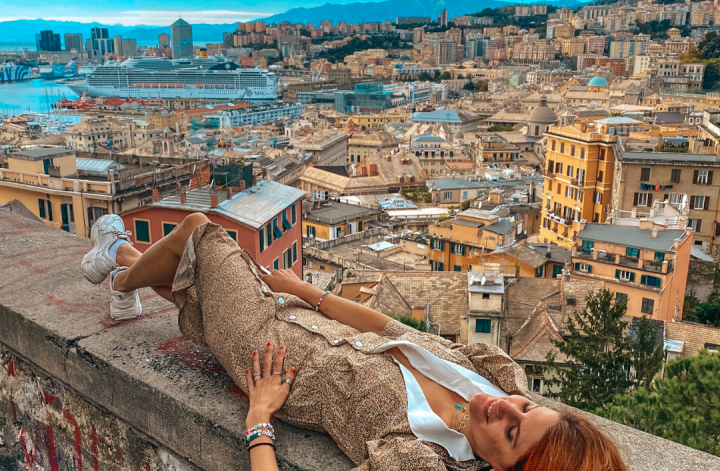
Let me be honest with you: Genoa was not what I expected. My first impression was that it was a bit gritty, it’s not polished or prettified for tourists the way Rome or Florence can feel. But give it a chance, and I promise you won’t regret it. Genoa was one of the most genuinely surprising cities I’ve visited in Italy. Among all the things to do in Genoa, the combination of medieval lanes, extraordinary Renaissance palaces, the best focaccia of my life, and a fishing village right on the doorstep of the city centre won me over completely. Plus it’s cheap. And the food is exceptional.
This is my complete Genoa travel guide, everything I’d tell a friend who was heading there.
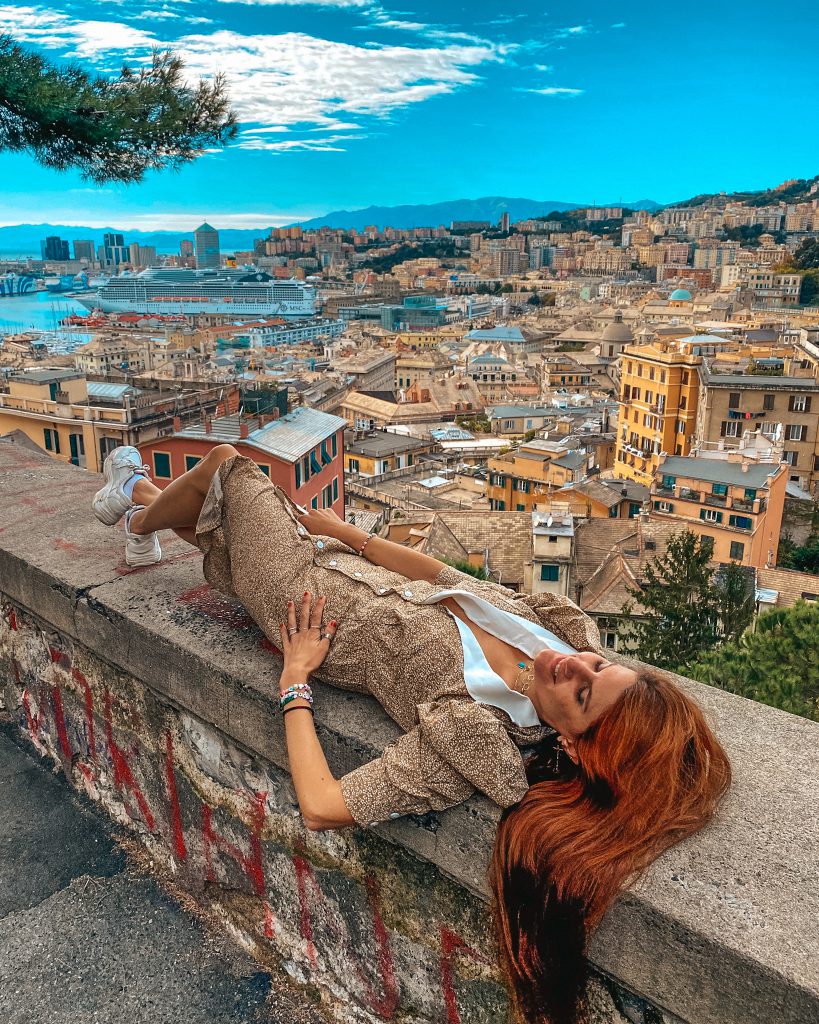
GENOA ESSENTIALS
✈️ Getting There / Genoa is well connected by rail to all major Italian cities. From Milan it’s around 1.5 hours; from Rome around 3 hours. The train is my preferred way to travel within Italy, easy, scenic, and often cheaper than flying. Book tickets on Trainline for the best fares. Genoa’s Cristoforo Colombo Airport is compact and close to the city, pre-book a transfer with WelcomePickups for a stress-free arrival with a fixed-price, English-speaking driver. Search flights on Skyscanner.
🚗 Getting Around / You don’t need a car in Genoa itself, but if you’re planning day trips to Portofino or Cinque Terre, having a car for part of your trip is useful. Compare rates on DiscoverCars.
🎟️ Tours / Genoa’s historic centre is best explored on foot, but guided tours bring the history to life in a way that’s hard to replicate independently. The best ones to book in advance:
Genoa Aquarium Entrance Ticket
Genoa Old Town Walking Tour: Caruggi and Palazzi
Guided Tour of the Rolli Palaces, UNESCO Site
Rooftop Pesto and Pasta Cooking Class
🏨 Stay / I stayed at Vo.Al. Concept Guest House near Genoa’s Central Station and loved it, see the full write-up below:
Budget: B&B Argentina
Mid-range: Starhotels President
Luxury: Bristol Palace Hotel
Search all Genoa hotels
🧳 Luggage Storage / If you’re early for check-in or have time to kill after checkout, no stress, there are luggage storage points all over Genoa. Use this website to find one nearby.
📱 Connect / Stay connected the moment you land. I use Holafly, use code TRAVELWITHPAU for 5% off.
🛡️ Get Insured / Don’t skip this. I use World Nomads, it covers activities, delays, and medical emergencies.
Things to Do in Genoa
1. Get Lost in the Caruggi (Medieval Lanes)
The caruggi, Genoa’s dense network of narrow medieval alleys, are the heart and soul of the city. This is a UNESCO World Heritage-listed historic centre, one of the largest in Europe, and walking through it feels genuinely medieval: dark, atmospheric, fragrant with focaccia and coffee, with sudden piazzas opening up unexpectedly and tiny street shrines (called edicole) tucked into corners.
Some highlights within the caruggi: the beautiful Abbazia di San Matteo, the Parrocchia di Santa Maria delle Vigne, and Piazza Campetto with its elegant architecture. A practical note: the caruggi’s reputation for being rough has improved significantly, but as with any dense urban neighbourhood, common sense applies, especially late at night. If you’d rather not navigate them solo on day one, this guided caruggi walking tour is a good way to get properly oriented before exploring alone for the rest of your trip.
2. Walk the Strada Nuova, Via Garibaldi
The Strada Nuova (now known as Via Garibaldi and Via Balbi) is the monumental showpiece of 16th-century Genoa. This is where the wealth of the Maritime Republic was put on display: a street of Renaissance palaces, the Palazzi Rolli, built by Genoa’s most powerful noble families to host visiting heads of state, cardinals and ambassadors. The sheer scale and grandeur of them is genuinely astonishing.
Via Garibaldi is today a UNESCO-listed street, and the palaces are some of the finest examples of Renaissance civic architecture in Italy. Walking it even without going inside any of the museums is worthwhile for the architecture alone, but if you want proper context on how the whole Rolli system worked, this guided tour of the Rolli Palaces covers the history in a way a plaque never can.