Last Updated on October 20, 2026
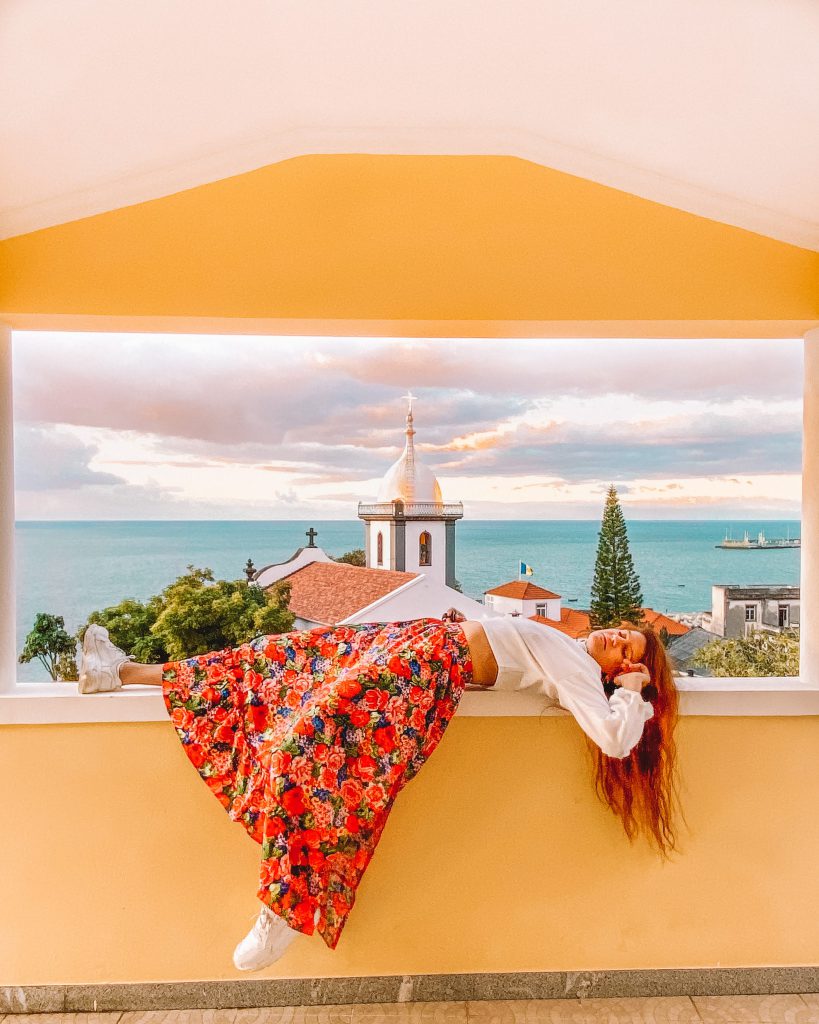
I’ll be honest: Madeira wasn’t at the top of my travel wish list. I’d heard vague things about it being a retirement destination for sun-seekers, and I wasn’t entirely sure it was for me. Six days later, I was already researching flights back. There are so many incredible things to do in Madeira that a week barely scratches the surface, from lush levada walks through misty mountains to whale watching off the Atlantic coast, this island genuinely has it all. Known as the “island of eternal spring,” Madeira sits in the North Atlantic as a Portuguese territory that’s geographically closer to Africa than Europe, and that subtropical climate means it’s gorgeous year-round.
Whether you’re a keen hiker, a foodie, a wildlife lover, or simply someone who wants beauty without the crowds, Madeira will deliver. Here’s my honest guide to everything you need to know.
VISITING MADEIRA: THE ESSENTIALS
Getting There / Madeira (Funchal Airport, FNC) is about a four-hour direct flight from London: easyJet, Jet2, and TAP Air Portugal all fly direct from the UK, and it’s also well-connected from other European cities. Book a private airport transfer with WelcomePickups for a fixed-price, meet-and-greet arrival, Funchal Airport is about 25 minutes from the city centre. Search for flights on Skyscanner.
Car Rental / A car is essential in Madeira as the levada trailheads, Fanal Forest, Porto Moniz, the north coast road, and the mountain viewpoints simply aren’t accessible without one. Compare rates on DiscoverCars and book well in advance, especially in summer.
Tours / Madeira is brilliant for guided experiences, especially if you’re not driving. The ones worth pre-booking:
Funchal Stories & Secrets Walking Tour
Pico Arieiro to Pico Ruivo Hike
Dolphin & Whale Watching
Best of the West Tour: Porto Moniz lava pools and the west coast
Best of the East Tour: Pico Arieiro, Santana, Ponta de São Lourenço
Stay / Funchal is the right base for a first trip. My personal pick: Hotel Quinta Belo São Tiago: a beautiful quinta set in tropical gardens with a heated pool, spa, and great breakfast, walking distance from the Old Town. Or search by area:
Old Town (Zona Velha) hotels: best for atmosphere, restaurants, and nightlife
Lido area hotels: best for families and seafront access
Connect / You’ll definitely want mobile data in Madeira for maps and restaurant bookings. I always recommend using an eSIM , no physical SIM card needed. I use Sim Local, and you can get 5% off with the code TRAVELWITHPAU. Grab one here.
Get Insured / Don’t skip this, especially if you’re hiking. Madeira’s mountain trails can be challenging and evacuation isn’t cheap. World Nomads covers adventure activities including levada walks and mountain hiking.
Things to Do in Madeira
Levada Walks
If there’s one thing Madeira is truly famous for, it’s the levadas. These are ancient irrigation channels (mini water canals, really) built from the 16th century onwards to carry water from the rainy northern mountains down to the sunnier, drier agricultural south. What makes them special for visitors is that they come with narrow footpaths running alongside them, winding through forests, along cliffsides, and through tunnels. In total, there are around 2,500 kilometres of levadas on the island, so you could genuinely spend a month here and not walk the same path twice.
The views are extraordinary. These aren’t challenging mountain scrambles: levada walks are generally flat (the water has to flow, after all), which makes them accessible to most fitness levels. I’d highly recommend booking a guided walk, both for safety on the more remote trails and to learn about the incredible ecosystem around you from someone who actually knows it.
My top levada recommendations:
- Serra da Água: a scenic valley walk along one of Madeira’s longest levadas, with views stretching down to the south coast and through some of the island’s most beautiful inland landscapes. Book here.
- Rabaçal and the 25 Fountains: one of the most iconic levada walks on the island, heading into the Rabaçal nature reserve through ancient laurel forest to a stunning cascade. Deservedly famous. Book here
- Caldeirão Verde: moody, atmospheric, and one of the best on the island. The trail passes through four tunnels carved into the rock before ending at a dramatic waterfall dropping into an emerald lagoon. Book here
- Levada do Norte: an easy, accessible walk in the south of the island with fantastic views of Câmara de Lobos and the coastline. A good option if you want the levada experience without a challenging trail. Book here
Pico do Arieiro to Pico Ruivo Hike
One of the best non-levada hikes on the island is the ridge walk between Pico do Arieiro and Pico Ruivo, Madeira’s highest peak at 1,862 metres. This is dramatic, volcanic landscape: jagged peaks, lava veins running through the rock, tunnels carved through the mountainside, and wildflowers clinging to cliffsides. On a clear day, the views are nothing short of breathtaking.
The hike itself is about 10 kilometres return and takes most people 4–5 hours. It’s not the easiest trail in the world (there are some exposed sections and steep drops) but it’s absolutely worth it. I’d recommend going with a guide, particularly if you’re not an experienced hiker. Book the guided experience here.
Ponta de São Lourenço Hike
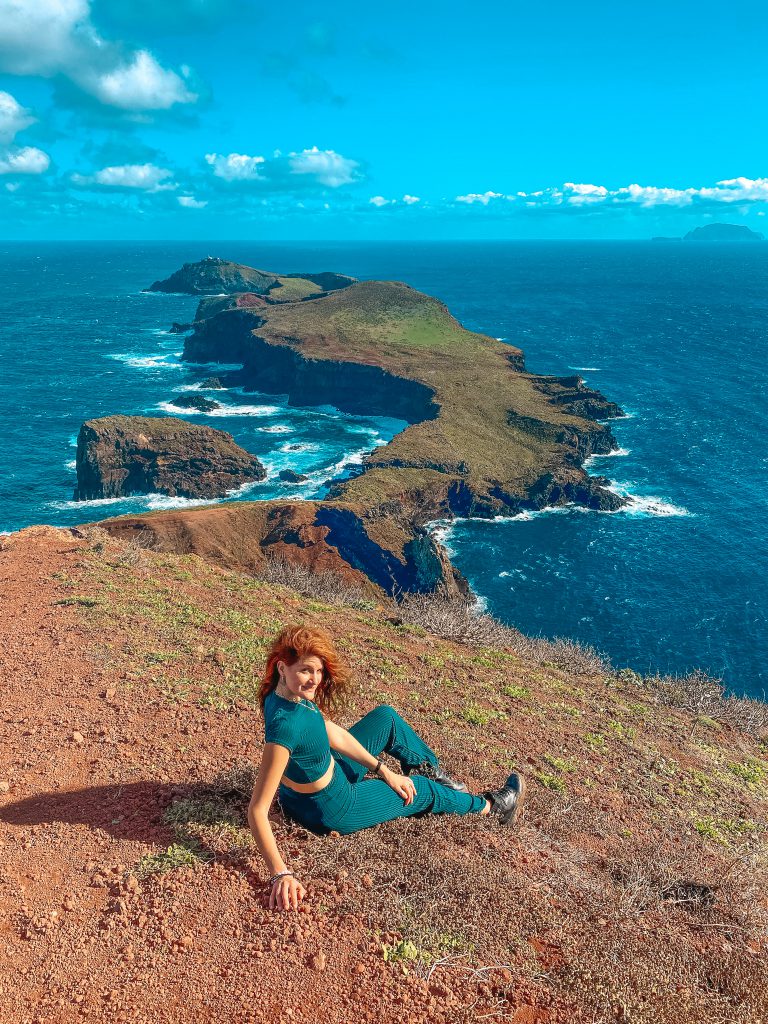
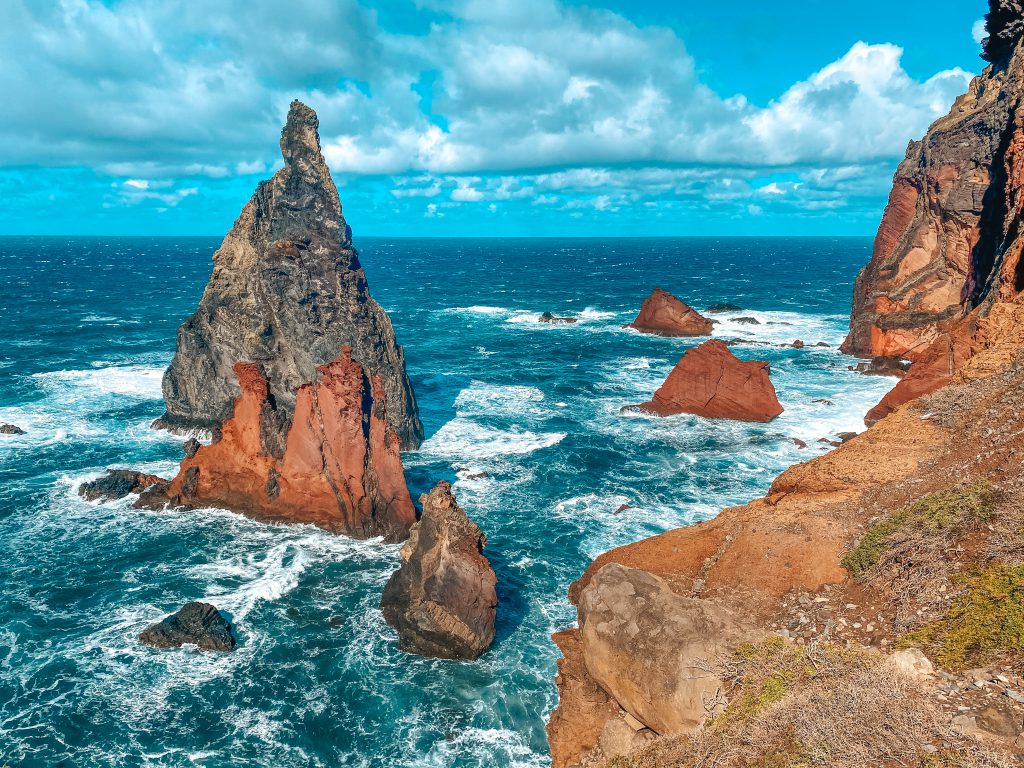
For something completely different from the green interior of the island, head east to Ponta de São Lourenço, Madeira’s dramatic eastern peninsula. The trail (about 3.5 kilometres each way) winds along a narrow strip of rugged, windswept coastline where the calm turquoise sea to the south meets the rough, churning waves of the north. It’s one of the most scenic hikes on the island and feels almost otherworldly.
The peninsula is geologically young, which means the landscape looks completely different to the lush, forested interior. Expect stark cliffs, dramatic rock formations, and incredible colour contrasts. Go with a guide to get the full story on the volcanic geology and endemic flora. Book the guided Ponta de São Lourenço hike here.
Pico do Arieiro Sunrise
If you can drag yourself out of bed early enough, watching the sunrise from Pico do Arieiro (Madeira’s third-highest peak at 1,818 metres) is something I’d put on the non-negotiable list. You drive up in the dark, wrap yourself in every layer you own, and wait. Then the clouds below you turn pink, the horizon catches fire, and suddenly you’re standing above the clouds watching the sun come up over the Atlantic. It’s one of those moments that stays with you. Several tour operators run sunrise trips from Funchal. Check what’s available here.
Fanal Forest
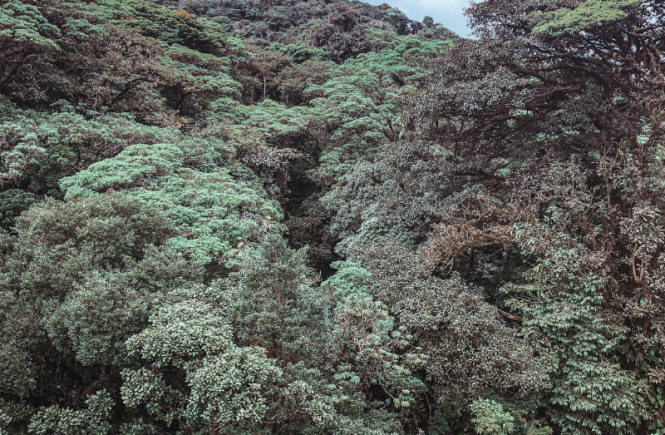
This one is slightly off the beaten track for first-time visitors and I’m not entirely sure why: Fanal Forest is absolutely magical. Located on the Paul da Serra plateau in the northwest of the island, it’s an ancient laurel forest where gnarly, centuries-old trees are draped in thick moss and ferns. When the mist rolls in (which it often does up here), it looks like something from a fairy tale, or a particularly atmospheric video game.
It’s easily accessible by car (another reason that hiring a car from DiscoverCars is so worthwhile in Madeira), and there are short walking trails through the forest. Go early in the morning for the best chance of mist and before the day-trippers arrive. If you don’t have a car, this tour visits it.
Porto Moniz Natural Lava Pools
On Madeira’s rugged northwestern tip sits Porto Moniz, home to the island’s famous natural lava pools. Over thousands of years, volcanic rock formations have created natural seawater pools right at the water’s edge: dramatic black rock surrounding crystal-clear ocean water, with waves crashing just beyond. Swimming here feels wildly adventurous even though it’s perfectly safe.
The pools are best visited during the summer months when the water temperature is comfortable, but they’re beautiful to visit at any time of year. The drive up the north coast road to get there is spectacular in itself: all hairpin bends, sea cliffs, and waterfalls tumbling down the mountainside. This tour visits them and also goes to Fanal Forest, Seixal and the Skywalk (see below).
Seixal Black Sand Beach
While Madeira isn’t really a beach destination in the same way as, say, the Algarve, Seixal Beach on the north coast is worth a visit for the sheer drama of it. The sand is volcanic black, the water is a vivid blue-green, and the surrounding cliffs are covered in greenery. There’s a small natural pool here too. It’s not a sunbathing beach (the north coast is wilder and cooler), but it’s genuinely striking. Again, this is only easy to reach with a car, or with this tour recommended above.
Cabo Girão Skywalk
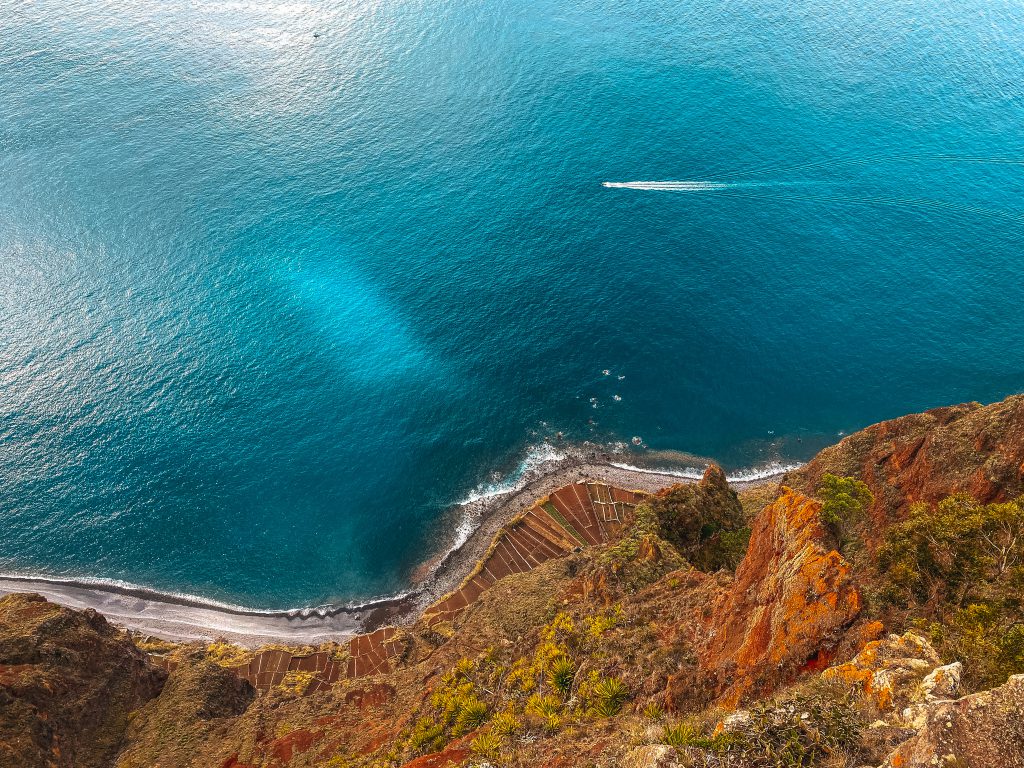
At 589 metres above sea level, Cabo Girão is Europe’s highest sea cliff, and there’s a glass-floored skywalk right at the edge of it. Standing on that transparent platform and looking straight down to the Atlantic below is not for the faint-hearted, but the views are extraordinary. On a clear day you can see all the way along the southern coast. Many tours already recommended above stop here; otherwise it’s a straightforward drive from Funchal.
Monte Cable Car & Toboggan Ride
The cable car from Funchal up to Monte is one of the most enjoyable ways to spend a morning. The 15–20 minute ride climbs from the seafront up through the city’s terraced hillsides, past colourful houses and tropical gardens, with sweeping views over the harbour and bay below. At the top, Monte is a lovely residential suburb with several things worth visiting:
- Monte Palace Tropical Garden: 70,000 square metres of extraordinary gardens with Portuguese tile art, Asian pagodas, and a museum
- Church of Our Lady of Monte: a beautiful church where the last Austro-Hungarian emperor Karl I is buried
- Botanical Gardens of Madeira: a bit further down the hill, stunning collection of endemic plants
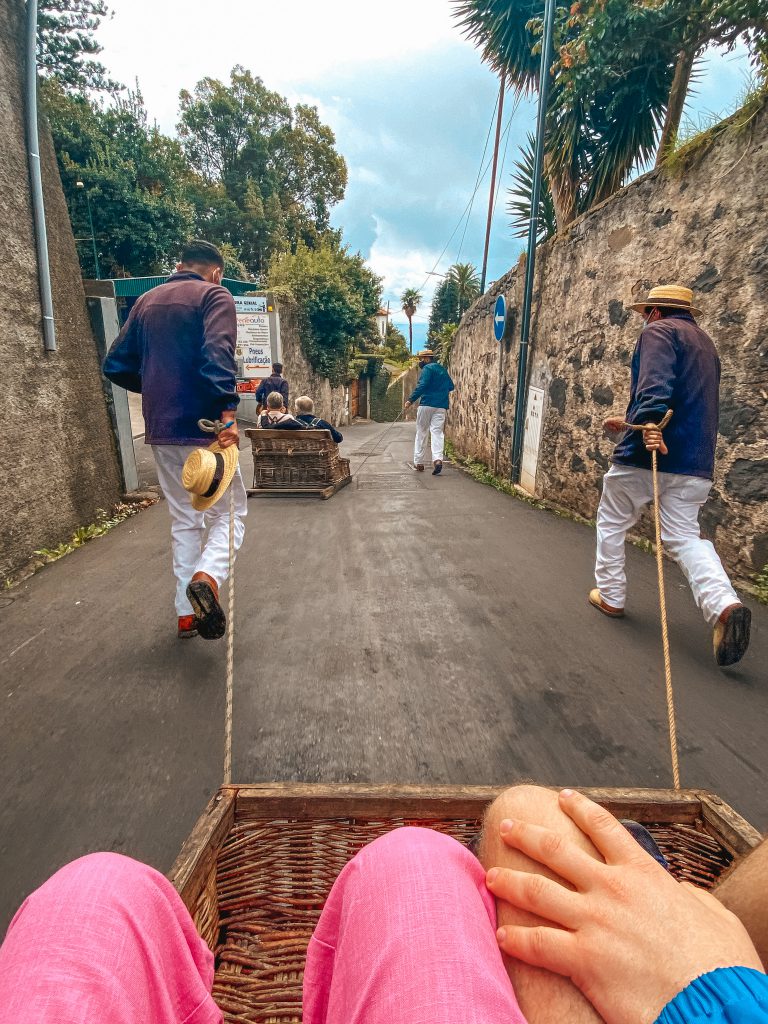
And then there’s the toboggan. This is, without question, Madeira’s most original tourist attraction. You sit in a wicker basket sled, and two men in white uniforms and straw hats grab ropes and push you down a steep cobbled street towards Funchal. It’s part transport history (this was how people actually got down the hill before cars), part pure fun. It costs around €25–40 depending on group size, and yes, it absolutely is as ridiculous and wonderful as it sounds. It is possible to pre-book it as well as a tuk tuk ride of Monte Palace if you’d rather plan in advance. Book it here.
Dolphin & Whale Watching
I genuinely don’t have strong enough words for this. On my whale watching trip, I saw tens of dolphins bow-riding alongside the boat, two humpback whales (one of which breached, creating a rainbow in the spray), and two sperm whales. One of the most memorable experiences of my life. Full stop.
Madeira sits on a major cetacean migration route, and the deep Atlantic waters just off the coast are home to over 20 species of whale and dolphin year-round. If you book one experience in Madeira, make it this one. I’d recommend looking for operators that take small groups and have a marine biologist on board: the commentary adds so much to the experience.
Book a dolphin and whale watching tour here. I used Magic Dolphin and they were brilliant.
Funchal Walking Tour & Old Town
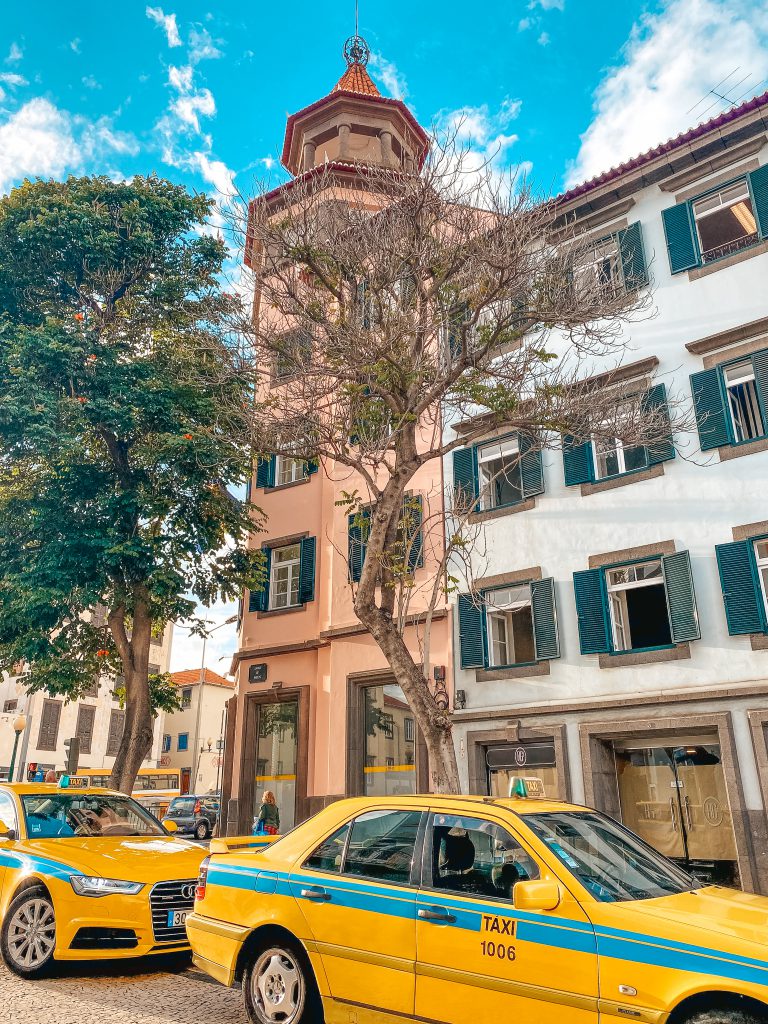
Funchal has been at the heart of Atlantic trade since the 15th century, and the old town, Zona Velha, still carries that history beautifully. Cobbled streets, colourful painted tiles, wooden balconied buildings, and the famous painted doors of Rua de Santa Maria. It’s also, I should mention, the birthplace of Cristiano Ronaldo (there’s a museum if you’re a fan; I’ll leave that one to you).
The city genuinely rewards a guided walking tour for the historical context: there’s so much happening beneath the surface that you’d miss on your own. I’d recommend the Funchal Secrets Walking Tour, or if you’d rather sit down while someone else navigates the hills, the Tukxi city tour is a fun option.
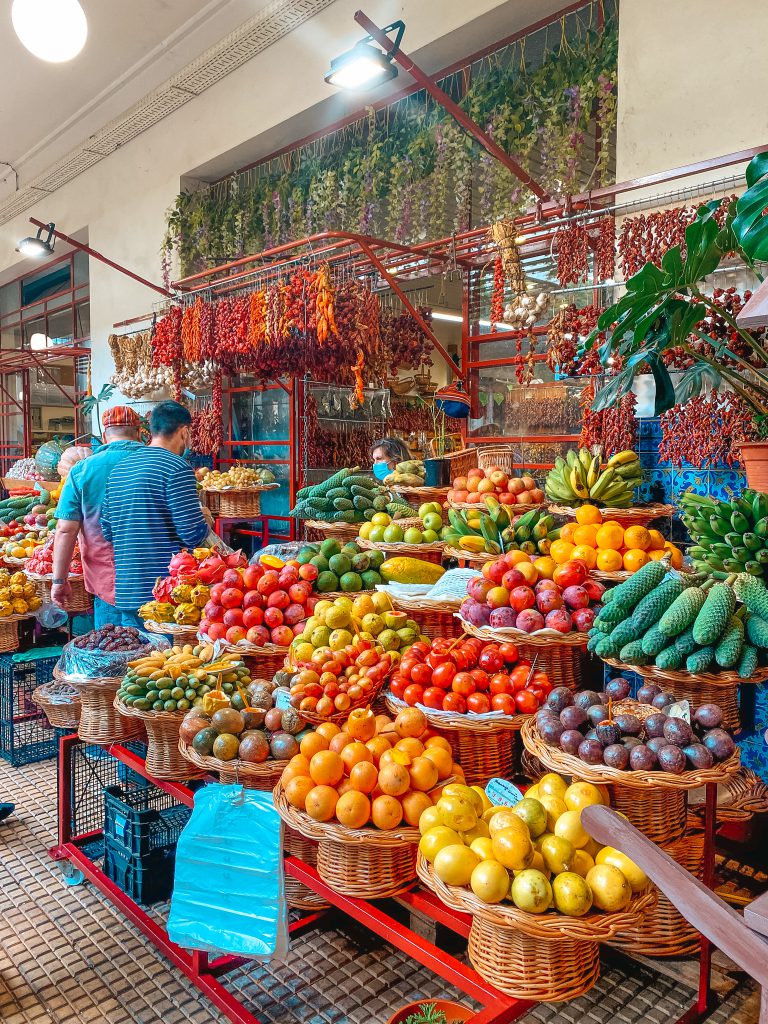
Mercado dos Lavradores
Funchal’s Farmers Market is the sort of place you go to buy a passion fruit and end up spending an hour just wandering. The building itself dates to 1940 and is covered in the most beautiful Portuguese tiles, and the women who run the market stalls often wear traditional Madeiran dress. The produce is extraordinary: local bananas (small, intensely sweet, nothing like the ones at home), dozens of varieties of passion fruit, exotic tropical fruits you won’t find in a UK supermarket, and the famous Monstera deliciosa, which Madeirans call “banana pineapple” because it genuinely tastes like both. Go on a weekday morning to avoid the tour group rush.
Câmara de Lobos
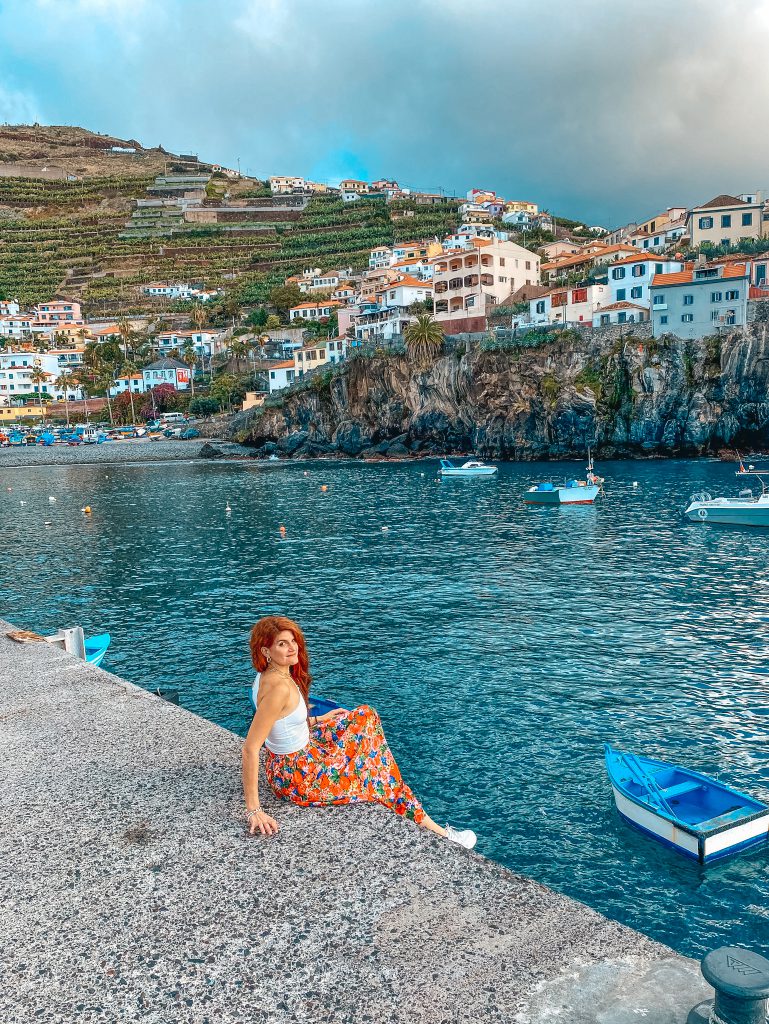
This small traditional fishing village about 10 kilometres west of Funchal is one of those places that feels like it belongs in a painting, because it literally has been. Winston Churchill used to come here to paint, and it’s easy to see why. Brightly coloured fishing boats bob in the harbour, fishermen mend their nets on the quayside, and the hillsides tumble down to the sea in a cascade of coloured houses. It’s also famous for being the home of poncha (the local rum drink), and there are several traditional bars where you can pull up a stool and try the authentic version. Easy to visit as a day trip from Funchal or as a stop on a West Island tour.
Curral das Freiras (Valley of the Nuns)
Deep in the mountainous interior, surrounded on all sides by towering peaks, sits Curral das Freiras, the Valley of the Nuns. The village is so remote and hidden that for centuries the nuns of a Funchal convent used it as a refuge when pirates threatened the coast, carrying their treasures into the mountains to keep them safe. You reach it either through a long mountain road or via a tunnel that opens suddenly to reveal the valley below, and the view from the viewpoints above the village is genuinely jaw-dropping.
The village holds an annual chestnut festival in November with music, food, and wine, lovely if you’re visiting in autumn. Book a guided tour here.
Rua de Santa Maria
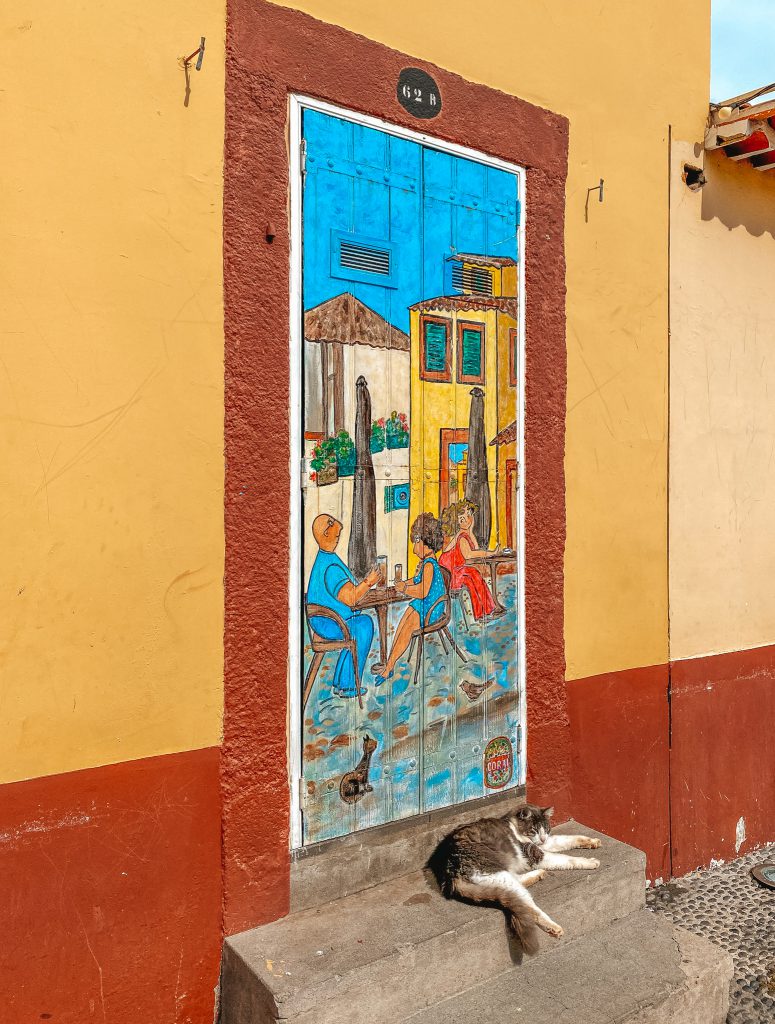
One of Funchal’s oldest streets, dating to 1430, Rua de Santa Maria is now one of its most Instagrammable. Back in 2014, a public art project called “Open Doors” invited local artists to paint the doorways of this previously run-down street, and over 200 doors were transformed into individual works of art. Each one is different, and the effect of walking down the street is genuinely wonderful. It’s a short walk from the central market and easy to combine with a wander through the old town.
Livraria Esperança Bookshop
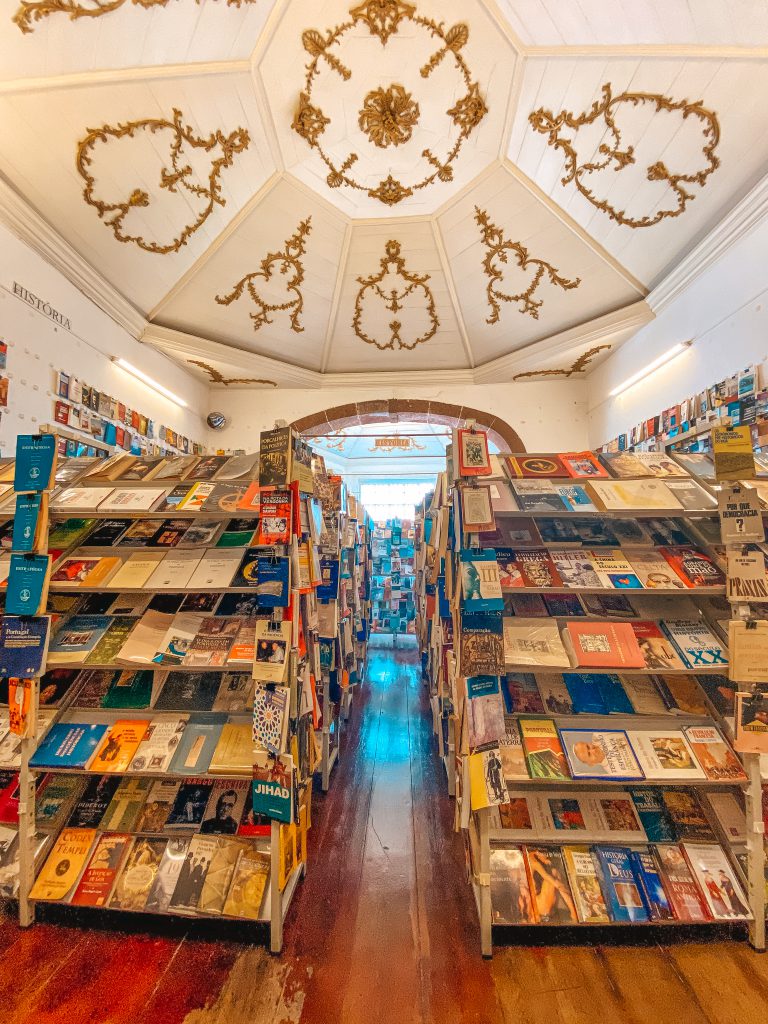
Bear with me on this one because it might sound niche, but Livraria Esperança is one of my favourite things in all of Funchal. This historic bookshop occupies a 16th-century palace and has been family-run since 1996. What makes it extraordinary is that every single book in the shop, over 100,000 titles across more than 70 literary sections spread through 20+ rooms, is displayed face-out by cover rather than spine. The effect is a labyrinth of book art. Even if you don’t buy anything, it’s worth wandering in for ten minutes.
Poncha: The National Drink
Madeira’s national drink is poncha: a deceptively powerful spirit made from sugar cane rum, honey, sugar, and citrus, traditionally lemon or orange, mixed with a wooden tool called a mexelote. There are fruit-flavoured variations (strawberry and passion fruit are lovely) that are easier to drink, but if you want the real thing, order it traditional.
The best place to try it: Rei da Poncha in Funchal. A proper local bar, no tourist fuss, very good poncha.
Madeiran Food & Wine
Madeiran cuisine deserves a whole article to itself (and one day I’ll write it), but here’s what to know: it’s hearty, deeply flavoured, and uses a lot of fresh fish. The dishes to try:
- Tomato and onion soup: a regional staple, often served with a poached egg
- Tuna steak with fried maize (milho frito): simple and perfect
- Black scabbard fish (espada) with banana: sounds wrong, tastes brilliant
- Espetada: beef skewers with salt, garlic, and bay leaves, cooked over wood
- Bolo do caco: sweet potato flatbread, served warm with garlic butter
For restaurants in Funchal’s old town, I’d recommend Taberna Madeira, Restaurante Santa Maria, and Restaurante Taberna Ruel, all in the historic centre. For a fun way to discover local food and wine together, the Funchal Food & Wine Walking Tour is excellent.
Then there’s Madeira wine, the fortified wine that helped fund the Age of Discoveries and was supposedly Thomas Jefferson’s drink of choice. George Washington served it at celebrations for the Declaration of Independence, which gives you a sense of its historical reach. Visit Blandy’s Wine Lodge for a tour and tasting, it’s one of the oldest wine producers on the island and very well done.
Bolo de Mel
Before you leave, pick up a bolo de mel, Madeira’s traditional honey cake. Made with local sugar cane honey, spices, and dried fruits, it keeps for weeks and makes a brilliant gift (or an excellent thing to eat on the plane home). The best place to buy it is Fábrica Santo António, a historic factory and shop in central Funchal that’s been making it for generations.
Stargazing from the Peaks
This one requires a clear night and either a car or an organised evening tour, but if conditions are right, drive up to Pico do Arieiro after dark and look up or better book a tour that takes the hassle away. At nearly 1,800 metres above sea level, well above any light pollution, the night sky over Madeira is extraordinary. Milky Way, shooting stars, the works. It’s the kind of thing you don’t think to plan and then end up talking about for years.
Madeira Island Tours
If you’re not hiring a car, or you simply want a knowledgeable guide to bring the landscape to life, Madeira’s full-day island tours are genuinely excellent value. The island divides naturally into three routes:
Best of the West: This is the tour I’d recommend if you only do one. It takes in Câmara de Lobos, the Cabo Girão skywalk, Ribeira Brava, Serra D’Água, the Encumeada pass (with views to both coasts), São Vicente, Porto Moniz’s volcanic pools, and the Paul da Serra plateau. It’s a brilliant cross-section of what makes Madeira so special. Book the Best of the West tour here.
Best of the East: Covers Pico do Arieiro, the fairy-tale thatched-roofed houses of Santana, the dramatic Ponta de São Lourenço peninsula, and the bay at Machico. Book the Best of the East tour here.
North Coast Tour: The north coast is Madeira’s wilder, quieter side. This tour visits Porto da Cruz, the pretty village of Cabanas de São Jorge, Ponta Delgada, São Vicente, and the São Vicente Caves, an underground volcanic cave system that’s genuinely impressive. Book the North Coast tour here.
Day Trips from Madeira
Porto Santo Island
Madeira’s smaller sister island, Porto Santo, is worth a day trip (or longer stay) if you’re visiting in summer. Unlike Madeira’s dramatic volcanic landscape, Porto Santo is drier and flatter, with a long golden sandy beach stretching the length of the island, something notably absent on Madeira itself. There’s a ferry connection from Funchal (about 2.5 hours) or a short flight. It’s a completely different vibe: relaxed, quiet, all about the beach and the sea, and a lovely contrast to Madeira’s mountains. You can book your Ferry to Porto Santo here and there is a tour available in the island which is good if you are just visiting for a day or two.
Where to Stay in Madeira
Most visitors base themselves in Funchal, the capital, and it’s the right call for a first trip. It’s well-connected to everywhere on the island, has the best restaurant and bar scene, and is where most tour operators pick you up.
Where I stayed: Hotel Quinta Belo São Tiago
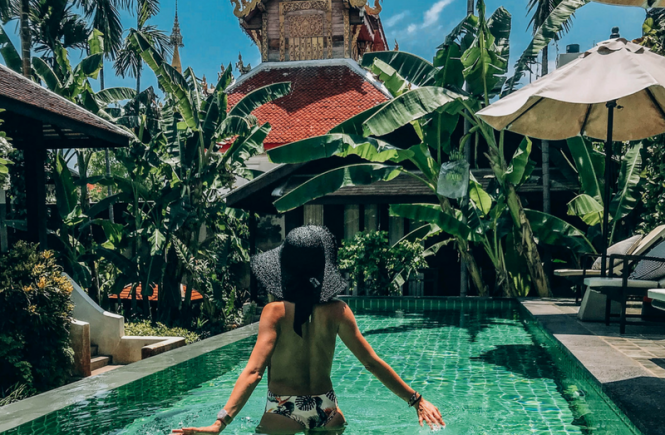
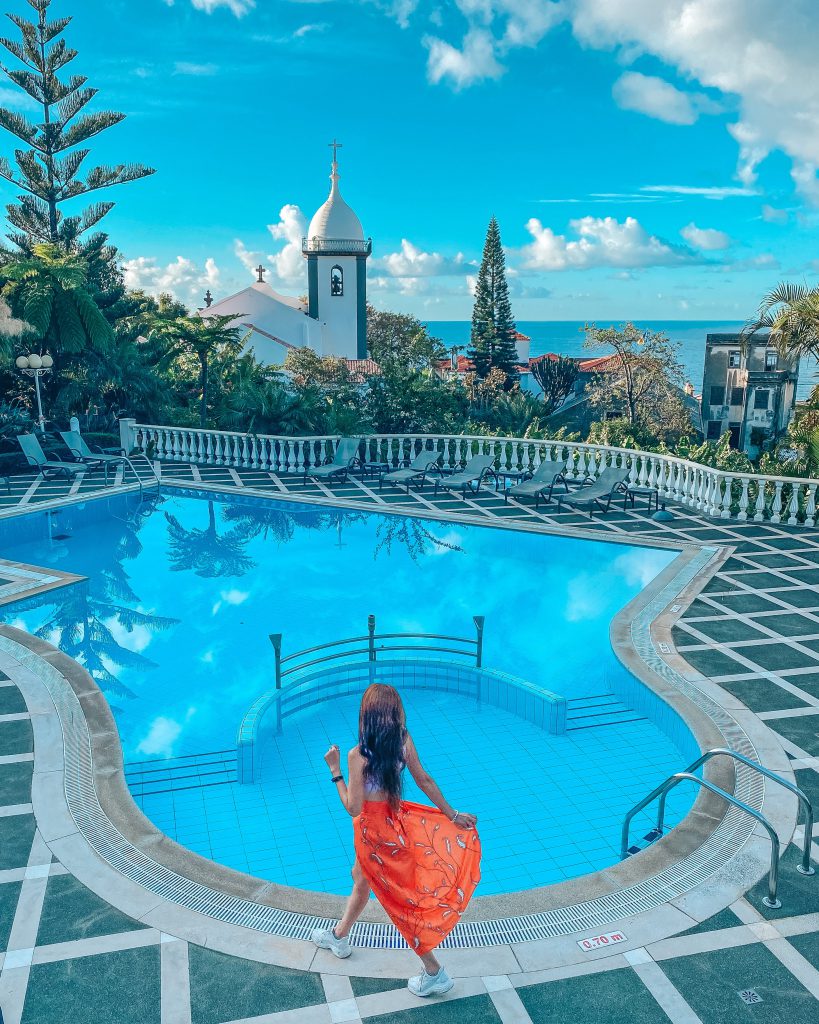
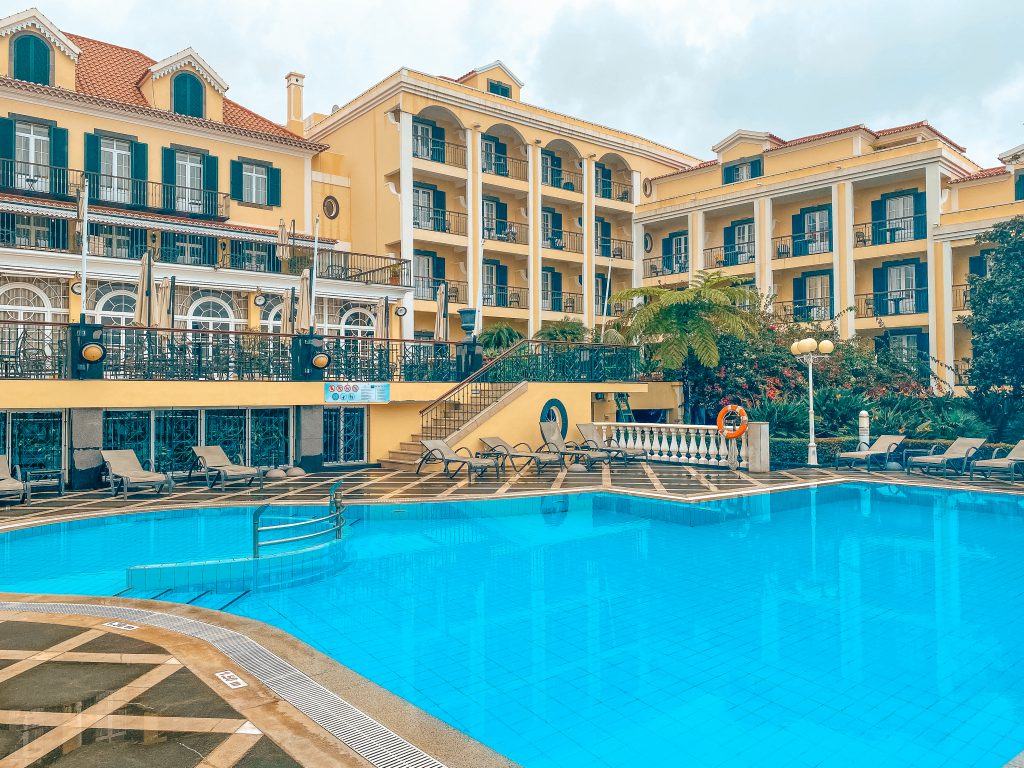
I stayed at Hotel Quinta Belo São Tiago, and I couldn’t recommend it more highly. It’s set in a gorgeous quinta (manor house) surrounded by tropical gardens, with an outdoor heated pool, a wellness centre with massage, sauna and Turkish bath, a fitness centre, and a really good breakfast. It’s in a quiet part of Funchal but still within easy walking distance of the centre. Lovely staff, beautiful setting.
Funchal neighbourhoods to consider:
- Old Town (Zona Velha): Best for atmosphere, restaurants, and nightlife. Ideal if you want to be in the thick of things. Browse Old Town hotels
- Lido area: More resort-style, popular with families, on the western seafront promenade. Good pools and easy access to the seafront. Browse Lido hotels
- Monte (hillside): Quieter, cooler, beautiful views. Better if you have a car. Lovely boutique options up here.
How long to stay: I spent six full days in Madeira and I genuinely felt like it could have been more. I’d say five to six days minimum if you’re not a big hiker, and seven to ten days if walking and hiking are your thing. There are over 30 levada trails alone: you won’t be short of things to fill your time.
Getting To & Around Madeira
Getting to Madeira
Madeira is roughly a four-hour direct flight from London. Several airlines fly the route including easyJet, Jet2, and TAP Air Portugal. It’s also well-connected from other European cities: Paris is about four hours, Lisbon about 90 minutes. Search for flights via Skyscanner to compare prices across airlines.
Airport Transfer
Funchal Airport (officially Cristiano Ronaldo International Airport, yes, really) is about 25 minutes from the city centre. I’d recommend pre-booking a private transfer with Welcome Pickups rather than chancing taxis or local buses after a flight. Fixed pricing, English-speaking drivers, and they track your flight so they’re there even if you’re delayed.
Hiring a Car in Madeira
A car is essential in Madeira. I know some guides hedge on this, but I’ll be direct: if you want to see the best of the island (the levada trailheads, Fanal Forest, Porto Moniz, the north coast road, the mountain viewpoints), you need a car. Public buses exist and work for Funchal day trips, but they’re limited for the island’s most spectacular spots.
Book in advance through DiscoverCars: they compare rates across multiple companies so you get the best price. A few practical notes: drive on the right (same as mainland Portugal), roads can be steep, narrow, and winding in the mountains, and parking in central Funchal can be tight. An automatic with decent power makes the mountain roads much more enjoyable.
Getting Around Without a Car
If you’d rather not drive, Funchal’s local bus network (Horários do Funchal) covers the city well, and taxis or rideshares handle shorter trips. For island exploration, the tour options are genuinely the best alternative: the full-day island tours cover an enormous amount of ground with a driver/guide included.
Madeira FAQ
How many days do you need in Madeira?
I spent six full days in Madeira and felt I could have happily stayed longer. If you’re not a big hiker, five to six days gives you time to explore Funchal properly, do a couple of island tours, and fit in the highlights like whale watching and the cable car. If hiking is your thing (and Madeira’s levada network alone has over 2,500 kilometres of trails), give yourself at least seven to ten days. It’s the kind of place where your to-do list grows rather than shrinks.
Is Madeira good for hiking?
Madeira is one of the best hiking destinations in Europe, full stop. The levada walks are iconic: ancient irrigation channels with flat footpaths running alongside them through forests, cliffsides, and tunnels. There are over 30 marked trails at varying difficulty levels. For something more challenging, the ridge hike between Pico do Arieiro and Pico Ruivo (Madeira’s highest peak) is spectacular. Trail surfaces can be slippery after rain, so good footwear is essential and a guide is highly recommended.
Do you need a car in Madeira?
For most visitors, yes: a car makes a significant difference to what you can see and do. The island’s most spectacular spots, including Fanal Forest, Porto Moniz, the north coast road, levada trailheads, and mountain viewpoints, are difficult to reach by public transport. Roads are well-maintained but can be steep, narrow, and winding in the mountains. Book in advance through DiscoverCars. If you’d rather not drive, the full-day island tours from Funchal here are an excellent alternative.
What is the best time of year to visit Madeira?
One of Madeira’s great selling points is that it genuinely is worth visiting year-round. The subtropical climate means even winter temperatures hover around 19–20°C, and the mountains see snow only at the very highest peaks. Spring (April–June) is beautiful, with the famous Flower Festival and lush greenery everywhere. Summer (July–September) is warmest, around 25–26°C, and ideal for swimming at Porto Moniz. Autumn is quieter with good hiking conditions. Winter is festive and mild: Funchal’s New Year’s Eve fireworks are reputedly one of the world’s biggest.
What is poncha and where should I try it?
Poncha is Madeira’s national drink: a spirit made from sugar cane rum, honey, sugar, and lemon or orange juice, mixed with a traditional wooden tool called a mexelote. It’s deceptively easy to drink and quite potent. Traditional poncha has a sharp, citrus-driven flavour, though fruit variations (strawberry, passion fruit) are more approachable for newcomers. The best place to try it in Funchal is Rei da Poncha: a proper local bar without any tourist fuss.
Is Madeira safe for solo travellers?
Madeira is one of the safest destinations I’ve visited. Crime rates are very low, locals are welcoming, and Funchal is easy to navigate alone. The main practical considerations for solo travellers are trail safety (some of the more remote levada walks can be slippery or exposed, and solo hiking on unfamiliar trails isn’t recommended) and mountain driving, which requires confidence on steep, winding roads. Booking guided hikes here solves both issues neatly. Travel insurance with activity cover is a must, I use World Nomads.
Enjoyed this article? Support my work by buying me a latte. Otherwise, do me a great favor of leaving a comment and following me on Instagram (@travelwithpau). Feel free to say ‘Hello!’ I don’t bite. And make sure you save the article for later on Pinterest!

This post contains affiliate links. If you click on one and make a purchase, I might make a small commission, at no extra cost to you in order to help support my blog.