Looking for immersive experiences in London? Well, good, because I’m the UK’s biggest independent immersive experience blogger. Whenever an immersive experience launches in London, I’m there no matter how weird it is. I have visited more than 100 so far!
Below are London’s best immersive experiences that I have tried and tested, organised by type. This article gets updated regularly, you’ll find 30+ immersive experiences here at all times.
Something needs updating? Give me a shout in the comments, or on Instagram (@travelwithpau).
🫖 Afternoon Tea /Wizard Afternoon Tea, spellbindingly delicious, with a smoky cauldron on the side.
🛏️ Overnight /Key of Dreams, a luxury 24 hour immersive theatre and fine dining experience you can stay in overnight.
This Month’s Highlight
Peaky Blinders: Underworld
The one everyone’s talking about right now. Set in the historic railway arches by London Bridge, Peaky Blinders: Underworld drops you straight into Thomas Shelby’s world, starting in a full recreation of the Garrison Tavern, where you can grab a drink before finding the hidden door down into the underworld beneath. From there you’re free to explore Garrison Lane, The Bookies, Chinatown, and the Small Heath Fairground, bumping into actors, solving puzzles, and stumbling into surprises along the way. Around an hour, fully immersive, and exactly the kind of world-building the show’s fans have been waiting for. Running 13 August 2026 – 3 January 2027, from around £25.
Belfast is the capital of Northern Ireland and one of the most underrated city breaks in the UK. It’s compact, incredibly walkable, and packed with history, culture, and one of the best food and bar scenes I’ve encountered anywhere in the British Isles.
It’s also a city that wears its complex past openly the murals, the Peace Wall, the political taxi tours and that honesty makes it one of the most thought-provoking places I’ve visited. Come with an open mind, and you’ll leave with a genuine understanding of a city that has worked incredibly hard to reinvent itself.
Nowadays Belfast is my second home, as I own short term accommodation properties in the city. I’m constantly advising and engaging tourists so I do dare say I know a lot. So if you are visiting do me a favour and stay in one of them… wink, wink!
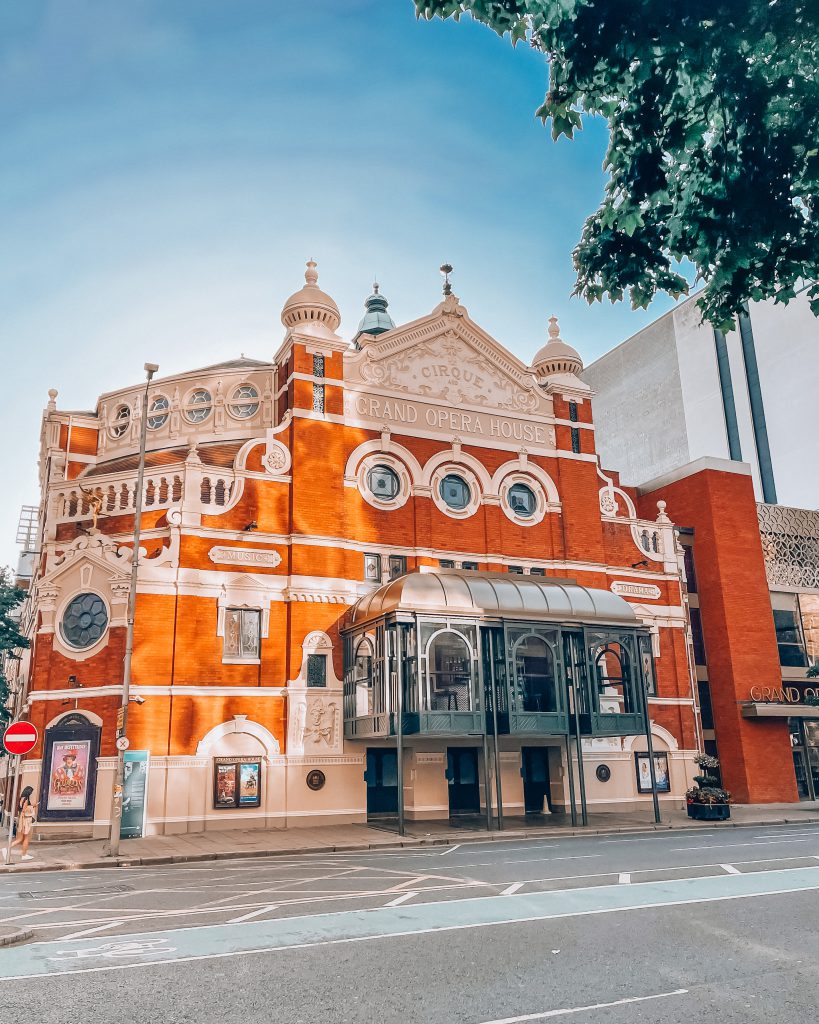
GRAND OPERA HOUSE
BELFAST ESSENTIALS
✈️ Getting There / Belfast has two airports, Belfast International (BFS) and George Best Belfast City Airport (BHD), most UK flights use City Airport, which is closer to the centre. Book a private airport transfer with WelcomePickups for a stress-free arrival. Search flights on Skyscanner.
🚗 Getting Around / The city centre is very walkable, with most attractions within a 20 to 30 minute walk of each other. For day trips out to Giant’s Causeway or Hillsborough Castle, compare rental cars on DiscoverCars.
🧳 Luggage Storage / If you’re early for check-in or have time to kill before heading home, no stress, there are luggage storage points all over Belfast. Use this website to find one nearby.
📱 Connect / Stay connected the moment you land with an eSIM. I use Holafly, use code TRAVELWITHPAU for 5% off.
🛡️ Get Insured / Even for a UK trip, it’s worth having cover. World Nomads offers coverage for over 150 activities as well as emergency medical, lost luggage, trip cancellation and more.
Wonderful Things to Do in Belfast
Visit the Titanic Belfast Experience
The Titanic Belfast museum is, without exaggeration, one of the best museums I’ve ever been to. Built on the exact slipway where the Titanic was constructed, it takes you through the full story of the ship, from Belfast’s industrial history to the night of the sinking and beyond. The building itself is stunning, designed to resemble the prow of a ship.
Book in advance, this sells out, especially on weekends. Book your Titanic Belfast tickets and include the SS Nomadic visit while you’re there.
Spot the Samson & Goliath Cranes
These two giant yellow cranes are Belfast’s most iconic skyline feature, you can see them from almost everywhere in the city. They’re a symbol of the city’s shipbuilding heritage and make for great photos, especially from the Titanic Quarter waterfront.
I am a bit of a COLAB regular. They are a cornerstone of immersive theatre in London and launch several shows around Halloween, and I have been to multiple of them. They are all very good and use a format I love: puzzles and tasks, a trip into somewhere properly scary, a break from the scares and then more scares, and a grand finale. So I was keen to see how SPORE, their new immersive horror show, would fit in.
I went with my partner on press night and only the second run of the show, so a few teething issues were still being sorted. I will be honest about those below, but please keep in mind that my experience was affected by them, and yours may well be better. SPORE is also one of the very few immersive Halloween experiences in London this year, which is a big part of why I think it is worth a look.
A red double decker bus covered in Peppa Pig characters, a themed afternoon tea and a 90 minute tour past London’s biggest landmarks. When I was invited to try the Peppa Pig Afternoon Tea Bus Tour, I took my son, who had just turned 2, the minimum age. Here is what it is really like, from where it departs to what is on the menu, plus whether I think it is worth the money.
These shoes were gifted to me by Vivaia and this post contains affiliate links. All opinions are my own.
Quick Verdict
Summary: The Vivaia Avoir are foldable nylon travel loafers from the brand’s new RE:work collection. I wore them for six days in Belfast, on over 10,000 steps a day, and then to a theme park and they were comfortable the whole way through. They run a little roomy and I got one blister on my left heel on the first afternoon, but it disappeared quickly and never came back. They wipe clean, they look smart enough for travelling, and I would happily buy another pair.
Pros
Genuinely comfortable, even on days of 10,000 steps or more
Wipe clean, I have not needed to wash them yet
Held up in damp Belfast and in the rain, even though they are not advertised as waterproof
Foldable, with a storage bag, and a clip strap at the back that keeps the pair together while you travel
Smart enough to look classy while travelling
Cons
They run slightly roomy (I took a 5.5)
I got a blister on my left heel the first afternoon, it disappeared quickly and did not come back
Light colours will get dirty, the sole is flat and exposed to whatever is on the floor
They are soft and unstructured, so not a traditional structured loafer
MY RATING: VIVAIA AVOIR TRAVEL LOAFERS Comfort: ⭐⭐⭐⭐⭐ (5/5) Style: ⭐⭐⭐⭐ (4/5) Value: ⭐⭐⭐⭐⭐ (5/5) Packability: ⭐⭐⭐⭐⭐ (5/5) Overall: 4.75/5
Get $10 off all VIVAIA orders with code VPAULA Works site-wide, year round, no minimum spend
VIVAIA BLACK FRIDAY & CYBER MONDAY 2026 Use my exclusive code PAULA2026 for 30% off 4 pairs, 25% off 3 pairs, 20% off 2 pairs and an extra 10% off a single pair 15 to 28 Oct: early access, 2 pairs for $189 until 21 Oct, then $219 until 28 Oct 29 Oct to 10 Nov: flash sale, up to 30% off never-on-sale styles and up to 60% off clearance 11 Nov to 1 Dec: the full Black Friday and Cyber Monday sale, plus a free DuPont paper tote when you buy 3 or more pairs from 19 to 25 Nov Shop the VIVAIA Black Friday sale
Koh Tao was my favourite island in Thailand. I loved all of them, but Koh Tao has a perfect size, beautiful beaches, outstanding diving and snorkelling, as well as the perfect amount of partying, there is some but it’s not at the crazy annoying level. These are my favourite things to do in Koh Tao, as well as where to stay, where to eat and how to get there!
🛵 Getting Around / Walking is the main way to get around, as well as scooters and boats. The roads are steep, so only hire a scooter if you’re confident on one.
📱 Connect / You’ll need mobile data while you are in Thailand, and I always recommend an eSIM, there’s absolutely no need for a physical one! I use Holafly, which gives you unlimited data, plus 1GB of free global backup data with its Always On feature, handy if your plans change. Get yours with my link and use code TRAVELWITHPAU for 5% off.
🛡️ Get Insured / Unfortunately, things can and do go wrong when you travel. World Nomads offers coverage for more than 150 activities as well as emergency medical, lost luggage, trip cancellation and more, and if you’re planning to dive, you’ll want it.
Best Things to Do in Koh Tao
1. Explore the Underwater World
Koh Tao’s underwater world is probably the number one reason people come here, because the island has the perfect combination: amazing snorkelling and really low prices. A lot of people come just to do their PADI certification. I didn’t do mine because I had already done it somewhere else, but whether you sign up for a PADI Open Water Course or simply snorkel in shallow reefs teeming with marine life, you’re in for a treat. If you’d rather try diving before committing to a full course, the Try Scuba Diving 1-Day Experience is a relaxed way in, and if you’re already certified, Sail Rock is one of the island’s most popular dive sites. For snorkellers, the Islands Snorkeling Highlights Day Tour & Lunch and the Koh Nangyuan & Hidden Bays Snorkeling Tour w/ Lunch are more relaxed days out.
2. Hike to John Suwan Viewpoint and Chill at Freedom Beach
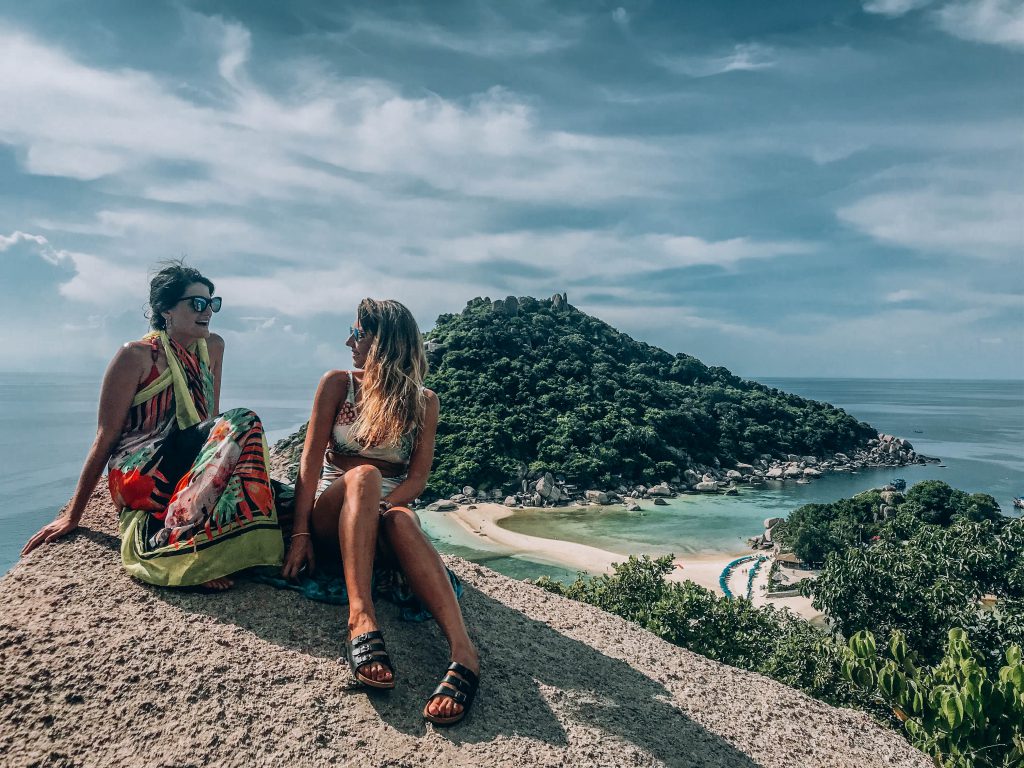
Koh Tao has many beautiful viewpoints, but John Suwan Viewpoint is the best one. You can get to it walking from the centre of Koh Tao, it’s approximately a 40 minute walk in total, or by scooter. You need to pay when you come in, but it’s worth it. The hike is short and easy, approximately 20 minutes, although the top is a bit rocky, so it’s more comfy if you don’t do it in flip flops. Make sure you stay at Freedom Beach afterwards, it’s beautiful, empty, and you can do a bit of snorkelling while you are there as well.
Other viewpoints you might want to check out in Koh Tao are Love @ Koh Tao and Mango Bay.
3. Visit Koh Nang Yuan
Koh Nang Yuan is a small island really close to Koh Tao which is a must visit. It has a viewpoint, and it’s really three small islands connected by a strip of sand so it actually looks really cool, especially from the viewpoint. There are taxi boats that take you there from Koh Tao. You can also kayak to it from Koh Tao or visit as part of a day tour, which is what I did. The island is protected so there is no town, just a small restaurant and a dive resort. Entry to the island is currently 250 THB per adult, paid in cash, so check whether your tour includes it. Book the tour here.
4. Take an Entire Day Boat Tour
This one is a must, I would say if you only have one day in Koh Tao, do this one! We booked an all day tour which was brilliant, total value for money, and loads of fun. It covered pick up from our hotel in Koh Tao and it took us to Shark Bay, Aow Leuk and Hin Wong Bay snorkelling, each one just better than the last. After that our last stop was a couple of hours in Koh Nang Yuan.
5. Hike from Mae Haad Pier to Chalok Bay
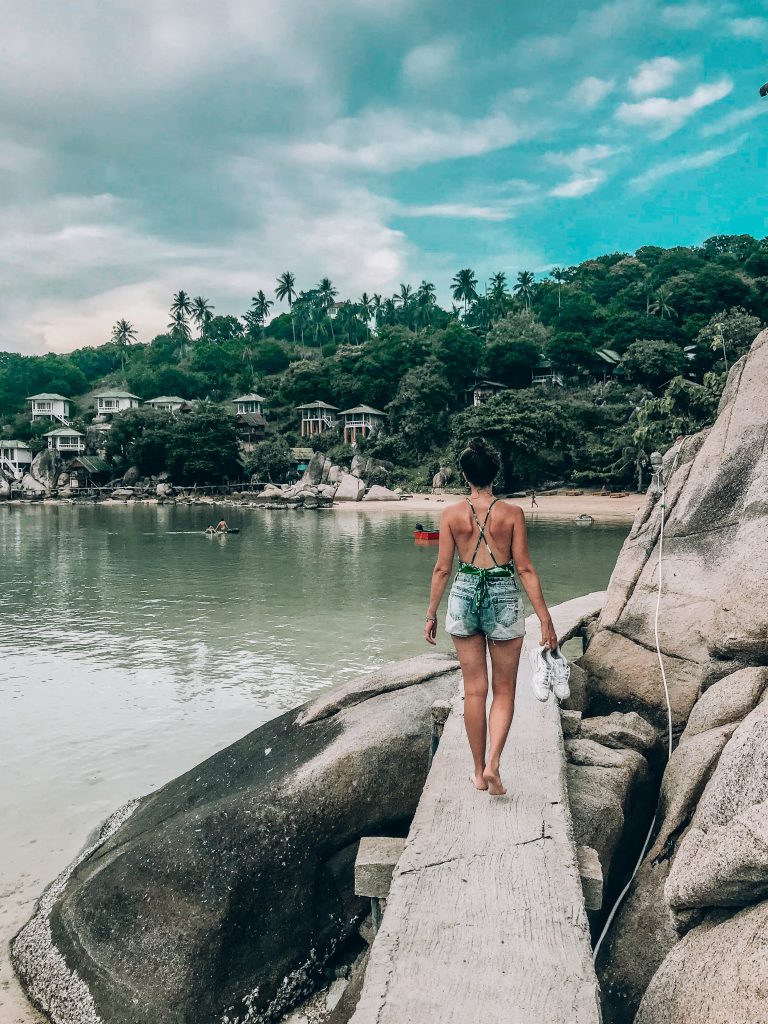
A must to do if you want to get off the beaten path when in Koh Tao. It is accessible for every level of fitness. You will get to swim in remote bays, pass through beautiful resorts, enjoy great views, walk through a palm tree forest and skinny dip on a deserted beach. Yes, all that.
From the Mae Haad pier in Koh Tao walk south and leave the sea on your right side. Pass through Sensi Paradise Resort and up to Charm Churee Resort. Then head down to the beach, you’ll reach Jansom Bay. Jansom Bay is only a 15-minute walk from the Mae Haad pier and is so picturesque. There are rafts a few minutes away from the shore that you can float on. So cool! Leave Jansom Bay and continue towards Sai Nuan Beach. It can be crowded at midday, but tourists leave around sunset so this deserted bay will be all yours and is a great spot to take pictures. Just around the corner there is Sai Nuan 2, known for its Banana Rock restaurant, one to check out.
6. Watch the Sunset
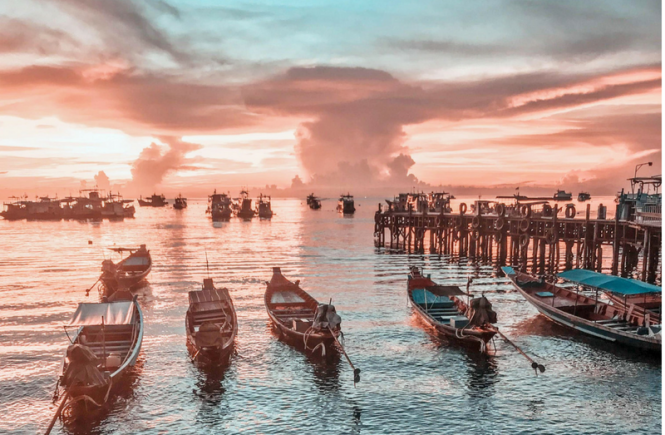
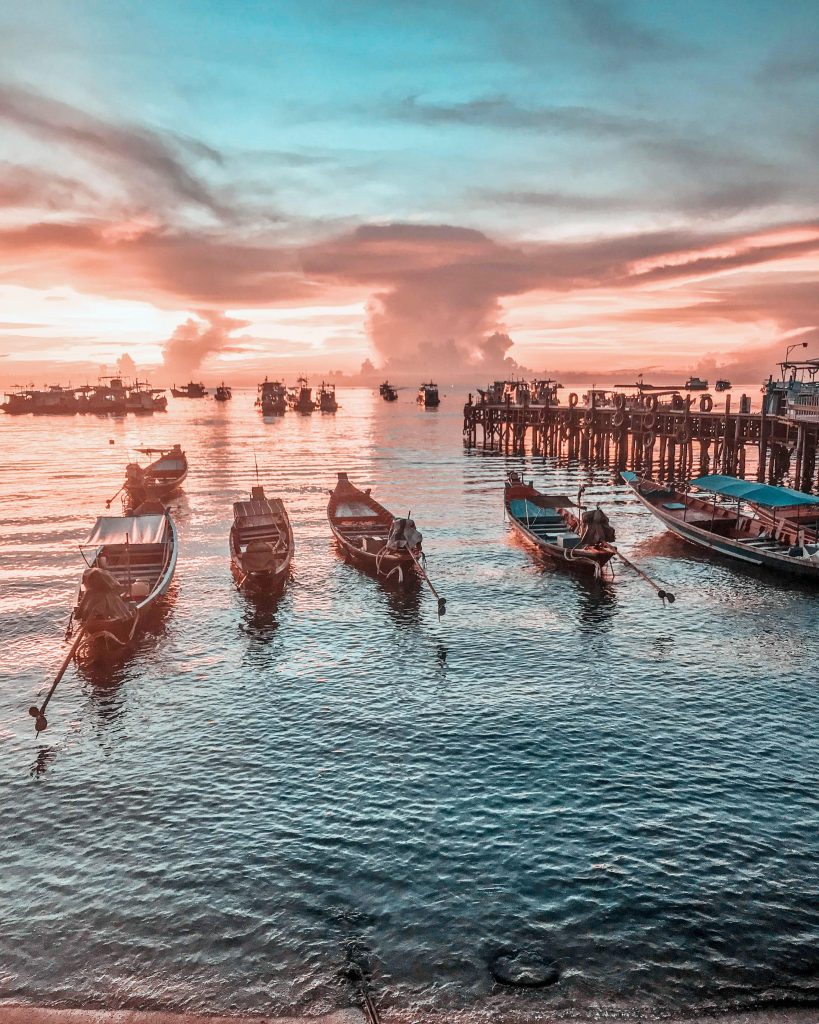
Part of why Koh Tao was my favourite island in Thailand was its sunsets. They are absolutely unreal. As the sun goes down the clouds get darker but on the horizon a red fiery strong glow remains. A popular place to watch the sunset in Koh Tao is Mango Bay Viewpoint, but if you are not feeling like hiking up there, then Sairee Beach would also work. I watched the sunset at the beach close to a bar coincidentally called Sunset while having a beer and it was one of those moments where you go “Wow, I’m literally so lucky right now that I can see this!” To see the sunset we hiked from Chalok Bay up to View Point Resort and then down to Sunset bar. It was magical.
7. Party in Sairee Beach
When the sun goes down in Koh Tao, the fun is not over. Head to Sairee Beach for a little bit of partying. If the night is successful you might even end up refreshing yourself in the sea under the stars.
8. Snorkel with Sharks at Shark Bay
Not one from my own list, but it comes up in every Koh Tao guide for a reason: Shark Bay (also called Thian Og Bay) on the south coast is where blacktip reef sharks and green turtles hang out, and you can see them just by snorkelling, no dive certification needed. The sharks are harmless, the little ones tend to cruise the shallows close to shore, and early morning or late afternoon gives you the best chance of spotting them. It’s snorkelling only, so bring your own gear if you can (it can also be rented nearby), and note that the coral here isn’t the island’s best, it’s all about the animals. Shark Bay is also one of the stops on the all-day boat tour in number 4.
9. Rock Jump and Snorkel at Tanote Bay
Also worth knowing about: Tanote Bay on the east coast of the island is surrounded by hills and boulders, and it’s known as the best spot on Koh Tao for rock jumping, with good snorkelling right off the beach too. It’s a good option if you want something a bit different from the west coast beaches.
10. Visit the Turtle Conservation Centre
For something a bit different, New Heaven Reef Conservation at Chalok Baan Kao Bay raises hatchling sea turtles for about a year before releasing them back into the sea. Visitors can watch the turtles being fed in the late afternoon, though you can’t handle them. Opening hours and programmes change, so check with New Heaven before you go.
11. Try Kayaking and Paddleboarding
Koh Tao’s calm bays are made for paddling, and sunrise or sunset is the nicest time to be out on the water. Kayaks and paddleboards can be rented around Sairee Beach (SUP Tao is the best-known paddleboard rental, and you’ll need to be a confident swimmer), and as I mentioned above, you can even kayak across to Koh Nang Yuan if you’re feeling energetic. If you’d rather have it all organised, the Tao-Nangyuan Snorkeling Day Trip with Meals & Sunset includes kayak and paddleboard gear, with kayaking at Hin Wong Bay, Aow Leuk and Shark Bay.
12. Take a Thai Cooking Class
If you need a break from the water, a Thai cooking class is a fun way to spend a morning or afternoon. This Half Day Thai Cooking Class with Sea View takes about 3 hours in a small group between Mae Haad and Sairee, you cook three classic Thai dishes from scratch, and a meal is included.
13. Go Rock Climbing
Koh Tao’s granite boulders and cliffs make it a surprisingly good climbing spot, with outdoor routes and an indoor gym near Sairee Beach. There’s no big tour operator for this one, so book directly with a local climbing outfit once you’re there.
14. Watch a Muay Thai Fight
If you want to see something properly Thai, Muay Thai fight nights are typically held about once a month, they normally sell out, and Island Muay Thai in Sairee sells advance tickets on its own website. The same gym and Monsoon Gym both offer classes if you’d rather have a go yourself.
Day Trips From Koh Tao
Most of the best days out from Koh Tao are on the water. These are the boat tours I’d look at first.
Islands Snorkeling Highlights Day Tour & Lunch: This is the all-day trip I describe above, and it’s a great all-rounder. The route covers Shark Bay, Aow Leuk, Hin Wong Bay, Mango Bay and a couple of hours on Koh Nang Yuan, with a Thai-style lunch on board and snorkel gear and a life jacket provided. It has thousands of reviews and a 4.7 rating, so you won’t be the first to try it. Book here.
Koh Nangyuan & Hidden Bays Snorkeling Tour w/ Lunch: A 7 hour trip with a Thai-style lunch box on board, time to walk the sandbar and climb to the viewpoint on Koh Nang Yuan, and a stop at Mango Bay. Book here.
Tao-Nangyuan Snorkeling Day Trip with Meals & Sunset: If you’d like your snorkelling day to end with a view, this one adds meals and a sunset on the water, and it includes kayak and paddleboard gear too. Book here.
Try Scuba Diving 1-Day Experience: No experience needed, hotel pickup included, and it’s the best-reviewed way to see what all the fuss is about before you commit to a course. Book here.
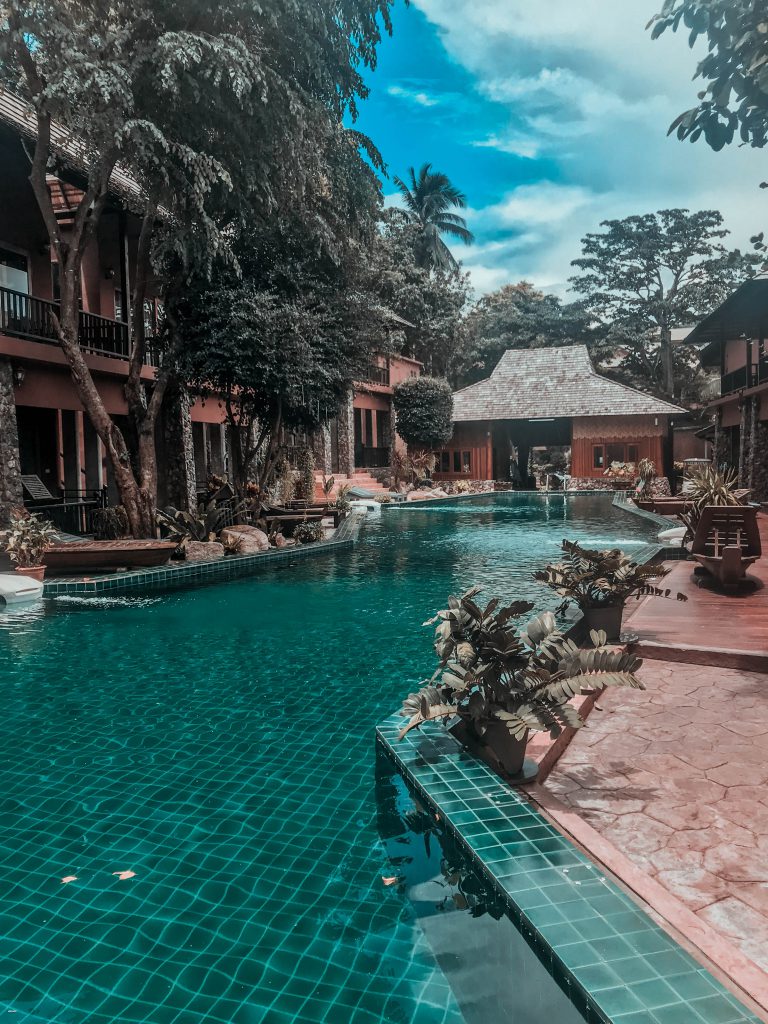
I really enjoyed my stay at The Beach Club Koh Tao. The hotel is on the beach, and it’s actually beautiful to watch the sunset from there. Maybe depending on where your room is you can even watch it from your balcony. The rooms are spacious, there is complimentary water, tea & coffee and the aircon works wonderfully. But my favourite thing was the pool. It’s a strong green, a really unique colour for a pool, and it’s huge. It also makes the hotel look great as it’s right in the middle, surrounded by trees and by the rooms. Refreshing in the pool in the afternoons after going to the beach was the best. Last, it’s really close to Mae Haad where you’ll find most of the best restaurants in Koh Tao for dinner or breakfast. You can book The Beach Club Koh Tao here.
Want more choice? Below are some of the best hotels on the island, each offering unique experiences and exceptional service, perfect for your stay in this tropical paradise.
Budget Accommodation
Ban’s Diving Resort: A popular and affordable resort for divers, offering comfortable rooms, an on-site dive school, and a large outdoor pool.
Sensi Paradise Beach Resort: A beautiful tropical resort with beachfront villas, a tranquil atmosphere, and excellent service, perfect for a relaxing getaway.
The Tarna Resort: A hillside resort above Sairee Beach with sea-view rooms and villas, a restaurant, and a free shuttle to the beach and the pier. Some rooms open straight onto the pool.
Splurge
Jamahkiri Resort & Spa: A luxury resort offering stunning ocean views, spacious rooms, a full-service spa, and a private beach for an unforgettable stay.
Koh Tao Coral Grand Resort: A beachfront resort with a range of cosy bungalows, an outdoor pool, and easy access to the island’s famous diving spots.
If you only have one meal in Koh Tao, then make it these!
Breakfast/Brunch:Blue Water Café: Famous for its smoothie bowls, pancakes, and oceanfront views.
Lunch:Coconut Monkey: A cosy café offering fresh salads, sandwiches, and vegan-friendly options.
Dinner:Barracuda: One of the island’s top-rated restaurants, known for its fresh seafood and fusion dishes.
How Long to Stay in Koh Tao
3 to 4 days is the minimum I’d suggest, which is enough to relax, explore the beaches, do a boat tour and a viewpoint hike, and either dive or snorkel.
5 days is what you need if you’re getting certified in scuba, and this is IMPORTANT! You won’t be able to do the Open Water course in less.
A week or more if you want to slow right down, add a hike or two, and fit in the sunset spots, the nightlife and a few more days in the water without rushing.
Best Time to Visit Koh Tao
The best time to visit is from December to April when the weather is driest and ideal for diving and island hopping. Avoid October and November, which are the rainiest months due to monsoon season. I visited in May and it was great! Really quiet and not so rainy.
Getting To & Around Koh Tao
Koh Tao doesn’t have its own airport, so most travellers fly into Koh Samui or Surat Thani and then take a ferry, or head overland from Bangkok with a bus plus ferry combo via Chumphon, which is usually the cheapest option but a long travel day, typically 9 to 12 hours, so check current timetables. Search flights into Thailand on Skyscanner. 12Go is a booking platform that covers pretty much every domestic transport option in one search, trains, buses, minivans, ferries, and even combined routes like a bus plus ferry to an island, which makes it the easiest way to book the whole trip from Bangkok. If you’re coming from another island, pre-book your ferry tickets with Ferryhopper. In high season, boats to Koh Tao fill up, so booking a day or two ahead is wise.
Once you’re on the island, walking is the main mode of transport, as well as scooters and boats. Scooters are a popular way to get around, but Koh Tao’s roads are steep and can be tricky, especially in wet conditions. If you’re not confident riding one, consider walking, using taxis, or renting an ATV for safety. There are several ATMs on the island, but they sometimes run out of cash, so bring some Thai baht with you or withdraw at the airport before arriving.
Koh Tao FAQ
How do I get to Koh Tao?
Koh Tao doesn’t have its own airport, so most travellers fly into Koh Samui or Surat Thani and then take a ferry. You can also come overland from Bangkok with a bus and ferry combo via Chumphon. Book your ferry here, or book bus and ferry together with 12Go.
What is the best time to visit Koh Tao?
The best time to visit is from December to April when the weather is driest and ideal for diving and island hopping. Avoid October and November, which are the rainiest months due to monsoon season. I visited in May and it was great! Really quiet and not so rainy.
Is Koh Tao good for beginners who want to learn scuba diving?
Yes! Koh Tao is one of the most affordable and popular places in the world to get PADI certified. There are dozens of reputable dive schools, many with experienced English-speaking instructors and great beginner dive sites. Book your PADI course here.
How many days should I spend in Koh Tao?
A minimum of 3 to 4 days is ideal to relax, explore the beaches, and do some diving or snorkelling. If you’re getting certified for scuba, you’ll want at least 5 days, this is IMPORTANT! You won’t be able to do it in less.
Do I need to rent a scooter on Koh Tao?
Scooters are a popular way to get around, but Koh Tao’s roads are steep and can be tricky, especially in wet conditions. If you’re not confident riding one, consider walking, using taxis, or renting an ATV for safety.
Are there ATMs on Koh Tao?
Yes, there are several ATMs on the island, but they sometimes run out of cash. It’s wise to bring some Thai baht with you or withdraw at the airport before arriving.
Can you visit Koh Tao without diving?
Absolutely. Snorkelling is excellent right off the beaches and on boat tours, and there are viewpoint hikes, kayaking, sunsets and beach bars to fill your days. You don’t need a dive certification to enjoy Koh Tao, and a try-dive is an easy way to see if you like it.
How much is the Koh Nang Yuan entrance fee?
Entry to Koh Nang Yuan is currently 250 THB per adult, paid in cash on arrival, with a lower child rate. Some older pages still show 100 THB, which is out of date. Check whether your tour includes the fee, as some do and some charge it separately.
Traveling to Thailand? Check other Thailand posts here.
My stay at The Beach Club Koh Tao was complimentary, however as always my opinions are my own.
Enjoyed this article? Support my work by buying me a latte. Otherwise, do me a great favor of leaving a comment and following me on Instagram (@travelwithpau). Feel free to say ‘Hello!’ I don’t bite. And make sure you save the article for later on Pinterest!
This post contains affiliate links. If you click on one and make a purchase, I might make a small commission, at no extra cost to you in order to help support my blog.